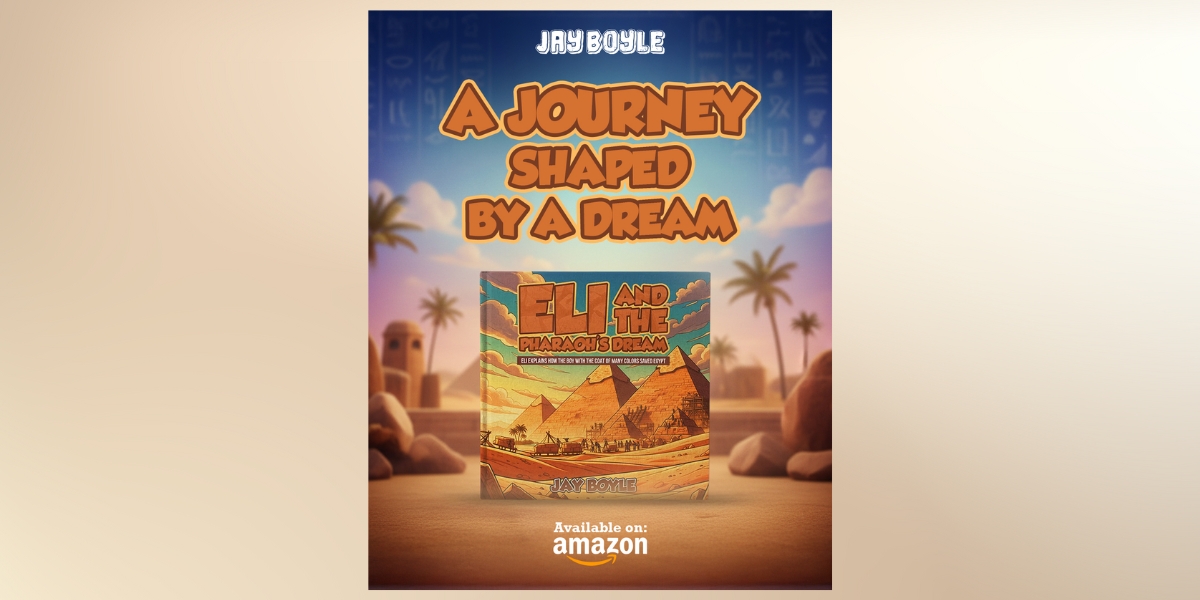


For generations, ancient Egypt has captured the imagination of scholars, students, and casual learners. From the architectural marvel of the pyramids to the mysteries of pharaohs and biblical connections, the civilization continues to fascinate. Yet translating its depth into a form that children can understand has always been a challenge. Textbooks often overwhelm young readers with details that lack emotional context. Museum exhibits inspire wonder, but they rarely linger long enough in a child’s mind to create lasting understanding. This is where narrative-driven learning steps in, particularly through children’s literature that builds curiosity through storytelling.
Eli and the Pharaoh’s Dream enter this space with a fresh and intentional approach. Written by Jay Boyle, a Navy veteran and first-time author, the book blends family life, biblical history, and ancient Egyptian culture into a warm narrative that is accessible to children without sacrificing educational substance. While the story introduces pyramids, river systems, and archaeological concepts, it presents them through the eyes of Eli, a young boy who learns from his father, a university history professor. This narrative lens allows children to engage with complex ideas in a way that feels natural rather than instructional.
One of the book’s strengths is its framing of ancient Egypt not as a distant, unreachable world but as a living story connected to modern curiosity. Eli is not a historian or a scholar. He is an ordinary child with questions, excitement, and a strong imagination. His father becomes a guide, offering explanations rooted in real historical practices, such as studying sediment layers to understand floods. These details help children see how history is uncovered and interpreted, giving them an early appreciation for scientific inquiry.
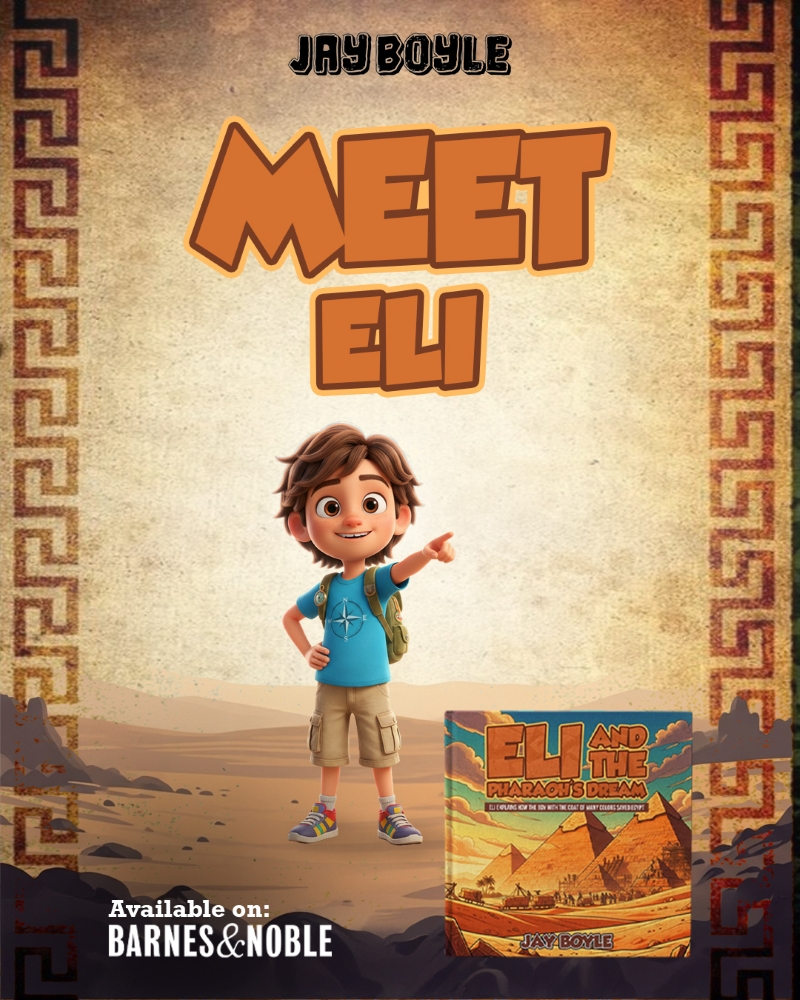
Photo Courtesy: Jay Boyle / Henry Miller
The book also serves another purpose. It thoughtfully and effectively introduces the biblical story of Joseph. Joseph’s role in Egypt is a key element of Judeo-Christian history, yet many children encounter the story only in simplified or purely spiritual formats. Eli and the Pharaoh’s Dream bridges that gap by grounding Joseph’s story in its historical setting. This allows parents and educators to discuss both the spiritual and cultural implications of Joseph’s journey. The book positions the biblical narrative within the broader context of Egyptian society, making it easier for children to grasp the significance of Joseph’s rise to influence.
There is growing interest among families and educators in stories that combine cultural depth with moral guidance. As technology changes the way children interact with information, parents are seeking books that anchor learning in values and meaningful content. Narrative-driven learning offers an approach that integrates emotion, character, and curiosity. Children retain more when they care about the characters and feel invested in the story. Eli’s excitement about his father’s discoveries becomes the reader’s excitement as well.

Photo Courtesy: Henry Miller
Jay Boyle’s own story adds another layer of resonance. After experiencing a major stroke, he felt a renewed sense of purpose that led him to write this book. His background as the son of a minister and a longtime history enthusiast contributes to the book’s tone. It reflects both lived experience and heartfelt intention. Although the story is crafted for children, the foundation is rooted in Boyle’s passion for connecting biblical and historical knowledge.
Educational experts have long emphasized that storytelling is one of the most effective tools for early learning. Narrative immersion strengthens memory, encourages empathy, and helps children understand cause and effect. When ancient civilizations are presented through characters rather than facts alone, children gain a more holistic understanding. They absorb cultural details but also feel the emotions, challenges, and opportunities that shape historical eras. Eli and the Pharaoh’s Dream uses this principle to full advantage by creating an environment where learning unfolds naturally.
Demand for culturally rich, spiritually grounded stories is increasing in both traditional and homeschooling settings. Parents are seeking books that reinforce values without being didactic. Teachers are seeking materials that introduce history in a way that feels relevant. Faith-based communities seek stories that make biblical lessons accessible to modern children. Boyle’s book sits at the intersection of these needs. It offers a gentle entry point into ancient Egypt, encourages curiosity about archaeology, and opens conversations about the spiritual significance of Joseph’s life.
The response from distributors has been clear: demand is strong and growing.
Educational distributors, faith-based wholesalers, and international book partners have shown sustained interest in the title, driven by two factors:
- Sales momentum, as families respond positively to the book’s narrative-driven learning
- Scalability, enabled by its multilingual availability and universal themes
The primary focus moving forward is sales volume and reach. This is not a limited-run or niche release. Eli and the Pharaoh’s Dream is being positioned as a high-demand, high-circulation educational title, with distributors actively seeking to place it into broader retail, school, and international markets.
From its earliest stages, Eli and the Pharaoh’s Dream was designed for global reach, not limited regional circulation. The themes it explores, family learning, historical curiosity, and moral reflection, translate across cultures, faiths, and education systems.
To support this vision, the book has moved into large-scale international production, with official translations underway and completed in:
- Spanish
- French
- German
- Arabic
- Portuguese
- Chinese
This multilingual rollout positions the book for worldwide sales and distribution, allowing it to reach families and classrooms across North America, Europe, the Middle East, Latin America, and Asia. Rather than adapting the book after success, the strategy has been to build for international audiences from the start, a decision increasingly reflected in distributor interest.
As families continue to navigate a fast-changing digital landscape, stories like Eli and the Pharaoh’s Dream offer an alternative that prioritizes imagination, moral depth, and cultural education. The book demonstrates that complex history can be introduced to children without overwhelming them. It also highlights the importance of narrative as a bridge between academic learning and emotional development. For parents seeking meaningful literature and educators looking for accessible teaching tools, this book offers a valuable resource.
Eli and the Pharaoh’s Dream demonstrates that history comes to life when presented through a child’s perspective. More importantly, it reminds us that storytelling remains one of the most powerful educational tools we possess.