


In Joyful Resilience, author and artist Agazit Negash steps into one emotionally demanding role any person can inherit: becoming the anchor of a family shattered by back-to-back tragedy while fighting to secure a life of dignity, support, and independence for her autistic brother, Biruk. Told through a blend of raw honesty, cultural history, humor, and relentless advocacy, the book reveals a story that is heartbreaking yet unexpectedly uplifting.
The narrative opens with an emotional blow that most readers will struggle to imagine. Twenty-five days after losing her father to Alzheimer’s, Agazit learns, while sitting in an airport, that her mother has also passed away. The grief is immediate and crushing. With no time to process the losses, she must pivot into crisis mode, stepping into a caretaker role for Biruk, who arrives off the plane without their mother and intuitively absorbs the shock written across their sister’s face.
What follows is a book that stretches far beyond a story of tragedy. It becomes a chronicle of love sharpened by responsibility and reshaped by the complex reality of neurodiversity. Biruk, a 33-year-old autistic adult, becomes both the source of her strength and the person who needs her the most. His innocence, his curious humor, and his ability to charm strangers into buying him chips and Coke offer readers moments of levity that soften the book’s heaviest moments.

Photo Courtesy: Agazit Negash
Yet Joyful Resilience is not just the story of a relationship. It becomes a window into the world of autism advocacy, community networks, and the bureaucratic gauntlet that caregivers must navigate. After returning to Washington, D.C., Agazit confronts the overwhelming weight of finding long-term support for Biruk: service providers, adult programs, specialists, caregivers, financial assistance, and organizations built for neurodivergent adults who need structured routines and reliable supervision. She enters this world not as an expert but as a determined sister who refuses to let her brother fall through a system that is notoriously uneven and complicated.
Her journey becomes an unexpected education. She builds relationships with autism networks, advocates, case managers, and behavioral therapists. She learns what resources exist, what gaps families must fill themselves, and how cultural misconceptions about autism shape everything from diagnosis to community acceptance. In this advocacy, readers see the book’s heartbeat: a woman discovering that caregiving is not an act of sacrifice, but an act of love built from purpose and unwavering loyalty.
Woven through Biruk’s story is another narrative just as compelling: the history of their mother, Rahawa, whose life unfolds across chapters that feel almost cinematic. From escaping an arranged marriage at fourteen to surviving a civil war and rebuilding her identity before immigrating to America, her story embodies courage, faith, and remarkable emotional intelligence. It becomes clear that the strength Agazit relies on, especially in the darkest moments, comes from her mother’s legacy of resilience.
As the memoir moves across Eritrea, Ethiopia, Seattle, and D.C., readers witness the intersections of family, culture, migration, and identity. The book highlights the emotional reality of caregiving: the guilt of physical distance, the pressure of constant decision-making, and the quiet triumphs that come from small breakthroughs. FaceTime calls with Biruk become anchors. Coordinating appointments becomes second nature. And through every hurdle, she remains determined to protect him, empower him, and ensure he is supported by a community rather than confined by his diagnosis.
The brilliance of Joyful Resilience lies in its ability to hold contradictions. The book is tragic but humorous, heartbreaking but hopeful, culturally grounded yet universally relatable. It is a testimony to sibling love, to the realities families face as they navigate neurodiversity, and to the ways humor and tenderness can coexist with grief.
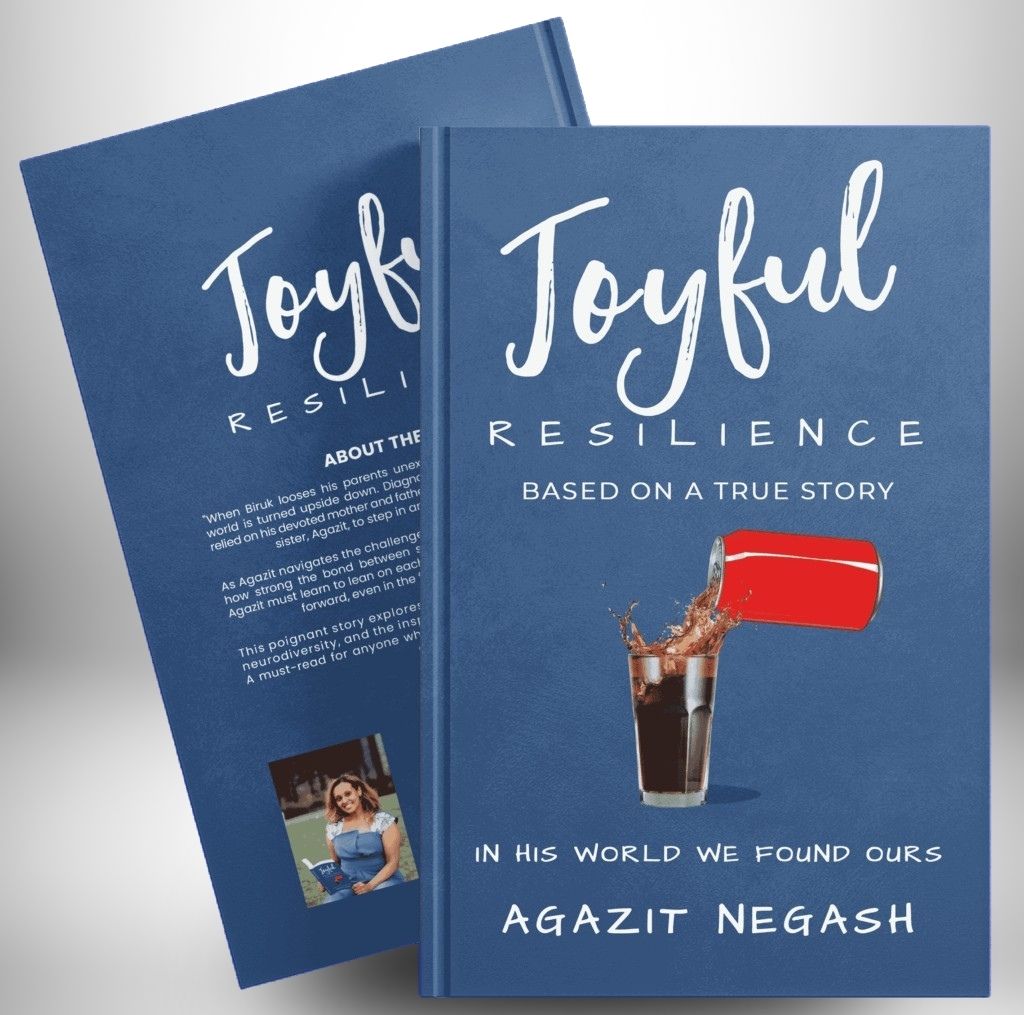
Photo Courtesy: Agazit Negash
By the final chapter, readers walk away not only moved by the story but also inspired by its core message: resilience is not about avoiding suffering but about choosing to build purpose within it. And sometimes, as Agazit shows, the most powerful advocacy begins with the simplest act: loving someone enough to fight for their place in the world.