

By: Paul White
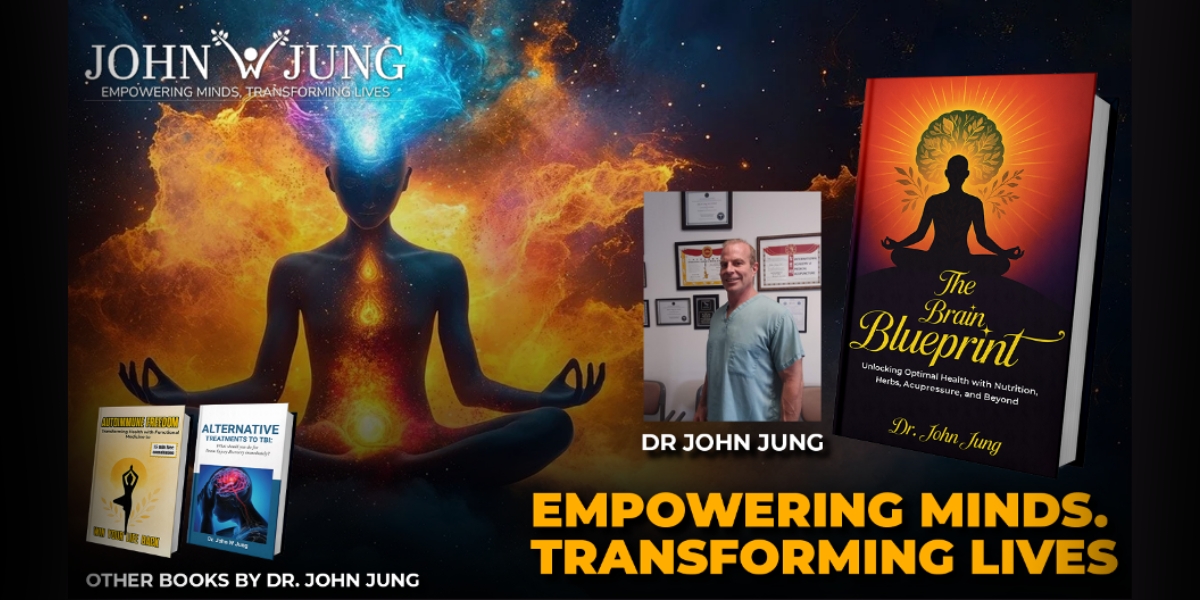
Dr. John Jung is not your typical author. He doesn’t posture as a guru, doesn’t romanticize his past, and doesn’t believe readers need another feel-good story about recovery. What he believes people actually need urgently are answers. In a world where nearly everyone feels mentally overloaded, stressed, or numb, Jung’s new book, The Brain Blueprint: Unlocking Optimal Health with Nutrition, Herbs, Acupuncture, and Beyond, sets out to do one thing: provide practical, proven tools to restore clarity, focus, and calm.
“We’re all brain-fatigued,” Jung says plainly. “Our systems are overwhelmed. People don’t need another theory about why they need to know what to do about it.”
That mindset defines The Brain Blueprint. It’s not a memoir, manifesto, or collection of academic essays. It’s a hands-on manual that delivers clear steps for dealing with the most common mental health stressors: sleep disruption, anxiety, burnout, depression, poor concentration, and emotional instability. Each chapter focuses on what works, drawn from a blend of modern research and timeless wisdom: nutrition, herbs, acupuncture points, nootropics, lifestyle interventions, and daily habits that help the brain heal and perform better.
Jung’s previous works focused on concussion recovery and autoimmune healing, but this third book casts a much wider net. “This one’s for everyone,” he explains. “Because everyone’s brain is under stress whether from screens, poor diet, lack of rest, or constant emotional pressure.”
His goal was to write something that skips the preamble and gets right to the protocols. “People are tired of reading about problems,” Jung says. “They want solutions. This book exists so they can stop Googling symptoms and start fixing them.”
The Brain Blueprint opens with a stark diagnosis of the modern mind: overstimulated, undernourished, and medicated into submission. Jung doesn’t mince words about the failures he sees in conventional mental health care, an industry, he argues, that has become more about maintenance than healing.
He cites statistics showing that over 50% of people on antidepressants report little to no lasting benefit, while many suffer debilitating side effects. “We have this cultural myth that depression equals a Prozac deficiency,” he says. “That’s not science. That’s marketing.”
But Jung isn’t anti-medicine. Instead, he’s pro-accountability and pro-results. “There’s a time and place for pharmaceuticals,” he clarifies. “But we’re using them as the first and often only response. That’s not a treatment. That’s dependency.”
What sets The Brain Blueprint apart is its relentless practicality. Jung organizes each section around direct, usable actions: no fluff, no jargon, no endless theorizing. Readers get checklists, self-assessment tools, and daily micro-habits that yield measurable improvements.
For example:
- For anxiety and overwhelm: He teaches a simple acupressure sequence that can lower cortisol in minutes, paired with magnesium and breathing techniques that balance the nervous system.
- For poor sleep: He suggests swapping out nightly melatonin for magnesium glycinate, setting light cues, and resetting the body’s clock through nutrition and movement.
- For burnout and fatigue: He introduces structured “micro-recovery” breaks two to three minutes of breathwork or light stretching every 90 minutes to rewire energy and focus.
- For brain fog and attention lapses: He recommends hydration-first mornings, probiotic-rich foods to strengthen the gut-brain connection, and targeted nootropics to boost neurotransmitter balance.
Each protocol is short, science-backed, and easy to apply, designed for people who don’t have the luxury of reading dense medical studies or attending week-long retreats.
Beyond individual tactics, Jung delivers a sharp critique of what he calls the “disease care” model. “We diagnose before we test, and prescribe before we understand,” he says. “It’s backward. We need to get curious about root causes again: nutrient deficiencies, inflammation, sleep deprivation, and chronic stress. These are things we can actually fix.”
His skepticism is balanced with compassion. Having seen patients and families struggle with conditions that were quickly labeled but never fully treated, he wanted to give them tools to take back control. “Knowledge is medicine,” he insists. “When people understand how their brain works, they stop feeling broken and start feeling empowered.”
The book doesn’t shy away from hard questions either: Why are psychiatric drugs being prescribed to infants? Why is nutrition still ignored in mental health? Why are we overrun with data yet starving for wisdom?
These aren’t rhetorical flourishes; they’re challenges to a system Jung believes needs reform from the ground up.
While the message is serious, Jung’s delivery is refreshingly clear and even hopeful. His voice throughout the book is equal parts clinician, teacher, and friend. He simplifies neurobiology and supplements with the same ease he uses to describe acupressure points, making advanced concepts feel intuitive. That accessibility is no accident. “I had my wife and mother read early drafts,” Jung laughs. “If they didn’t understand something right away, I rewrote it. The goal was to make it instantly usable.”
Readers seem to agree. Early feedback has called The Brain Blueprint “the first mental health book that actually tells me what to do,” and “a manual for the everyday brain.”
At its core, The Brain Blueprint is a movement away from passive health consumption toward active self-repair. It’s an invitation to treat the brain not as a mystery organ but as a system that can be nourished, supported, and retrained.
“Neuroplasticity isn’t just a buzzword,” Jung says. “It’s proof that your brain is always capable of change. The problem is, no one’s giving people the manual for how to direct that change. This book is that manual.”
The message resonates because it feels urgent and attainable at once: anyone, regardless of age or background, can take small, daily actions that add up to massive transformation over time. “If you get 1% better every day,” Jung reminds readers, “you’re 365% better by year’s end.”
Dr. John Jung doesn’t promise magic pills or overnight cures. What he promises and delivers is a roadmap. The Brain Blueprint is for anyone who’s tired of feeling foggy, anxious, wired, or worn out, and ready to take their brain health back into their own hands. He plans to update the book annually as new research emerges, ensuring it remains a living resource. “Health doesn’t come from insurance,” Jung says. “It comes from knowledge and the will to act on it.”
In a time when burnout and brain fatigue have become universal, The Brain Blueprint stands out as more than a book; it’s a lifeline for the modern mind.
Disclaimer: The information provided in this article is intended for general informational purposes only and does not constitute medical advice. It is recommended to consult with a qualified healthcare professional before making any changes to your health routine or treatment plan.