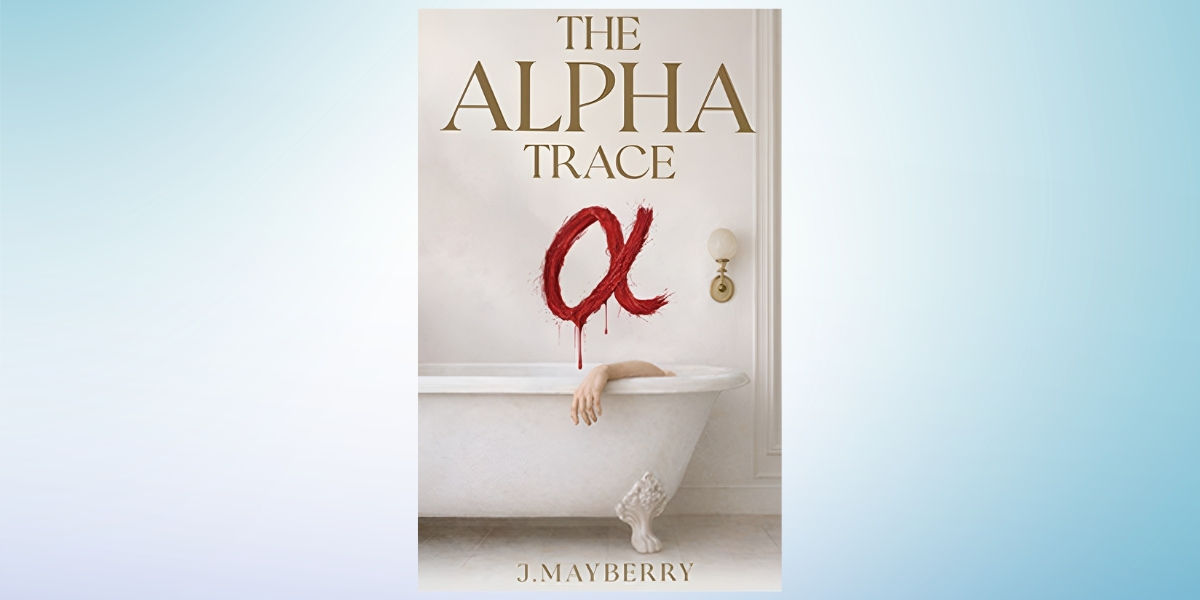


The Dark Legacy at the Heart of This Psychological Thriller
Crime fiction often asks who committed the act. Psychological thrillers go further and ask why. This novel moves beyond both questions and ventures into more unsettling territory: whether violence can echo across generations, not through fate, but through influence.
At its core, this story explores the idea that darkness does not always arrive suddenly. Sometimes it is learned. Sometimes it is absorbed. And sometimes it is inherited in ways no one fully recognizes until it is too late.
When the Past Refuses to Stay Buried
Decades ago, a small town was shaken by a series of murders marked by a single, unforgettable symbol. The case went cold. The fear faded into memory. Life moved forward. Then the symbol returns. Not loudly. Not theatrically. But with deliberate precision.
The reappearance of this pattern does more than reignite an investigation. It forces the town, and one particular family, to confront the possibility that the past was never truly resolved. The novel builds tension not through spectacle, but through the quiet realization that unfinished history has a way of resurfacing.
The Return of a Pattern
What makes the symbol’s return so unsettling is not just its presence, but its timing. It appears with intention. It suggests continuity. It implies that what once seemed random may never have been random at all.
The novel carefully positions this recurrence as more than coincidence. It becomes a thread that pulls at buried memory, forcing characters and readers, to question how much of history was ever truly understood.
A Family Shaped by Ideas
At the center of the narrative lies a family whose intellectual brilliance casts a long shadow. A father devoted to studying systems and patterns. A daughter driven by the pursuit of truth. A son navigating loyalty, doubt, and memory. What makes this story compelling is not simply what these characters do, but what they believe.
Children grow up inside philosophies long before they question them. They absorb language, tone, and frameworks for understanding the world. When those frameworks are rooted in control, correction, or moral superiority, the long-term consequences can be profound.
Influence Without Instruction
The novel examines how influence operates quietly. It does not always announce itself as direct teaching. Often, it feels like common sense. It feels logical. It feels justified.
That subtle shaping of thought becomes one of the most powerful forces in the narrative. Because when belief systems are inherited without scrutiny, they can become indistinguishable from identity itself.
The Seduction of Order in a Chaotic World
One of the most striking elements of this thriller is its exploration of order versus chaos. Rather than treating violence as random, the story introduces the unsettling notion that chaos can be studied, measured, and perhaps even corrected.
The intellectual undercurrent woven into the narrative adds a chilling dimension. When brutality is justified through theory, it becomes more than impulse, it becomes ideology.
When Theory Becomes Justification
This is where the tension deepens. The story invites readers to consider how easily the language of balance and correction can shift into justification. When someone believes they are restoring order, the line between necessity and destruction begins to blur.
The result is a thriller that does not rely on spectacle, but on unsettling plausibility.
Investigation as Personal Reckoning
The investigative thread drives momentum, but the emotional weight lies elsewhere. As questions surface, they do not remain abstract. They turn inward. What begins as a search for truth about a town’s violent history gradually becomes a confrontation with family legacy. Every discovery carries personal consequences. Every revelation forces characters to reassess what they thought they understood about themselves.
The suspense builds carefully. Rather than relying on constant twists, the novel constructs a slow, controlled escalation. The pattern beneath the story reveals itself piece by piece, encouraging readers to look back at earlier moments with new understanding.
Grief, Silence, and Moral Ambiguity
Beyond the mystery, the novel examines grief in all its forms, grief for lost lives, for fractured relationships, and for the collapse of certainty. When long-held beliefs begin to unravel, the emotional fallout can be as devastating as any crime.
Silence also plays a critical role. The story suggests that what families choose not to discuss can shape them just as powerfully as what they do. Avoidance becomes a form of inheritance. And unexamined truths gain power over time.
Rather than offering simple moral divisions, the book leans into ambiguity. It challenges readers to consider where responsibility truly lies. With the individual who acts? With the ideology that influenced them? With the environment that allowed doubt to grow unchecked?
The answers are never simplistic, and that is precisely the point.
A Thriller That Lingers
What elevates this novel beyond genre convention is its restraint and psychological depth. The narrative does not rush to shock. Instead, it builds an atmosphere of unease that intensifies with each chapter.
By the time the story reaches its climax, readers will realize they have been watching a carefully constructed pattern all along. Every piece matters. Every belief has consequence. The final impression is not simply of a mystery resolved, but of a question left resonating long after the last page.
If influence can be inherited, how far does its reach extend?
If chaos can be measured, who decides when it must be corrected?
And if truth demands a cost, who is willing to pay it? This novel does not merely entertain. It unsettles. It challenges. And it invites readers into a psychological landscape where legacy, ideology, and identity collide in ways that feel disturbingly plausible.