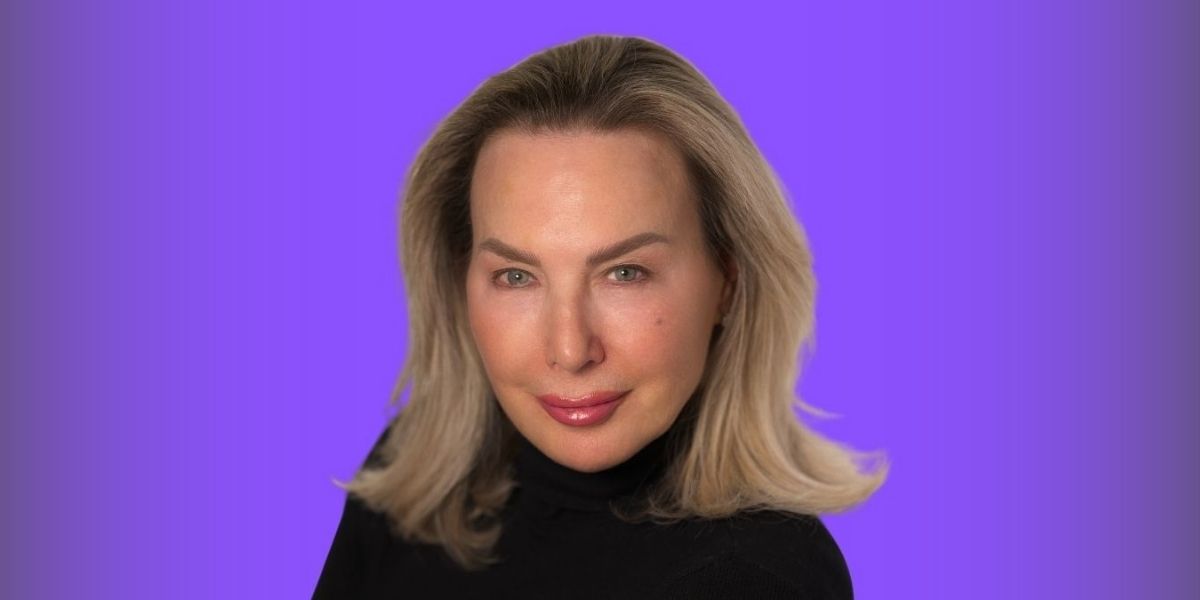


By Alena Wiese
New York City has never been short on motion.
People move fast here, across sidewalks, across careers, across relationships. The city rewards momentum, ambition, and the ability to keep going even when balance feels optional. But beneath the pace, there’s another reality many New Yorkers quietly share: connection can feel fragile in a place built on constant movement.
That tension, between motion and balance, independence and intimacy, is exactly where Bonnie Diaz has spent her life working.
Diaz, a world-class ballroom champion, master educator, and longtime New York City resident, doesn’t approach connection as an abstract idea. She approaches it as something physical. Observable. Felt.
In a city that prides itself on intellect and drive, Diaz teaches a quieter skill: how to stay present with another person without losing yourself.
Learning Balance Where It Can’t Be Faked
Ballroom dance is an unlikely place to find a philosophy of modern relationships. Yet for Diaz, it became the most honest classroom imaginable.
“In dance, you can’t talk your way out of imbalance,” she says. “Your body tells the truth immediately.”
Years ago, as Diaz trained and competed at elite levels, she noticed a pattern. The partnerships that worked weren’t defined by dominance or submission, strength or softness. They worked because both partners stayed aware, of themselves and of each other, at the same time.
Dancers call this shared axis: a center of balance that doesn’t belong to either person, but exists between them. Lose awareness of it, and the movement breaks. Try to control it, and the connection stiffens.
Living in New York, Diaz began to see the same thing everywhere, on crowded trains, in rehearsal studios, in professional collaborations, and in personal relationships strained by ambition and exhaustion.
“This city teaches people how to stand on their own,” she says. “But it doesn’t always teach people how to stand together.”
Partnership Without Performance
Much of modern relationship culture, especially in cities like New York, revolves around performance. Being interesting. Being impressive. Being self-sufficient. Being unbothered.
Diaz’s work quietly dismantles that framework.
She doesn’t teach people how to attract, persuade, or manage connection. She teaches them how to notice it.
“Most disconnection happens long before words,” she explains. “You can feel it in posture, in breath, in how close or far someone stands.”
In dance, that awareness is trained daily. In life, it’s often ignored.
Over time, Diaz began formalizing what she was seeing, not as advice, but as a structure for understanding partnership. That structure became her 4D Partnership System, which looks at connection through four overlapping dimensions: physical, social, emotional, and spiritual.
Unlike many relationship models that live entirely in language, Diaz’s begins with the body.
The Body as the First Conversation
New Yorkers are good at talking. Less practiced at listening to what isn’t said.
“The body reacts before the mind decides,” Diaz says. “Tension shows up before resentment. Withdrawal shows up before silence.”
Physical consciousness, how someone holds themselves, how they breathe, how they orient toward another person, is often the earliest indicator of imbalance. Yet in a culture that values productivity and intellect, these signals are easy to dismiss.
Diaz doesn’t see them as problems to fix. She sees them as information.
“Awareness isn’t judgment,” she says. “It’s orientation.”
That distinction matters. Especially for women.
A Language Many Women Already Speak
In New York, women often carry invisible roles, emotional coordination, relational smoothing, adaptability. Diaz is careful not to frame this as weakness. Instead, she sees it as sensitivity that’s been misdirected.
“Many women already feel the axis,” she says. “They just end up holding it alone.”
Her work doesn’t encourage women to give more or try harder. It invites them to notice where balance has become one-sided, and to step back into shared responsibility.
That idea has resonated strongly in recent years, particularly as burnout becomes less taboo and conversations about emotional labor grow more honest.
Diaz’s message isn’t about leaving relationships or fixing partners. It’s about restoring alignment, internally first.
From New York Studios to the Written Page
These ideas come together in Diaz’s book, The 4th-Dimension Partnership™, A New Solution for a World Out of Balance: How Higher Awareness & Perspective Enhances Kindness for Your Dance of Life, released January 19, 2026.
While the book has earned recognition within the ballroom world, ranking among the Top 50 Ballroom Dance titles, it reads less like a dance manual and more like a meditation on modern connection.
Diaz writes the way she teaches: observant, grounded, and precise without being rigid. She doesn’t prescribe how relationships should look. She asks readers to notice how they feel, in conversations, in conflict, in proximity.
In a city like New York, where people often live in close quarters but feel emotionally distant, that invitation feels timely.
A City That Teaches Independence, And Needs Balance
New York has always been a city of individuals. Artists. Entrepreneurs. Thinkers. Survivors.
But independence, Diaz notes, isn’t the same as isolation, and strength doesn’t have to mean separation.
“Shared axis doesn’t erase individuality,” she says. “It makes individuality sustainable.”
That idea echoes beyond romantic relationships. It applies to creative partnerships, professional collaborations, even civic life. When people remain present with themselves and others, systems function with less friction.
When they don’t, imbalance spreads quietly.
Why Her Work Feels So New, and So Old
There’s nothing trendy about Diaz’s work. And that may be why it feels refreshing.
She doesn’t promise transformation in ten steps. She doesn’t speak in slogans. She asks people to slow down just enough to feel what’s already happening.
In a city that never stops moving, that pause can feel radical.
“Balance isn’t static,” Diaz says. “It’s something you keep returning to.”
New York understands return. Return to work. Return to ambition. Return to reinvention.
Diaz offers a different return, to presence.
And in a place built on motion, that may be the most necessary movement of all.
Staying Connected Beyond the Studio
For those looking to engage more directly with Bonnie Diaz’s work, she remains accessible beyond the dance floor. Whether through workshops, speaking engagements, or personal inquiries, Diaz continues to open conversations around balance and connection in both movement and everyday life. She can be reached at BonnieDiazDance@gmail.com, where individuals and organizations alike connect with her ongoing work in partnership awareness.