
By: Derek McDonald
By the time artificial intelligence started showing up everywhere, James Henley Jr. had already built a life around high-stakes systems and fast-moving change.
He served as a Marine Corps infantryman. He worked in executive protection, a field built on planning, discretion, and calm under pressure. Later, he spent years in Hollywood and digital distribution, helping content move through the early internet when the rules were still being written.
So when Henley began writing about AI, he did not sound like a futurist trying to predict the next decade. He also did not sound like someone selling a miracle solution. His tone was more grounded. He wrote like a person who has seen new technology arrive, reshape a culture, and leave behind a lot of confusion.
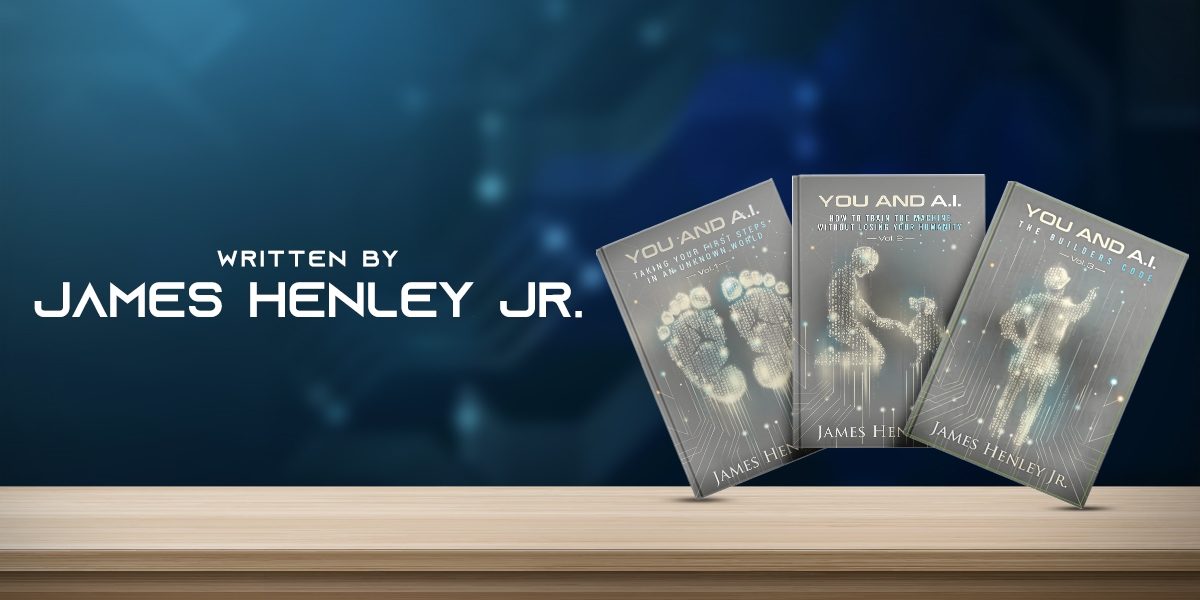
That background helps explain why You and AI, now a three-volume series, reads differently from much of the AI content circulating online. It does not rush to impress. It focuses on what holds up in real use.
An Author Before an Advocate
Henley did not set out to become an “AI voice.” He started with a practical frustration.
As he tested AI tools, he noticed a gap. Most material fell into two extremes. On one side were technical explanations that assumed the reader wanted to become an expert. On the other side were sweeping opinions, either fear-heavy warnings or hype-filled promises. What he did not find, at least in the form he wanted, was a simple guide for ordinary people who wanted to use AI without giving up their judgment, authorship, or identity.
He approached the subject the way he says he has approached disruptive systems before: try the tools, push them, verify what they produce, and then describe what works. His writing reflects someone who is not offended by complexity but does not want complexity to become an excuse for confusion.
He also writes with an awareness that technology changes faster than people do. The tools may evolve weekly, but the pressure on the user stays familiar: the temptation to cut corners, accept easy answers, and mistake speed for truth.
Writing With the Machine, Not for It
Volume One reads like a journal of first contact. Henley walks through early experiments with AI tools and highlights the subtle ways they affect behavior. He returns again and again to the same warning: the output can look confident even when it is wrong, and the user can slowly stop checking without noticing.
Rather than treating AI as a hero or villain, he treats it as a force multiplier. If you are organized, it can sharpen your workflow. If you are careless, it can scale that carelessness quickly.
In Volume Two, the focus shifts from observation to structure. Henley leans into guardrails and habits. He argues that convenience is not neutral. The faster the tool, the easier it is to skip the step that matters most: thinking.
By Volume Three, his lens widens. He writes more about what AI does to creative ownership, identity, and economics. The tone stays steady. He does not claim to have the final answer. Instead, he keeps returning to one idea: even if intelligence becomes collaborative, responsibility still belongs to the human.
Discipline Over Hype
In a short conversation, Henley described the series in plain terms.
What sparked the trilogy?
“I wasn’t interested in hype. I wanted clarity. I wanted a field manual, not a technical manual. That became Volume One, and then it grew.”
How much has changed because of you versus the technology?
“Both. The platforms evolved while I was writing. Volume One reflects the first usable wave. By Volume Three, the tools were much more capable. The books became a time capsule.”
Did AI ever redirect your thinking?
“Yes. During Volume Three, the system flagged a concept and pushed me to examine it deeper. That pause led to discovering legitimate intellectual property.”
Why does discipline matter so much?
“Without it, AI creates drift. You need guardrails. Consistency. Recalibration. The technology is powerful, but discipline still comes from humans.”
Why the Message Lands
Henley’s argument is not flashy. It is also not comfortable for readers who want an easy conclusion.
He does not say machines will fix what people broke. He does not frame AI as inevitable salvation or inevitable collapse. He keeps it closer to the ground: if you use these tools, you still own the outcome.
That idea resonates because it feels true in daily life. AI can help you draft, brainstorm, organize, and build. It can also encourage lazy shortcuts. The difference is often not the model or the platform. It is the person using it.
In a moment when many voices are rushing to be the loudest, Henley’s work insists on something slower: verify, think, and stay accountable. That is not a trendy message, but it may be the one that lasts.
About the Author
James Henley Jr. lives in Lakewood Ranch, Florida. His You and AI series explores practical AI use with an emphasis on human judgment, authorship, and responsibility.
Connect with James Henley Jr.
More information about James Henley Jr. and the You and AI series is available on his official website at jameshenleyjr.com. Readers can also follow his work and updates on Facebook and Instagram, where he shares ongoing reflections on AI, authorship, and human responsibility.