

By: Media at Game Changer Publishing
From Shadow to Strength: Gentle Questions that Change Everything
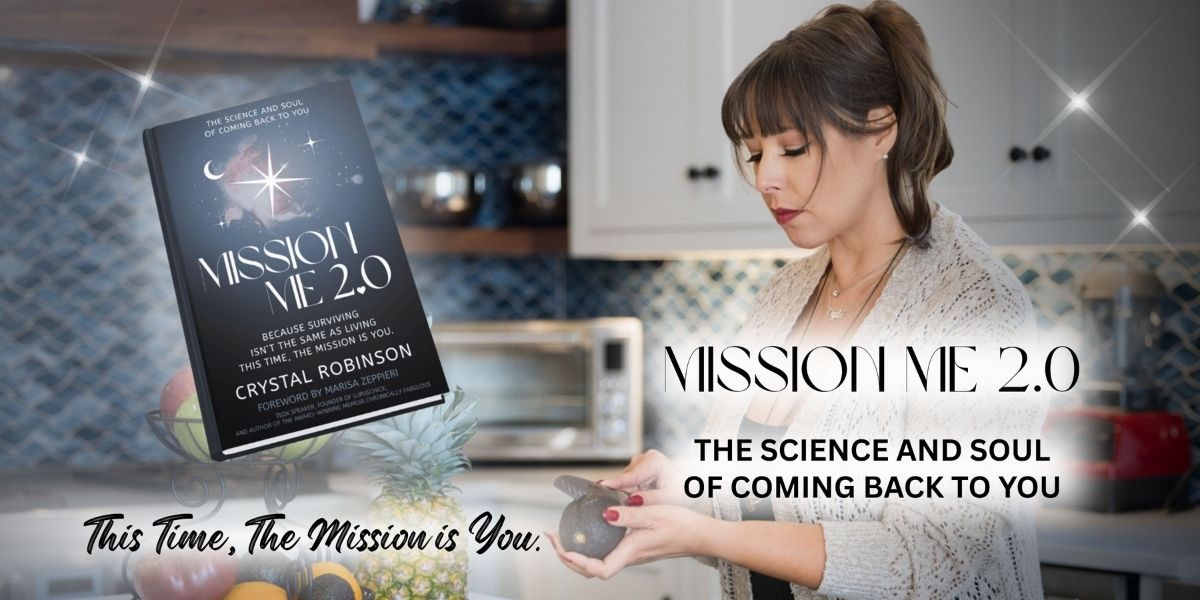
Crystal Robinson’s work sits at the intersection of systems thinking and nervous system regulation. With decades of engineering leadership experience and the release of her nationally positioned book Mission Me 2.0: The Science and Soul of Coming Back to You, Robinson has emerged as a clear authority on how chronic stress shapes behavior, decision-making, and leadership capacity. Her approach challenges a familiar professional reflex: the belief that clarity and performance come from effort alone.
Through Crystal Moon Holistic Healing and Mission Me 2.0, Robinson addresses a quieter crisis affecting high-achieving professionals. Outward success often masks an internal erosion of calm, focus, and physical resilience. Her work reframes healing not as self-improvement, but as nervous system retraining that restores access to clear judgment and sustainable authority. As she writes in her book, “Coming back to yourself isn’t a task to complete. It’s a rhythm to remember.”
From Pressure to Presence
Robinson’s engineering background fundamentally informs how she approaches stress and recovery. Trained to analyze complex systems under load, she applies the same discipline to the human body. In her framework, stress is not a personal failure or mindset issue. It is a predictable response of the system that requires regulation before optimization.
A stress-related illness forced Robinson to confront a core limitation of logic-driven leadership. The body does not respond to reasoning alone. As she states in Mission Me 2.0, “You can’t outthink your body. You can’t spiritually bypass your pain.” That realization shifted her work away from purely cognitive strategies and toward embodied practices that stabilize physiology first. This systems-level integration distinguishes her work from conventional wellness or mindset coaching by grounding change in repeatable, measurable responses.
Gentle Questions, Real Answers
At the center of Mission Me 2.0 is a disciplined practice of inquiry designed to interrupt stress-driven behavior. Robinson teaches readers to ask precise, compassionate questions that elicit information rather than escalate internal pressure. “It’s not about fixing what’s broken. It’s about softening what’s been hardened. Making space for what’s true. Asking better questions, not chasing better answers,” she explains.
In application, this may look like a leader pausing before responding to a high-stakes email. Rather than reacting with shallow breathing or a tightened posture, they regulate their breathing, notice physical tension, and allow the nervous system to settle. Only then do they respond. That brief pause often results in clearer communication, steadier authority, and more effective outcomes. These moments demonstrate how regulation directly shapes leadership decisions in real time.
A Cycle, Not a Checklist
Robinson consistently challenges the idea of healing as a finish line. “There is no ‘finish line’ here. No test at the end. No final breakthrough moment that promises a forever fix. Healing isn’t a checklist. It’s a cycle of remembering,” she writes. This framing removes performance pressure and replaces it with a repeatable process of regulation and return.
Throughout the book, Robinson illustrates how noticing a single physical signal can redirect an entire day. A longer exhale before speaking, a grounded pause before a meeting, or a brief check-in to identify one’s need all serve as entry points back into clarity. These practices are not symbolic. They are operational tools that accumulate into resilience and steadier leadership over time.
Returning to Basics
Robinson’s work does not ask professionals to abandon ambition or responsibility. It asks them to lead from a regulated nervous system rather than chronic strain. “This work, this way of living, is not a program to complete. It’s a rhythm you learn to follow,” she writes, emphasizing consistency over intensity.
Her insistence that “We don’t have to earn our peace. We don’t have to prove our worth before we come home to ourselves” speaks directly to leaders conditioned to equate value with output. Mission Me 2.0 reframes effectiveness as a physiological state that supports clearer decisions, stronger boundaries, and sustained presence. For professionals navigating constant demand, Robinson’s work offers not escape, but a practical return to agency.
A Practical Return
For leaders and professionals operating under continuous pressure, Mission Me 2.0 provides a grounded alternative to stress-driven performance. Robinson’s tools are designed for immediate application and long-term stability, enabling clearer judgment in work, relationships, and self-leadership.
The book ultimately reframes wellness as leadership infrastructure. As Robinson writes, “You are not here to perform wellness. You are here to remember who you are.” That recalibration, from reaction to regulation, defines the relevance of her work now and positions Mission Me 2.0 as a practical guide for professionals ready to lead with clarity rather than exhaustion.
Explore More and Connect with Crystal Robinson
🌐 Websites: www.crystalmoonholistichealing.com | www.missionme20.com
📖 Book: Mission Me 2.0: The Science and Soul of Coming Back to You
🔗 LinkedIn: Crystal Robinson
📘 Facebook: Crystal Moon Holistic Healing
Disclaimer: The information in this article is for informational purposes only and is not intended to replace professional medical advice, diagnosis, or treatment. Always seek the advice of your physician or other qualified health provider with any questions you may have regarding a medical condition.