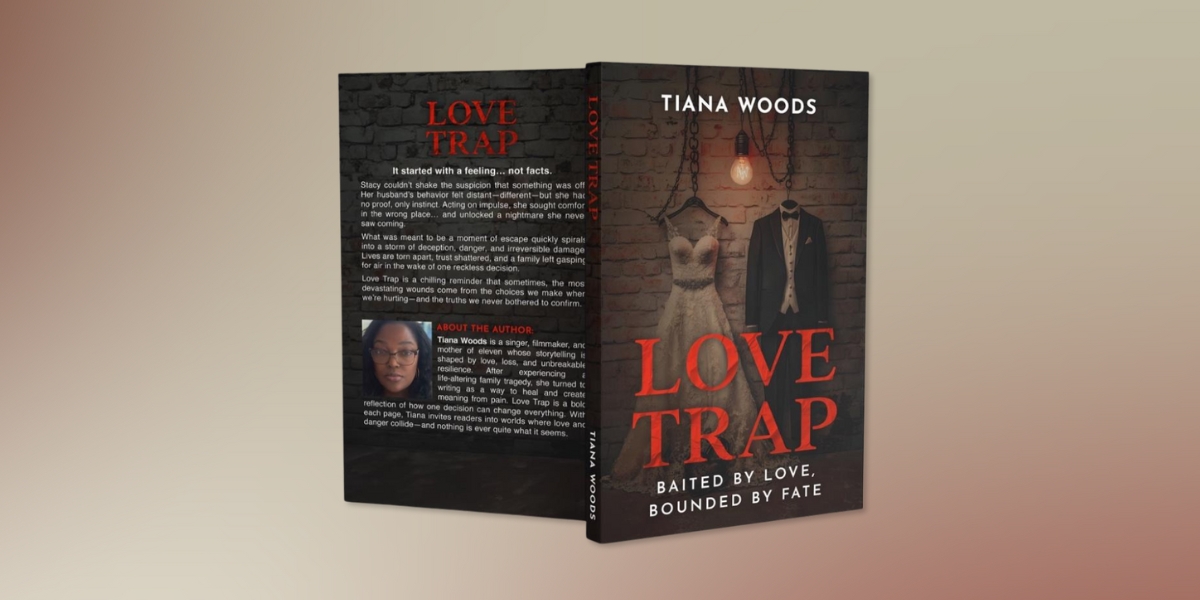


In the world of independent cinema, some “fresh blood” has arrived. On December 5, the premiere of Love Trap, directed by independent filmmaker Tiana Woods, took place in Las Vegas. The film was born out of her personal tragedy: she lost both her daughter and her father during the COVID-19 pandemic, and before that, she spent years experiencing homelessness. The movie explores the essence of love, its complicated forms, and its meaning in our lives. Woods cautions viewers not to expect a Hollywood happy ending because this story is grounded in real life.
From the film’s cast to the personal story of tragedy behind it, we got the full inside story from Tiana.
Q. Tiana, how did the idea for the film come about?
The idea was born several years ago, during COVID, when I lost my oldest daughter and my father. It was a very dark time for me. I fell into a deep depression and was constantly taking sleeping pills because I didn’t want to feel the pain. During that period, I started having dreams about making this film, and that’s where the idea for the script came from. Love Trap became my salvation and a form of healing. It helped me through the darkest period of my life.
I wrote the film script first, but since a movie can’t contain everything I wanted to say, I decided to write a book as well.
Q. What is “Love Trap” about?
Above all, it’s about love and how many people misunderstand its true meaning. I observe relationships between couples, spouses, mothers and daughters, and I see that many people don’t truly understand what love is. I want to show that love has different layers, and that awareness matters in how we love. A lot of people love only the outer shell, and as soon as you stop meeting their expectations, their “love” disappears. Love has to be backed by actions. But we often act under the influence of emotions, make the wrong choices, and sometimes one choice can change a life. Love has many forms, and that’s what I want to portray.
Q. How did you end up working in independent film? Tell us your story.
I was born in Detroit, Michigan. I have 11 children – and I still say “11,” because even though I lost my oldest daughter, she will always be part of our family. Before entering the film industry, I worked remotely in marketing, took care of my kids, and managed my daughter’s career – she’s an actress and singer who often travels for work.
So I was juggling everything at once: her career, the household, and building a business. Later, we moved from Detroit to Florida, and then to the East Coast, because the film industry was stronger there. We’ve now been living in Las Vegas for over a year.
I say all of this simply, but the road was long and hard. In Florida, we were homeless for several years until my husband Alan found a job. Now we’re both directors creating our own films.
Q. Were you homeless?
Yes. We all slept in a Dodge Durango in Florida – me, the kids, and my husband. We’d park overnight in a Walmart parking lot. I’d go inside to wash the kids, brush their teeth, get them ready for school, and drop them off. Then I’d drive my husband to work and spend the day at McDonald’s until his shift ended.
After picking him up, we’d get the kids from school, go to a park, and then return to the parking lot to sleep. I knew something bigger was meant for us. You don’t go through all that suffering unless you’re destined for something greater. And that’s exactly how it turned out.
Q. How did you get through that period?
My husband found a job, and slowly we started to rebuild. For example, the budget for Love Trap was $75,000 – not investor money, but money my husband and I earned ourselves. I worked overtime for a long time just to pursue my dream. We always knew what we wanted to do.
Our first short film, Inertia, was almost autobiographical – my husband wrote the script. It’s about a family that moves and tries to find a home but faces obstacle after obstacle. The film ended up winning several awards.
Q. How long did it take to make “Love Trap”?
Three and a half years. During that time, I faced a lot of challenges, especially finding loyal people. When you’re an independent filmmaker, you meet many who only want money and sell you false promises. I made mistakes, but life teaches you. Despite everything, the film is complete. Now I feel unstoppable. I’m like a phoenix – I have a purpose, and I’m moving toward it. The journey was long, but I had to find the right people.
Q. What do you think people will feel when they leave the theater?
I think many will be speechless. They’ll walk out asking, “What just happened?” I don’t want to spoil anything, but the ending is unconventional – no typical Hollywood happy ending. Like real life. Not every story ends wrapped in a bow. I want people to see themselves in the characters’ situations. I want them to feel the desire to change – to talk with their spouse, friend, or parent. To try to understand rather than argue. Communication and understanding are everything.
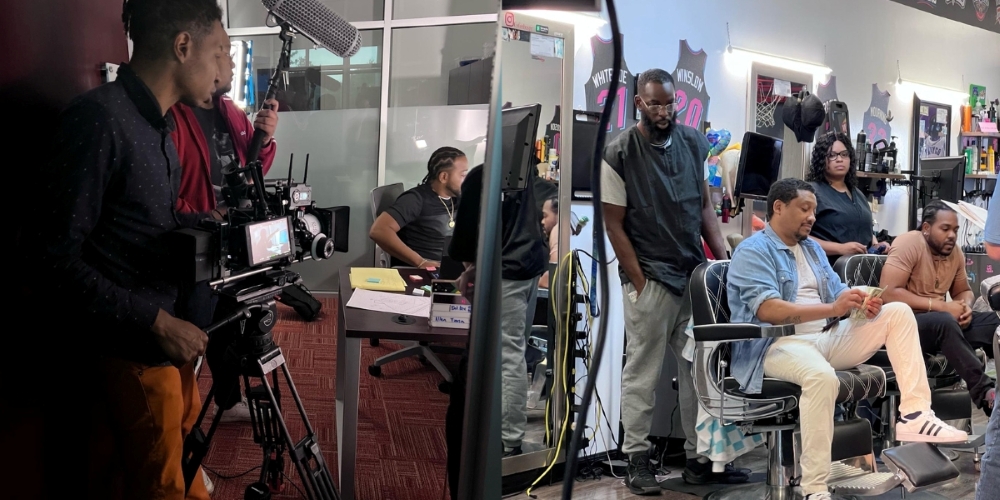
Photo Courtesy: Tiana Woods
Q. Your favorite symbols in the film?
There’s a woman in a wedding dress. She represents a woman who feels trapped in a relationship – stuck, chained, unable to leave. But the truth is, you can leave. You just have to stand up and do it. Many don’t. They stay, endure, and take on more and more until they reach a breaking point.
Q. If you could speak directly to someone who feels trapped in their own pain, what would you say?
It depends on the pain. If it’s a harmful or traumatic marriage, I’d say: “Reach down, pick yourself up, and move on.” No relationship is worth sacrificing your mental health. If it’s depression, I’d say: take your mind off the afflictions that let you down because if you stay in depression and obsess over the problem, you sink deeper and deeper – sometimes to a point that becomes life-threatening. You need to find something to do, take action, not just stay at home thinking about your situation or what is breaking you. If you don’t take steps to heal your pain, it will consume you. That’s what I would say.
Q. Your film features the well-known actor Khalil Kain.
Yes, and I’m deeply grateful to him. When you’re an independent filmmaker, actors of his caliber don’t line up for your projects. I reached out to him on a friend’s recommendation, and he immediately supported me. He didn’t treat me like I was nobody and he was the star. He understood my vision, was engaged, curious, and simply incredible. I made the right choice. People come into your life for a reason – he was meant for this role.
Q. What was it like working with him on set?
It was fun. He was ready from the start – it took just one or two takes, and he never missed a line. Being on set with someone so seasoned in the Hollywood film set environment was inspiring. He was smiling, and his spirit was calm. He brought life and humor to the set, motivating everyone around him. I would jump at the chance to work with him again. He had full creative freedom as Sed, and he brought the character to life perfectly. I didn’t even need to direct him – it felt like he could read my mind. Exactly what I envisioned, he delivered flawlessly.
Q. Who else is part of the film?
The three main characters are Kevin, played by Brian Creary; Jennifer Franklin, who plays his wife; and Khalil Kain as Sed, the best friend. There’s also Meco Hendrickson, who plays the “bad guy.” My children appear in the film; I appear in some crowd scenes; and my husband is also in it. And just weeks before the premiere, I met singer Yalana, whose track became the main soundtrack.
Q. Who is Yalana?
She’s a rising singer who, in many ways, is very similar to me. She creates music from her pain and life experiences and pours her soul into it. We literally bumped into each other at a music industry event and clicked instantly. It felt like fate.
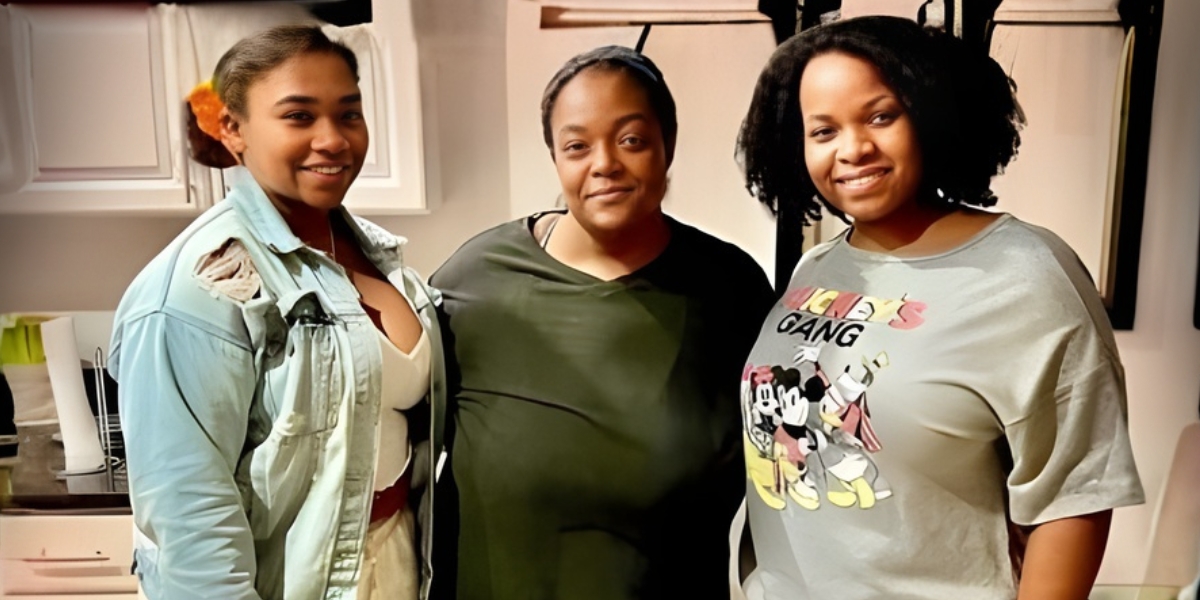
Photo Courtesy: Tiana Woods
Q. If your daughter could see the film today, what would you tell her?
I think she would be so proud of me, and I know she would be smiling from ear to ear – just like I know my dad would be. I really wish my dad and my daughter could be here to see this. Years ago, we went through really hard times – when we were homeless and sleeping in the car in Florida. All she saw back then was our struggle; she didn’t get to see the part where we were moving toward success. I never gave her the chance to see that it could be done. That’s why she appears in the photos at the end of the film – she is definitely my motivation. She would be in the film every step of the way, and she would definitely be right beside me, working on the next one.
Q. What would you like to wish the viewers?
I’d say: watch the film with an open mind, so you can truly catch the messages it carries. Don’t just watch but try to see the meaning behind it. It’s similar to how blind people, with their eyes closed, can still “see,” hear, and feel everything happening around them. I really hope that after watching the film, every viewer walks away with new thoughts and a sense that life and love can be experienced on a much deeper level.