

By: Patricia W. Myers
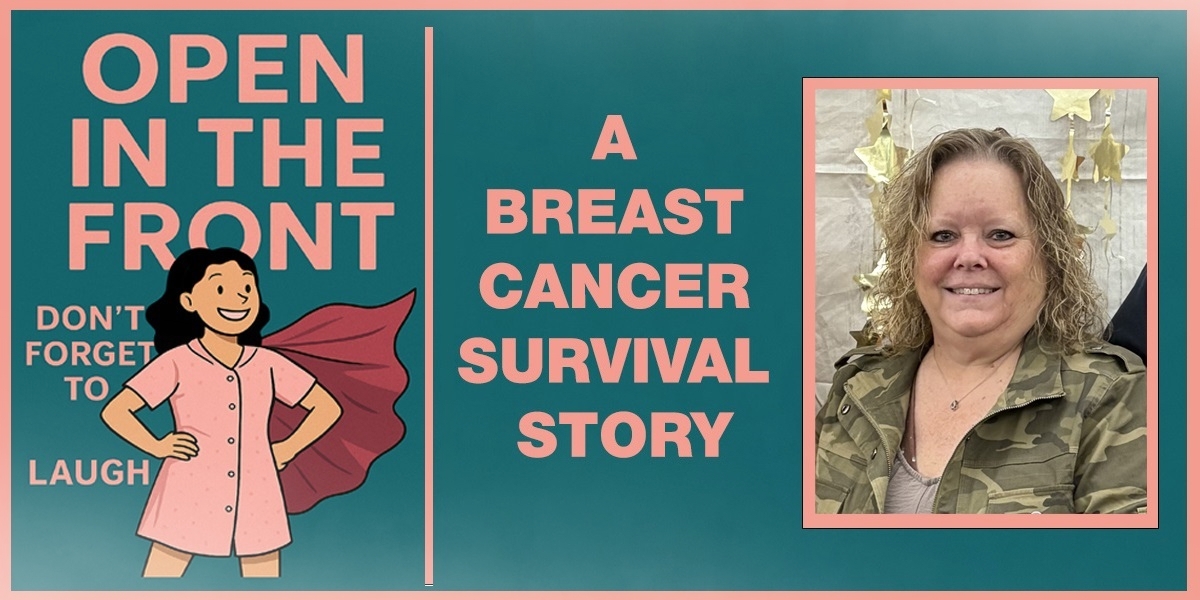
When Aimee Kintzel received her breast cancer diagnosis the day after her 56th birthday, she made an unconventional choice: she decided to laugh.
The healthcare landscape is often dominated by statistics, clinical terminology, and somber conversations. Kintzel’s new memoir, Open in the Front, offers something refreshingly different, a cancer journey told with irreverent humor, unflinching honesty, and the kind of wit that can make you laugh even as you reach for tissues.
“Cancer is a scary word,” Kintzel writes in her prologue. “This book is being written to remind you that even though you have cancer, you can still have fun and laugh.”
The Power of Perspective
What sets this memoir apart isn’t just its humor; it’s Kintzel’s approach to living through a medical crisis that might resonate with many. She treats readers to stories of “boob squoosh boogies” (mammograms), doctors she dubs “Dr. Beauty” and “Dr. Cutie,” and the saga of “Louise and Roxanne”—her names for breasts that developed distinct personalities during treatment.
But beneath the levity lies something profound: a potential blueprint for maintaining dignity, agency, and joy during life’s most challenging moments.
“I truly believe that one’s attitude and outlook can make a significant difference when dealing with life events,” Kintzel explains. Her decision to choose humor wasn’t denial; it was a survival strategy, a deliberate act of reclaiming power when cancer threatened to dominate her narrative.
A Support System Worth Celebrating
While Kintzel is the protagonist of her story, she generously shares the spotlight with an ensemble cast of supporters. Her husband Jim—described as someone who “has radar when it comes to my boobs”—transforms from a tenderhearted man terrified of causing pain into her steadfast caregiver.
Her work family organizes meal trains and throws pink-themed parties. Friends like Angela and Betsy show up, even when showing up means just sitting in the passenger seat for another two-hour drive to yet another appointment.
The book captures something often missing from medical memoirs: the everyday grace of people who simply refuse to let you face darkness alone.
Breaking the Social Media Silence
For Kintzel, every life event becomes instant content. She made a countercultural choice: keep her diagnosis private, sharing only with those closest to her.
“I decided that this was a private matter and that it would not be broadcast all over social media,” she writes. “Stop asking for prayers every time you get a fart stuck!”
Her approach raises important questions about how we navigate illness in the digital age. When does sharing become oversharing? How do we balance community support with personal boundaries? Kintzel’s selective disclosure allowed her to control her narrative and protect her emotional energy during treatment.
The Unglamorous Reality
Open in the Front doesn’t shy away from the uncomfortable truths of breast cancer treatment. Kintzel discusses drain tubes (“the bane of my existence”), tissue expanders that feel like “heavy plastic reusable shopping bags” inside your chest, and the mortification of having your breasts measured by a cute young doctor while your husband watches at “boob level.”
She addresses topics rarely discussed in polite company: intimacy challenges during treatment, the awkwardness of explaining reconstruction to elderly parents, and the strange sensation of having breasts with no feeling in the skin.
Yet she presents these realities without self-pity, instead offering practical insights for others who might face similar journeys.
A Message of Empowerment
Perhaps the most valuable aspect of Kintzel’s story is her emphasis on patient autonomy. When faced with treatment options, she made definitive choices based on her own values and family history, never wavering from her conviction that a bilateral mastectomy was the right path for her.
“I wanted to be the example Erin or anyone else who may have to face this disease needed to help them make this decision,” she writes of her daughter.
Her message is clear: this is YOUR journey. Make no apologies for how you handle it.
Beyond Cancer
Eight months from diagnosis to release, Kintzel’s relatively short cancer journey yielded unexpected gifts. She found time for one-on-one connections, discovered inner strength, and ultimately found herself—the woman she’d lost somewhere in the responsibilities of jobs, parenting, and aging.
“I don’t feel as though I have lost anything,” she reflects. “I feel like I found so much.”
For Readers Everywhere
Open in the Front isn’t just for cancer patients or survivors. It’s for anyone who has faced a medical crisis, supported a loved one through illness, or wondered how they would respond when life delivers devastating news.
It’s for the newly diagnosed who need permission to laugh, the caregivers searching for ways to help, and the healthcare workers who might benefit from seeing their work through a patient’s eyes.
Most importantly, it’s for anyone who needs reminding that even in our darkest moments, we get to choose our attitude, and sometimes, choosing laughter may be the bravest act of all.
Open in the Front by Aimee Kintzel is available now.