

In much of the world, early childhood education is treated as a public expectation. Children enter structured learning environments well before kindergarten, and families plan around systems that are generally consistent and widely accessible. In the United States, the experience is far less predictable. Access to early education often depends on geography, funding priorities, and local leadership rather than a national standard.
That uneven landscape is one of the environments where Diane F. Grannum spent her career, not in theory, but in what is widely considered one of the most complex public school systems in the country.
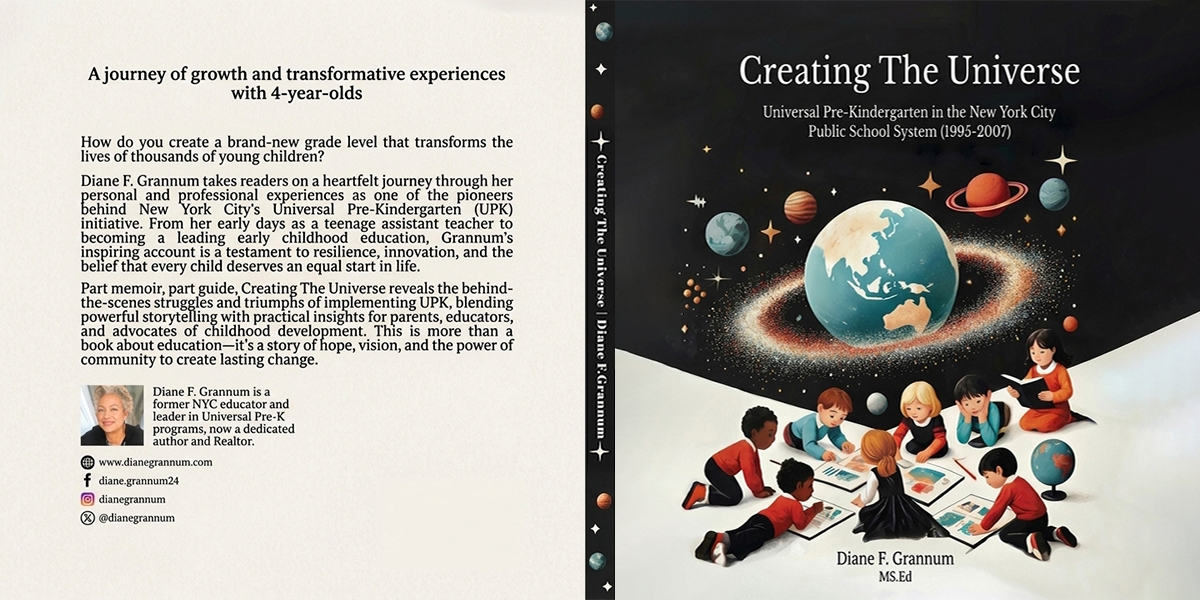
Her book, Creating the Universe: Universal Pre-K in the New York City Public School System (1995–2007), tells the story of how New York City worked toward something many American districts still struggle to achieve: building Universal Pre-K at scale. However, more than a policy narrative, the book offers a ground-level view of what it can take to turn an idea about early learning into a functioning system for large numbers of children.
A Career Built Inside the System
Grannum did not enter education through policy or administration. She began at 16, working as a teacher’s assistant in a New York City summer school program. That early experience gave her a close view of how children learn and how some students may fall behind before formal schooling even begins.
Over the next three decades, she worked her way through multiple roles: family worker, paraprofessional, special education teacher, coordinator, and eventually, administrator. While advancing professionally, she earned degrees in Special Education and Educational Administration, building both classroom and leadership experience.
By the mid-1990s, New York State legislation created an opportunity to expand pre-kindergarten programs. New York City faced a significant challenge: how to implement a large policy initiative within a system already under strain.
Grannum became one of the people responsible for helping translate that expansion into operational programs.
Building Universal Pre-K From the Ground Up
When Universal Pre-K began in New York City, it was not a citywide program. It started with a small number of sites and limited resources. Grannum initially coordinated early programs before being appointed Region 9 Director of Early Childhood Education, where she oversaw more than one hundred Pre-K programs across multiple districts.
Scaling the initiative required addressing practical issues that are not always emphasized in policy discussions:
- Finding classroom space in overcrowded buildings
- Training teachers specifically for four-year-old learners
- Coordinating public schools with community-based organizations
- Developing developmentally appropriate curricula
- Supporting families unfamiliar with the public school system
The expansion took place during a period of major structural change. In 2002, the shift to mayoral control reorganized New York City’s school districts, eliminated positions, and required many administrators to reapply for their roles.
Grannum retained her position, but as she describes in Creating the Universe, maintaining program stability during system-wide disruption became an important challenge for many administrators involved in early education programs.
Early Education as Development, Not Acceleration
One of the defining elements of Grannum’s approach was her focus on child development rather than academic acceleration.
Drawing on developmental theorists such as Abraham Maslow, Jean Piaget, and Erik Erikson, the programs she helped oversee emphasized social-emotional growth alongside early literacy and language development. Classrooms were designed to support routine, interaction, and emotional security, particularly for children who may be entering school with unstable home environments or limited prior learning opportunities.
Long before trauma-informed education became widely discussed, the programs incorporated practices that reflected an early awareness of how stress and instability can influence learning experiences.
For Grannum, the goal of Universal Pre-K was not to push children forward academically, but to help provide a stable foundation that could support later learning experiences.
A Local Solution in a Fragmented National System
While New York City’s program expanded significantly, serving tens of thousands of four-year-olds by 2007, the broader national picture remained uneven.
The United States still does not have a federally mandated Universal Pre-K system. Access varies widely by state and district, with funding structures, program quality, and availability differing across regions.
Grannum’s experience highlights a recurring pattern in American education. Large-scale progress often depends on local leadership rather than national policy. Cities and states build systems independently, and long-term stability often depends on continued political and financial support at the local level.
Creating the Universe does not argue for a specific policy solution. Instead, it presents New York City’s experience as a case study in what large-scale early education may require, including coordination, infrastructure, sustained leadership, and long-term commitment.
The Work Behind the Policy
What makes Grannum’s book distinct is its focus on implementation rather than outcomes alone.
She writes about principals negotiating for classroom space, teachers adapting to new expectations, families learning how to navigate enrollment, and administrators managing program growth during organizational upheaval.
These details shift the conversation from reform as a headline to reform as ongoing operational work within school systems.
Her own career path, from assistant to director, reflects the kind of institutional knowledge built over decades inside a single system. It also illustrates how large public initiatives often rely on experienced educators who understand both classroom realities and administrative demands.
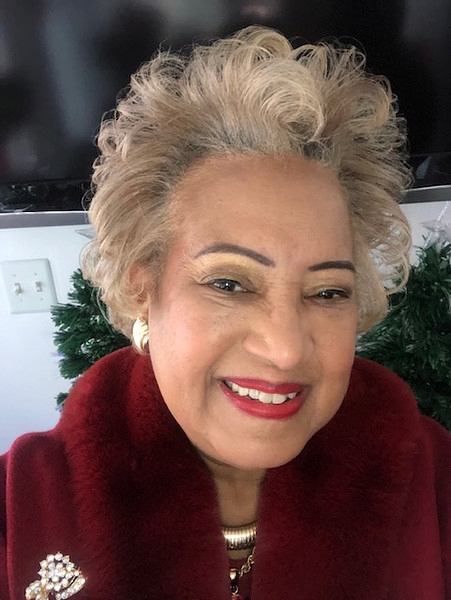
Photo Courtesy: Diane F. Grannum
A Different View of Education Reform
Education debates often focus on legislation, funding levels, or national initiatives. Creating the Universe offers a different perspective: how change can unfold inside schools and districts over time.
The title reflects Grannum’s belief that early childhood programs do more than prepare children for kindergarten. They create environments where learning, stability, and development can begin to take root.
In a country where early education still depends heavily on local capacity, her story also reflects a broader reality about American education.
Systems change when people stay long enough to build them and are able to help sustain them once they exist.
Learn more about Grannum’s work here.