

By: Seraphina Quinn
Introduction
In the quiet corners of a modest farmhouse, a young man, Mr. Allen, was born on March 7, 1947. Raised on a farm, he spent his days milking cows and feeding chickens. But deep within him, a spark of adventure flickered. The fields and barns couldn’t contain his dreams; he yearned for something beyond the horizon.
Mr. Allen’s admiration for his father, a World War Two veteran who survived the brutal battles of the South Pacific, fueled his desire for a different path. His father’s stories, the scent of old uniforms, and the lingering echoes of war shaped Allen’s aspirations. He made a promise to his father: he would never join the infantry. Little did he know that fate had other plans.
From Farm to Battlefield
At the top of the draft list, Allen faced a pivotal decision. His father’s words echoed in his mind: “Never the infantry.” Seeking an alternative, he walked into the county headquarters and met the Navy recruiter. The Navy wasn’t infantry, and so began Allen’s journey.
Basic training in sunny San Diego replaced snowdrifts, and the Navy welcomed him. Assigned to Balboa Hospital, Allen honed his medical skills. But fate intervened once more—orders to Camp Pendleton, the Marine base. Not what he signed up for, but there was a naval hospital there. Allen worked tirelessly, caring for wounded Marines.
Vietnam: A Harrowing Odyssey
Then came Vietnam. A chartered plane carried him across oceans, landing in Da Nang. The heat, the smell of jet fuel, and the reality of war hit him like a shockwave. Assigned to a Marine Corps Company, Allen rode trucks, delivering not only himself but also the wounded. The explosions, the fear—it was all too real.
In Alpha Company, Allen became friends with the Marines he treated. They shared stories of home, love, and loss. But one day, tragedy struck. His good friend stepped on a mine, and Allen could do nothing. The weight of war settled on his shoulders.
Capturing the Cruelty: Bullets and Bandages
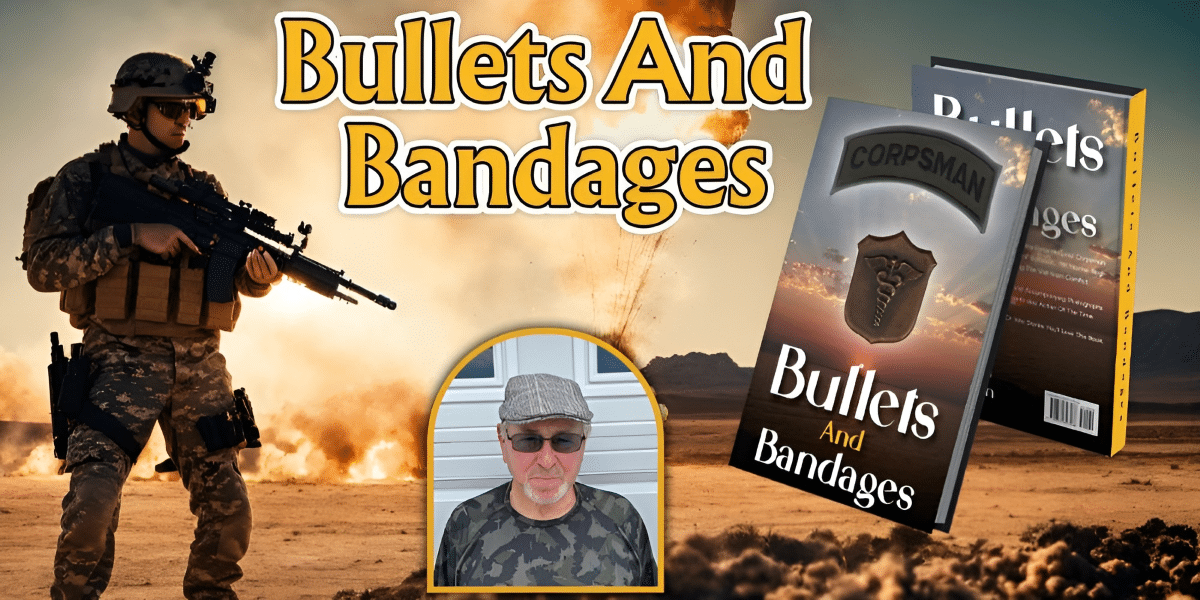
Amidst the chaos, Allen carried a small Kodak camera. He snapped pictures—images that revealed the cruelty and humanity of war. When film was developed, he mailed it home. Those snapshots, preserved in a shoebox, would later become the heart of his book, “Bullets and Bandages.”
A Healing Journey
Allen’s journey didn’t end in Vietnam. Discharged in 1969, he chose a different path. From UPS to respiratory therapy, nursing, and anesthesia, he found purpose. But the scars remained—the sleepless nights, the startle at sudden noises. Fireworks were no celebration; they were a reminder of war.
Legacy and Inspiration
“Bullets and Bandages” isn’t just a memoir; it’s an inspiration. Allen hopes future generations will read it and understand the sacrifices made by those who served. He wants dialogue between veterans and the public to bridge gaps and honor the fallen. As for Allen’s fiction? It waits patiently, a story yet untold.
Conclusion
The journey of Mr. Allen from farm to combat, from recovery to writing, reminds us that strength and bravery can prevail even in the most trying circumstances. “Bullets and Bandages” is more than a book; it’s a testament to the human spirit, etched in ink and memory.
Published by: Holy Minoza