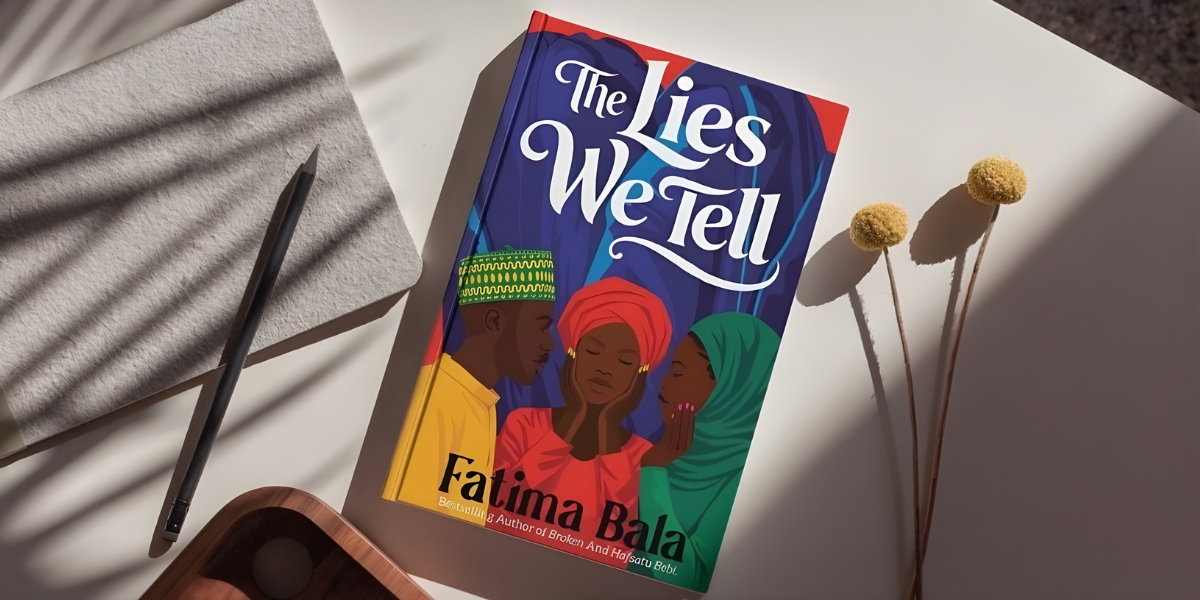


In The Lies We Tell, slated for publication in 2026 by Masobe Books, Fatima Bala returns with a short story collection that is as restrained as it is searing. Set largely in northern Nigerian Muslim communities, the book examines the lives of girls and women negotiating fidelity, marital, familial, and spiritual, under the quiet but relentless pressure of culture. Bala does not write to indict tradition, nor does she romanticize it. Instead, she places her characters in the narrow space between expectation and desire, asking what survives there when silence becomes a form of inheritance.
Readers familiar with Bala’s earlier successes, Broken: Not a Halal Love Story and Hafsatu Bebi, both widely praised for their emotional precision and moral clarity, will recognize her precise control over both intimacy and distance. She has long been adept at telling uncomfortable truths without spectacle, and The Lies We Tell extends that achievement. The collection’s title signals a study in concealment and its costs: what is preserved by silence, and what is quietly destroyed by it. Across these stories, fidelity is not a virtue but a demand, enforced through religion, family, and communal expectation. Allegiances overlap and conflict, leaving little room for individual choice. In one story, a woman realizes that even the most carefully hidden affair eventually comes to reckoning. In another, a daughter recognizes that endurance, so often praised, functions less as strength than as social compliance. Bala writes about non-consensual sexual relationships with a steadiness that refuses voyeurism, highlighting the psychological aftershocks: the confusion, the self-blame, the recalibration of womanhood that follows violation.
What distinguishes The Lies We Tell from many contemporary collections is its refusal to flatten its characters into symbols. Bala’s feminisms are not imported slogans but lived negotiations. Her girls are observant, sometimes complicit, sometimes rebellious, often unsure. Even when a character makes a choice the reader may resist, Bala renders it legible, if not comfortable. Stylistically, the prose is clean and deceptively simple. Bala trusts implication. Culture is not explained for an outsider’s benefit; it is assumed, textured, and allowed to contradict itself. This confidence gives the book its authority. Bala is not translating her world; she is inviting readers to sit inside it and listen.
There is also, unexpectedly, a quiet humor threaded through the collection. It appears in the dry observations of aunties, in the private thoughts of girls who know more than they are supposed to, in the small absurdities of moral policing. These moments do not undercut the seriousness of the themes; they humanize them. Bala does not offer neat resolutions. What she offers instead is recognition, the radical acknowledgment of lives often rendered invisible or misunderstood. The Lies We Tell is culturally specific without being closed.
As summer approaches, this collection feels poised to become that book passed quietly from hand to hand, read in the heat, remembered long after. For readers seeking fiction that is honest, unsettling, and deeply humane, The Lies We Tell is not just recommended, it is necessary.