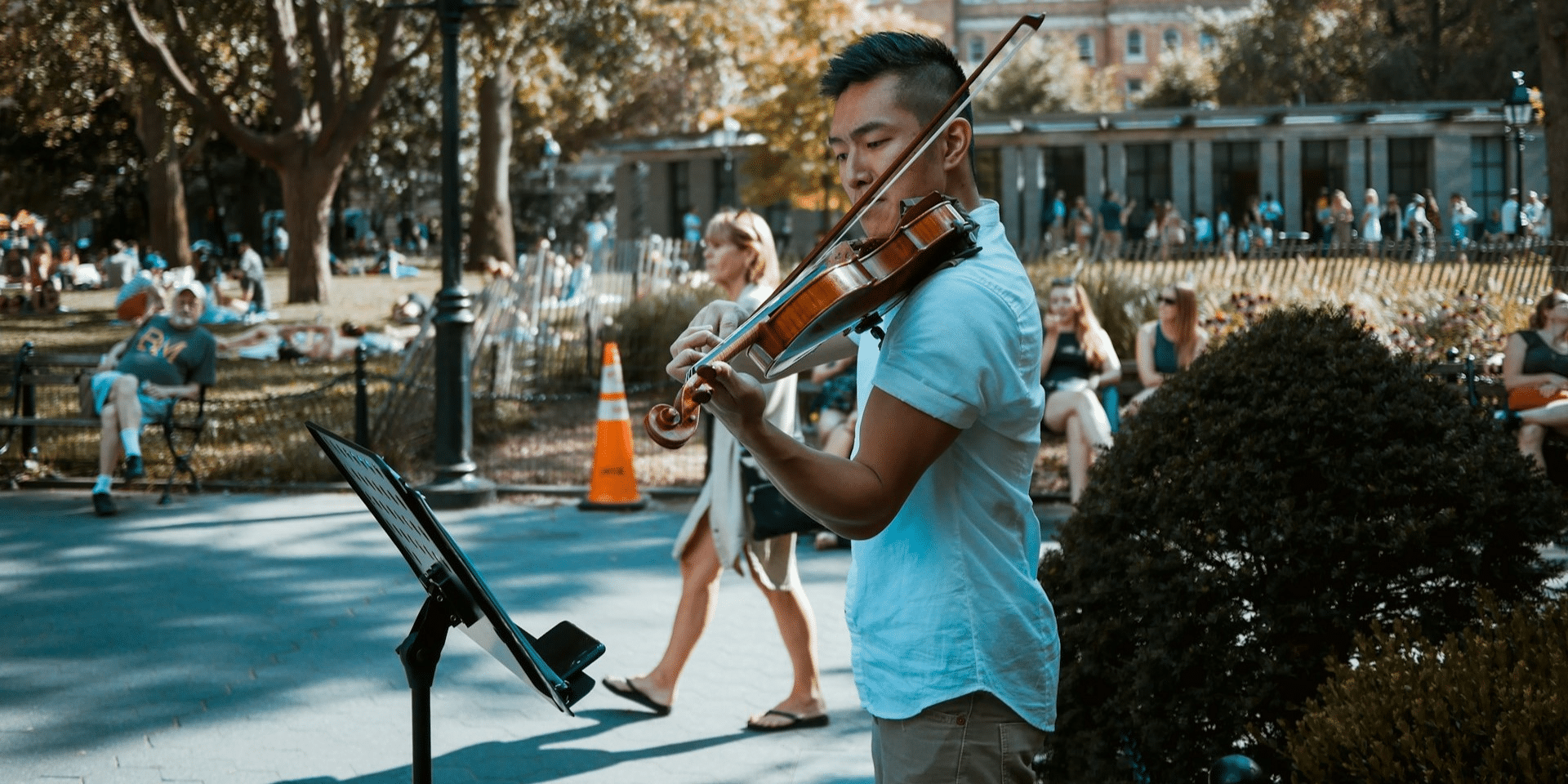
The Resonance of Street Musicians: the Cultural Impact

Within the dynamic tapestry of urban life, street musicians play a distinctive and often underappreciated role. Far beyond being mere purveyors of melodies in bustling streets, these artists contribute significantly to the cultural landscape of cities. This article delves into the cultural impact of street musicians, exploring how their performances transcend mere entertainment, becoming a profound reflection of the societies in which they play.

The Soundtrack of City Life

Street musicians, armed with their instruments and talents, create a live soundtrack that accompanies the daily rhythm of city life. Their music becomes intertwined with the hustle and bustle of crowded streets, echoing off buildings, and resonating with pedestrians. This auditory backdrop not only provides a sensory experience but also contributes to the identity of a place, creating a unique atmosphere that defines the city’s cultural vibrancy.

In the bustling streets of cities like New Orleans, the soulful notes of jazz musicians infuse the air, becoming synonymous with the city’s spirit. In Paris, the accordion’s melodic strains along the Seine River evoke a sense of romance and nostalgia. These diverse musical expressions enhance the cultural character of each city, making the streets come alive with a symphony of sounds.

Bridging Social Gaps

One of the remarkable aspects of street musicians is their ability to bridge social gaps. Regardless of socioeconomic backgrounds, people from all walks of life stop to listen, share a moment, and appreciate the music. In this shared experience, cultural barriers dissolve as individuals connect through a universal language – music. Street musicians, in their impromptu performances, create a sense of community among diverse urban populations, fostering unity through the appreciation of artistic expression.

In cities like London, where the Underground becomes a stage for musicians of various genres, commuters from different walks of life find common ground in the shared enjoyment of music. The democratic nature of street performances offers a space where societal divisions blur, if only for a moment, creating a sense of shared humanity.

Preserving Cultural Heritage

Street musicians often incorporate local and traditional elements into their performances, acting as cultural custodians. Whether playing folk tunes, regional melodies, or culturally significant compositions, these musicians contribute to the preservation of heritage. Their performances become a living archive, passing down cultural nuances to both residents and visitors. In this way, street musicians become inadvertent ambassadors of cultural heritage, ensuring that the echoes of tradition persist in the ever-evolving urban landscape.

In cities like Tokyo, where ancient and modern coexist, street musicians seamlessly blend traditional instruments with contemporary sounds. This fusion not only captivates audiences but also serves as a living testament to the city’s rich cultural history.

Fostering Artistic Expression

The streets serve as an unconventional stage for artists seeking to express themselves beyond the confines of formal venues. Street musicians showcase a diverse range of genres and styles, from classical melodies to experimental compositions. This eclectic mix not only exposes audiences to a variety of musical expressions but also encourages artists to push boundaries and explore new creative territories. The streets thus become a melting pot of artistic experimentation, enriching the cultural fabric of the city.

In cities such as Berlin, known for its avant-garde art scene, street musicians contribute to the city’s reputation for pushing artistic boundaries. From electronic beats to experimental performances, the streets of Berlin become a canvas for musical innovation, reflecting the city’s commitment to artistic freedom.

Contrarian Statement: Navigating Challenges

Despite their positive contributions, street musicians face challenges such as public indifference, regulatory constraints, and economic struggles. In some instances, their presence is met with apathy as people rush by, absorbed in their daily routines. Regulatory hurdles, including permits and noise ordinances, can limit the freedom of these artists. Additionally, many street musicians rely on tips and donations, making financial stability a constant concern. Navigating these challenges requires a delicate balance between artistic freedom and adherence to civic regulations.

In cities like San Francisco, where tech giants dominate the landscape, street musicians face unique challenges amid the bustling tech-driven environment. Striking a balance between preserving the artistic spirit and adhering to the regulatory framework becomes a delicate dance.

Conclusion

In the intricate dance of city life, street musicians emerge as cultural alchemists, transforming ordinary spaces into vibrant hubs of artistic expression. Their impact extends beyond the immediate enjoyment of a passerby, influencing the very essence of the communities they engage with. The soundtrack they provide, the social bridges they build, and the cultural heritage they preserve collectively shape the soul of a city.

As cities evolve, the role of street musicians remains pivotal in preserving tradition, fostering unity, and encouraging artistic innovation. Their melodies weave into the fabric of urban existence, leaving an indelible mark on the cultural narrative of the places they call their stage. In recognizing and celebrating the cultural impact of street musicians, we embrace the richness they bring to our daily lives and the collective identity of our cities. Ultimately, the key to success lies in not just choosing a location but in creating a cafe experience that resonates with the diverse and discerning tastes of New York City.


Why Spiral Galaxies Are Cosmic Rarities

In the vast cosmic expanse, where celestial wonders adorn the canvas of the universe, the enigma of spiral galaxies, reminiscent of our own captivating Milky Way, captivates the curiosity of astronomers. In a recent exploration into the cosmic mysteries, groundbreaking supercomputer simulations have cast a revealing light on the peculiar scarcity of these mesmerizing formations within the sprawling realms of the Supergalactic Plane—a billion light-year-wide supercluster housing an array of galaxy clusters.

The Enigma of Spiral Galaxies in the Supergalactic Plane:

Rare Gems in a Galactic Neighborhood:

As astronomers cast their gaze across the Supergalactic Plane, a cosmic revelation unfolds—a conspicuous scarcity of spiral galaxies juxtaposed against the prevalent backdrop of bright elliptical galaxies. The fundamental question echoes through the cosmic void: What cosmic forces conspire to make galaxies akin to the Milky Way so remarkably rare in this celestial neighborhood?

Decoding Galactic Histories:

The cosmic archives, holding the secrets of galactic evolution, became the focus of astronomers. Turning to the computational prowess of the Simulations Beyond the Local Universe (SIBELIUS) supercomputer simulation, their quest was to rewind the cosmic clock, tracing the intricate journey of these galaxies from the explosive birth of the universe to their present-day cosmic abode.

Insights from Simulations:

Dance of the Galaxies:

The simulated cosmic tableau unveils a turbulent history, where spiral galaxies in the dense clusters of the Supergalactic Plane engage in a celestial dance of frequent and cataclysmic collisions. This intricate choreography results in the metamorphosis of spirals into elliptical galaxies, their delicate arms shattered and smoothed out in the cosmic ballet.

Galactic Bar Brawl:

The Supergalactic Plane, resembling a colossal cosmic battleground, bears witness to the collision-induced metamorphosis of spiral galaxies. The aftermath not only alters their structures but also fuels the voracious appetite of supermassive black holes, amplifying their cosmic influence across the galactic stage.

Survivors Amidst Cosmic Chaos:

Spatial Advantage for Spirals:

Remarkably, in the vast cosmic tapestry, spiral galaxies situated in regions away from the plane emerge as resilient survivors of the cosmic bar brawl. Shielded from the frequent galactic collisions that shape the fate of their counterparts within the tumultuous Supergalactic Plane, they retain their distinctive structures—a testament to their cosmic endurance.

The Unusual Resilience of Our Milky Way:

Amidst the cosmic tumult, our very own Milky Way, nestled within a galaxy cluster on the Supergalactic Plane, defies the odds. The delicate arms of our cosmic neighbor, though subject to the chaotic dance of galactic collisions, manage to evade the worst of the damage, standing as a unique testimony to the evolutionary path of spiral galaxies.

Takeaway:

The revelation of the cosmic ballet that shapes the destiny of galaxies within the Supergalactic Plane provides not only a deeper understanding of the rarity of spiral galaxies but also an invitation to ponder the intricate interplay of cosmic forces on a galactic scale. As humanity continues its cosmic journey, these findings serve as a beacon, illuminating the pathways to unraveling the mysteries woven into the fabric of the universe.

Enhancing Predictive Models for Grassy Ecosystem Health

In a pioneering breakthrough titled “Enhancing Predictive Models for Grassy Ecosystem Health,” recent research from Dr. Kevin Wilcox and his team at UNC Greensboro is shedding new light on the predictive modeling of non-forested ecosystems. This research delves into how global changes, including droughts, fires, and heat waves, will affect the health and sustainability of Earth’s grassy ecosystems. These findings, published in the journal Global Change Biology, mark a significant step forward in improving mathematical models used to forecast changes in savannas, prairies, grasslands, and arctic tundras.

A Glimpse into the Research

“Forest ecosystems tend to get the lion’s share of public attention,” says Wilcox. “But ecosystems dominated by non-tree vegetation, known as ‘grassy’ ecosystems, cover a substantial 40 percent of Earth’s land surface. Our research is vital in catching up scientifically in these landscapes.”

This newfound research offers a fresh perspective, challenging the prevailing focus on forests and highlighting the often-overlooked ‘grassy’ ecosystems. With their vast presence, these ecosystems contribute significantly to our planet’s overall health and well-being.

Focusing on Non-Forested Ecosystems

Globally, grassy ecosystems play a pivotal role by providing essential resources and services to humans. These include food production, support for pollinators, and carbon sequestration. Furthermore, they serve as critical habitat for wildlife, such as elk and bison in North America. By shining a spotlight on these non-forested ecosystems, Wilcox’s research underscores their vital role in maintaining ecological balance and supporting biodiversity.

The Significance of Grassy Ecosystems

However, when it comes to predicting the resilience of these ecosystems in the face of imminent global changes, research in this realm has lagged behind that for forests. Wilcox’s work with Earth system models is narrowing this gap. Scientists employ these models to simulate the impact of physical phenomena, such as droughts and heat waves, on landscapes. These models involve complex mathematical equations that form thousands of lines of computer code, ultimately creating an abstract representation of reality. These models encompass a range of ecological processes, from rainfall infiltration in the soil to insect activity in savannas and the consequences of heat stress on plant and animal life.

Bridging the Predictive Gap

Wilcox emphasizes the dynamic nature of these grassy systems, stressing the need to move beyond assumptions that all components will remain unchanged as droughts and heat waves become more prevalent. The evolving character of these ecosystems presents a fascinating challenge, as they respond and adapt to ever-changing environmental conditions.

Simulating Ecological Impact

A significant challenge lies in how grasses are depicted in these models. Currently, they are often represented as miniature trees or a superficial ‘green slime’ on the planet’s surface. This portrayal might explain the models’ struggles to align with real-world observations in grassy ecosystems. Addressing this challenge requires a nuanced understanding of the complexity and diversity of non-tree vegetation ecosystems.

The Challenge of Representing Grasses

Wilcox calls for enhanced collaboration between empiricists and modelers to improve the representation of herbaceous dynamics within ecosystem models. This collaborative approach seeks to bridge the gap between theory and empirical observations, ensuring that predictive models better reflect the complex reality of grassy ecosystems.

A Call for Collaboration

Implementing these necessary changes is crucial in guiding future public policies and management strategies for these ecosystems. This is especially vital as droughts and deluges become more frequent and extreme, disturbances like fires intensify, and human pressures continue to mount. Wilcox’s research provides an essential foundation for informed decision-making and sustainable management of these ecosystems in a rapidly changing world.

Guiding Future Policy and Management

With this holistic insight into the research, we can appreciate the profound significance of Dr. Wilcox’s work in enhancing predictive models for the health of Earth’s grassy ecosystems. This groundbreaking research sets a robust foundation for a more sustainable future, where the ecological health of these critical landscapes can be preserved and effectively managed.

Exploring the Potential of Skull Marrow in Detecting and Treating Neurological Disorders

Skull marrow – The skull, once considered merely a protective barrier for the brain, has emerged as a fascinating area of research in the field of neurology. Recent discoveries suggest that bone marrow cells within the skull could play a pivotal role in monitoring and potentially treating brain disorders characterized by inflammation. This article delves into the intriguing findings that highlight the significance of the skull’s role in neurological health.

The Hidden Realm of Skull Marrow:

A closer examination of the skull has unveiled a remarkable phenomenon – bone marrow cells residing there undergo transformations and are recruited to the brain following injuries. This migration is believed to occur through minute channels connecting the skull to the brain’s outer protective layer. Furthermore, the inflammation within the skull appears to be specific to certain diseases, adding depth to our understanding. Researchers, in a study published on August 9 in Cell, propose that the skull’s marrow could serve as a potential target for tracking and treating neurological disorders marked by brain inflammation.

Inflammation and its Impact:

In various diseases and instances of neuronal injury, immune cells infiltrating the central nervous system can trigger detrimental effects by releasing harmful molecules into the brain. This influx of immune cells leads to inflammation in the brain and spinal cord, contributing to conditions like multiple sclerosis. For years, researchers have strived to detect and mitigate this inflammatory response, recognizing its significance in neurological health.

A Paradigm Shift:

The recent research elevates the status of the skull from a passive protector to an active participant in brain health. Gerd Meyer zu Hörste, a neurologist at the University of Münster in Germany, emphasizes that the skull now emerges as a dynamic site of interaction with the brain, responding to and evolving alongside brain diseases. This shift in perspective challenges conventional notions about the skull’s role in brain health.

Exploring Skull Marrow’s Distinct Characteristics:

Ali Ertürk of the Helmholtz Center in Munich and his colleagues embarked on a journey to unravel the unique attributes of skull marrow cells. By comparing genetic activity and protein production in skull marrow cells to those in other bones and the meninges (the protective membranes between the skull and brain), they made intriguing discoveries. Notably, skull cells, particularly neutrophils, exhibited distinctive characteristics compared to cells in other bones. Brain injuries exacerbated these differences, suggesting that skull cells respond dynamically to brain conditions.

A Two-Way Communication:

An essential revelation came when the team compared proteins in human skull cells with those in the pelvis and vertebrae. Skull marrow cells presented brain proteins, while other bones did not. This two-way communication between the skull and the brain underlines the dynamic interplay between these two seemingly distinct entities.

The Existence of “Tunnels”:

Previous studies had hinted at the presence of connecting “tunnels” between the skull and meninges in both mice and humans. This discovery suggests a physical conduit for communication between these two structures. Recent advancements in imaging techniques have allowed researchers to gain unprecedented insights into these tunnels, confirming their existence in humans.

The Path Forward:

While the findings are undeniably significant, questions remain about the functional relevance of these connections. It is crucial to explore whether skull inflammation can be accurately measured and targeted to combat brain diseases. The technology is not yet fully advanced for practical applications, indicating that further research is essential.

Skull Inflammation as a Diagnostic Tool:

The research team also utilized PET imaging to track the location and levels of neuroinflammation in the skulls of individuals with Alzheimer’s disease, stroke, or multiple sclerosis. Intriguingly, the pattern of skull inflammation differed among these diseases, offering a potential proxy for neuroinflammation. This could revolutionize the diagnosis and treatment of stroke, Alzheimer’s, and other neurological disorders through less invasive methods than traditional alternatives.

Takeaway:

The study’s groundbreaking insights into the role of skull marrow in monitoring and potentially treating neurological disorders underscore the evolving landscape of neurology. While the path ahead is filled with challenges and unanswered questions, the discovery of the skull’s active involvement in brain health holds immense promise for the future of neuroinflammatory disease research.

The Appeal of Music Stores in New York

Exploring the Vibrancy of New York’s Music Scene

In the bustling metropolis of New York City, where the pulse of culture beats incessantly and the streets hum with the rhythm of life, one finds a music scene as diverse and vibrant as the city itself. Nestled amidst the towering skyscrapers and bustling thoroughfares are a myriad of music stores, each offering a unique glimpse into the rich tapestry of musical expression that defines the city’s identity. From iconic record shops steeped in history to modern outlets embracing digital formats, these establishments serve as more than mere purveyors of music; they are cultural hubs that resonate with both locals and visitors alike.

A Melodic Journey Through Time and Genre

One of the primary draws of music stores in New York lies in their ability to transcend time and genre, offering patrons a veritable journey through the annals of musical history. Stores such as “Bleecker Street Records” and “Academy Records & CDs,” nestled in Manhattan’s storied Greenwich Village, beckon enthusiasts with their extensive collections of vinyl records, spanning decades of musical evolution. Here, amidst the crackling warmth of analog recordings, collectors and aficionados alike can lose themselves in a treasure trove of rare finds and timeless classics, each vinyl sleeve whispering stories of bygone eras and musical revolutions.

Embracing Diversity and Innovation

In a city celebrated for its cultural diversity, music stores in New York serve as microcosms of this eclectic tapestry, offering an array of genres and artists from around the globe. From the pulsating rhythms of Spanish Harlem to the soulful melodies of Brooklyn’s burgeoning indie scene, each neighborhood boasts its own distinct musical identity, reflected in the unique offerings of its local music stores. Stores like “Rough Trade NYC” in Williamsburg embrace this diversity, curating a selection of indie, rock, electronic, and world music that reflects the rich mosaic of influences shaping the city’s sonic landscape. With live performances, album launches, and artist meet-and-greets, these stores serve as dynamic platforms for emerging talent, celebrating innovation and creativity in the ever-evolving realm of music.

The Personal Touch: A Unique Shopping Experience

Beyond the convenience of online streaming services, music stores provide a personal touch and immersive shopping experience that transcends the digital realm. Here, amidst shelves adorned with album artwork and rows of meticulously organized CDs and vinyl records, patrons are invited to embark on a tactile journey of musical discovery. Knowledgeable staff members, passionate about their craft, offer recommendations, share anecdotes, and engage in spirited discussions about music, fostering a sense of camaraderie and community among patrons. Whether browsing through stacks of vinyl, attending a live performance, or participating in a listening party, visitors to these stores are encouraged to connect with music on a deeper level, forging lasting memories and relationships along the way.

Contrarian Statement: The Decline of Brick-and-Mortar Retail

However, amidst the allure of New York City’s music stores, it is important to acknowledge the challenges facing brick-and-mortar retail in an increasingly digital landscape. With the proliferation of online streaming platforms and digital downloads, traditional music stores must adapt to changing consumer preferences and technological advancements to remain relevant. The convenience of instant access to millions of songs at the click of a button has reshaped the way people consume music, posing a formidable challenge to the traditional retail model. Yet, despite these hurdles, music stores in New York continue to thrive by embracing innovation, curating unique experiences, and fostering a sense of community that transcends the digital divide.

A Harmonious Conclusion

In conclusion, the appeal of music stores in New York City lies not only in their vast selection of music but also in the sense of nostalgia, diversity, and community they evoke. From iconic record shops steeped in history to modern outlets embracing digital formats, these establishments offer a sanctuary for music lovers to explore, discover, and connect with the rich tapestry of musical expression. As the city continues to evolve, music stores serve as a testament to the enduring power of music to unite, inspire, and enrich our lives. Whether seeking out rare vinyl gems or attending a live performance, visitors to these stores are sure to find an experience that resonates long after the music fades away, a testament to the timeless allure of New York City’s vibrant music scene.

Enhancing Educational Opportunities in New York City: Approval of Five New Charter Schools

Legislative Authorization for New Charter Schools

In a remarkable development for New York City’s education landscape, state regulators have given the green light to establish five brand-new charter schools. These educational institutions will gradually commence their operations over the course of the next two years. This decision came about following an influential campaign that successfully influenced state lawmakers to amend the legislation that had previously restricted the expansion of charter schools.

Introducing the Innovative Charter Schools

The five newly sanctioned charter schools set to enrich the New York City educational scene are as follows:

  • Bed Stuy New Beginnings Charter School 2
  • Central Queens Academy Charter School II
  • Haven Charter High School
  • Kwenda Collegiate Girls Charter School
  • MESA Charter High School 2

These schools had remained in a state of suspension since 2019, primarily due to the rigid limitations imposed by the state’s educational laws. However, their applications have not only been rejuvenated but significantly fortified during this process, reflecting the compelling necessity for high-quality education in areas of the city grappling with economic adversity.

A Statement from Joseph Belluck

Joseph Belluck, the Chairman of the State University of New York Trustees’ Charter Schools Committee, conveyed his immense enthusiasm regarding this milestone. He affirmed that these charter school applications demonstrated remarkable strength when they were initially approved in 2019. Over time, these applications have evolved to become even more robust and needed than ever before. Belluck emphasized that parents in the affected districts, many of which are located in the most economically disadvantaged areas of New York City, have been clamoring for high-quality educational options. With confidence, he asserted that these new charter schools will address this demand. These charter school applicants have a solid track record, deep connections to the communities they intend to serve, and comprehensive plans to deliver innovative and rigorous academic programs to children and young adults in dire need of such opportunities.

The Guardians of Charter School Approvals

The approval of charter school applications falls under the purview of two key organizations: the State University of New York (SUNY) and the state Education Department/Board of Regents. SUNY, in particular, plays a pivotal role in evaluating and granting approval to these applications.

School Commencement Dates and Areas of Specialization

  • Central Queens Academy Charter School II and Bed Stuy Charter School 2 are poised to open their doors in August 2024. The former will ultimately cater to students from kindergarten through 8th grade, while the latter will serve students from kindergarten to 5th grade.
  • Math, Engineering, and Science Academy Charter High School 2 is slated to commence its operations in August 2025, with a focus on students hailing from the heavily Asian and Hispanic neighborhoods of southwestern Brooklyn’s District 20. The school aims to replicate the successful model of MESA HS in Bushwick.
  • Haven Charter High School is also set to open in August 2025, catering to students in the South Bronx and northern Manhattan. The school’s primary focus will be on career and technical education programs.
  • The launch of Kwenda Collegiate Girls Charter School is planned for August 2025 in Brooklyn’s District 22, eventually serving students in grades K to 8 from the regions of East Flatbush, Flatbush, and Flatlands.

The Complex Legislative Journey

The approval of these charter schools was not achieved without its share of challenges. In April, Governor Kathy Hochul and the state legislature passed a law within the state budget, allowing for the establishment of 14 new charter schools within New York City, and 8 more beyond the city limits, bringing the total to 22. This achievement followed arduous political battles with anti-charter teachers’ unions and their legislative allies.

Governor Hochul’s original plan aimed to eliminate the state cap of 275 charter schools within the five boroughs and enable the reissuance of “zombie” licenses from closed schools. However, opposition from the United Federation of Teachers led to the rejection of this proposal by the Democratic majority in the state Senate and Assembly. Ultimately, a compromise was reached, permitting the reissuance of 22 “zombie” charters to new schools, with the state assuming full financial responsibility.

The Impact of Charter Schools

The New York Post published a series of stories that illuminate the impressive academic achievements of charter schools. It’s a notable fact that students in charter schools often outperform their peers in traditional public schools.

A Quarter-Century of Charter Schools

In the current year, charter schools are celebrating their 25th anniversary. The state law authorizing charter schools was originally passed in 1998 during the tenure of then-Governor George Pataki. Charter school educators and their supporters are commemorating this significant milestone, reflecting on the positive impact they’ve had on New York City’s educational landscape.

Charter School Enrollment

At present, approximately 142,500 students are enrolled in 274 charter schools situated across the five boroughs of New York City. This means that roughly 15% of students, or one out of every six public school students, is benefitting from the offerings of these charter schools.

Jennifer Hyman: The Power of Likability in Building a $96 Million Empire

Jennifer Hyman Shares Her Secret

Jennifer Hyman, the CEO of Rent the Runway, learned a pivotal lesson in her career as a 22-year-old intern that would later contribute to building her company into a market giant worth $95.93 million. In a recent talk at Stanford Graduate School of Business, she emphasized the importance of being likable in achieving her goals. This lesson not only helped her persuade colleagues but also played a significant role in convincing prominent designers to partner with her. In this article, we delve into the journey of how likability became the driving force behind Jennifer Hyman’s success.

Read also: From University Degree to Million-Dollar Venture: Serene Lim’s Journey of Entrepreneurial Success

The Lesson as an Intern: “Be Likable”

Jennifer Hyman’s career-defining lesson came during her internship at Starwood Hotels and Resorts. While she had an innovative idea for honeymoon registries, it wasn’t an easy sell to the company’s president. Instead of immediately embracing her concept, Hyman had to rally her colleagues to build a website, reservation system, and essentially create a new business. She realized that having a great idea was insufficient; she needed to be likable. This experience taught her that you don’t need authority to be a leader.

“I had to influence hundreds of people around the world in different divisions to help me,” said Jennifer Hyman.

“It was just an exercise for me, and [I realized] you don’t need to have authority to actually be a leader.”

Applying the Lesson to Rent the Runway

Six years later, in 2008, when she co-founded Rent the Runway, Hyman understood that people would only sign up for their clothing rental service if they offered renowned designer brands. This meant reaching out to prominent designers like Diane von Furstenberg (DVF). Despite initial skepticism, Hyman’s likability became a pivotal factor. She listened to DVF’s concerns and showcased how Rent the Runway could help her grow her consumer base by targeting a younger demographic. This approach impressed DVF and led to a successful partnership.

The Science of Likability: Research Backs It Up

Jennifer Hyman’s strategy of being warm, engaging, and actively listening aligns with research findings. A Harvard University study from 2017 revealed that people who listen and ask questions are perceived as more responsive, which is associated with understanding, validation, and care. Additionally, a 2009 study in the Personality and Social Psychology Bulletin found that warm and friendly behavior increases persuasiveness, even in the presence of social pessimism.

The Ongoing Influence of Likability

Jennifer Hyman continues to apply the principle of likability in her leadership approach. She recognizes that influential leadership, especially when positive, is a potent force in building successful ventures. Rent the Runway, co-founded in 2009, has since evolved and expanded its offerings, democratizing designer fashion and empowering people to feel their best every day.

Rent the Runway’s Journey

December 2008 – The Meeting that Changed Everything

In the fashion world, innovation often starts with a daring idea and a bold move. This was certainly the case when Jenn and Jenny decided to take the fashion industry by storm. They embarked on an ambitious journey that would ultimately redefine how women approach dressing up. Their story begins in December 2008, with a meeting that changed everything.

Jenn and Jenny, the co-founders of Rent the Runway, pondered whether the fashion industry would embrace their groundbreaking concept. They took a leap of faith and cold-emailed none other than Diane von Furstenberg, a legendary figure in the fashion world. To their amazement, Diane agreed to a meeting. Why not start at the top?

Walking into Diane’s office, they introduced themselves and their vision. While Diane initially had her reservations, she saw potential in their idea. She offered invaluable business advice and gave them each a good luck charm. Little did they know, this meeting would set them on a path to disrupt the fashion landscape.

April 2009 – Testing the Waters

With newfound inspiration and determination, Jenn, Jenny, and Becky set up a pop-up shop on Harvard’s campus. Here, students could try on and rent dresses on the spot. It was an experiment that would change their lives. Witnessing the excited reactions of their peers, they realized that renting fashion items could make women feel amazing. This revelation solidified Rent the Runway’s mission: to empower women to feel their best every day.

November 2009 – Rent the Runway is Born

Over the course of several months, Jenn, Jenny, along with a dedicated team and a fleet of interns, worked tirelessly to bring the Rent the Runway website to life. They wanted to make this concept accessible to women nationwide. Finally, on November 10th, 2009, the Rent the Runway website was born.

May 2010 – Accessories Now Available to Rent

Rent the Runway’s evolution didn’t stop with dresses. Designer necklaces, earrings, handbags—everything a fashion-forward individual would need to complete their look became available on RTR. It was a game-changer, making luxury accessories accessible to all.

September 2013 – Launched Plus Size Category

In 2013, Rent the Runway took a significant step towards inclusivity and diversity. As part of their mission to democratize designer fashion and boost self-confidence, they introduced a range of plus-size items, catering to sizes 14-22+. This move resonated with a broader audience and marked another milestone in their journey.

October 2014 – First Brick-And-Mortar Store

After successful experiments with ‘shop-in-shops’ at Henri Bendel in New York and The Cosmopolitan hotel in Las Vegas, Rent the Runway took a bold step by opening its first-ever standalone store. Nestled in the iconic Flatiron building in New York City, this store marked a new chapter in their mission to make high-end fashion accessible.

March 2016 – Launch of Monthly Subscriptions

March 2016 witnessed a revolutionary change in how people experienced fashion. Rent the Runway introduced its memberships—a first-of-its-kind clothing rental subscription that transformed the way people dressed. Getting dressed was no longer a mundane task; it became an opportunity to explore, experiment, and redefine one’s style. To this day, Rent the Runway continues to evolve its memberships, offering people more access and flexibility to a vast closet of designer styles.

In conclusion, Rent the Runway’s journey is a testament to the power of innovation and the willingness to challenge the status quo. From a daring meeting with Diane von Furstenberg to revolutionizing the way people approach fashion, Jenn, Jenny, and their team have created a brand that empowers women to look and feel their best every day.

Key Takeaway

Jennifer Hyman’s journey from being an intern with an innovative idea to the CEO of a multimillion-dollar company underscores the significance of likability in achieving success. Her ability to connect with colleagues and influential designers through warmth, engagement, and active listening has been a key driver in building her empire. As she continues to lead Rent the Runway, the lesson that likability is a powerful tool remains at the core of her leadership philosophy.

Navigating the Changing Landscape of Short-Term Bnb Rentals in New York City

New York Bnb Changes

In recent times, securing a vacation rental in the vibrant heart of New York City has become a more challenging endeavor. The city has taken a stern stance on short-term rentals (STRs), enforcing new regulations that are reshaping the hospitality landscape. This article explores the evolving scenario, delving into the key changes, the perspectives of stakeholders, and the potential ramifications on tourism.

Read also: Bodega Evolution: Culinary Innovation and Cultural Fusion in New York’s Corner Stores

New Regulations Take Effect

A Shift in the Vacation Rental Landscape

Travelers seeking to rent apartments for brief stays in New York City now face a narrower pool of options. As of a recent Tuesday, city officials have initiated the enforcement of new rules aimed at curbing short-term rentals. These rules have a profound impact on listings available on platforms like Airbnb, restricting stays to 30 days or longer unless property owners comply with the city’s application process, securing official registration numbers.

Divergent Views on the Rules

Clash of Interests

Airbnb has labeled these regulations as a “de facto ban” on short-term rentals, contending that they will adversely affect hosts and the local tourism economy. In contrast, city officials argue that they are enforcing existing laws to safeguard visitor health and safety, while also combating the proliferation of illegal STRs. The stringent approval requirements, which predate the new registration rules, mandate that hosts must co-reside with guests and limit their number to two.

The City’s Perspective

Upholding Safety and Order

According to official documents, the city’s enforcement of these rules is driven by a desire to address public nuisance concerns. Between 2017 and 2021, the city recorded a staggering 11,934 complaints related to issues like late-night disturbances, excessive noise, and crime, primarily associated with illegal short-term rentals. Moreover, the regulations aim to mitigate risks to visitor safety posed by properties lacking adequate fire safety measures.

Legal Battles and Their Outcomes

Airbnb’s Fight Against the Rules

Airbnb, along with some local hosts, mounted legal challenges to block the enforcement of the registration rules established in Local Law 18. Unfortunately, these suits were dismissed in the previous month, leaving the rules intact and effective.

Impact on Tourism

Potential Consequences on the Hospitality Industry

While some believe that the rules’ impact on tourism is speculative, others express concerns about their potential repercussions. According to Bjorn Hanson, a clinical professor at the Jonathan M. Tisch Center of Hospitality at New York University, Airbnb represents a significant share of the city’s transient housing supply, potentially affecting group travel and family-oriented stays. Reduced inventory could lead to fewer visitors and shorter stays.

Adapting to the Changes

Hosts Seeking Solutions

In response to the new rules, some hosts may explore alternative strategies, possibly listing properties for 30 days at reduced rates, with the expectation that stays won’t extend the full 30-day period. Thousands of listings across various platforms will be impacted as these registration rules take hold. As of the end of the first quarter of 2023, nearly 11,000 listings citywide were in violation of occupancy laws.

Looking Ahead

Preparing for the Future

As of early last week, the city had granted registration approval to only about 260 applications out of more than 3,200. Many of these applications were submitted following the dismissal of the August lawsuit. Of the 3,200 applications, approximately 800 had undergone review, with over half requiring additional information or corrections, according to the city.

Guidance for Airbnb Guests

What to Expect as a Guest in NYC

If you have an upcoming Airbnb booking in New York City, here’s what you should anticipate. Existing reservations with check-ins before December 1 will not be canceled, with Airbnb refunding associated fees post-check-in to comply with STR regulations. However, reservations for stays beginning on or after December 2 will be canceled, and guests will receive refunds. On September 5, any Airbnb listings without registration numbers or exemptions will be converted to long-term stays of 30 days or more, depending on host calendar settings, or deactivated if not feasible.

The Humble Beginnings of a Real Estate Giant: How Ex-CEO’s Side Hustle Launched a $265.2 Million Empire

In the world of real estate, success stories often start from humble beginnings. This is precisely the case with one of the globe’s largest real estate companies, Re/Max. In the late 1960s, its co-founder and chairman, Dave Liniger, embarked on a journey that would ultimately lead to a market value of $265.2 million. But this journey began with a modest fixer-upper house and a relentless work ethic. In this article, we delve into the fascinating tale of how a former U.S. Air Force airman and Indiana University dropout transformed a $500 monthly income into a real estate empire.

From Three Jobs to Real Estate Royalty:

The Early Struggles and Determination

Dave Liniger’s journey to success was far from conventional. At the time, he was stationed near Tucson, Arizona, striving to supplement his meager $99 per month military salary. To make ends meet, he juggled not one, not two, but three part-time jobs. His days began at 2 a.m., delivering newspapers, followed by work at a gasoline station in the evenings. To cap it off, he also worked at a movie theater. These jobs combined brought his monthly income to $500, a sum that allowed for some financial flexibility.

Living frugally, Liniger saved enough money to take a significant step forward. He purchased a small, inexpensive fixer-upper house and dedicated six months to its restoration. The outcome? A $5,000 profit that ignited his passion for real estate.

The Hook That Set the Course

“The hook was set,” Liniger recalls. Making $5,000 from a six-month project while working four jobs was an eye-opener. It was a glimpse into the potential that lay in the world of real estate. With his profits in hand, he was eager to replicate his success.

Building Momentum:

The Reinvention of Dave Liniger

Liniger didn’t rest on his laurels. He reinvested his earnings and embarked on a journey of buying and restoring fixer-upper homes for resale. As he ventured further, he saw the need to acquire a real estate license, a decision that would save him money on commissions and reveal his innate talent as a broker.

In 1971, Liniger left the military and set his sights on Denver. There, he worked with established real estate brokerages before taking a monumental step – co-founding Re/Max with his soon-to-be wife, Gail. Although it meant taking on a daunting $300,000 debt to hire employees and launch the business, it only took five years for Re/Max to become the largest real estate company in Colorado.

Leadership Lessons from the Real Estate Titan:

Insights from a Seasoned CEO

Dave Liniger’s journey from a military airman to a real estate magnate offers valuable leadership lessons. Here are four key takeaways:

  • Sell the Dream of Hope: Liniger emphasizes the power of optimism in leadership. Leaders who inspire with a vision of a brighter future are more likely to succeed.
  • Surround Yourself with Positivity: Associating with people who share your goals and inspire you can significantly impact your success, a concept echoed by luminaries like Warren Buffett and Bill Gates.
  • Supplement Your Weaknesses: Recognizing your limitations and hiring those with complementary strengths is a pivotal step in building a successful enterprise.
  • Embrace Mistakes: Liniger’s candid admission of an error in judgment highlights the importance of forgiving oneself for mistakes and moving forward.

Takeaway:

Dave Liniger’s incredible journey from a struggling airman to the co-founder of a real estate giant serves as a testament to the power of determination, optimism, and adaptability. His leadership lessons provide invaluable insights for aspiring entrepreneurs and leaders in any industry.

Trees: why you need them at your homes


Trees: With trees all around, neighborhoods tend to look a lot livelier, but trees can also offer advantages beyond a vibrant appearance.

Here are a few considerations for planting a tree in your yard.

Climate system

Regardless of where you reside, some trees can assist with heating or cooling.

In addition, trees are recognized for producing oxygen.

They serve the following purposes, which greatly aid in reducing the electricity bill:

  • Effective wind blocks
  • Reduce sunlight hitting home and cooling equipment
  • Strategically letting light in during fall and winter.

The University of Minnesota Landscape Arboretum’s director, Peter Moe, said:

“Planting trees can save homeowners money on utilities when they’re planted correctly.”

“Deciduous trees are a great fit for homeowners because they shade homes during the summer, but allow sunlight to reach the home after the leaves drop in the fall.”

“Evergreen trees planted on the northwest side of a home can block cold winter winds.”

The idea of tree-based energy efficiency is also explored in a report this year that was published in the Energy and Building journal.

According to the author, two trees placed properly can reduce heating energy use by up to 40% and cooling energy use by up to 18% during heat waves.

Wildlife shelter

Not only does the presence of trees enhance the beauty of the environment, but they also draw different animals.

Interior designer and certified naturalist, Sarah Barnard from California, said:

“Increased wildlife can offer the joys of birdwatching, which can be a pleasurable daily experience,” said Barnard.

“Some trees can attract butterflies, like oak trees, which draw California sister, dusky wing, and hairstreak butterflies, among others.”

Animals can locate safer locations to nurse their young and hunt for food by planting trees.

“Homeowners who want to support wildlife should try to plant a diverse mix of trees because many birds, animals, and insects have specific and preferred host plants,” said Moe.

“If you’re just getting started, oaks are good host plants as they provide food, shelter, and nesting spaces for more species of birds, animals, and insects than any other group of trees.”

Read also: The Best Way To Minimize Damages And Handle Fire Accidents Caused by Hurricanes In New York

Impact on flood damage

The ability of trees to help keep lawns from washing away after heavy rains are one of the most essential advantages of planting trees at home.

Trees also have a rapid rate of water absorption.

Solar Panels Network USA’s founder, Alan Duncan, frequently includes trees in residential energy efficiency plans.

“Trees can help regulate water flow by allowing rainwater to be absorbed into the ground instead of flowing away with runoff,” said Duncan.

“This helps to recharge our groundwater supplies, reduce flooding and soil erosion, and can even improve water quality.”

Planting a tree

Digging a hole and dropping a stick can seem simple, but planting a tree is far more complicated.

When planting, you must take into account the tree you choose and the planting location.

Evergreen Hardscaping & Tree Care’s president in Delaware, Scott Berry, stated:

“The best placement for a tree depends on the specimen and its growth rate and growing habits.”

“You wouldn’t want to plant a white oak five feet from your foundation wall,” he added.

“Plant larger trees further from the structure – at least 20 to 30 feet if possible – and smaller ornamental trees much closer to the home.”

Where the roots and shoots will grow is another thing to consider.

For instance, putting underground or above-ground utilities in a particular yard area runs the risk of the tree’s growth, causing damage to pipes and lines.

“When choosing a planting location, homeowners have to consider the mature size of the tree as well as below-ground and overhead utilities,” said Moe.

“You also want your trees to fit into your home landscape design and you’ll have to consider where shade is desired at specific times of the day.”

“For example, would you like a shady patio in the late afternoon or a sunny one?”

A tree needs space to grow when it is planted.

Although there is a traditional solution for bad placement called topping, in which the tree’s top is significantly cut, experts don’t advise it.

“When maintaining trees after planting, one thing to keep in mind is to avoid topping them,” offered Sarah Barnard.

“It may irrevocably damage or harm trees, as the reduced leaf surface area makes it harder for the tree to produce food, creates more areas of direct sun exposure, and offers openings for diseases and infestations.”

Read also: 8 Easiest Ways to Learn Guitar

Tree selection

When picking a tree, there are several factors to take into account, such as:

  • How much space is there for growth
  • What problems to solve
  • Wildlife housing
  • Improving indoor climate efficiency
  • Where it can put down roots without causing a power outage

Although there are countless potential trees, only a select few stand out in the landscape.

“Oak trees tend to be great for this, but they can grow quite large,” said Berry.

“Tulip poplars are also good selections, as well as certain species of maples.”

“There are a lot of options, but keep in mind they will all have their own special challenges when it comes to how and when they shed leaves and seeds.”

Reference:

5 benefits of planting trees in your yard