The Ultimate Guide to Digital Learning Resources in 2024

With the rapid shift towards online education, digital learning resources have become vital tools for students and teachers. These resources offer flexibility, accessibility, and personalized learning experiences that help learners succeed in today’s fast-paced educational landscape. Materiips.com is a key player in this space, providing students with various study materials and interactive tools to stay on top of their learning journey. As education continues to evolve, understanding and utilizing these resources effectively can make all the difference in achieving academic success.

What are Digital Learning Resources?

Digital learning resources are educational tools available online that support teaching and learning. These resources can include everything from e-books, study guides, and videos to interactive simulations, quizzes, and educational apps. Unlike traditional textbooks, digital resources allow students to engage with the material dynamically, offering multimedia content and personalized learning paths tailored to individual needs.

The importance of digital learning resources in today’s education system cannot be overstated. As more students and educators rely on online platforms for learning, these resources have made education more accessible. Whether in a traditional classroom setting or through remote learning, digital resources offer students flexibility, allowing them to study at their own pace, review materials as needed, and access a wealth of information that supports their academic growth.

How Materiips.com Offers a Variety of Resources

Materiips.com stands out in digital learning by providing a wide range of resources, ensuring students access high-quality materials for all subjects. Here’s a closer look at what it offers:

Study Guides

Materiips.com provides comprehensive study guides across various subjects, including math, science, literature, and history. These guides are easy to follow and designed to help students grasp key concepts quickly, making them ideal for exam preparation and homework help.

Interactive Tools

The platform also offers interactive tools such as quizzes, flashcards, and practice tests to make learning more engaging. These tools allow students to test their knowledge and reinforce what they’ve learned, providing instant feedback and helping them identify areas that need improvement.

Video Lessons

Video content is one of the most effective ways to learn, and Materiips.com delivers detailed video lessons that cover complex topics in a simple, visual format. These videos help break down challenging subjects, making them easier to understand and retain.

Personalized Learning

Materiips.com’s resources cater to different learning styles, offering materials that can be adapted to the student’s pace and preferences. Whether a student needs extra help in a specific subject or wants to advance quickly through familiar material, the platform ensures that the learning experience is tailored to their needs.

Tips on Using Digital Resources for Better Study Outcomes

Students should approach them strategically to maximize the benefits of digital learning resources. Here are some tips for using platforms like Materiips.com effectively:

Create a Study Schedule

Flexibility is a great advantage of digital learning, but it can lead to procrastination without proper time management. Set a daily or weekly study schedule to stay organized and consistent.

Use Interactive Tools for Active Learning

Passive reading can only take you so far. Utilize quizzes, flashcards, and practice tests to actively engage with the material. These tools help reinforce knowledge and improve long-term retention.

Review Materials Regularly

Take advantage of the vast library of resources available on platforms like Materiips.com. Reviewing videos and study guides can help reinforce understanding and improve recall, especially before exams.

Explore Different Learning Formats

Everyone learns differently. Explore a mix of videos, quizzes, and interactive tools to determine which format works best for you. This will help you stay engaged and improve your overall learning experience.

Stay Updated with New Resources

Digital platforms are constantly updated with new materials and tools. Keep checking for new study guides or interactive content to stay ahead in your learning and gain access to the latest educational resources.

Conclusion

As education shifts online, digital learning resources are becoming increasingly crucial for students and teachers. Platforms like Materiips.com are leading the way, offering diverse tools and study materials to help students succeed in their academic pursuits. 

By effectively utilizing these resources, learners can enjoy flexible, personalized, and engaging educational experiences that will empower them to achieve their goals. As we move further into the digital age, platforms like Materiips.com will remain indispensable tools in the future of education.


Published By: Aize Perez

Zhuoyue Wang Shares Insights on AI-Augmented Data Systems

By: Anya Miller

Interviewer: Today, we have the pleasure of speaking with Zhuoyue Wang, a Senior Software Engineer at Oracle and a prolific researcher in AI+science with the focus on machine learning applications. Zhuoyue has made significant contributions across various sectors, all unified under the concept of “AI-Augmented Data Systems.” Welcome, Zhuoyue, and thank you for joining us.

Zhuoyue Wang: Thank you for having me. I’m excited to share my research and experiences with you.

Interviewer: Your research portfolio covers a diverse range of fields, including healthcare, sports, and technical domains such as image processing and speech recognition. How do you connect these seemingly different fields under the concept of “AI-Augmented Data Systems”?

Zhuoyue Wang: My research might seem diverse at first glance, but the common thread is the use of AI and machine learning to enhance data-driven decision-making systems. Whether it’s predicting optimal football formations, diagnosing brain tumors from MRI scans, or improving edge detection in color images, my focus is on leveraging AI to process and interpret complex data more effectively. By doing so, we can provide more insightful, accurate, and actionable outcomes across various applications.

Integrating GNNs and Reinforcement Learning

Zhuoyue Wang Shares Insights on AI-Augmented Data Systems

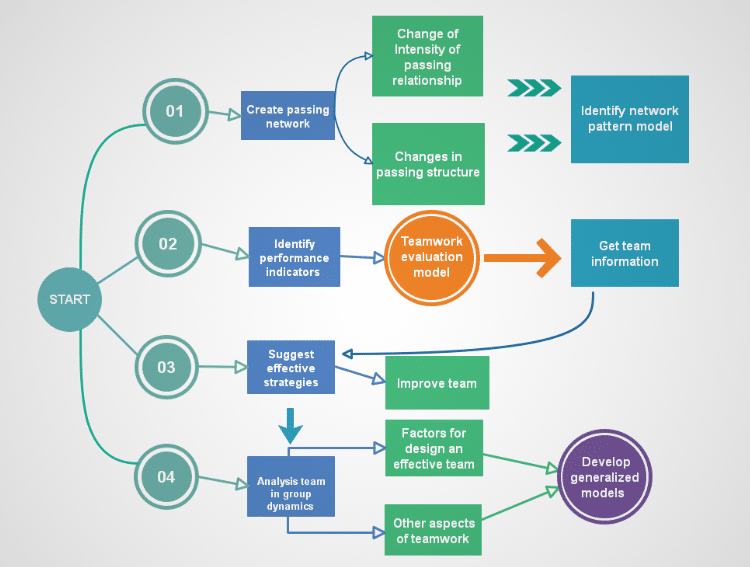
Football Formation Strategy Problem Analysis / Photo Courtesy: Zhuoyue Wang

Interviewer: Let’s dive deeper into your cited work, “Graph Neural Network Recommendation System for Football Formation.” What motivated you to explore AI applications in sports analytics, and what makes this work stand out?

Zhuoyue Wang: The motivation came from a deep interest in understanding complex human interactions, such as those on a football field, and how AI can provide a fresh perspective on these dynamics. Sports analytics is a field ripe for innovation, where traditional metrics don’t always capture the intricacies of player and team interactions. By applying graph neural networks (GNNs) and reinforcement learning, we were able to create a model that considers both local and global passing relationships among players. This approach enables more sophisticated decision-making support for coaches, which goes beyond simple statistics like possession or shots on target.

This work introduced a novel framework that integrates GNNs and reinforcement learning to suggest real-time adjustments for football formations. The key accomplishment is providing a tool that helps teams optimize their strategies based on dynamic, data-driven insights.

This research is critical because it opens up new avenues for AI applications in sports management, where real-time data analysis can significantly impact team performance and game outcomes. Moreover, the methodologies developed here could be adapted to other team-based decision-making scenarios, broadening their applicability.

AI for Healthcare

Zhuoyue Wang Shares Insights on AI-Augmented Data Systems

MRI Images of Various Brain Tumor Types for Analysis / Photo Courtesy: Zhuoyue Wang

Interviewer: Moving on to your work on “Deep Learning in Medical Image Classification from MRI-based Brain Tumor Images,” where you were the second author. What drove you to focus on this area, and what are the key contributions of your work?

Zhuoyue Wang: My motivation for this research was driven by the potential of AI to make a direct impact on healthcare, particularly in early disease detection and diagnosis. Brain tumors are notoriously difficult to diagnose accurately at early stages, and delays can have dire consequences. We wanted to explore how deep learning, particularly fine-tuned models, could offer more precise and quicker diagnosis capabilities. 

The development of the MobileNet-BT model was a significant step forward. By customizing and fine-tuning this model specifically for medical imaging, we achieved remarkable accuracy in brain tumor classification compared to several other state-of-the-art models. This accuracy can help radiologists and doctors make more informed decisions faster, potentially saving lives.

This work is critical in the context of medical imaging because it addresses a real-world problem where timely and accurate diagnoses are crucial. By enhancing the diagnostic capabilities of MRI-based systems, we can reduce human error, provide better patient outcomes, and potentially lower the costs associated with lengthy diagnostic procedures.

Motivation for Edge Detection Improvement

Zhuoyue Wang Shares Insights on AI-Augmented Data Systems

Example Results from Various Edge Detection Algorithms / Photo Courtesy: Zhuoyue Wang

Interviewer: You’ve also worked on enhancing edge detection techniques in color images with your first-author paper, “A Multiscale Gradient Fusion Method for Edge Detection in Color Images Utilizing the CBM3D Filter.” What inspired you to develop this method, and what makes it a significant contribution?

Zhuoyue Wang: Edge detection is fundamental to many computer vision tasks, such as object detection, 3D modeling, and medical imaging. The challenge was to develop a method that could improve edge detection in color images while maintaining robustness against noise. I was inspired by the limitations I observed in existing methods, which often struggled with balancing noise reduction and detail preservation. The idea was to integrate multiscale gradient fusion with a collaborative filtering technique to achieve a more refined edge detection process.

We introduced a new technique combining the CBM3D filter with multiscale gradient fusion, potentially improving noise resistance and edge quality. The method demonstrated excellent performance over traditional edge detection methods like Color Sobel, Color Canny, and SE algorithms in terms of PR curves, AUC, PSNR, and FOM metrics.

This research is important as it provides a robust and versatile solution for edge detection, which is a cornerstone of numerous AI applications. Improved edge detection can enhance the accuracy and efficiency of systems in areas like autonomous driving, facial recognition, and medical diagnostics, where high-quality image processing is vital.

Discussing Broader Themes and Future Directions

Interviewer: Can you share your thoughts on the role of machine learning in transforming traditional data processing systems, particularly in the context of your research?

Zhuoyue Wang: Machine learning has revolutionized data processing by allowing systems to learn from vast amounts of data and make decisions based on patterns that might not be evident to humans. In my work on the Graph Neural Network for football formations, for example, we used machine learning to identify subtle yet critical interactions among players that could influence game outcomes. Similarly, in medical imaging, machine learning models like MobileNet-BT can enable more precise and efficient tumor detection, which can significantly impact patient care. It’s about enhancing the ability to derive meaningful insights from complex datasets, regardless of the field.

Interviewer: With your diverse background, where do you see the future of AI-Augmented Data Systems heading?

Zhuoyue Wang: The future of AI-Augmented Data Systems lies in their ability to become more adaptive and integrated across various domains. We are moving towards systems that not only process data but also continuously learn and optimize based on real-time feedback. This could revolutionize areas like personalized medicine, smart city management, and intelligent manufacturing. My aim is to continue developing AI models that are not just powerful but also adaptable and scalable across different industries.

Interviewer: Given your experience across different research areas, what advice would you give to young researchers who want to make impactful contributions in AI and data systems?

Zhuoyue Wang: My advice would be to stay curious and open to interdisciplinary applications. Some of the best innovations come from applying concepts from one field to solve problems in another. It’s also essential to have a strong foundation in both the theoretical and practical aspects of AI and data science. Lastly, collaboration is key—engaging with diverse teams can bring fresh perspectives and lead to more innovative solutions.

For a more comprehensive understanding of Zhuoyue Wang’s academic journey, publications, and professional engagements, visit his LinkedIn and Google Scholar profiles.


Published By: Aize Perez

How Life Coaching Empowers Entrepreneurs?

By: SEO Mavens

Entrepreneurship is an exciting yet challenging journey that requires resilience, determination, and a constant drive for growth. Entrepreneurs face a unique set of pressures, from the responsibility of running a business to the mental and emotional demands of pursuing their vision. As businesses grow and evolve, so too must the people behind them, which is why life coaching has become an essential tool for many entrepreneurs.

Life coaching provides guidance, support, and the necessary tools to help individuals reach their full potential, both personally and professionally. Specifically, business coaching for entrepreneurs can offer tailored strategies that empower entrepreneurs to overcome challenges, achieve success, and maintain balance in their personal and business lives.

Clarity of Vision and Purpose

One of the significant ways life coaching empowers entrepreneurs is by helping them clarify their vision and purpose. Many entrepreneurs embark on their journey with a vague or evolving sense of direction. While they may have a general idea of what they want to achieve, articulating a clear, detailed vision can be difficult. Without this clarity, it becomes challenging to set meaningful goals, make informed decisions, or stay motivated during tough times.

A life coach works with entrepreneurs to help them define their vision and align their business goals with their personal values. Through reflective questioning and goal-setting exercises, entrepreneurs can gain clarity about what they truly want to achieve, both in their business and personal lives. This sense of purpose serves as a guiding light, helping entrepreneurs navigate the ups and downs of business ownership while staying focused on their long-term aspirations.

Enhancing Decision-Making Skills

Entrepreneurs are required to make countless decisions every day, ranging from small operational tasks to major strategic moves that can determine the future of their business. These decisions can be overwhelming, especially when there is a lack of experience or confidence in the decision-making process. Hesitation, fear of failure, or analysis paralysis can prevent entrepreneurs from making timely and effective choices.

Life coaching equips entrepreneurs with decision-making frameworks and techniques that enhance their ability to make confident, informed decisions. Coaches encourage entrepreneurs to examine their options from multiple perspectives, consider the potential risks and benefits, and trust their intuition. By practicing effective decision-making, entrepreneurs can move their businesses forward with greater agility, navigate complex challenges with ease, and avoid costly mistakes.

Overcoming Limiting Beliefs

One of the significant barriers to entrepreneurial success is the presence of limiting beliefs. These are deeply ingrained, often subconscious thoughts or assumptions that hold individuals back from reaching their full potential. Common limiting beliefs among entrepreneurs include fears of failure, self-doubt, and the belief that success is unattainable or undeserved. These mental blocks can hinder personal growth, slow down business progress, and negatively impact an entrepreneur’s overall well-being.

Life coaching helps entrepreneurs identify and overcome these limiting beliefs by challenging negative thought patterns and replacing them with empowering, positive beliefs. Coaches work with clients to reframe their thinking, enabling them to see obstacles as opportunities and failures as valuable learning experiences. This shift in mindset allows entrepreneurs to approach challenges with confidence, resilience, and a sense of possibility, ultimately unlocking their potential for success.

Managing Stress and Preventing Burnout

Entrepreneurship is often associated with long hours, high stress, and the constant pressure to perform. The demands of running a business can take a toll on an entrepreneur’s physical, emotional, and mental health, leading to burnout if not managed effectively. Burnout can result in decreased productivity, loss of motivation, and even the collapse of a business.

Life coaching empowers entrepreneurs by teaching them how to manage stress and prevent burnout. Coaches provide practical tools for stress management, such as mindfulness techniques, time management strategies, and self-care routines. By implementing these practices, entrepreneurs can maintain a healthier work-life balance, reduce the risk of burnout, and sustain their energy and focus over the long term. Life coaching also helps entrepreneurs recognize the early signs of burnout, allowing them to take proactive steps to recharge before it impacts their business.

Developing Emotional Intelligence

Emotional intelligence (EQ) is a crucial skill for entrepreneurs, as it directly influences their ability to lead teams, build relationships, and make sound business decisions. Entrepreneurs with high emotional intelligence are better equipped to manage their own emotions, understand the emotions of others, and navigate interpersonal dynamics in a way that fosters collaboration and trust.

Life coaching helps entrepreneurs develop and enhance their emotional intelligence by increasing their self-awareness, empathy, and emotional regulation. Coaches work with entrepreneurs to identify emotional triggers, develop strategies for managing challenging emotions, and improve their communication skills. By cultivating emotional intelligence, entrepreneurs can become more effective leaders, build stronger relationships with clients and employees, and create a positive and supportive work environment.

Building Confidence and Resilience

Entrepreneurship is a journey filled with uncertainties, setbacks, and moments of self-doubt. The ability to remain confident and resilient in the face of challenges is essential for long-term success. However, many entrepreneurs struggle with imposter syndrome, fear of failure, or a lack of self-confidence, which can undermine their ability to grow their businesses.

Life coaching empowers entrepreneurs to build confidence and resilience by helping them recognize their strengths, celebrate their achievements, and develop a growth mindset. Coaches provide constructive feedback and encouragement, helping entrepreneurs shift their focus from perceived limitations to their potential for growth. This newfound confidence enables entrepreneurs to take calculated risks, embrace new opportunities, and bounce back from setbacks with renewed determination.

Cultivating a Growth Mindset

A growth mindset—the belief that abilities and intelligence can be developed through effort, learning, and persistence—is a key factor in entrepreneurial success. Entrepreneurs with a growth mindset are more likely to embrace challenges, learn from failures, and continuously seek opportunities for personal and professional development. In contrast, those with a fixed mindset may avoid risks, fear failure, and become stagnant in their business endeavors.

Life coaching helps entrepreneurs cultivate a growth mindset by encouraging them to view challenges as opportunities for growth and learning. Coaches guide entrepreneurs in reframing failures as valuable lessons and help them develop strategies for continuous improvement. With a growth mindset, entrepreneurs are more adaptable, open to innovation, and willing to invest in their own development, which ultimately leads to greater success in their business ventures.

Creating Accountability and Staying Focused

One of the powerful aspects of life coaching is the accountability it provides. Entrepreneurs often struggle with staying focused on their goals, especially when they are juggling multiple responsibilities and facing distractions from day-to-day operations. Without accountability, it’s easy to lose sight of long-term objectives or fall into the trap of procrastination.

A life coach helps entrepreneurs stay focused and accountable by regularly checking in on their progress, offering guidance, and providing motivation. Coaches work with clients to set clear, measurable goals and create actionable plans to achieve them. By holding entrepreneurs accountable for their commitments, life coaches aim that they stay on track and maintain momentum toward their desired outcomes. This level of accountability fosters discipline, consistency, and progress, all of which are critical for entrepreneurial success.

Fostering Work-Life Balance

Achieving a healthy work-life balance is one of the biggest challenges for entrepreneurs. The demands of running a business often leave little time for personal pursuits, relationships, or self-care, leading to feelings of imbalance and dissatisfaction. Many entrepreneurs struggle to set boundaries between work and personal life, resulting in burnout and decreased overall well-being.

Life coaching empowers entrepreneurs to create and maintain a healthy work-life balance by helping them prioritize their time, set boundaries, and align their personal and professional goals. Coaches provide tools and strategies for managing time effectively, delegating tasks, and making space for self-care and personal relationships. By fostering work-life balance, life coaching enables entrepreneurs to enjoy greater fulfillment in both their personal and business lives.

Conclusion

Entrepreneurship is a rewarding yet demanding path that requires constant personal and professional growth. Life coaching empowers entrepreneurs by providing them with the tools, strategies, and support they need to overcome challenges, build confidence, and achieve success.

From clarifying their vision and enhancing decision-making skills to managing stress and fostering work-life balance, life coaching plays a crucial role in helping entrepreneurs thrive. As more entrepreneurs seek to unlock their potential and create lasting impact, the guidance of a life coach can be the key to achieving both personal fulfillment and business success.


Published By: Aize Perez

Kerry M. Kwiecinski: A Journey Through Life and Literature

By: Seraphina Quinn

Kerry M. Kwiecinski is an author with a life story as rich and complex as the characters in his books. His journey from a small-town boy to a published author is one filled with experiences that shaped not only his personality but also his writing. Through the lens of his life, we can see how his upbringing, his career, and his personal struggles have all contributed to the depth and authenticity of his work.

Kerry was raised in a middle-class family where he learned the values of hard work and perseverance. His early life was marked by active participation in organizations like the Cub Scouts and Boy Scouts, where he achieved the rank of Eagle Scout. These experiences instilled in him a sense of duty, discipline, and a love for the outdoors, which would later influence his writing.

As a young man, Kerry faced a turning point during the Vietnam War. With a draft number of five, he was almost certain to be sent to war. However, he was also offered opportunities by both West Point and the Naval Academy, reflecting his potential and the respect he commanded. Despite these offers, his father, a Lieutenant Colonel, advised him against going to Vietnam, deeming the conflict senseless. This advice led Kerry to pursue a different path, one that would eventually take him to college instead of the battlefield.

Kerry’s college years at Central Michigan University were challenging. Enrolled in a rigorous curriculum, including junior calculus and Advanced Placement courses, he quickly realized that the academic demands were intense. His experiences during these years were marked by a constant struggle to balance his studies with his personal life, especially against the backdrop of the social unrest caused by the Vietnam War.

One notable experience was his involvement in ROTC, which he initially joined but soon left due to the hostility he faced from anti-war protesters. This period of his life was chaotic and difficult, but it also forged a resilience in Kerry that would later be reflected in his writing. Despite the challenges, he managed to graduate on time with a diverse range of studies, including geology, geography, math, biology, and chemistry.

After college, Kerry’s career took him all over the world. He worked in technical fields, dealing with high-level executives and technical experts from various industries. His work was demanding and required a great deal of precision, something that also became a hallmark of his writing style. Throughout his career, Kerry wrote numerous technical papers, a far cry from the creative writing he would later pursue. However, these experiences honed his writing skills, particularly in crafting clear, concise, and impactful language.

Kerry’s work in the technical field was a significant part of his life, but it was not without its frustrations. The technical world, with its strict structures and demands, often left him feeling constrained. This frustration, however, fueled his desire to write creatively, to break free from the rigid frameworks he had operated within for so long.

Kerry did not begin his journey as a novelist until later in life. His decision to write was not motivated by a desire for fame or financial gain but rather by a deep-seated need to express himself and to see if he could craft a coherent story. His novel, Yesterday Revealed, is a product of this need—a story born from his life experiences, his reflections on the past, and his understanding of human nature.

The characters in Yesterday Revealed are deeply personal to Kerry. Kip Green, the protagonist, is inspired by a childhood acquaintance, while Susie and Techie are amalgamations of various influences from his past. These characters are not just figments of his imagination; they are extensions of Kerry’s life, shaped by his memories and the people he has known.

Kerry’s approach to writing is methodical. He views writing as a way to explore the complexities of life, using his characters to delve into themes of love, duty, and the passage of time. His writing process is influenced by the great authors and thinkers he admires, such as Hemingway, Ludlum, and Shakespeare, whose works have left an indelible mark on his literary style.

Kerry’s personal life has been as complex as his professional one. He married and had two sons, both of whom have gone on to achieve success in their own right. His younger son, known by his stage name Griz, is a successful music entertainer, while his older son has made a name for himself in the medical marijuana industry. Kerry takes great pride in their accomplishments, attributing some of their success to the freedom and guidance he provided as a parent.

However, Kerry’s personal life has not been without its struggles. His marriage eventually ended in divorce, a painful experience that he rarely discusses. Yet, even this part of his life has influenced his writing, giving him a deeper understanding of human relationships and the complexities that come with them.

One of the most significant influences on Kerry’s writing is the relationship between his parents. He describes them as being polar opposites—his mother, a right-brained, creative individual, and his father, a left-brained, logical thinker. Their dynamic, often tumultuous but ultimately loving, provided Kerry with a unique perspective on life. This yin and yang, as he calls it, is something he strives to capture in his writing, where he seeks to balance the emotional and the rational, the past and the present.

Kerry’s writing is not just a reflection of his life experiences; it is also a philosophical exploration of the human condition. He is deeply influenced by philosophical questions, such as whether form follows function or vice versa. These questions permeate his work, offering readers not just a story but also a deeper contemplation of the world around them.

Kerry M. Kwiecinski is a writer who has lived a full and varied life, and his work reflects the richness of his experiences. His journey from a technical writer to a novelist is a testament to his belief in the power of storytelling and the importance of reflecting on one’s past to understand the present.

As he continues to write, Kerry remains focused on his original goal: to create stories that are coherent, engaging, and thought-provoking. He does not seek fame or fortune; rather, he writes to explore the complexities of life and to share his insights with others. For Kerry, writing is not just a profession; it is a way of life, a means of making sense of the world and leaving a legacy that will endure long after he is gone.

In the end, Kerry M. Kwiecinski is more than just an author; he is a storyteller whose work is a window into the soul of a man who has lived, loved, and learned. Through his books, he invites readers to join him on a journey of discovery, where the past is revealed, the present is understood, and the future is always on the horizon.

Published by: Holy Minoza

Ashcroft Capital’s Centralized Procurement Department Makes Apartment Renovations Less Expensive and More Efficient

By: Jim Cunning

By his own admission, Frank Roessler, founder and CEO of Ashcroft Capital, can be something of a restless leader.

“One of the best parts of my job is having the ability to make constant improvements while striving for excellence,” Roessler said. “How can we continue to do things better? As a company, we’re always on a mission to streamline operations, improve our processes and create more efficiencies.”

Roessler founded Ashcroft Capital, a vertically integrated multifamily investment firm that owns and manages apartment communities across the Sun Belt, in 2015. In the nine years since, he and the leadership team have built a portfolio that consists of roughly 14,000 apartment homes and totals $2.6 billion in value.

The company’s ongoing quest for improvement has resulted in a unique procurement process that allows Ashcroft to renovate its apartment communities with greater efficiency and at a significantly reduced cost, Roessler noted. The innovative process benefits Ashcroft’s residents and investors, and provides the company with a true competitive advantage, he said.

Ashcroft typically acquires apartment properties that are in need of improvements. By renovating the homes in these communities, Ashcroft is able to provide higher-quality finishes for discerning renters and deliver strong risk-adjusted returns to investors, according to Roessler. 

Because renovations are at the heart of Ashcroft’s asset strategies, Roessler and his team decided they needed to optimize how they purchased the materials—light fixtures, ceiling fans, sinks, faucets, towel racks, etc.—used to upgrade their apartments. 

When you buy from retailers, even in bulk, there’s obviously a strong mark-up,” Roessler said. “Also, you can’t control the frequent changes to quality or style of what is available through retailers. That changes all the time, and if it takes you two years to renovate a community, you can end up with mixed and matched materials inside of your homes. This leaves you without a uniform look and quality.

“And so we thought to ourselves, ‘Well, what can we do to better this process?’ And that led us to, ‘It would be great if we could buy from wholesalers directly for a number of reasons.’”

Roessler and the Ashcroft leadership team began researching and visiting manufacturers in east Asia, Vietnam and India. “We invested a tremendous amount of time and resources in making sure that our manufacturing partners were reputable, could build what we needed them to build and could deliver the product in the quantities that we needed them,” Roessler said.

After settling on its overseas partners, Ashcroft began building its own internal supply chain. 

The result is a centralized procurement process. The company purchases materials from overseas manufacturers in large quantities, typically nine to 12 months worth of material for the entire portfolio with each order. The materials are shipped in containers to an Ashcroft warehouse in Dallas, which is where Birchstone Residential, Ashcroft’s in-house property management firm, is headquartered. 

At the warehouse, the materials are unboxed and organized into kits. These kits contain every item needed for each unit’s renovation. Specifically designed to be narrow enough to fit through unit door frames, the kits are then delivered to the appropriate apartment home, ready for subcontractors to efficiently unbox and install everything. With the materials on hand, labor teams don’t need to go to a store because of a missing part and can focus on turning a unit quickly and efficiently. This saves on labor costs and also reduces vacancy loss. Roessler created a company, SureHome, to manage the procurement process for Ashcroft. 

“We’ve been doing this now for several years, and it’s been working very well,” Roessler said. “The quality of the interior renovations we do is extremely high, and we are renovating each unit in two to three weeks. We’re very proud of that turn time, and we’re also very proud to be providing our residents with such beautiful homes.”

According to Roessler, buying the materials directly from overseas manufacturers provides roughly a 30% discount on average when compared to buying in bulk from U.S. retailers. All else being equal, this enables Ashcroft to pass higher returns along to its investors.

Ashcroft’s procurement process also allows the company to circumvent international supply chain disruptions, as well as domestic disruptions such as hurricanes and other severe weather events.

“It’s quite challenging to streamline the process of renovating thousands of units as they become vacant,” Roessler said. “But we feel that we have done a very good job.”

Published by: Josh Tatunay

Navigating Business and Media Law: Attorney Insights for New Yorkers

Navigating the complex landscape of business and media law in New York can feel overwhelming for entrepreneurs and content creators alike. With ever-changing regulations and a competitive marketplace, understanding the nuances of the law is essential for success. Business and media law attorneys in New York City possess unique insights and strategies that can significantly benefit those in these fields. Here are some approaches that experienced attorneys may use to support their clients.

Choosing the Right Business Structure

One of the foundational steps in establishing a business is selecting the appropriate legal structure. This choice—be it a sole proprietorship, LLC, or corporation—has significant implications for liability, taxation, and operational flexibility. A skilled attorney can guide you through the decision-making process, considering your long-term goals. For instance, forming an LLC is commonly used to separate personal and business assets, while a corporation structure is often chosen for its potential to attract investors. An attorney’s experience in this area can save you time and potential financial pitfalls.

Intellectual Property (IP) Protection

For media professionals, intellectual property is a cornerstone of their business. Protecting creations through copyrights, trademarks, and patents is critical, yet many fail to take these steps seriously. A knowledgeable attorney can help you identify what aspects of your work need protection and assist with the registration process. Securing intellectual property helps protect a brand’s identity and contributes to maintaining the value of its creative output. This proactive approach is essential for preventing infringement and potential disputes in the future.

Crafting Solid Contracts

Contracts are the backbone of business relationships. However, many entrepreneurs overlook the importance of having clear and comprehensive agreements. An experienced attorney can draft and review contracts, ensuring they protect your interests and include necessary clauses. This might involve detailing terms of service, confidentiality agreements, or licensing terms. A well-crafted contract can mitigate risks and clarify expectations, reducing the chances of misunderstandings or legal disputes later on.

Navigating Advertising Regulations

In the media industry, compliance with advertising laws is crucial. New York has specific regulations governing marketing practices, including guidelines on truthfulness in advertising and the use of endorsements. Many businesses underestimate the complexity of these laws, which can lead to costly fines or lawsuits. An attorney with expertise in media law can guide you through these regulations, ensuring your advertising strategies are not only effective but also compliant. This knowledge can safeguard your business against legal challenges that might arise from non-compliance.

Embracing Alternative Dispute Resolution (ADR)

Litigation can be a time-consuming and expensive process. Many attorneys advocate for Alternative Dispute Resolution (ADR) methods, such as mediation and arbitration, as more efficient solutions for conflict resolution. These methods often lead to quicker outcomes and preserve business relationships. An attorney can help you decide when to pursue ADR and prepare you for the process, helping you achieve a resolution without the heavy costs associated with litigation.

Developing Crisis Management Plans

In the fast-paced world of media, crises can arise at any moment. Having a robust crisis management plan is essential for minimizing damage and maintaining your brand’s reputation. Attorneys can assist you in creating a strategy that outlines how to respond to negative publicity or legal challenges. This preparation allows businesses to act quickly and decisively, reducing potential fallout from adverse events.

Staying Ahead of Regulatory Changes

The legal landscape is continually evolving, particularly in business and media law. Attorneys are dedicated to staying informed about changes that could impact their clients. This includes keeping up with new regulations and industry standards that affect advertising, IP, and business practices. By being proactive, attorneys can help businesses adapt to changes, ensuring compliance and competitive advantage.

Building Strategic Networks

Experienced attorneys often have extensive networks that can benefit their clients. By connecting with industry influencers, regulatory bodies, and other professionals, attorneys can facilitate valuable partnerships and collaborations. This networking can open doors to new opportunities and resources that may not be available otherwise. Engaging with an attorney who understands the importance of these connections can enhance your business’s growth potential.

Summary

By understanding these secret tactics employed by seasoned attorneys, you can equip yourself with the knowledge necessary to protect your interests and thrive in your industry. Whether you’re a startup founder or a content creator, the insights gained from engaging with professionals can significantly enhance your business strategy. Firms like Omni LAW P.C. can offer invaluable guidance to help you implement these tactics effectively. Stay informed, and remember: proactive legal strategies can be your strongest ally in the competitive landscape of New York business and media law.

Disclaimer: “The content in this article is provided for general knowledge. It does not constitute legal advice, and readers should seek advice from qualified legal professionals regarding particular cases or situations.”

Published by: Josh Tatunay

How Can Business Consulting Help Your Company Grow?

By: John Glover (MBA)

Are you feeling like your business is stuck in a rut? It’s easy to fall into the trap of doing the same things over and over, hoping for different results. But in today’s competitive market, standing still is not an option. This is where business consulting comes into play. By bringing in expert advice and fresh perspectives, you can unlock new opportunities for growth and success. In this article, we’ll explore how business consulting can help you lead, succeed, and grow your business, taking it to heights you never imagined.

What Is Business Consulting?

Business consulting is all about providing expert advice to help businesses improve their performance, solve problems, and achieve their goals. Think of it as bringing in a seasoned guide to navigate the complexities of running a business. Consultants come with a wealth of knowledge and experience in various areas, such as strategy, operations, finance, and marketing.

When you hire a business consultant, you’re getting an outsider’s perspective on your company. This fresh set of eyes can identify issues that might be overlooked internally. They dive deep into your business operations, analyze data, and pinpoint areas that need improvement. Whether it’s streamlining processes, boosting productivity, or crafting a winning strategy, consultants offer tailored solutions that fit your specific needs.

Moreover, business consultants are skilled at implementing changes. They work closely with your team to ensure that the proposed strategies are put into action effectively. This hands-on approach not only helps in overcoming immediate challenges but also sets your business up for long-term success.

In essence, business consulting is about leveraging external expertise to enhance your company’s performance and drive growth. It’s a strategic investment that can lead to significant improvements and competitive advantages in the market.

Why Should You Consider Business Consulting?

In today’s fast-paced market, staying ahead of the competition is crucial. Business consulting can be a game-changer for your company, providing the tools and insights you need to thrive. Here are some key reasons why you should consider bringing a business consultant on board:

Identifying and Solving Problems

One of the main advantages of hiring a business consultant is their ability to identify and solve problems that you might not even be aware of. Sometimes, being too close to your business can make it hard to see the bigger picture. A consultant brings a fresh perspective and can pinpoint issues that might be holding your business back. Whether it’s inefficiencies in your operations, gaps in your market strategy, or internal conflicts, a consultant can provide the expertise to tackle these challenges head-on.

Providing Expert Insights

Business consultants come with a wealth of experience and knowledge from working with various industries. This expertise allows them to offer valuable insights that can significantly impact your business. They can help you understand market trends, customer behavior, and competitive dynamics, giving you an edge in making informed decisions. With their guidance, you can develop strategies that are not only effective but also aligned with your long-term goals.

In essence, business consulting isn’t just for companies in crisis; it’s for any business that wants to reach new heights. By identifying and solving problems and providing expert insights, consultants can help you lead, succeed, and grow in today’s competitive market.

What Are the Key Benefits of Business Consulting?

Business consulting offers numerous advantages that can help take your company to the next level. Here are some key benefits:

Driving Growth and Performance

When you bring a business consultant on board, you tap into a wealth of knowledge and experience that can drive significant growth. Consultants are experts at identifying opportunities that you might have overlooked. They analyze market trends, evaluate your competition, and help you develop strategies that position your business for success. By focusing on data-driven decision-making, consultants ensure that your strategies are based on solid insights rather than guesswork.

Optimizing Operations and Efficiency

Efficiency is critical for any business aiming to stay competitive. Consultants can help streamline your processes, reduce waste, and improve overall productivity. They bring a fresh perspective, allowing them to spot inefficiencies that might be invisible to those entrenched in daily operations. By working with a consultant, you can implement leading practices that enhance your operational efficiency, saving both time and money.

Investing in business consulting is a strategic move that can lead to substantial benefits. Whether it’s driving growth through expert insights or optimizing your operations for better efficiency, the impact of a skilled consultant can be transformative for your business. By leveraging these benefits, you position your company to not just survive but thrive in a competitive market.

How to Choose the Right Business Consultant?

Choosing the right business consultant can make a significant difference in your company’s growth and success. Here are some tips to help you make the premier choice:

First, consider the consultant’s expertise and experience. Look for someone who has a proven track record in your industry. This ensures they understand the unique challenges and opportunities your business faces. Check their background, past projects, and client testimonials to gauge their capabilities.

Next, assess their approach and methodology. A good consultant should have a clear, structured process for diagnosing problems and implementing solutions. Ask about their strategies and how they plan to tailor their services to meet your specific needs. It’s important that their approach aligns with your business goals and culture.

Communication is key. Ensure the consultant has excellent communication skills and can explain complex concepts in a way that’s easy to understand. They should be able to listen to your concerns and provide clear, actionable advice. Good communication fosters a productive working relationship and helps achieve better results.

Evaluate their problem-solving skills. A competent consultant should be adept at identifying issues and proposing effective, innovative solutions. Ask for examples of how they’ve successfully tackled similar problems in the past.

Finally, consider the cost. While you don’t want to compromise on quality, it’s essential to find a consultant whose fees fit within your budget. Discuss their pricing structure upfront and ensure there are no hidden costs.

By carefully considering these factors, you can find a business consultant who will help drive your company’s success and growth.

Summary

In today’s competitive market, business consulting is one of the powerful tools for growth and success. It offers expert advice, fresh perspectives, and tailored strategies that can help your business overcome challenges and seize new opportunities. Whether you’re looking to optimize operations, drive performance, or expand your market reach, a business consultant can provide the insights and support you need. Don’t let your business stay still—embrace consulting to unlock your full potential and achieve your goals. Investing in business consulting is investing in the future of your business.

Published by: Martin De Juan

Beyond the Résumé: Lynda Rogerson’s Blueprint for Career Transformation

By: Seraphina Quinn

Dr. Lynda Rogerson didn’t follow a linear path—she blazed a trail. Born into a military family, Lynda’s upbringing was steeped in discipline. Yet, her professional journey was anything but controlled. From grant writing to consulting and curriculum design to leading a network for women, her career was a mosaic of experiences. She distilled these varied experiences into her pivotal work, Four Directions of a Career Change, crafted to guide those navigating the tumultuous waters of career uncertainty.

Our careers, much like life itself, are adventures that take us through unexpected jungles. Her metaphor is striking: imagine entering a South American jungle with no map, compass, or clear sense of direction. This is how many people feel when facing a career shift. This sits well with Lynda’s work as it aims to help her audience navigate this unknown terrain with purpose and clarity.

Her approach challenges the status quo. Rather than focusing on the superficialities of career advice—like tweaking résumés or perfecting interview techniques—Lynda digs deeper. A staple element in her narrative is you cannot change unless you change from the inside out. This is also one of the Four Laws of Change she learned with a Native American organization. This inner shift, Lynda believes, is what’s missing in the approach many people take in their career transitions. It’s not just about the next job or promotion—it’s about understanding the internal messages that shape your actions and beliefs.

The real issue isn’t a lack of skills or opportunities but a mindset. The poor me attitude is prevalent, whether from laid-off veterans returning to civilian life or students with degrees but no job prospects. According to Lynda, the key is to get these individuals to see themselves differently. People don’t change unless they believe they can. She believes that lasting career change begins with understanding the internal messages we tell ourselves, identifying our transferable skills, and aligning our career paths with our core values. This deep, introspective work is the key to a successful transformation for Lynda. In her consulting sessions, she saw firsthand how reframing self-perception led to shifts in attitude and tangible career outcomes. 

The title of her book, Four Directions of a Career Change, is inspirational. The four directions represent the critical phases of any career transformation: awareness, preparation, implementation, and reflection. This process mirrors the spiritual and personal growth Lynda herself underwent while consulting for Native American organizations. Her principles are rooted in an often-overlooked philosophy: true, lasting change starts from within. Lynda’s book is a roadmap for those seeking new careers and lives.

She encourages readers to take inventory of their lives, looking at their skills and emotional, spiritual, and physical well-being. It’s not just about getting a job; it’s about building a life that resonates with who you are. This inventory process allows individuals to identify their strengths, understand their weaknesses, and set realistic goals for the future.

Her career counseling isn’t about quick fixes or generic advice. She quickly tells her readers that cookie-cutter résumés and interview coaching won’t cut it in the modern job market. Artificial intelligence can write your résumé now. Instead, she emphasizes that successful career shifts begin with a solid foundation of self-awareness. Her book uses vivid metaphors—like a South American jungle adventure or an archeological dig—to help readers understand the inner work necessary for lasting career success. She wants her readers to understand that a career change is not a setback—it’s an opportunity to explore new possibilities and reinvent themselves in ways they never thought possible.

The archeology metaphor is particularly emotional. Changing careers is like digging through layers of yourself, uncovering forgotten talents, hidden interests, and long-buried ambitions. It’s not about what the job market wants from you—it’s about what you want from yourself. And this is where her method sets her apart. She doesn’t just teach job seekers how to find work—she teaches them how to find themselves.

As Lynda nears completion of her latest project, the excitement is palpable. It’s clear that this isn’t just a career guide—it’s a manifesto for personal empowerment, one that has the potential to resonate with anyone at a crossroads in their life. 

For Dr. Lynda, career change isn’t just about finding a new job; it’s about rediscovering your potential and crafting a life that aligns with your deepest values. Her story is one of resilience, self-discovery, and strong belief in the human capacity for growth—a story that, much like her book, challenges us to take on our jungle adventure, armed with nothing but the confidence that we can find our way.

Published by: Nelly Chavez

Are You Stuck in Business? Discover How Consulting Can Help!

By: John Glover (MBA)

Every business owner faces challenges that can cause a business to stagnate. Sales might plateau, competition can intensify, and market dynamics often shift unexpectedly. Sometimes, the internal processes that once worked seamlessly begin to show cracks, or the team might feel unmotivated and overwhelmed. It’s not uncommon to hit a wall where growth seems impossible. These obstacles can be difficult to identify and overcome without an objective perspective. Understanding why your business is stuck is the first step in finding the right solutions and moving forward.

How Can Business Consulting Identify Obstacles?

Feeling stuck in your business can be frustrating. That’s where a business consultant comes in. They bring an outside perspective that helps pinpoint what’s holding you back. Sometimes, you’re too close to the problem to see it clearly. A consultant will analyze your operations, finances, and market position to identify bottlenecks and inefficiencies.

They don’t just look at the numbers. They talk to your team, observe workflows, and assess customer feedback. This holistic approach allows them to uncover issues that might not be obvious to you. Whether it’s a process that’s outdated, a market strategy that’s no longer effective, or internal communication problems, a consultant can identify these obstacles.

Once the issues are identified, they can offer customized solutions tailored to your specific needs. This targeted approach helps you address the real problems and move forward with confidence.

What are Your Business’s Weaknesses and Strengths?

Understanding your business’s weaknesses and strengths is crucial for growth. Sometimes, it’s hard to see these clearly when you’re deeply involved in the daily operations. That’s where a business consultant comes in. They provide an objective perspective, helping you pinpoint areas where your business is excelling and where it’s falling short.

By identifying your strengths, you can leverage them to gain a competitive edge. Whether it’s exceptional customer service, innovative products, or a strong brand presence, knowing your strengths allows you to capitalize on them.

On the flip side, recognizing your weaknesses is the first step towards improvement. A consultant can help you address these weaknesses, whether they involve inefficient processes, outdated technology, or gaps in the market strategy. By working on these areas, you set your business up for sustained success and growth.

How Can You Develop More Efficient Processes?

Do you feel like your business processes are bogging you down? Streamlining operations is crucial for boosting productivity and reducing costs. Start by mapping out your current workflows. Identify bottlenecks and redundant steps that slow things down.

Next, consider adopting new technologies. Automation tools can handle repetitive tasks, freeing up your team for more strategic work. Also, don’t underestimate the power of proper training. Well-trained employees can perform their tasks more efficiently, making the entire operation smoother.

Finally, keep communication open. Regular check-ins with your team can reveal issues early and help you adjust processes in real-time. By continuously refining how things are done, you’ll find that efficiency becomes a natural part of your business culture.

How Can You Improve the Customer Experience?

Improving the customer experience is crucial for retaining clients and attracting new ones. Start by understanding your customers’ needs and preferences. Conduct surveys or gather feedback to get insights into what they value most about your product or service. Use this information to tailor your offerings and enhance satisfaction.

Streamline your customer service processes to ensure quick and efficient responses. Training your staff to handle inquiries and complaints with empathy and professionalism can make a significant difference. Implementing a reliable CRM system can help manage customer interactions effectively.

Additionally, focus on creating a seamless and enjoyable user experience, whether online or in-store. Ensure your website is user-friendly, easy to navigate, and mobile-optimized. Regularly update your content and make sure it’s relevant and engaging. By continuously refining these aspects, you’ll build stronger relationships with your customers and foster long-term loyalty.

How to Adapt to Market Changes and Leverage New Trends?

Adapting to market changes is crucial for staying competitive. It’s easy to feel overwhelmed when the market shifts, but this is where a business consultant can be invaluable. They bring an outside perspective and can help you see opportunities you might have missed.

First, you need to stay informed about what’s happening in your industry. Regularly review market reports, attend industry conferences, and keep an eye on your competitors. A consultant can help you analyze this information and understand how it impacts your business.

Next, consider your business model. Are there new technologies or processes that could improve your efficiency? Consultants often have a broad knowledge of different industries and can suggest innovative solutions that you might not have considered. Implementing the right business consulting solutions can streamline operations and reduce costs.

Additionally, leveraging new trends can give you an edge over your competitors. This could mean adopting new marketing strategies, utilizing social media more effectively, or exploring new product lines that cater to emerging customer preferences. A consultant can help you identify these trends and develop a plan to integrate them into your business strategy.

In short, staying adaptable and open to change, with the guidance of a business consultant, can position your business for long-term success.

Finding the Right Way Forward

Feeling stuck in business is a common challenge, but it’s not insurmountable. Business consulting offers a fresh perspective, helping you identify and overcome obstacles. By understanding your business’s weaknesses and strengths, developing efficient processes, and improving customer experience, you can navigate market changes and leverage new trends. Consulting isn’t just about solving problems—it’s about unlocking your business’s full potential and setting the stage for sustained success. If you’re ready for a refresh, the right consultant can provide the guidance and support you need to move forward confidently.

Published by: Martin De Juan

Blurring Reality and Fiction: The Surreal World of Matt Coley

By: Seraphina Quinn

Matt Coley’s life effortlessly blends the ordinary with the extraordinary. As a tech enthusiast and visionary, he has always seen beyond the surface, merging the real and the surreal. From programming games at a Sears store as a kid to selling computers before most teens get their licenses, his journey has been anything but typical. But what truly stands out isn’t just his early achievements; it’s the profound intensity of his experiences with life, death, and the unknown. His book, There from Here, is far more than a sci-fi adventure about aliens and spaceships—it’s a deeply personal reflection of his life, dreams, and the moments where fate was both a blessing and a curse.

One of the foundational moments in the book involves a family abducted by aliens. It sounds like pure fantasy, right? Except Coley vividly recalls his mother’s face in a dream so detailed it left him questioning whether it was truly just a dream. This haunting dream has stayed with him since his childhood, hence making him believe that a clone of his mother was sent back to live with the family. At first glance, it seems like a far-fetched plot twist—but for Coley, it was the spark that ignited his writing journey, blurring the line between fiction and reality in an unsettling way.

What’s fascinating about There from Here isn’t just the alien abductions and otherworldly beings—it’s the juxtaposition of these fantastical elements with the mundane. Chris, a mathematical prodigy at the age of six, doesn’t just grapple with the mysteries of the universe; he also faces bullying at school. Or Sally, a mother who confronts both the impossibility of alien cloning and the very real human fear of losing her child. There’s an intimacy to the struggles of the characters, one that feels eerily familiar despite the alien setting.

This is what makes Coley’s work so gripping. He takes the things that scare us—family, identity, survival—and twists them into scenarios that make us question what we believe about the nature of life. The premise that an alien race has been covertly aiding humanity for centuries while abducting and experimenting on people feels like a well-worn trope in science fiction. But his delivery gives it a refreshing plausibility. After all, he’s survived enough near-death experiences to make even skeptics reconsider the boundaries between reality and the unknown.

His story isn’t just about supernatural saviors or scientific experimentation—it’s about resilience. He recounts a real-life brush with death when his car spun out on black ice, narrowly avoiding a fatal collision with a semi-truck. “We all yelled goodbye at the same time,” Coley recalls, but somehow, they survived. Moments like this inform his storytelling, making the line between luck, fate, and something else less clear. These moments anchor his fiction in something deeply personal and hauntingly possible.

One could argue that There from Here stands out not because of its extraterrestrial elements but because it turns these elements into mirrors of our own lives. In some sense, we’re all navigating strange, uncertain spaces—whether it’s a traffic accident or a sudden life-altering event that throws us into the unknown. Coley’s characters, like many of us, are figuring it out as they go along. And that’s the real beauty of his work.

Even more remarkable is the almost eerie realism of his writing. Despite the alien landscapes and complex interstellar politics, Coley never loses sight of the core human emotions driving his characters. Chris’ mathematical genius, for example, isn’t just a plot device; it mirrors Coley’s own experience as a child prodigy who nearly skipped ahead in school before his mother intervened to protect him from potential bullying. It’s in moments like these that readers are drawn in, not because of flashy sci-fi battles but because of the very real, relatable emotions simmering just below the surface.

It’s this combination of science fiction grounded in human emotion that keeps readers returning to There from Here. While other books focus on grand battles or world-ending stakes, Coley keeps the stakes personal. His story is as much about a mother fighting for her family as it is about extraterrestrial saviors trying to prevent their civilization’s downfall. There’s a duality to it—a merging of the ordinary with the extraordinary—that keeps readers guessing.

What’s surprising isn’t just the combination of sci-fi elements and familial drama; it’s how Coley crafts a narrative where the aliens aren’t hostile invaders but complex beings struggling with their own existential crises. The Mygas, an ancient alien race central to the plot, aren’t depicted as conquerors but as reluctant saviors, manipulating DNA to prevent their extinction. The twist? They’ve been quietly influencing humanity for centuries, their presence hidden in the shadows of human history. In a genre obsessed with large-scale battles and dystopian futures, Coley offers something different: a meditation on survival, family, and the choices we make when confronted with the unknown.

And that’s the beauty of his writing. He makes us question the very foundations of what we think we know. His tales may seem like fiction, but they’re rooted in his real-life experiences—whether it’s narrowly escaping death, challenging the boundaries of the human intellect, or grappling with the strange, unexplained phenomena that have colored his life since childhood. In the end, There from Here isn’t just about aliens or advanced technology—it’s about humanity. Our fears, hope, and unending quest for understanding in a universe is far stranger than we could ever imagine.

Is it any wonder that readers find themselves unable to put it down?

In a world that increasingly feels like science fiction itself, Matt Coley’s There from Here offers a refreshingly introspective take on the genre—one that challenges our assumptions, tugs at our emotions, and leaves us looking at the sky just a little differently.

Published by: Nelly Chavez