Before Their Crimes: What We’re Misunderstanding About Childhood Trauma, Youth Crime, and the Path to Healing

By: Wendy Smith, Ph.D., LCSW

In 2015, I traveled to Pelican Bay State Prison at the northern border of California.  Its massive concrete blocks rise ominously, in stark contrast to the wildly beautiful coastal waters of the Pacific Ocean just a few miles away.  Home to those who commit some of the most violent crimes, this prison, known as a “supermax” has one of the state’s large Secure Housing Units (SHU), designed to hold prisoners in long-term solitary confinement.  

I was part of a volunteer group of advocates, lawyers, and law students who traveled to California prisons to provide workshops on SB260, a groundbreaking state law passed in 2014 that established a new parole process for individuals whose crimes took place when they were under 18 years old. 

Spurred by scientific advances in the understanding of juvenile brain development, SB260 allows parole boards to consider the youthful development and early life experiences of men and women who committed their crimes as teenagers. For those who received life sentences while not yet 18, the new hope for an early release was nothing short of a miracle.

As a social worker and psychotherapist with expertise in the effects of trauma, my role was to lead “insight groups,” teaching the men how to develop insight into their crimes and the factors that might have played a part in their criminal behavior.  

Another of my roles that day was to lead a meditation.  This was the thing that had kept me awake in the nights before our visit.  It seemed so improbable that I could persuade these men to join me in a meditative experience.  As I stood at the front of the room, looking out at 65 men, many heavily tattooed, mostly Black and Brown, shifting in their seats, I wondered whether it would make any sense to them at all that someone like me, a middle-class White Jewish woman, an academic with no lived experience of incarceration, was inviting them into a meditative experience.  When I asked them to relax their bodies and close their eyes, would they? Or would suspicion, skepticism, and the need to maintain vigilance prevail, and the men be unable to step away from their immediate surroundings mentally?  I had no real plan for what I would do if they balked or were simply unresponsive, so I was both relieved and profoundly moved to see and hear almost all of the men in the room place their feet on the floor, relax into their seats, close their eyes, and begin to take deep breaths.  The sound of my voice, female and softer than what they heard on their usual day, had a greater impact than anything I said during the meditation, offering a human connection and a soothing experience more akin to a lullaby than speech. 

Before Their Crimes What We’re Misunderstanding About Childhood Trauma, Youth Crime, and the Path to Healing

Photo Courtesy: Before Their Crimes / Wendy Smith

The next day, we entered the Solitary Housing Unit (SHU).  It’s easy for an inmate to get sent to the SHU—suspected gang affiliation, a variety of both serious and petty infractions—but it is much, much harder to get out.  The windowless blocks of the SHU weighed down upon us; the heaviness was physical and mental, like the smashed, emptied-out feeling that comes when someone you love has died.  Here, there was no congregate visiting area, only long halls lined on both sides with individual cells. 

We spent our day moving slowly through the hall between cells, positioning ourselves to be able to speak to men in four cells at a time and then moving to the next group, so that we could reach every person in the SHU who might be affected by SB260.  We spoke to the men through metal doors perforated by hundreds of smaller, round openings, each just big enough for the tip of a finger to fit through. These small openings permit the “Pelican Bay Handshake,” in which inmate and visitor can touch fingertips when placed on the same hole.  Poignantly, many of the men put their fingers on these openings, inviting us to ‘shake.’  Some told us they hadn’t physically touched another person in years.  Our visual images of one another through the tiny holes were broken and distorted.  Sometimes we could see just one eye of the other person, and they of us, but it didn’t matter–human connection was powerfully present as we moved from cell to cell.  Our time with each foursome was necessarily brief, focusing on what the new legislation might mean for them.

It happened that I was able to speak individually with a man who had recently renounced his Mexican gang ties in a ‘debriefing process’ during which he told officers everything he knew about the gang.  He and I met in a different corridor, where the door of his holding cell permitted us to see each other more fully.

A solidly built middle-aged man with a deeply lined face that told of too many painful experiences, he had been incarcerated at 17, already the father of two young children. We did not discuss his crimes or his gang life before and during his imprisonment.  He wanted and needed to talk about the rocky course of his marriage over many years, how his wife had given him the courage and fortitude that helped him to get sober, and the religious faith that strengthened his will to leave the gang life.  

The conversation was wrenching.  He wept as he told me of the pain and guilt he felt about how he had lived his life and his tenuous hopes for the future. I wept too.  Only recently, he said, had he begun to see that events from his early life had an impact on him.  His baby brother died in childhood, and his mother’s grief consumed her.  She turned on him cruelly, pouring scalding water over his hands, a terrifying experience that was repeated more than once.   

We spoke for 20 minutes, one human being to another.  His relief was palpable. I could feel how the simple act of telling his story to a person who wanted to hear it was a restorative moment.

We learned that even the briefer group meetings with the advocates had an impact.  A few days after we left Pelican Bay, we received a letter from one of the men there that read, in part: “Many years of jail, years of prison, not even the SHU or worst punishments could change me or break me. Punishment, torture, that don’t change people! It only makes us worse because to survive it, we have to become tougher, harder. Today I learned something, compassion!  You guys don’t know us, but you treated us as humans and showed affection and caring towards us, and made us feel human.  We feel and have a longing to open up to people, to be accepted. You humble us. Make us want to change.”  Jose Flores

About the Author: 

Wendy Smith, Ph.D., LCSW, is a retired clinical professor of social work who served as associate dean of curriculum development and assessment at the University of Southern California’s Suzanne Dworak-Peck School of Social Work, where she taught courses on child and adolescent development. She is a licensed clinical social worker, specializing in the treatment of individuals, couples, and survivors of childhood maltreatment. Her new book is Before Their Crimes: What We’re Misunderstanding About Childhood Trauma, Youth Crime, and the Path to Healing.


Stepping Into Act 2: How Veronique Gautier Guides Women From Burnout to Brilliance

By: Nancy Wallace

For many women, there comes a moment when life as it is no longer feels like life as it should be. Years of dedication—to career, family, or building someone else’s vision—culminate in an uneasy realization: my life doesn’t fit anymore. It’s a truth both sobering and liberating, and it’s the space where Veronique Gautier, known simply as “V,” does her most transformative work.

V is the founder of the Act 2 Revolution, a strategist, mentor, and guide for women ready to step into their second act with clarity, vitality, and purpose. Her approach blends lived experience with a deep command of transformational sciences—from neuroscience and epigenetics to psychology, biology, and quantum principles. But what makes her work so powerful is not just the science; it’s the invitation for women to choose themselves, often for the first time in decades.

Choosing Herself: The First Shift

V describes that turning point with a metaphor: “It’s like unkinking a hose—life starts flowing again.” Women come to her exhausted, stuck, and sometimes even sick from years of having abandoned themselves for everyone else. In their first strategy session, they face a critical choice: will they continue to force themselves into a life that depletes them, or will they finally choose themselves?

That decision, V says, is everything. It’s not about external achievements at first, but about reclaiming the ability to design a life aligned with who they truly are. Once that choice is made, transformation can begin. And what unfolds over the next nine months can feel both rapid and remarkable: vitality returns, passion replaces pressure, and women start leading from a congruent, heart-and-brain-aligned identity to create results they’d never believed were possible for them

The Four Questions of Reinvention

At the center of V’s work is her signature framework: the Four Clarity Questions to Reinvention. This process, she says, bridges life mastery with business alignment, helping women step into leadership and entrepreneurship from the inside out.

The first question is “Who am I now?” Too often, people live from outdated identities, shaped by old expectations, roles, and conditioning. V guides her clients in discovering their Distinctive Natural Assets®—unique qualities and experiences that hold real value. Through an approach that combines 2 levels of awareness – self-empathy and observer view –  women discover how brilliant they really are, unlocking a really powerful, authentic self-respect.

The second question, “What do I want now?”, is about direction. Unlike traditional goal-setting, V calls this dream-setting. Drawing on DreamBuilder® technology, she helps women imprint their vision on the brain and body until it becomes a possible life to be lived, and guides them to start living ‘from’ there to bring this possibility into reality. “The secret,” she explains, “is loving your dream so much that you’re willing to become the person who lives it.”

The third question, “Who am I designed to be?”, unlocks clarity of purpose by itself during the process V calls this our “Spiritual DNA”—the vocation and calling that sets our lives on fire. Once this is activated, women often feel unstoppable, propelled by an energy that finally matches their deepest truth.

Finally, the fourth question, “What am I here to do or give?”, turns clarity into action. Here, women design businesses, brands, or leadership paths that reflect their authentic selves. As V puts it, “We are not dreamers—we are builders, value creators. Our responsibility is to create the unique vehicle for our contribution.”

Vitality Reborn

For many of her clients—and for V herself—the work begins in a place of burnout. High-achieving women, she says, are “champions of full-life burnout.” They run on willpower, demand excellence of themselves, and push their nervous systems to the limit. But eventually, survival mode takes its toll, showing up as exhaustion, illness, or emotional disconnection.

V understands this intimately because she lived it. Her own transition—from successful corporate strategist to soul-aligned mentor—was born from a full-life burnout, culminating in a divorce and the near collapse of her health. She had compromised herself for too long, and it took illness to stop her. On the other side of that crisis, she rebuilt not just her career, but her relationship to life itself.

Now, she helps women transmute burnout into what she calls “full-fledged vitality.” Through alignment practices, heart-brain coherence, and quantum tools, her clients reconnect to life itself. The shift is profound: when what you do and who you are finally align, life circulates freely again.

Redefining Success

Having walked through fire herself, V no longer defines success in the traditional corporate sense. Instead, she frames it with one simple question: how alive do you feel? True success, she insists, is not about competition but about contribution, anchored in the uniqueness of each person’s Distinctive Natural Assets®.

When women claim that uniqueness, stop competing, and start contributing from their authentic design, everything changes. “Expressing who I am designed to be is exactly what gives me life,” V says. “And when we live in full alignment—personal to business—that is the recipe for vitality.”

The Revolution of Act 2

The women V works with don’t just change their careers or businesses; they change their lives. They move from exhaustion to energy, from compromise to clarity, from survival to soulful leadership. They step fully into their Act 2—not as a continuation of the past, but as the beginning of something entirely new.

And for V, that’s the real revolution: women leading from vitality, purpose, and joy, creating ripple effects that touch families, communities, and industries.

Step boldly into your next chapter—clearer, stronger, and full of energy—by exploring V’s transformative mentorship programs at www.veronique-gautier.com.

For visionaries, entrepreneurs, and innovators ready to align purpose with powerful brand building and value creation , dive into the creative world of www.thebrandnalab.com  and bring your ideas to life with authenticity and impact.

Five Key Steps to a Successful Wedding Plan

Wedding planning can be a whirlwind of emotions, where excitement quickly shifts to stress as couples juggle the numerous details that go into creating their perfect day. From deciding on the guest list and choosing the wedding dress to selecting a venue and managing the budget, it’s easy for couples to become overwhelmed by the sheer volume of decisions. Amid all these choices, it’s common to lose sight of what truly matters, celebrating love and the union of two people. However, it doesn’t have to be an all-consuming, anxiety-filled experience. By taking a step back and adopting a clear, organized approach from the very beginning, couples can not only streamline the process but also make more informed decisions. This helps minimize compromises and, more importantly, ensures that the planning process itself becomes something enjoyable. With a well-thought-out plan, couples can focus on what truly matters, creating lasting memories and enjoying every moment of their journey toward the big day.

Set Priorities Early


Before booking anything, the couple needs to sit down together and talk about what matters most. Is it the location? The size of the guest list?

Defining their values early in the planning process gives couples the structure they need to make confident decisions. For instance, if a couple envisions a breathtaking sea-view venue, they might decide to scale back the guest list in order to stay within their budget while still achieving their dream location. By clearly understanding their priorities, couples can align their choices with their vision, making it easier to say no to options that don’t fit without second-guessing themselves. This kind of clarity not only helps streamline the decision-making process but also minimizes the chances of regret later on. With a clear sense of what matters most to them, couples can navigate their wedding plans with greater peace of mind, avoiding unnecessary stress and ensuring that every choice supports their overall vision for the day.

Get Organized With A Timeline That Fits Their Life


Building a timeline that reflects the couple’s actual lifestyle is key to managing wedding planning without adding unnecessary pressure. If one partner is studying, working, or juggling multiple responsibilities, it’s important to factor those commitments into the plan. Setting aside specific weekends for administrative tasks, venue visits, or meetings can make the process feel more manageable and ensure that progress continues steadily, rather than getting overwhelming. When both partners have a clear view of what needs to be done and when, it not only helps keep everything on track but also reduces the friction that can arise from mismatched expectations. With a timeline that works for both, couples can stay organized and avoid the stress of feeling behind or unprepared, keeping their focus on the big picture rather than getting caught up in the details.

Budget With Flexibility And Honesty


Open and honest conversations about what they can and want to spend are essential. Couples should build in at least 10% extra for the things they didn’t see coming, such as extra seating or weatherproofing the venue.

Seasonal flowers or switching from plated meals to family-style dining can also make a big difference. Knowing the numbers empowers them to negotiate with confidence and make decisions that reflect their priorities, not pressure.

Choose Vendors Who Align With Their Vision


The right photographer or caterer isn’t just someone with good reviews — it’s someone who listens. When meeting with vendors, couples should ask about how they work, how they handle changes, and how they communicate. When the people they hire understand and respect their ideas, the couple is more likely to feel relaxed on the big day as those vendors work their magic. There should be a sense of invaluable trust, especially when the day arrives and the couple wants to stay present rather than problem-solving.

Stay Connected To The Meaning Behind The Day


When spreadsheets and budgets start to take over, it helps for couples to take a break and remind themselves why they’re doing this. Taking a weekend off from planning, going for a walk, or having a conversation about what marriage means to them can help restore focus. Initiating small moments of intimacy, like choosing their engagement rings together or writing personal vows, can serve as meaningful reminders that they’re not just planning an event, but creating a shared beginning. A foundation like this can carry them not just through the wedding, but into the days, months, and years beyond.

A Brave and Beautiful Novel of Reinvention and Hope

Shirley van der Bank’s Life in Three Acts is a deeply poignant and emotionally resonant novel that takes readers on an intimate journey of love, loss, self-discovery, and empowerment. Centered around Jessica, the protagonist, the novel unfolds in three distinct acts—Betrayal, Survival & Success, and Love… & Ever After—each serving as a powerful chapter in her transformation. Structured almost like a stage play, the novel offers a window into Jessica’s evolution, one filled with vulnerability, resilience, and ultimately, the reclaiming of her life on her own terms.

In the first act, Betrayal, Jessica’s story begins with a devastating emotional blow. The narrative opens with a sense of profound loss and broken trust, two themes that resonate universally, particularly for those who have faced relationship struggles. Shirley van der Bank’s writing during this section is sharp and unflinching, pulling the reader into Jessica’s emotional turmoil. The betrayal Jessica experiences is not simply about romantic loss, but also about the deeper wound of disillusionment—a feeling that many readers will find familiar. What sets this section apart is Jessica’s ability to share her pain with raw honesty, but without succumbing to melodrama. The prose is controlled and graceful, making her vulnerability accessible and relatable. Her pain, though deep, is not portrayed as an endless cycle of victimhood, but as the beginning of a journey toward healing.

The second act, Survival & Success, marks the turning point in Jessica’s journey. This section captures her slow and often painful rebuilding process, a theme that feels especially timely in today’s world, where self-reinvention is something many people, especially women, must face. Jessica’s growth is neither instantaneous nor easy. It is the product of hard-earned introspection, self-compassion, and the gradual regaining of independence. Shirley van der Bank makes it clear that this is not a story about “bouncing back” from adversity; instead, it is about learning how to move forward in a way that feels empowering and authentic. Jessica’s journey in this act is less about grand successes and more about the small, yet significant, victories—redefining success on her own terms, one step at a time. The act is a tribute to the quiet resilience found in everyday choices and the emotional strength required to set healthy boundaries and rebuild trust in oneself. For many readers, this act will serve as an inspiring reminder that healing is a process, one that requires patience and self-compassion.

The third act, Love… & Ever After, brings Jessica’s transformation to its most hopeful and inspiring conclusion. This act is not a simple fairy tale ending, but a deeply human exploration of love’s potential to heal and transform. Jessica does not present love as a cure for past wounds, but rather as a natural consequence of personal growth and emotional healing. The relationships she forms in this section are grounded in authenticity and mutual respect, showing that true love can only flourish once a person has learned to love themselves first. Shirley van der Bank infuses this act with warmth and hope, as Jessica’s journey culminates in a sense of wholeness and inner peace. It’s a moving reminder that self-love and healthy relationships can coexist, and that happiness does not come from external circumstances, but from an internal sense of fulfillment and self-worth.

One of the most remarkable aspects of Life in Three Acts is the strength of Jessica’s voice. Throughout the novel, her voice is clear, empathetic, and unwavering. Rather than presenting herself as an expert or guru, she comes across as a fellow traveler—someone who has experienced pain and hardship, and who has emerged on the other side with wisdom and compassion. This quality makes Jessica an incredibly relatable protagonist, one whose journey will resonate deeply with readers, particularly women facing their own life transitions. The novel also holds a special place for readers navigating midlife challenges, as it provides a much-needed reminder that it is never too late to rewrite your story.

Life in Three Acts is a novel that transcends its specific narrative, offering a universal message of hope, strength, and self-discovery. It is a celebration of resilience, the importance of self-reflection, and the transformative power of choosing to live on one’s own terms. This is a book that will resonate with women of all ages, and it is especially recommended for book clubs, women’s groups, or anyone in search of a story that is both deeply human and deeply hopeful. Shirley van der Bank has created a narrative that reminds us all that it’s never too late to begin again.

Availability 

This inspiring masterpiece is available on Amazon.

Author Name: ‎ Shirley Van Der Bank

ISBN Number: 978-1917367523

Hard Version: Click Here

Paperback Version: Click Here

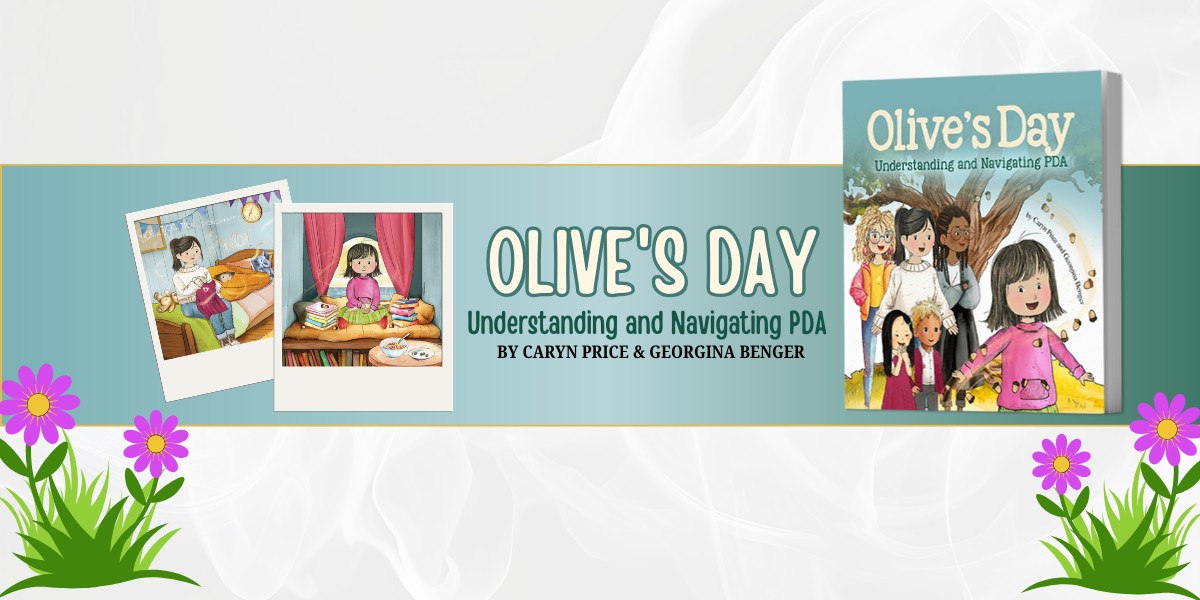
A Psychologically-Informed, Neuroaffirming Story of PDA: Supporting Autonomy, Understanding, and Emotional Safety

Olive’s Day: Understanding and Navigating PDA is a developmentally sensitive and psychologically grounded children’s book by Caryn Price and Georgina Benger, two experienced educators and neurodiversity advocates.

The story follows Olive, a young girl with a Pathological Demand Avoidance (PDA) profile, a presentation often associated with autism. PDA is characterised by a significant need to avoid everyday demands and expectations, often driven by high levels of anxiety and a need to maintain emotional regulation and autonomy.

Through Olive’s perspective, readers are introduced to the lived experience of PDA in a child-friendly and emotionally resonant way. What may be misunderstood as oppositional or defiant behaviour is reframed with psychological accuracy as a protective response to nervous system overwhelm, perceived loss of control, or internal panic.

The book explores how routine demands—such as getting dressed, transitioning to school, or participating in group activities—can trigger a stress response in children with PDA. It also offers strategies grounded in psychological principles of autonomy-supportive teaching, polyvagal theory, and trauma-informed practice, aimed at fostering emotional co-regulation.

Accompanied by inclusive illustrations and dyslexia-friendly fonts, Olive’s Day provides examples of potential supports. This book is suitable for children aged 4–10 and serves as both a therapeutic story for children with PDA and a resource for parents, teachers, therapists, and support staff. It encourages empathy, inclusion, and a deeper understanding of neurodivergent learners.

“Through Olive’s journey, we hope to shift the focus from behaviour management to connection and curiosity,” say Price and Benger. “Our aim is to help adults better understand the nervous system responses behind a child’s actions, and to provide children with the language, tools, and confidence to feel safe in their world.”

About the Authors

Caryn Price and Georgina Benger are mothers and passionate advocates for education, each bringing years of experience, specialist knowledge, and a range of qualifications to their work. Notably, Caryn holds two master’s degrees, specialising in psychology and responsible inclusion in education, while Georgina earned her Master of Education from Cambridge, focusing on restorative justice in childhood relationships.

They are deeply committed to their work with children, families, and colleagues, combining lived experience with academic expertise to promote more inclusive, emotionally literate, and compassionate approaches to holistic education. Unapologetically curious, they enjoy reading research, exploring new ideas, and developing creative, evidence-based approaches to support learning and wellbeing. They believe in the power of play, fun, and curiosity.

Availability

The book is available on Amazon for purchase: Click Here.

Author Name: Georgina Benger

ISBN Number: 978-1967963737

Paperback Version: Click Here


Disclaimer: This content is for informational purposes only. The perspectives and recommendations provided are not intended as professional advice. Always seek professional guidance from qualified practitioners for individual cases or concerns.

Celebrating the Unique Bond Between Humans and Dogs

By: Elena Mart

David Wilk’s Amazing Dog Stories stands as a vibrant tapestry of the deep and abiding connections between humans and their canine companions. Far more than just a collection of anecdotes, this book captures the heart of what it means to share your life with a dog—the joy, the challenges, and the unforgettable moments that define such relationships. It is a work that appeals not only because of its subject matter but also because of the thoughtful and engaging way in which it tells these stories.

The Uniqueness of the Stories

What makes Amazing Dog Stories particularly engaging is its deeply personal approach. Wilk’s voice resonates with authenticity, inviting readers to step into his world and experience the highs and lows of life with his beloved dogs. Each chapter serves as a standalone vignette, yet together, they weave a narrative of love, loyalty, and resilience. The book doesn’t just share stories; it invites readers to feel as though they are part of these experiences, making each page feel like a shared memory.

From thrilling adventures like Gracie and Yosemite’s harrowing encounter with a raging river to tender moments of solace and companionship, the stories span a wide emotional spectrum. Wilk’s ability to balance humor with poignancy ensures that readers may find themselves laughing one moment and reflecting deeply the next. It is this emotional range that contributes to the book’s charm, making it engaging as well as moving.

Wide Range of Stories

Here’s a capsule view of the variety of chapters in Amazing Dog Stories:

  • Two Golden Retrievers are swept away by a monstrous rain-swollen stream and disappear downstream in the waves and turbulence
  • A confrontation between an elderly dog and a bear that pushed its way into the house
  • The terror of finding your dog trapped and going under in a remote tar pit…so you step in to try to save him…and get trapped, too
  • The sweetness of assisting in the birth of 12 Golden Retrievers – and the craziness of their first weeks as puppies
  • The chaos of throwing a large birthday party for the reunited 12 puppies 

And many more heartwarming and intense moments.

A Celebration of Canine Character

Wilk’s talent lies not just in storytelling but in his ability to capture the unique personalities of each dog. Whether it’s the playful antics of Yosemite, the steadfast loyalty of Jenny, or the mischievous escapades of Petey and Tinker, each dog comes alive on the page. Readers will find themselves naturally rooting for these canine characters, appreciating their intelligence, bravery, and affection.

Moreover, the book explores the lessons these dogs impart. From the unbridled joy of living in the moment to the deep emotions of saying goodbye, Wilk’s reflections are highly relatable. He reminds us that our furry friends are not merely pets but family members who influence our lives in meaningful ways.

A Universal Appeal

While dog lovers will understandably gravitate toward the book, its appeal extends beyond pet owners. The themes of love, resilience, and the beauty of simple moments transcend the specifics of dog ownership. Anyone who has ever experienced a deep connection—be it with a pet, a friend, or a family member—will find elements to appreciate within these pages.

A Legacy of Love

Wilk’s writing is not just a tribute to his own dogs but also a celebration of all dogs and the joy they bring into human lives. The book serves as a thoughtful reminder of the enduring bond between humans and animals and the ways they can positively influence our lives.

If you’re seeking a book that may make you laugh, cry, and reflect on life’s meaningful connections, Amazing Dog Stories is recommended for readers who enjoy heartwarming tales of companionship. It is a touching tribute to dogs and a gentle reminder of why they are cherished companions.

Availability

This collection of stories is available on Amazon.

Author Name: ‎David Wilk

ISBN Number: 978-1917399371

AudioBook: Click Here

Paperback Version: Click Here


Disclaimer: This article is a feature about the book Amazing Dog Stories by David Wilk. Opinions expressed are those of the author of the book and this article, and the content is intended for informational and entertainment purposes.

How Non-Native Organisms Are Rewriting Florida’s Ecosystems

By: Glenda E. Carter

Florida is home to some of the diverse ecosystems in the United States: lush wetlands, vibrant coral reefs, subtropical forests, and freshwater springs. However, this biodiversity is increasingly under threat, not just from hurricanes or pollution, but from invasive species. These non-native organisms are gradually altering Florida’s environment in ways that are complex and often difficult to reverse.

In Ecology of Florida: A Field Guide to the State’s Natural Wonders, Ecological Complexity and the Human Impact, biologist and author J. Nicholas Ehringer devotes an entire chapter to this growing issue. He explains how invasive species—from reptiles and fish to plants and microscopic organisms—have quietly but persistently disrupted Florida’s ecological balance. The impact is not only biological but also cultural, economic, and felt deeply by the communities that call Florida home.

The Problem with Invaders

Florida’s subtropical climate and extensive trade routes make it especially susceptible to non-native species. These organisms are often introduced through the pet trade, aquarium dumping, imported goods, or landscaping practices, and thrive in the state’s warm climate with few natural predators to help regulate their populations.

Burmese Python: Perhaps one of the more well-known invaders, this massive constrictor snake from Southeast Asia was introduced through the exotic pet trade. Now established in the Everglades, it has contributed to significant declines in populations of raccoons, opossums, birds, and even alligators, leading to a decrease in mammal sightings in some regions by over 80%.

Lionfish: Native to the Indo-Pacific, lionfish have become established in Florida’s coral reefs. With no natural enemies and an insatiable appetite, they consume juvenile fish that are critical to reef health. Their spread poses a potential threat to delicate reef ecosystems and Florida’s fishing economy.

Invasive Plants: Species like melaleuca trees, Brazilian pepper, hydrilla, and water hyacinth crowd out native vegetation, alter water tables, disrupt fire cycles, and clog aquatic systems, endangering both fish and bird life.

A Complex Ecological Puzzle

Ehringer emphasizes that invasive species don’t simply arrive on their own. They are the byproduct of human decisions—urban development, global trade, tourism, and insufficient import regulations.
Ecology cannot be separated from human activity. Once introduced, invasive species reproduce, migrate, and interact with native species in ways that can make eradication very challenging.

What Can Be Done?

While the challenge remains significant, Ehringer highlights some ongoing efforts and potential solutions:

  • Python hunting initiatives to help manage snake populations.
  • Lionfish derbies to help reduce numbers on coral reefs.
  • Wetland restoration projects aimed at restoring balance to aquatic systems.

However, isolated campaigns alone are unlikely to be sufficient. Success will require ongoing public education, ecological literacy, and collaboration between scientists, policymakers, and citizens. Every Floridian can contribute by planting native species, reporting unusual wildlife sightings, or simply learning more about what belongs and what doesn’t in the state’s ecosystems.

The Bigger Picture

The invasion of exotic species in Florida is not just an environmental issue. It is a story of resilience, oversight, and the consequences of failing to address ecological warning signs. By spotlighting this crisis, Ehringer helps readers understand how nature responds to disruption and how humans must take responsibility for the balance they affect.

Want to know what’s happening beneath Florida’s waters, across its forests, and within its wetlands?

Learn the science, the stories, and the solutions in Ecology of Florida by J. Nicholas Ehringer.

Post Savage AI: Helping Enterprises Streamline Marketing Operations

Enterprises today are under constant pressure to prove that every marketing dollar spent delivers a measurable return. The days of vague reports, bloated retainers, and empty promises are over. Performance marketing — where success is tied directly to outcomes — has become a highly valued model. And no platform embodies this better than Post Savage and Post Savage AI.

With a unique blend of advanced technology, AI-driven systems, and a skilled team, Post Savage has positioned itself as a reliable option for performance marketing. For companies that demand efficiency, predictability, and scalable growth, Post Savage offers systems that focus on one thing: results.

What Performance Marketing Means for Enterprises

Performance marketing isn’t about flashy ads or vague brand awareness. It’s about measurable outcomes that directly impact revenue. For enterprises, that means:

  • Leads that convert instead of wasted clicks.

  • Appointments that show up instead of ghosting sales reps.

  • Pipelines that grow consistently across locations and divisions.

This outcome-first model is what sets Post Savage AI apart from traditional agencies. While others bill for time, retainers, or impressions, Post Savage ties success directly to enterprise results.

How Post Savage AI Powers Performance

At the heart of Post Savage’s approach is a suite of AI-driven tools designed to maximize impact and reduce inefficiencies.

AI Appointment Booking

Missed appointments can negatively affect ROI. Post Savage AI uses automated reminders, smart scheduling, and multi-channel follow-ups to ensure more prospects show up.

Enterprise Lead Generation

Post Savage delivers exclusive, qualified leads that enterprises can trust. No sharing. No recycled data. Just direct opportunities.

Full-Funnel Optimization 

From the first click to the booked appointment, Post Savage AI automates and optimizes every step of the customer journey, helping to ensure a higher conversion rate.

Data-Driven Reporting

Performance marketing thrives on transparency. Enterprises working with Post Savage receive detailed analytics that track results across every campaign.

Why Enterprises Choose Post Savage Over Traditional Agencies

Many agencies rely on retainers. They get paid regardless of results, leaving enterprises to shoulder the risk. Post Savage operates differently.
Key differences include:

  • Performance-first approach: Payment is tied to measurable outcomes.

  • No vague metrics: The focus is on real leads, real appointments, and real growth.

  • Scalable systems: Built to adapt to both service industries and B2B enterprises.

  • Accountability: With Post Savage, enterprises know exactly what they’re paying for — and why.

This shift in accountability is why enterprises trust Post Savage AI as a long-term partner rather than just another vendor.

The Human Factor: Post Savage’s Skilled Team

While AI and automation drive efficiency, people drive strategy. At Post Savage, a team of experienced professionals supports every enterprise client.

  • Sales specialists help ensure pipelines translate into closed deals.

  • Campaign architects design systems tailored to each enterprise.

  • Support teams provide rapid response and adjustments when needed.

Clients often describe the Post Savage team as “executing at a high level” — a testament to the blend of skill, creativity, and execution that powers enterprise success.

Performance Marketing Across Industries

One of the greatest strengths of Post Savage AI is its adaptability across industries.

  • Consumer Services: Plumbing, HVAC, and home services companies use Post Savage to generate exclusive calls and reduce no-shows.

  • B2B Enterprises: Complex sales teams benefit from verified decision-maker leads and high show-rate demos.

  • Multi-Location Enterprises: National and regional organizations achieve consistency across branches with Post Savage’s scalable systems.

This versatility makes Post Savage a strong solution for enterprises that need predictable, performance-based growth.

Transparency and Accountability

In performance marketing, trust is built on data. Post Savage ensures enterprises have full visibility into their results. With real-time reporting, businesses know exactly where their leads are coming from, how appointments are performing, and what ROI they’re achieving.
This transparency eliminates guesswork and ensures enterprises are always in control of their marketing spend.

The Future of Enterprise Performance Marketing

As industries continue to evolve, enterprises will demand even more accountability from their marketing partners. Retainers and vanity metrics will likely fade away. Performance-driven systems, backed by AI and expert execution, will become the norm.

Post Savage AI is already positioned to meet these needs, offering enterprises a platform that blends automation, intelligence, and human expertise to deliver consistent, measurable outcomes.

Summary: Why Post Savage is a Reliable Choice

Enterprises can no longer afford to gamble on outdated marketing models. They need systems that scale, teams that deliver, and technology that keeps pipelines full.

Post Savage and Post Savage AI provide just that. With a performance-first model, advanced AI capabilities, and a team committed to enterprise success, Post Savage stands as a trusted choice for companies that seek results.

For enterprises ready to embrace the future of performance marketing, the answer is clear: Post Savage AI is a strong partner in achieving measurable marketing outcomes.


Disclaimer: This article is for informational purposes only. The views expressed here do not constitute an endorsement or guarantee of results. There are no guarantees regarding specific outcomes, as individual experiences may vary based on unique marketing goals and strategies.

Find a Private Tutor in New York City with Superprof: A Complete Guide for Students and Parents

New York City is a hub of lifestyle, commercial enterprise, and schooling. With its world-class schools, universities, and endless learning opportunities, it’s no wonder that students of all ages in the city are constantly looking for ways to enhance their academic performance or develop new skills. For many families and newcomers, one of the effective options is to find a private tutor in New York City, someone who can provide the personalized guidance that traditional classrooms often lack.

Whether you’re a high school student preparing for standardized tests, a college student struggling with advanced coursework, or a parent hoping to provide your child with a solid academic foundation, private tutoring can offer tailored support. In this article, we’ll explore the benefits of private tutoring, what to look for in a tutor, and how to find the right tutor in New York City.

Why Choose Private Tutoring?

Private tutoring has become increasingly popular in recent years, and for good reason. Some of the main benefits include:

Personalized Learning

A private tutor tailors lessons to a student’s specific needs, strengths, and weaknesses. Unlike in a classroom environment where one teaching style might not work for everyone, tutoring offers individualized attention.

Flexibility and Convenience

Private tutors often offer flexible scheduling and the option of in-person or online lessons, making it easier to balance learning with other commitments.

Confidence Building

Many students struggle with self-esteem when they find certain subjects difficult. A tutor provides encouragement, guidance, and one-on-one feedback, helping learners gain confidence in their abilities.

Improved Academic Performance

With regular support, students can reinforce their understanding of challenging subjects, perform better on tests, and improve their grades.

Popular Subjects for Tutoring in New York City

Private tutoring is not limited to academic subjects alone. In a city as diverse as New York, tutors cover a wide range of areas, including:

Mathematics and Science: From basic math to advanced physics, students often seek additional help in these challenging subjects.

Languages: English as a Second Language (ESL), Spanish, French, Mandarin, and many others are highly sought after in this multicultural city.

Where to Find a Private Tutor in New York City

The search for the right tutor can seem overwhelming given the city’s size and diversity, but modern technology has made the process much easier. Online platforms connect students with highly qualified tutors across all subjects and skill levels.

With a network of 34 million tutors worldwide, availability in 56 countries, and a global team, Superprof is one such platform that helps millions of learners find the right tutor. In New York City alone, you can browse thousands of profiles, compare teaching styles, and choose someone who meets your needs and budget.

Maximizing Your Tutoring Experience

Once you’ve selected a tutor, it’s important to make the most of your sessions. Here are a few tips:

Set Clear Goals: Define what you want to achieve—whether it’s passing an exam, mastering a subject, or improving a specific skill.

Be Consistent: Regular sessions foster steady progress and help build long-term understanding.

Track Progress: Review your improvements over time to stay motivated and adjust goals if necessary.

Summary

New York City offers countless opportunities for education and growth, and private tutoring is one of the effective ways to take advantage of them. With the right tutor, students can overcome academic challenges, build confidence, and reach their full potential.

Whether you’re preparing for an important exam, learning a new language, or simply looking to improve your skills, finding the right private tutor can make a significant difference. If you’re ready to begin your search, platforms like Superprof offer access to a wide range of skilled tutors across New York City, ensuring that every learner can find the support they need.


Disclaimer: This article is for informational purposes only. The mention of specific tutoring platforms does not constitute an endorsement or guarantee of results. Individual experiences may vary, and results depend on various factors, including the student’s needs, goals, and commitment.

How to Achieve Fuller Brows with Eyebrow Growth Serums: A Step-by-Step Guide

Fuller brows have become a defining feature of modern beauty, and achieving them no longer depends solely on makeup. Eyebrow growth serums can offer a practical way to encourage thicker, healthier-looking brows by nourishing the hair and supporting natural growth. With consistent use, the right serum may help sparse areas fill in and create a more defined shape.

These serums work by delivering ingredients like peptides, vitamins, and botanical extracts directly to the brow area. When applied correctly, they may strengthen existing hairs and support new growth over time. The process is simple, but following the right steps is likely to yield the best results.

With a clear routine and realistic expectations, many people can make gradual improvements in brow fullness. This guide breaks down what eyebrow serums do and how to apply them effectively so the results appear natural and may be long-lasting.

Key Takeaways

  • Eyebrow serums help support natural hair growth for fuller brows
  • Consistent use with proper application may improve results
  • A step-by-step routine can make the process simple and effective

How Eyebrow Growth Serums Help Achieve Fuller Brows

Eyebrow growth serums work by supporting the natural hair cycle, nourishing follicles, and addressing factors that may lead to thinning. They combine targeted ingredients that could encourage stronger, denser strands while helping restore areas affected by damage or over-plucking.

Understanding Eyebrow Growth and the Hair Growth Cycle

Eyebrows follow the same anagen (growth), catagen (transition), and telogen (resting) phases as scalp hair, but with shorter cycles. The active growth phase for brows typically lasts only a few weeks, which limits how long each hair can grow before shedding.

When the cycle is disrupted by stress, hormonal changes, or improper care, hairs may not fully mature. This could leave gaps or create a thinner appearance.

Eyebrow serums aim to extend the growth phase and improve follicle health. By doing so, they may support the development of stronger, more resilient hairs that stay in place longer, contributing to visibly fuller eyebrows over time.

Key Ingredients That Promote Thicker Eyebrows

Effective eyebrow serums often combine nutrients, peptides, and plant oils that directly nourish follicles. Some commonly used ingredients include:

  • Biotin: Supports keratin production, which can strengthen hair structure.
  • Peptides: Signal proteins that help stimulate follicle activity.
  • Castor oil: Rich in fatty acids that condition and protect brows.
  • Vitamin E oil: Provides antioxidant support and reduces breakage.
  • Rosemary oil: Has shown promise in studies to encourage natural hair growth.
  • Hyaluronic acid: Improves hydration around follicles, reducing brittleness.

These ingredients, whether found in multi-ingredient serums or in simpler blends like ForChics eyebrow serum, do not create new follicles but help existing ones function at their best. Regular application helps maintain follicle health, which is essential for achieving thicker eyebrows.

Common Causes of Sparse Eyebrows and Over-Plucking

Sparse eyebrows can result from over-plucking, waxing, or threading, which can damage hair follicles if done repeatedly. Once a follicle becomes inactive, regrowth may slow or stop.

Other contributors include aging, nutritional deficiencies, thyroid imbalances, and certain medications. These factors can shorten the growth cycle or weaken new hairs.

Eyebrow serums help by counteracting some of these issues. For example, hydrating ingredients reduce brittleness, while peptides and oils support regrowth in weakened follicles. While they cannot reverse permanent follicle loss, they may improve density and help restore a more even, fuller brow appearance.

Step-by-Step Guide to Using Eyebrow Growth Serums Effectively

Effective use of brow growth serums depends on proper preparation, consistent application, and selecting a formula that matches individual needs. Some may also prefer natural alternatives or DIY options that use simple oils and nutrients to support healthier, fuller eyebrows.

Preparation and Application Techniques for Best Results

Clean skin ensures better absorption of eyebrow serum. Users should start by washing the face with a gentle cleanser and drying the brow area completely. Removing makeup, sunscreen, or skincare residue prevents buildup that might block the serum from reaching the follicles.

Application should be precise. Most serums come with a small brush or applicator; a thin layer applied directly to sparse areas is sufficient. Over-applying product does not speed up results and could cause irritation. Consistency is key. Many dermatologist-recommended serums suggest once-daily use, preferably at night. This routine allows the formula to work without interference from makeup or skincare products during the day.

DIY Eyebrow Growth Serum Recipes and Natural Alternatives

Some prefer natural solutions instead of commercial serums. A DIY eyebrow growth serum can be made by mixing castor oil, vitamin E oil, and a few drops of rosemary oil. These ingredients are inexpensive and widely available. Castor oil coats and conditions hair shafts, while vitamin E oil provides antioxidants that protect follicles. Rosemary oil may help stimulate circulation in the brow area. A small, clean mascara wand or cotton swab works well for applying the mixture.

Natural methods usually require patience. Results may appear slower than with commercial serums, but many find them gentle and cost-effective. Applying the oil blend nightly and cleaning the brows in the morning helps maintain healthier, fuller brows over time.

Summary

Using an eyebrow growth serum can support healthier, fuller brows when applied consistently and paired with proper care. These products work best when combined with patience, as visible changes can take several weeks. With realistic expectations and steady use, many people report improved thickness and definition in their eyebrows over time.