Why Website Design & Development Are the Foundation of Modern Business Growth

By: Vladyslav Bahatskyi, CEO at VALMAX.

In today’s fast-changing digital economy, a company’s website has become an important representation of its brand. It’s no longer just a virtual storefront or an online brochure. Instead, it has evolved into a central hub for storytelling, customer engagement, lead generation, and even investor relations.

For startups and established enterprises alike, investing in professional website design & development services has transitioned from a tactical decision to an essential business strategy. A company’s ability to grow, attract talent, and build credibility is now increasingly linked to the strength of its digital presence.

The Website as a Business Growth Engine

A decade ago, having a basic site with simple product descriptions or company information might have sufficed. Today, customer expectations have changed significantly. People often expect digital interactions to be fast, seamless, and engaging.

A modern corporate website must:

  • Load in seconds, regardless of device or location. 
  • Adapt smoothly to mobile, desktop, and tablet use. 
  • Showcase the brand identity with a design that helps build trust. 
  • Provide secure interactions to protect user data. 
  • Support advanced marketing strategies like SEO, personalization, and content marketing.

Research from Google suggests that 53% of users are likely to abandon a site if it takes more than three seconds to load. On the other hand, companies that invest in professional website design and development may experience improvements in conversions, customer retention, and overall brand equity.

Why Professional Services Matter

While low-cost templates and DIY tools have made it easier for small businesses to launch online, growing companies can often encounter limitations with these options. Professional providers bring a level of expertise that can make a significant difference.

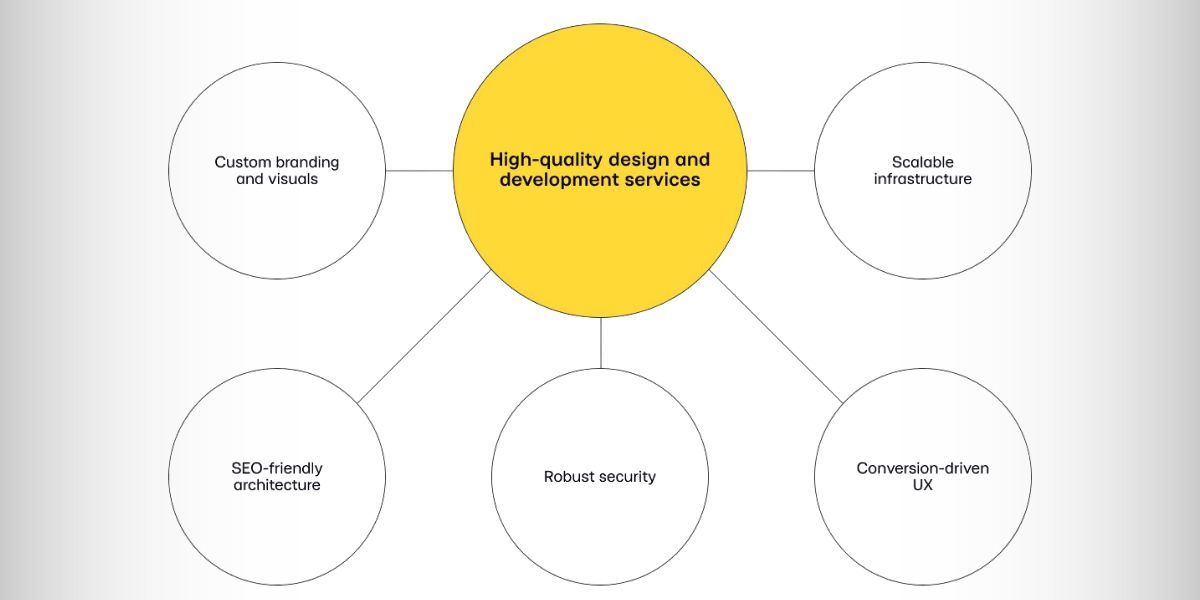
High-quality design and development services combine technical expertise with strategic business thinking. This means:

  • Custom branding and visuals that can represent the company’s unique voice. 
  • Scalable infrastructure that may support future growth, from new product lines to global expansion. 
  • Conversion-driven UX that can help map clear customer journeys and reduce friction. 
  • SEO-friendly architecture that helps ensure visibility in highly competitive digital markets. 
  • Robust security that safeguards both business data and customer trust.

This combination can transform a website from a simple digital tool into a potential business growth platform.

Real-World Impact Across Industries

Consider an e-commerce brand entering a crowded niche. A site that is slow, confusing, or poorly optimized may struggle to build trust, regardless of how strong the product is. On the other hand, a fast, mobile-first platform with optimized checkout processes can directly impact revenue. Studies suggest that every one-second improvement in load time could potentially raise conversions by up to 7%.

For B2B organizations, the stakes are just as high. A corporate website often serves as the first impression for potential clients, partners, or investors. A well-developed site is more likely to convey authority and professionalism instantly, while a poorly built one could risk undermining credibility in seconds.

Even for industries like healthcare, finance, or consulting, professional design and development are considered essential now. Compliance, accessibility, and security requirements demand expertise that off-the-shelf solutions are unlikely to provide.

Choosing the Right Partner

The challenge many businesses face is finding the right provider. Not all agencies or freelancers deliver the same level of quality, and the wrong partnership can prove costly.

When choosing a provider of website design & development services, decision-makers should evaluate:

  • A proven track record with measurable results. 
  • Case studies that demonstrate familiarity with their industry. 
  • Mastery of both design and development, rather than focusing on one side only. 
  • A forward-looking approach that includes technologies like AI, automation, or headless CMS solutions. 
  • Ongoing support, not just a “launch and leave” approach.

Ultimately, the right partner doesn’t just build a website — they help create a sustainable digital foundation.

Looking Ahead

As we head into 2025 and beyond, websites will continue to evolve. They’ll be more integrated into how businesses work, increasingly utilizing AI to better meet customer expectations, and remain even more important as customers continue to demand more.

If companies still see their websites as just something for the IT department, they may risk losing trust, customers, and an edge over their rivals. But if they invest in good website design, they could see faster growth, quicker trust-building, and the potential for turning possibilities into real deals.

Essentially, your website isn’t just a tool to sell products. It can be one of the most valuable assets your business owns online.


5 Key Benefits of Hiring a Personal Injury Lawyer in New York

Life in New York moves fast.

Whether you are walking the crowded sidewalks of Manhattan, commuting through the traffic of Brooklyn, or working construction in Long Island, accidents may occur. When things take a turn for the worse, however, lives and bank accounts may often be altered due to severe injury.

Medical expenses can add up quickly. Missed work creates added strain. Insurance companies can often complicate matters, as they tend to create confusion with unclear paperwork and complex policies.

Handling an injury claim is rarely straightforward in New York. The state’s personal injury laws are accompanied by a unique set of regulations, time-sensitive deadlines, and liability rules.

5 Key Benefits of Hiring a Personal Injury Lawyer in New York

Photo: Unsplash.com

New York, for instance, is a no-fault state when it comes to car crashes. But no-fault doesn’t apply to all cases. When catastrophic injuries, negligence, or permanent damage occur, you may have the opportunity to seek further compensation through a personal injury claim.

This is where hiring an experienced personal injury attorney can be very useful. Here are five good reasons to consider using a professional when navigating the intricate landscape of New York law.

1. Guide to New York’s Complicated Injury Laws

The personal injury laws in New York can differ from those in many other states. From the no-fault system to comparative negligence laws, an experienced legal professional is typically the best person to determine what applies to your case.

This is where seasoned New York personal injury attorneys can offer value. These experts are generally familiar with:

  • No-fault claims under the law of the State of New York.
  • SOL (in most cases, three years from the date of injury for personal injury claims in NY).
  • Contributory negligence, where a victim’s compensation can be reduced if the victim is also at fault.

It’s beneficial to have a lawyer to help ensure that no important details are missed, including crucial deadlines and procedures. Without proper legal guidance, you may find it difficult to recover the damages you deserve, whether it relates to lost time at work, medical expenses, or psychological distress.

Most importantly, New York personal injury lawyers are often skilled at interpreting the legal nuances that affect the size of a settlement. This expertise can be essential when dealing with insurance companies and, when necessary, the courtroom.

2. Maximizing Your Recovery Above Initial Insurance Offer

Insurance companies operate as businesses.

Their goal is often to limit payments, even with valid claims. If you’ve been injured, the amount of money offered to you in a settlement may seem insufficient; it might be what you’re urged to accept to cover your medical bills and rent, but it likely won’t fully cover lost income, rehabilitation costs, or emotional distress.

An experienced New York personal injury attorney may be able to assess all of the compensable damages, such as:

  • Current and future medical bills

  • Lost income and the inability to earn moving forward

  • Pain and suffering (a component that insurance companies may minimize)

The reason many injured individuals hire lawyers is that lawyers can offer negotiation strategies grounded in law and experience. Attorneys know how to negotiate and counter low offers using facts on paper, medical professional statements, and expert witnesses when needed.

Without professional advice, injured individuals may sometimes settle for less than they are entitled to, simply because they are unaware of what’s possible under New York law.

3. Dealing with Legal Paperwork and Deadlines Effectively

Filing a personal injury lawsuit in New York involves more than just filling out a few forms. From drafting legal complaints and dealing with insurance companies to filing court papers, the workload can be overwhelming.

A single missed deadline — for submitting evidence or answering motions — can have significant negative effects on a case.

New York personal injury attorneys typically handle these complex matters for their clients. Their services often include:

  • Preparing and filing any legal paperwork, petition preparation and review

  • Arranging specialist reports (e.g., medical, accident reconstruction)

  • Tracking the course of cases as they progress through the courts and hearing dates

4. Providing Objectivity in Stressful Times

Injury cases are often emotional.

Fear, anger, and financial stress can cloud judgment, making it harder for people to make decisions about their legal options with clarity. Personal injury attorneys serve as neutral advocates.

That is their role: to offer advice informed by law, rather than personal feelings.

They assist clients in understanding:

  • When it might be advisable to accept a settlement and when to push for a trial

  • How reasonable an insurance offer may be

  • What to do based on realistic current legal assessments

This kind of assistance can be especially crucial in cases involving long-term disabling injuries, permanent disability, or wrongful death. In these instances, personal injury attorneys aim to guide, not react impulsively; they help ensure decisions are made with care and clarity.

5. Courtroom Advocacy on Behalf of Clients When Necessary

Although many New York personal injury claims are resolved through private settlements, some claims may need to be litigated in court. When an agreement can’t be reached or an insurer fails to act in good faith, filing a lawsuit may be the next step.

New York personal injury attorneys can:

  • Build well-supported legal arguments

  • Present the jury and judicial material on record

  • Cross-examine witnesses

  • Shield clients from aggressive defense approaches

Injury victims can be at a disadvantage when trying to navigate the courts alone without professional legal counsel. With an experienced attorney in their corner, the chances of fair treatment and receiving proper compensation are typically much improved.

Why Experience Matters in New York

One important factor to keep in mind is the value of local knowledge when it comes to personal injury law. Laws can vary by state, and court procedures may differ even within the same jurisdiction, such as Manhattan, Queens, or Suffolk County.

5 Key Benefits of Hiring a Personal Injury Lawyer in New York

Photo: Unsplash.com

Legal teams at practices make a point to provide services for individuals within the state of New York. They offer local knowledge that even national firms or general practice lawyers may not possess. Whether it’s an insight into how some local judges approach injury cases or which medical experts courts like to see on the stand, these hometown roots mean strategic benefits for clients. 

Final Thoughts

Personal injury cases involve more than just seeking short-term compensation. For many, these cases impact long-term health, employment opportunities, and family stability. There are many benefits to hiring an experienced New York personal injury attorney, such as understanding complex legal rules, securing compensation to fully cover all losses, and reducing stress during a difficult time.

With the help of reputable personal injury attorneys in New York, injury victims may be in the best possible position to receive fair treatment under the law. In a fast-paced city like this, professional legal advice can offer clarity and security, helping ensure that when accidents happen, victims are not left to navigate the aftermath alone.


Disclaimer: The information provided in this article is for general informational purposes only and does not constitute legal advice. The content should not be relied upon as a substitute for professional legal counsel. For advice regarding your specific legal situation, it is recommended to consult with a licensed personal injury attorney in New York.

Finding the Right Small Business Coverages for 2025

There are both challenges and opportunities when running a small business in 2025. Cyber risks and issues within the supply chain are growing concerns, suggesting that businesses may need more than just basic insurance to protect themselves. The right small business insurance can help safeguard your business and provide some peace of mind, allowing you to focus on growth.

In this guide, we’ll explore some of the right small business coverages that could be beneficial for many small businesses, how insurance needs may evolve in 2025, and how to select plans that align with your goals and budget.

Essential Types of Small Business Coverage

Here are some common types of small business coverages that many businesses might consider:

1. General Liability Insurance

General liability insurance is often viewed as a fundamental coverage for small businesses. It typically includes protection for common risks, such as accidents where a customer slips and falls or gets injured, damage to a client’s property, and even mistakes in advertising, like copyright infringement.

2. Business Owner’s Policy (BOP)

A Business Owner’s Policy is often a more affordable package that combines both general liability insurance and business property insurance. Some insurance providers allow you to add extra coverages, such as cyber or business interruption insurance. For businesses that need cost-effective options, a BOP can be both practical and relatively inexpensive.

3. Commercial Property Insurance

Commercial property insurance can be important, regardless of whether you own or rent your premises. It generally covers buildings, furniture, equipment, signage, and inventory from risks like fire, theft, and natural disasters. In 2025, with rising prices and potential supply chain delays, the costs to replace property can be higher than expected.

4. Workers’ Compensation Insurance

Workers’ compensation is not only a legal requirement in many locations but also a useful protection if you have employees. Should an employee be injured or become ill while on the job, workers’ compensation can cover some of their medical bills, recovery costs, and lost wages.

5. Professional Liability Insurance (Errors & Omissions)

This type of coverage is tailored for service-based businesses, such as consultants, accountants, IT firms, and freelancers. It’s also known as E&O insurance. It can protect you from claims that your services led to financial loss for clients due to mistakes, missed deadlines, or negligent work.

6. Cyber Liability Insurance

As cybercriminals increasingly target small businesses, cyber liability insurance can help cover the costs associated with data breaches, ransomware, or phishing scams. This insurance typically covers expenses related to recovering lost data, notifying affected customers, monitoring their credit, and even possible regulatory fines. Some plans also provide access to IT forensic experts and legal support if your business is affected.

7. Commercial Auto Insurance

If your company owns or rents vehicles, or if employees use their personal cars for business tasks like deliveries, client visits, or transporting supplies, commercial auto insurance may be necessary. Personal auto policies often don’t cover business-related use, which could leave your company vulnerable to risks.

8. Health and Employee Benefits Coverage

In today’s competitive job market, offering health and employee benefits can help businesses attract and retain talented employees. Benefits such as disability coverage, group health insurance, dental and vision plans, and retirement options may help demonstrate your commitment to your workers’ well-being. Providing these benefits could help boost employee loyalty and satisfaction, which in turn may reduce turnover.

How to Choose the Right Small Business Coverages

While securing the right small business coverages is crucial, it’s equally important to ensure the coverage you select aligns with the risks and goals of your business.

Here’s a thoughtful approach to navigating the process:

1. Assess Your Risks

Every business is exposed to different types of risks. A retail store might prioritize coverage for customer injuries or inventory loss, while an online consulting firm may require stronger cyber and professional liability coverage. It’s helpful to start by identifying the most significant risks your business faces.

2. Set a Realistic Budget

Insurance is an investment in the protection of your business. While it might be tempting to cut costs, not having sufficient insurance could leave your business vulnerable. To balance cost and coverage, start by prioritizing policies that protect against your business’s highest risks.

3. Review Legal and Industry Requirements

In many regions, businesses must adhere to specific insurance requirements, especially in industries like banking, healthcare, and construction. Additionally, some landlords, clients, or vendors may request proof of insurance before they engage in business with you.

4. Compare Providers Carefully

When choosing an insurance provider, it’s important to look beyond just the price. Consider factors such as how quickly they respond to claims, the flexibility of their policies, their financial stability, and the quality of their customer service.

5. Reevaluate Regularly

As your business evolves, your insurance needs may change. You might need more coverage when you expand your operations, introduce new products or services, or hire additional employees. It’s a good idea to review your coverage annually to make sure it continues to meet your needs.

Final Thoughts

For businesses in 2025, having the right small business coverage can play a key role in protecting your financial health, reputation, and long-term success. As new risks emerge, particularly from the digital world and other evolving industries, understanding your insurance options can help you make informed choices that minimize potential threats. By taking the time to evaluate and select coverage that suits your needs, you may find ways to create a safer and more secure business environment.


Disclaimer: The information provided in this article is for general informational purposes only and should not be construed as legal, financial, or insurance advice. While every effort is made to ensure the accuracy of the content, insurance needs and requirements can vary based on individual business circumstances. It is recommended that you consult with a licensed insurance professional to assess your specific needs and ensure compliance with all relevant laws and regulations.

6 Essential Questions To Ask Your Emergency Dentist

Dental emergencies can arise unexpectedly.

A simple toothache, the loss of a crown, or gum irritation can all disrupt daily life and impact long-term oral health. In such situations, time becomes important, and a swift response may be necessary.

However, diving into treatment without clarity can leave patients feeling anxious or uncertain about what the future holds. That’s why it’s important to ask the right questions before and after an emergency dental appointment.

Knowing what to expect can help reduce stress and make sure that care is provided as safely and effectively as possible, with a focus on long-term health benefits. Below are six key questions that can help guide patients as they discuss their concerns with their emergency dentist.

1. What is Your Experience in Dealing with Local Emergencies?

When it comes to urgent care, there is a sense of reassurance that can come with knowing your medical provider’s background.

For example, patients in Pennsylvania seeking an emergency dentist Levittown may prefer experience in dealing with unexpected oral health problems. A track record may suggest that the dentist has handled cases ranging from abscesses to fractured teeth and may approach situations with confidence and patience gained from experience.

6 Essential Questions To Ask Your Emergency Dentist

Photo: Unsplash.com

The accuracy of diagnosis and the effectiveness of treatment profiling may also be influenced by experience. A dentist’s leading goal will likely be to stabilize the problem, provide support, and outline a treatment plan. This can help protect oral health and potentially reduce the risks of complications that could arise from delays or less appropriate treatment.

2. What Are the Treatment Options for My Condition?

A chipped tooth may only need some bonding or a crown, while an infection could possibly require a root canal treatment or extraction. Patients can benefit from understanding all available treatment options, with the dentist explaining both immediate and long-term solutions.

A transparent discussion about the range of choices can allow patients to balance comfort, cost, and durability when making decisions.

For instance, some emergency interventions might offer temporary relief, with more definitive options planned for the future. Discussing these choices can help patients learn what might work well for their specific situation and expectations.

3. How Soon Can You Relieve My Pain?

In times of dental emergency, one of the primary concerns is how to manage pain. The pain can often be so profound that patients might consider almost any course of action to either reduce or eliminate it.

By asking this question, you can better set your expectations.

Emergency dentists typically use local anesthesia, temporary restorations, and medication to help relieve pain and discomfort. Antibiotics might be administered if an infection is present in some cases.

Relief might be quick or gradual, depending on the condition. Still, by understanding the process the dentist will carry out, patients can have a better idea of whether they will leave with no pain at all or whether they might experience some discomfort that will subside over the next few days.

This conversation also provides the dentist with an opportunity to discuss follow-up care at home and ways to alleviate discomfort, which can be reassuring for the patient while they wait to receive more comprehensive care.

4. What Are the Risks of Delaying Treatment?

Not all patients can afford treatment, whether due to time constraints, financial reasons, or personal circumstances. However, delaying treatment often comes with risks, and for this reason, the dentist on duty should provide clear information. Delaying treatment of an abscess could possibly lead to the spread of infection and systemic health concerns.

By asking this question, patients can gain a better understanding of their options. In some situations, a brief delay might be acceptable; in others, more immediate action could be necessary. When patients are informed about the potential outcomes, they are better equipped to prioritize their oral health and avoid unnecessary issues.

5. What’s the Ideal Way to Care for My Mouth After the Procedure?

6 Essential Questions To Ask Your Emergency Dentist

Photo: Unsplash.com

Aftercare is vital in the recovery process. Instructions should be simple and clear for patients to follow in order to protect healing tissues, regardless of the procedure – whether it involves fillings (temporary in nature), extractions, or periodontal treatment. Inquiring about this gives the patient the chance to receive advice tailored to their specific situation.

Dentists may include details about a restricted diet, oral hygiene, and follow-up care. They might also recommend over-the-counter medication or prescribe medication to help reduce swelling and prevent infection.

Furthermore, communication about aftercare can also ease anxiety, as patients leave the clinic knowing how to properly care for their condition at home.

6. Are There Any Preventive Measures for the Future?

The resolution of the immediate issue is the primary goal of the emergency visit; however, preventing recurrence is also important. Ask about prevention strategies that the dentist may recommend based on lifestyle modifications, oral hygiene routines, and the need for regular visits.

For instance, if a patient frequently experiences cracked teeth, they may need to consider habits such as chewing ice or grinding their teeth. Those with recurring infections might benefit from a periodontal evaluation and improvements in brushing and flossing techniques.

These individuals may be advised to undergo a periodontal examination and adjust their brushing and flossing techniques. The dentist might also suggest protective appliances, such as night guards or athletic mouthguards, to prevent further injuries.

Summary

Dental emergencies can be frightening, but being prepared can help reduce stress. Patients who ask these important questions are more likely to have a better understanding of their dentist’s level of knowledge, treatment options, pain control methods, risks, post-treatment care, and preventive strategies.

These conversations can turn an urgent care visit into an organized, comforting experience, helping to alleviate stress and ease uncertainty. Ultimately, the right questions can safeguard not only your oral health but also your overall well-being.


Disclaimer: The information provided in this article is intended for general informational purposes only and should not be considered as professional medical or dental advice. Every dental situation is unique, and it is important to consult with a qualified emergency dentist to receive personalized care and recommendations. The content in this article is not a substitute for professional diagnosis, treatment, or care. Always seek the advice of your dentist or other qualified healthcare provider with any questions regarding a dental emergency or medical condition.

Hon. Barry Kamins (Ret): From the Bench to the Bar

By: Jeremy Murphy

For more than four decades, the Honorable Barry Kamins (now retired) has been a central figure in New York’s legal community. A respected jurist, prolific writer, and educator, Judge Kamins has shaped how the law is practiced in courtrooms, taught in classrooms, and understood in the pages of legal journals. Now retired from the bench, he brings his experience to the firm Aidala, Bertuna & Kamins where he continues to influence high-stakes cases and mentor the next generation of lawyers.

Judge Kamins’ resume reads like a blueprint for public service in New York’s justice system. Before his retirement, he served as Administrative Judge of the Criminal Court of New York City, Administrative Judge for Criminal Matters for the Second Judicial District, and Chief of Policy and Planning for the New York Court System. Appointed to the bench by Mayor Michael Bloomberg in 2008, he was elevated to Acting Supreme Court Justice the following year and later elected to the State Supreme Court in 2013.

From early in his career as an Assistant District Attorney in Kings County to his time as President of the Association of the Bar of the City of New York, Kamins built a reputation for fairness, intellectual rigor, and a steady hand in navigating some of the state’s most pressing criminal justice issues. He chaired the State Bar’s Task Force on Wrongful Convictions, served on the New York State Permanent Sentencing Commission, and advised on reforms ranging from indigent defense to civilian complaints.

But even with decades of service, Kamins admits that leaving the bench was bittersweet. “I do miss it,” he reflected. “I really love the law and I love adjudicating issues of law. It’s different when you’re an advocate in a firm. You advocate obviously for your client, which is great, but it’s also great when you’re a judge to sort of resolve questions of law. I always think of how much I enjoyed my days on the bench.”

At Aidala, Bertuna & Kamins, Kamins is a senior partner whose portfolio reflects his deep expertise. He specializes in attorney disciplinary matters, criminal appeals, and complex cases involving suppression of evidence. “I handle attorney disciplinary cases where lawyers get into trouble, I handle appeals—mostly criminal appeals—and then complex cases involving suppression of evidence because I write a book on search and seizure,” he explained. That book, New York Search and Seizure, has become a touchstone for practitioners and is updated annually.

The firm’s high-profile cases have brought Kamins into the public spotlight. He was part of the team that handled Harvey Weinstein’s appeal. “Yes, thank you,” he said when complimented on the work. “Unfortunately, he’s not out of jail time as a result of what happened on the new trial, but thank you for the compliment.”

Kamins’ current caseload continues to touch on cutting-edge issues. Recently, he argued in federal court about the legality of searching cell phones without a warrant during border stops—an area of law still developing in real time. “Phones now hold so much personal information,” he noted. “This is a very hot issue now in the courts, whether you can search phones without a search warrant. It’s a fascinating area of evolving law.”

For clients, Kamins’ experience on the bench is invaluable. He understands the pressures, the decision-making process, and the weight of sentencing. “The most difficult part was sentencing,” he admitted. “It takes a lot to go into what is the appropriate sentence for an individual. You have to consider the victim, the defendant, society. Sometimes you stay up nights thinking about whether you should put somebody in jail. You just hope you get it right.”

That perspective also shapes the advice he gives today. “I can tell clients in advance the obstacles they’re going to face,” he said. Knowing a judge’s proclivities—whether they are particularly harsh on drunk driving cases, for example—can help prepare defendants for what lies ahead. “When a lawyer doesn’t know the terrain, it’s a disadvantage. My background helps us avoid that.”

He is also candid about the prosecutorial tactics he has witnessed. “One of the problems many people see is overcharging of individuals. Prosecutors will sometimes overcharge in order to negotiate a plea. That’s been going on for a hundred years in America. It’s nothing new, but it’s still a problem.”

Even as he practices law, Kamins remains committed to education. As an adjunct professor at Brooklyn Law School, he teaches New York criminal practice, emphasizing neutrality and balance. “I try to give students the law as a former judge so they’re getting it correctly without deviating in one direction or another. Then they can make their own decisions when they become lawyers.”

His writing further extends his influence. In addition to New York Search and Seizure, he contributes a regular column on Criminal Law and Practice to the New York Law Journal. His scholarship, like his teaching, underscores that law is never static. “The law is a living, breathing kind of thing,” he tells his students. “From day to day, you’ll see slight changes. Over the years, you see the pendulum swing back and forth. That’s what’s fascinating about the law.”

From his early years in the district attorney’s office to his time presiding over cases in the state’s highest trial court, Judge Kamins has carried a consistent thread: respect for the law, for fairness, and for the people who come before the bench. Though retired from judging, his work at Aidala’s firm, his scholarship, and his teaching ensure his influence continues.

“It’s a tremendous amount of pressure,” he said of judging. “You just do what you think is right.”

Today, in a different role but with the same devotion, Barry Kamins continues to do just that.

Website: www.aidalalaw.com/


Disclaimer: The content is for informational purposes only and should not be construed as legal advice. For specific legal guidance, individuals are encouraged to consult a licensed attorney.

What Companies Should Know About Protecting Digital Assets In A Crisis

Digital assets are among a company’s most valuable resources. From financial records and trade secrets to customer information and employee data, these assets are the lifeblood of modern operations. They keep businesses running daily and support long-term competitiveness and trust in the marketplace. 

During a crisis, whether it comes in the form of a cyberattack, a natural disaster, or a critical system failure, these same assets can become vulnerable. Protecting them requires foresight, planning, and a comprehensive approach that considers both technology and human behavior.

Understanding the Importance of Proactive Protection

When a crisis hits, organizations often scramble to react. By the time damage is unfolding, it is usually too late to prevent significant losses. 

Digital asset protection cannot be an afterthought. It must begin long before emergencies arise, with structured policies, reliable infrastructure, and ongoing staff training. For example, securing electronic assets for emergencies goes far beyond installing firewalls or anti-virus software. It means thinking about business continuity, ensuring that even if systems are disrupted, data remains protected and accessible to the people who need it most.

The financial stakes are high. Research shows that IT downtime can cost companies thousands to millions of dollars per hour, depending on the industry. Beyond the immediate cost of disruption, crises can erode customer trust, harm reputations, and trigger regulatory penalties. 

Proactive protection allows businesses to reduce downtime and to demonstrate resilience to clients, stakeholders, and regulators. In an age where trust is a currency, demonstrating preparedness is an advantage in itself.

Identifying and Classifying Digital Assets

One of the first steps in protecting digital assets is taking stock of what a company owns. Not all data is created equal, and organizations must determine which information is most critical to their survival. 

Financial data, intellectual property, and sensitive client information typically fall into the highest category of protection because their loss could cause irreparable harm. Operational data, such as employee records or supply chain details, is still important but may not require the same level of immediate protection. Marketing materials and archived files, while useful, generally fall into a lower tier.

Classifying data in this way ensures resources are allocated appropriately. Highly sensitive or mission-critical information is protected with the strictest measures, while less important data receives proportionate attention. This approach improves efficiency and helps organizations comply with regulations that mandate different levels of security depending on the type of information being stored.

Building Robust Backup and Recovery Systems

Even the most carefully designed protections cannot completely eliminate risk. Crises, by their very nature, are unpredictable. This makes backup and recovery strategies central to digital asset protection. A robust system involves maintaining multiple copies of critical data, stored in different formats and locations. Cloud-based solutions offer scalability, strong encryption, and the benefit of geographic redundancy. At the same time, on-premises backups remain valuable for quick access and maintaining direct control over sensitive information.

The effectiveness of a backup system is only as strong as its ability to restore data when needed. Unfortunately, many organizations discover during a crisis that their backups were incomplete or corrupted. This is why regular testing and simulations are important. By practicing recovery scenarios, businesses can be confident that they can resume operations swiftly after a disruption, minimizing both financial losses and reputational damage.

Strengthening Cybersecurity Defenses

Cyberattacks are among the significant threats to digital assets, and crises often present the perfect opportunity for attackers to strike. During periods of disorganization or distraction, businesses may let down their guard, making them vulnerable to ransomware, phishing campaigns, or distributed denial-of-service attacks.

The premier defense is a multilayered approach that combines strong technical safeguards with vigilant human oversight. Protective measures such as firewalls, intrusion detection systems, encryption, and multi-factor authentication are critical. Equally important is the practice of keeping all systems updated with the latest patches to close known vulnerabilities. Yet technology alone is not enough. Employees must be trained to recognize threats and follow safe practices, as human error remains one of the leading causes of security breaches.

By combining strong technical defenses with an educated workforce, companies create a resilient security culture that is better able to withstand crises.

Developing Crisis Communication Plans

Protecting digital assets requires more than technology. Clear communication during a crisis can mean the difference between a contained incident and a cascading failure. Organizations must define in advance who is responsible for decision-making, how incidents are reported, and how information is communicated to employees, stakeholders, regulators, and the public.

When a crisis unfolds, confusion and misinformation can spread quickly. Without a plan, teams may duplicate efforts or overlook critical tasks. A well-structured communication plan ensures that all parties understand their roles, that accurate updates are provided in a timely manner, and that external stakeholders feel reassured rather than alarmed. Transparency during emergencies builds trust and reduces the likelihood of reputational harm.

Addressing Physical Risks to Digital Infrastructure

While cybersecurity threats dominate headlines, physical risks remain equally significant. Fires, floods, earthquakes, and power outages can all damage servers and digital infrastructure. Businesses must evaluate the physical environment in which their digital assets are stored and take steps to protect against these risks.

This includes placing servers in secure, climate-controlled facilities, installing backup power systems such as uninterruptible power supplies and generators, and protecting equipment against theft or vandalism. 

Cloud-based or colocation facilities often provide higher levels of physical security than on-site systems, offering controlled access, redundant power supplies, and disaster recovery protocols. For organizations that rely on on-premises infrastructure, creating contingency plans for relocation and remote work can ensure continuity even when facilities are compromised.

Training Employees for Resilience

Employees are often described as the first line of defense in digital security. During crises, they can either act as an asset or inadvertently contribute to vulnerabilities. Companies must therefore prioritize training to ensure staff know how to respond effectively when emergencies arise.

Training should cover everything from safe password practices and recognizing phishing attempts to specific crisis protocols, such as shutting down compromised systems or reporting suspected breaches. 

Importantly, training must not be a one-time exercise. Regular refreshers and simulated crisis scenarios keep employees sharp and confident in their ability to act under pressure. The goal is to cultivate a culture of resilience where employees are empowered to make quick, informed decisions that protect digital assets.

What Companies Should Know About Protecting Digital Assets In A Crisis

Photo: Unsplash.com

In times of crisis, digital assets are often among the most at-risk resources, making their protection an urgent priority. By securing electronic assets, classifying data by importance, building strong backup systems, and bolstering cybersecurity defenses, companies create a framework for resilience. Communication plans, employee training, and physical safeguards ensure that organizations are prepared for both digital and physical threats.


Disclaimer: This article is provided for informational purposes only and does not constitute legal, financial, or cybersecurity advice. Companies should consult qualified professionals to develop strategies specific to their circumstances.

Andre Jackson Delivers Adventure and Legacy in Naomi The Lost World of Atlantis

By: Elowen Gray

When Andre Jackson talks about his first book, Naomi: The Lost World of Atlantis, his voice exudes the same energy that propels his book: vision, perseverance, and the conviction of heroes emerging from humble beginnings.

“I wanted to write an all-female hero,” Jackson explained to NY Weekly during a recent interview. “Someone who could save the world on her own.”

It is this desire that gave rise to the name Naomi, the young heroine at the center of Jackson’s epic fantasy adventure. Naomi was inspired by his niece and painted as a heroine of will and grit, a woman who refuses to quit, regardless of the hurdles she faces.

A Story Tied to Myth and Tradition

Naomi: The Lost World of Atlantis is more than a fantasy novel, but a blend of Egyptian mythology and Atlantean legend. Naomi and her brother, Nuru, are the protagonists in the novel as they embark on a perilous quest to discover their mother’s destiny and the reason behind their bloodline.

Guided by visions and gifted with a golden spear inherited from their mother, Naomi is a symbol of bravery. She and Nuru cross deserts, abandoned villages, living forests, and old pyramids. Each step brings them closer to Atlantis and headlong into battle against two powerful enemies: the Keeper of the Clock, a one-eyed man who controls time, and Kaelen, a dark betrayer of the past.

For Jackson, the spear itself has more than one meaning. “Her mom gave it to her a long time ago,” he said. “It became complete after both parts of the spear came together as a whole. To me, it stands for memory, family, and truth.”

The Birth of Naomi

When questioned about the creation of Naomi, Jackson hesitated not at all: “I modeled her after my niece. She’s so sweet, and she does just what Naomi does. I wanted her to symbolize young women who never quit, even when the world tries to bury their light.”

Through Naomi’s struggles, readers are invited to see reflections of their own resilience. Her journey is not only a fight against mythological forces but also a metaphor for overcoming adversity, holding on to truth, and honoring family legacies.

A Vision Turned into a Book

Jackson’s journey to becoming an author is as fascinating as the tale that he’s sharing. While the concept, in fact, hit him years ago in a dream, he was seeing Egyptian legends crash into Atlantis, it wasn’t until recently that he molded it into a manuscript.

“I had the vision a long time ago,” he said. “But when I sat down, it only took me about a month and a half to write. Once I had the vision, I knew how to put everything together.”

The outcome is a book that reads both quickly and intensely personal, setting up what Jackson assures will be a sequel.

Influences and Inspirations

Jackson is quick to credit the authors who influenced his imagination. “Stephen King is the GOAT to me,” he chuckled. “And S.A. Cosby, too, he’s from right near where I grew up in Virginia. Their styles gave me a blueprint for storytelling, combining imagination with what’s really going on in the world.”

It’s a combination that’s experienced in Naomi: The Lost World of Atlantis: magical worlds overlaid with emotional realities about family, loss, and determination. 

Who Can Resonate with Naomi?

Jackson views his readership as young adults and adults alike. “The young readers will relate to the journey of Naomi and Nuru, seeking truth while coming of age. But adults will realize why their mother kept secrets for their protection. It’s the best of both worlds.”

A Story Built for the Screen

With its blend of mythology, fantasy, and action, Naomi already feels cinematic. When asked who he’d like to see play Naomi in a film or series adaptation, Jackson admitted he hasn’t chosen specific actors yet. “I’d want strong, young, and mature actors who can bring depth to Naomi and her mother,” he said. For now, he’s focused on letting the book reach readers and spark imaginations.

A Legacy in Motion

Naomi: The Lost World of Atlantis is not just an adventure; it’s a tale of courage, family, and the strength of memory. Naomi and Nuru’s adventure is just beginning, and Jackson is already creating the next installment of their story.

For readers, the novel is a welcome into a mythic realm in which the past and future intersect, and where a young heroine demonstrates that the struggle for truth and heritage is worth it all.

As Jackson said best: “Naomi shows that no matter how hard things get, you don’t give up. You keep searching, you keep fighting, and you keep the light alive.”

The Cultural Significance of Festivals in Urban Communities: Building Bonds and Celebrating Heritage

Festivals breathe life into urban communities, transforming streets into vibrant hubs of culture and connection. These celebrations not only showcase a variety of diverse traditions but also contribute to a sense of belonging among residents. As we immerse ourselves in the sights, sounds, and flavors of these events, we begin to understand how they reflect the unique identity of our neighborhoods. Behind the scenes, pop-up maker spaces and live craft demos add dimension, such as metal art booths and on-site fabrication, where safety and craft are carefully integrated with practical gear like sturdy welding goggles.

In an increasingly fast-paced world, festivals offer a valuable opportunity for pause, inviting us to celebrate shared values and heritage. They create spaces for local artists to showcase their work, small businesses to flourish, and families to build traditions that can endure. Curated programming, parades, food fairs, workshops, and neighborhood storytelling turn public spaces into dynamic environments, strengthening the social fabric that keeps cities resilient.

Thoughtful planning also takes into account the city’s rhythms: accessible routes, sustainable materials, and clear safety protocols aim to ensure joy without causing disruption. When the sun sets, many events culminate in a moment of collective awe, often involving licensed displays choreographed to music, or skyline-friendly bursts like shimmering silver fireworks. These carefully designed finales serve to echo the festival’s purpose: to bring people together, celebrate local identity, and leave the city feeling a little more connected than before.

Types of Urban Festivals

Urban communities host a wide range of festivals that reflect the richness of their cultural tapestry. These events range from traditional celebrations steeped in history to modern gatherings that showcase contemporary creativity.

Traditional Festivals

Traditional festivals celebrate cultural heritage and historical practices. Events like carnival celebrations or local harvest festivals recognize specific communities. These gatherings often include music, dance, and rituals unique to various cultures. Participants may wear traditional attire and enjoy cuisine that highlights regional flavors. According to the National Endowment for the Arts, traditional festivals help preserve cultural identities while promoting intergenerational connections. They foster pride and recognition of communal histories, making them valuable elements for maintaining the essence of urban life.

Modern Festivals

Modern festivals focus on creativity and innovation, contributing to the dynamic nature of urban communities. These events include music festivals, art fairs, and food festivals that attract a diverse array of audiences. Organized around various themes, modern festivals showcase emerging artists, culinary talents, and new trends in entertainment. They encourage participation through interactive experiences, such as workshops and performances. By blending various art forms, modern festivals stimulate cultural dialogue and engagement. As a result, they contribute to cultural dynamism and economic growth, making important contributions to the vibrancy of urban life.

Social Benefits of Festivals

Festivals play an important role in enhancing social interactions within urban communities. They bring people together, creating spaces where shared experiences can flourish.

Community Cohesion

Festivals can strengthen community cohesion by encouraging participation among diverse groups. We often observe a mixture of individuals from various backgrounds joining together in celebration. This collaboration helps foster connections that might not occur in everyday life. Our shared experiences during festivals can help break down barriers, promoting mutual respect and understanding. Local traditions and stories intertwine, enhancing our collective identity. Through communal activities like parades, workshops, and performances, we build bonds and reinforce social ties that contribute to a more united community.

Cultural Exchange

Festivals serve as vibrant platforms for cultural exchange, allowing different communities to showcase their unique heritage. We experience various culinary delights, music genres, and artistic expressions from around the world during these events. This exchange encourages curiosity and appreciation for diverse lifestyles, fostering an atmosphere of inclusivity. Through exposure to unfamiliar cultures, we broaden our perspectives and encourage opportunities for dialogue. Cultural exchange during festivals helps us celebrate our differences while recognizing our shared humanity, ultimately enriching the urban fabric of our community.

Economic Impact of Festivals

The Cultural Significance of Festivals in Urban Communities: Building Bonds and Celebrating Heritage

Photo: Unsplash.com

Boosting Local Businesses

Festivals attract large crowds, which can drive foot traffic to nearby shops, restaurants, and hotels. For example, cities hosting music or food festivals often report a notable increase in sales for local vendors during the event. Small businesses gain exposure and expand their customer base as attendees explore the area. Additionally, festival organizers frequently partner with local suppliers, creating deeper community ties and fostering economic stability. Festivals also encourage visitors to return after experiencing local culture, resulting in ongoing economic benefits.

Job Creation

Festivals generate numerous job opportunities, supporting both temporary and permanent positions. Event planning requires staff for logistics, marketing, and customer service, while local artisans and performers benefit from heightened demand for their skills. In a study by the National Endowment for the Arts, festivals created over 200,000 temporary jobs nationwide during peak seasons. These positions help contribute to economic growth, promote community engagement, and enhance workforce development, further supporting urban vitality.

Challenges Faced by Urban Festivals

Funding Issues

Funding issues remain a challenge for urban festivals, limiting their scope and reach. Many festivals rely on grants, sponsorships, and community contributions to cover expenses. Inadequate financial support can hinder planning and execution, leading to scaled-down events. Competition for funds among various non-profit organizations and community initiatives creates additional pressure. For instance, over 50% of festivals experience challenges in securing adequate funding to match inflation, directly affecting their production quality. While crowdfunding has emerged as a potential solution, it can often lack the sustainability needed for long-term success.

Urban Development Conflicts

Urban development conflicts pose challenges to festivals. In rapidly growing cities, construction projects and gentrification efforts may disrupt traditional festival locations. These conflicts can result in logistical issues, such as obtaining necessary permits or managing crowd control in altered spaces. For example, 40% of festival organizers report challenges in securing venues due to ongoing urban development. Tensions may also arise between festival activities and local businesses or residents, creating opposition that hampers event planning. Navigating these complexities requires collaboration between festival organizers, community stakeholders, and city planners to ensure that festivals continue to thrive amidst urban changes.

For a deeper dive into the impact of festivals on community identity, check out the National Endowment for the Arts.

Exploring BeFreed: A Personalized Approach to Micro Learning in 2025

In 2025, micro-learning apps have become increasingly popular for those seeking efficient ways to consume knowledge. With time in short supply, busy professionals, lifelong learners, and students have turned to AI-powered tools that condense books and insights into more digestible formats. In this post, we focus on BeFreed, a platform that could be a useful option for users seeking a personalized learning experience.

What Is a Micro Learning App?

A micro-learning app offers condensed, high-value educational content—often in the form of book summaries, flashcards, or short podcasts. These tools use formats such as audio, video, and interactive learning paths to help users absorb knowledge efficiently. In 2025, innovations like AI personalization, visual learning, and dynamic podcast feeds are changing how people engage with nonfiction content.

BeFreed — An AI-Personalized Micro Learning App

BeFreed is an AI-powered learning app designed to personalize the learning experience for each user. While some apps offer quick summaries of content, BeFreed takes a more immersive approach by transforming long-form content—books, expert talks, and research—into engaging, podcast-style micro-lessons.

  • Personalized podcast feeds with tone, depth, and energy that adapt to your preferences
  • AI-curated content from bestselling books, research, and expert talks
  • Learning modes: 10-minute, 20-minute, or full 40-minute deep dives
  • Flashcards, immersive video summaries, and custom learning paths

Why It Stands Out: BeFreed offers more than simple summaries. It adapts to your goals, mood, and learning style, helping you retain knowledge in a way that feels more aligned with your needs. This could be especially beneficial for those who prefer personalized learning, including individuals with ADHD or those who are visual learners.

Pricing: Free to use; premium plans starting from $12.99/month, with free trials available
Platforms: iOS, Android, Web
Popular In: U.S., UK, Singapore, India, and other tech-savvy regions

What Makes BeFreed Different?

Unlike many other micro-learning apps, BeFreed doesn’t just focus on speed or brevity. While some apps might be designed for quick skimming of content, BeFreed aims to offer personalized, deep learning experiences that are engaging and enjoyable.

For instance:

  • Audio-first learners can enjoy personalized narration, designed to feel more like a natural conversation than a robotic reading
  • Visual learners can access immersive summaries of books, transforming traditional content into visually engaging formats
  • Time-conscious users can opt for shorter 10-minute deep dives or extend the experience with 20- or 40-minute sessions

BeFreed also offers dynamic learning paths that adjust to your pace, helping to ensure that your learning journey feels smooth and well-suited to your schedule. This adaptability sets it apart from apps that may be more rigid in their structure.

Designed for Long-Term Engagement

While other apps focus on speed reading or brief skimming of material, BeFreed is designed to create learning experiences that are engaging and immersive. This is achieved through personalized podcast-style content, immersive video summaries, and AI-powered curation. For those looking to build a long-term habit of learning, BeFreed provides a framework that could help integrate knowledge into daily routines.

While some users may find the personalized features particularly appealing, others might appreciate its balanced approach to content delivery—ensuring both depth and engagement without overwhelming the learner. In a crowded market, BeFreed stands out for its holistic learning experience.

How to Choose the Right Micro Learning App for You

When selecting a micro-learning app, it’s important to consider several factors:

  • Learning style: Do you prefer immersive audio or quick, visual content?
  • Depth vs. speed: Are you looking for deep insights or quick summaries?
  • Topics: Does the app cover a wide range of subjects, such as psychology, investing, or wellness?
  • Personalization: Does it adapt to your individual goals?
  • Formats: Does the app offer multiple learning formats like audio, video, or flashcards?

For those who value personalization and diverse learning formats, BeFreed might be a good fit, offering a more tailored approach to learning.

Final Thoughts & Summary

When considering a micro-learning app, BeFreed offers a robust, personalized learning experience. With its focus on AI-driven content and immersive formats, it provides a dynamic alternative to traditional summary apps. Whether you are a busy professional or someone simply looking to deepen your knowledge, BeFreed may offer a smarter and more enjoyable way to learn. However, as with any tool, it’s important to explore whether its features match your learning preferences.

FAQ

  • What is the ideal micro-learning app in 2025?

While it’s subjective, BeFreed offers a highly personalized and engaging experience, making it a strong option for serious learners in 2025.

  • How does BeFreed compare to other apps?

Unlike many apps, BeFreed offers a more personalized learning experience, with deeper AI integration and multimedia formats. Other apps may be more focused on quick summaries.

  • Can BeFreed help ADHD or neurodivergent learners?

Yes, BeFreed offers personalized pacing and dopamine-friendly formats, which can be helpful for learners with ADHD or those who prefer more engaging content.

  • What makes BeFreed’s podcast AI unique?

BeFreed customizes the tone, length, and energy of each podcast to align with your individual learning goals, making the experience feel more natural and human-like.

  • Is BeFreed free?

BeFreed offers a free version, with a premium option starting at $12.99/month for additional features and content.

Turn Your Backyard into a Personal Oasis with a Swim Spa from Take a Break Spas

Have you ever dreamed of having your very own special place right in your backyard? A place where you can swim, play, relax, and feel happy, no matter the weather? Well, it’s certainly possible with a swim spa Utah from Take a Break Spas, where you can transform your backyard into a personal oasis!

What’s a Personal Oasis?

Imagine a beautiful, peaceful place that’s all your own. A place where you can escape, have fun, and feel calm. That’s what we mean by a “personal oasis.” And with a swim spa, your backyard could become that peaceful spot!

What is a Swim Spa, Anyway?

Let’s start with the basics! A swim spa is a unique combination of a swimming pool and a hot tub.

  • It’s for Swimming! While it’s smaller than a large swimming pool, a swim spa has powerful jets that create a strong current. This means you can swim against the current and stay in one place, just like you’re swimming laps in a bigger pool! It’s a fun and effective way to get a workout or just splash around.
  • It’s for Relaxing! Just like a hot tub, a swim spa has warm water and soothing jets that can massage your muscles. You can sit back, relax, and let the warm water help relieve any stress. It’s a great way to unwind after a long day.

So, you get swimming fun and hot tub relaxation all in one neat package!

Why a Swim Spa from Take a Break Spas is Great for Your Utah Home

Utah’s weather can be a bit unpredictable, right? Hot summers, cold winters, sometimes all in the same week! That’s why a swim spa from Take a Break Spas could be a great choice for homes in Utah.

1. Fun in Every Season!

This is one of the best parts! You know how you can only use a regular pool in the summer? Not with a swim spa!

  • Summer Splash Zone: When the sun is shining bright and it’s super hot outside, your swim spa is a great place to cool off. You can jump in, splash around with friends, play games, or swim against the current for a great workout. It’s a fun way to enjoy your backyard!
  • Winter Wonderland Warmth: Imagine this: it’s snowing outside, flakes are falling, and everything is white and beautiful. Instead of being stuck inside, you can hop into your warm swim spa! Take a Break Spas’ swim spas can be heated, so you can enjoy a cozy swim or a relaxing soak even when it’s cold outside. It’s a great way to enjoy the outdoors while staying warm. This year-round fun makes a swim spa Utah a truly special addition.

2. Fits Great in Any Backyard

Many backyards in Utah aren’t huge. Maybe you don’t have space for a giant swimming pool. No problem! Swim spas are much smaller than traditional pools, so they fit well into many backyards, even smaller ones. Take a Break Spas has different sizes and styles, so you can find one that’s just right for your space. You get all the fun and benefits of a pool without needing a lot of room. It’s a smart way to make the most of your yard!

3. Your Personal Fitness Center

Do you like to stay active and healthy? A swim spa is a great way to do it!

  • Swim Workouts: You can swim against the strong current for as long as you want. It’s like having an endless swimming pool! This is a fantastic way to get your heart pumping and build strong muscles.
  • Water Exercises: You can also do other fun exercises in the water, like water aerobics. The water supports your body, which makes exercises easier on your joints. This is great for everyone, from kids to grown-ups! A swim spa Utah makes staying fit both fun and accessible.

4. The Best Place to Relax

After a busy day at school or playing outside, everyone needs a little time to relax. Your swim spa from Take a Break Spas is a great spot!

  • Warm Water Soothe: The warm water helps relax your muscles.
  • Bubbling Jets: The powerful jets create bubbles that can give you a gentle massage.
  • Peace and Quiet: Just sitting in the warm water, listening to the gentle sounds, can help you feel calm and peaceful. It’s like a mini-vacation at home, helping you feel refreshed and ready for whatever comes next.

5. Easy to Keep Nice

You might think a swim spa would be a lot of work to clean, but actually, they are often easier to take care of than big swimming pools!

  • They use less water.
  • They need fewer chemicals.

Take a Break Spas can even help you learn how to keep your swim spa sparkling clean so you can spend more time enjoying it and less time on chores! It’s a practical choice for busy families.

6. Makes Your Home Even More Special

Having a swim spa in your backyard can make your house more appealing and unique. If your family ever decides to sell your home in the future, having a swim spa could be an extra perk that makes your house stand out. It’s a great way to add value and enjoy fun now!

Imagine Your Backyard Oasis!

Close your eyes and picture these awesome moments in your new personal oasis:

  • Sunny Summer Afternoons: You and your family are laughing and splashing in your swim spa, cooling off from the summer heat. Maybe you’re playing water games or floating on a big inflatable.
  • Crisp Autumn Evenings: The leaves on the trees are changing colors, and you’re enjoying a warm, bubbly soak under the stars, feeling completely relaxed.
  • Snowy Winter Mornings: You wake up to a fresh blanket of snow, and you can still go for a warm swim or a peaceful soak in your heated swim spa. It’s an incredible experience!
  • Bright Spring Days: As the weather starts to warm up, you’re already enjoying your swim spa while your neighbors are still waiting for their big pools to open.

A swim spa Utah from Take a Break Spas gives you endless opportunities for fun, fitness, and pure relaxation, no matter what the Utah weather decides to do. It’s a place where you can make wonderful memories with your family and friends, all year long.

Ready to Create Your Own Oasis?

If you live in Utah and think turning your backyard into a personal oasis with a swim spa sounds amazing, talk to your parents! Take a Break Spas is right here to help. They know all about swim spas and can help you find the right one for your family and your backyard.

Having a swim spa from Take a Break Spas is more than just having a pool or a hot tub; it’s about creating a special place where you can escape, play, exercise, and relax every single day. It’s the great way to upgrade your backyard and make your home even more wonderful!