Discover Korean Language Immersion in South Korea: Learn Like a Local, Live Like a Local

When people think about learning a new language abroad, they usually imagine sitting in a classroom with other students, repeating phrases from a textbook, or listening to audio lessons. But there’s an entirely different and far more natural way to learn a method that goes beyond the walls of a traditional school. It’s called home tuition language immersion, and it’s transforming the way people experience Korean language immersion in South Korea.

Learn Korean in South Korea with Teacher Homestay, this unique program provides learners the chance to live and study directly in the home of their teacher.  Instead of attending classes for a few hours each day and then returning to an English-speaking environment, students are surrounded by the Korean language from morning to night.

A New Way to Experience Language Learning

Home tuition immersion is not about memorizing grammar rules or practicing isolated phrases. It’s about living the language — speaking it over breakfast, understanding it in casual conversation, and hearing it naturally during daily life. This total exposure can create an environment where learning becomes more intuitive. You don’t just learn Korean; you begin to think and feel in Korean.

Unlike language schools or apps, where progress may feel slow or disconnected, immersion at a teacher’s home allows every moment to become a potential lesson. Even ordinary experiences, like cooking a meal, visiting a market, or watching a Korean drama with your teacher’s family, become opportunities to grow your vocabulary and confidence.

Personalized Learning for Every Learner

One of the powerful aspects of this approach is personalization. Each teacher designs lessons according to the students’ level, goals, and interests. Whether you’re a complete beginner or already have some knowledge of Korean, the experience is tailored to you.

Adults who want to travel or work abroad, professionals preparing for business communication, or even retirees exploring new cultures — everyone may benefit. You don’t have to fit into a classroom schedule or follow a rigid textbook. Instead, you learn what truly matters to you, at your own pace, with constant real-world practice.

Connecting Deeply with Korean Culture

Language is more than words — it’s a reflection of culture, manners, and daily life. Living with a teacher and their family means you get the chance to experience authentic Korean hospitality, traditions, and values. You share meals, participate in local customs, and discover the rhythm of life in a Korean neighborhood.

This human connection can make the learning process not only faster but also emotionally richer. You form bonds that last long after the program ends, carrying with you not just the ability to speak Korean, but a deep appreciation for the culture itself.

A Transformative Experience

For anyone dreaming of mastering Korean while truly experiencing the country, home tuition immersion is a once-in-a-lifetime opportunity. It replaces classrooms with real conversations, textbooks with authentic experiences, and short lessons with full cultural connection. The beauty of this immersion lies in its ability to make the learning process feel natural, integrating language into every moment of daily life. By living with a teacher, you’re not just learning to speak Korean; you’re learning to think and feel in Korean.

So, if you’ve ever wanted to learn Korean, not just study it, but live it, discover the power of immersion through Korean Language Immersion in South Korea. This approach helps provide constant exposure to the language, enabling students to absorb vocabulary and grammar without relying on traditional textbooks. It’s an experience that extends beyond language learning and creates lasting memories and connections.

It’s more than a course; it’s a life-changing journey into language, culture, and connection.

London James: A Legacy of Discipline, Faith, and Determination

By: Lennard James  

There are few joys greater than watching your child grow into a remarkable young man of character, vision, and purpose. For me, that joy comes every time I think about my son, London James. He is more than an athlete, more than a student, more than a photographer; he is a reflection of hard work, humility, and strong spiritual grounding. Seeing him thrive at Austin Peay State University, excelling as a student-athlete, creative photographer, and a proud member of Alpha Phi Alpha Fraternity, Inc., fills me with an overwhelming sense of pride. 

From an early age, London showed a rare combination of focus and curiosity. He loved being active, driven by a natural love for sports that extended far beyond football. He played baseball, where his patience and precision shone; he ran track, developing the endurance that would one day carry him through the challenges of college athletics. Every game, every race, every practice revealed his discipline not just to win, but to improve, to push himself further, to become better than he was yesterday. 

Those same qualities followed him into the world of football, where his commitment earned him a place on the team at Austin Peay. But London never let sports define him; instead, he used them as tools to build his character. He understands that football is about more than power; it’s about teamwork, leadership, and heart. When I watch him take the field, I see not just an athlete, but a young man who embodies perseverance and faith, someone who carries our family’s values with every step he takes. 

What makes me most proud is that my son is as gifted in the classroom as he is on the field. A model student, he approaches education with the same focus and drive he brings to athletics. He’s dedicated to learning, always eager to learn, explore new ideas, and challenge himself intellectually. His professors describe him as thoughtful, respectful, and mature, the kind of student who sets an example for others to follow. 

Yet beyond the books and the game, London is also a talented photographer with a natural eye for storytelling. Behind the lens, he captures the world in ways that reveal his depth of moments of joy, movement, and meaning that others might overlook. Photography gives him balance; it’s where his creativity meets his calm. Whether it’s an image from a game, a city street, or a candid smile, his work reflects a quiet understanding that beauty lies in perspective. 

But what truly sets my son apart is his spiritual foundation. His strong faith guides every decision he makes. It keeps him grounded, humble, and focused on gratitude. He understands that his gifts, athletic, academic, and artistic, come from God, and he carries that belief with grace. His spirituality gives him peace in times of pressure and purpose in times of uncertainty. 

London James, Jr. A Legacy of Discipline, Faith, and Determination (2)

Photo Courtesy: London James

That moral compass also extends to his commitment to service and brotherhood. As a proud member of Alpha Phi Alpha Fraternity, Inc., London upholds a long tradition of leadership, scholarship, and community involvement. The fraternity has helped shape his outlook on manhood, responsibility, and excellence values that align perfectly with the principles he was raised with. Through Alpha, he has found a circle of brothers who challenge him, support him, and inspire him to continue striving for greatness on every front. 

London’s journey has also been one of experience beyond the classroom and the campus. From working with me on political campaigns, while watching the art of leadership and politics up close, to hopping on a plane to travel to New York City for a weekend, or taking a spontaneous drive to Atlanta, he’s learned that the world is bigger than the neighborhood he grew up in. Each trip has shaped his worldview, showing him how to connect with people from all walks of life, how to carry himself with respect and confidence no matter where he goes. 

Through it all, one thing has never changed: London has always been the perfect son. Respectful, dependable, and thoughtful, he embodies everything a father could hope for. He listens more than he speaks, works more than he boasts, and gives more than he asks for. His humility makes it easy to love him; his determination makes it impossible not to admire him. 

As I reflect on his journey, I see a young man who has already accomplished much yet still understands that the best is yet to come. He doesn’t take shortcuts. He doesn’t chase attention. He builds his legacy quietly, one choice at a time. Every touchdown, every photo, every fraternity event, every late-night study session, it all adds up to something far greater than individual achievements. It tells the story of a young man raised with purpose, guided by faith, and destined for leadership. 

Watching my son, London James, navigate this chapter of his life fills me with gratitude beyond words. He reminds me daily that strength is not just physical, it’s spiritual. That success is not just about what you earn, but who you become. And that being proud of your children doesn’t come from what they do, but from who they are. 

He is disciplined, creative, intelligent, faithful, and grounded as a student-athlete, a photographer, a fraternity man, and a young leader whose light continues to grow. As a father, I couldn’t ask for more. London is not just my son; he is part of my legacy, my joy, and my daily reminder that when faith and hard work meet purpose, the results are nothing short of extraordinary. And for that, I am endlessly proud. Love dad!  

Adobe After Effects in MotionArray – Verdict?

If you’re a video creator, you know the struggle: you open a blank After Effects project, stare at the timeline, and wonder how to make your visuals look as polished as that creator on YouTube who seems to churn out cinematic edits in hours. You’ve got ideas, but not always the time to build everything from scratch. That’s where MotionArray comes in – a creative library packed with templates, effects, stock assets, and plugins designed to make After Effects users’ lives easier.

But here’s the real question: is MotionArray actually worth it for After Effects users in 2025? Let’s break it down.

What Is MotionArray and How It Works With After Effects

At its core, MotionArray is an all-in-one creative marketplace and subscription platform for video editors, motion designers, and content creators. It provides everything from After Effects templates and transitions to royalty-free music, sound effects, and stock footage, all under one affordable plan.

What makes MotionArray especially powerful for Adobe After Effects users is its deep integration. Instead of browsing on a website, downloading ZIP files, and importing manually, the MotionArray plugin allows you to search, preview, and import assets directly inside After Effects. Think of it as having a creative library built right into your workspace.

Whether you’re creating a YouTube intro, a corporate promo, or an Instagram reel, the platform gives you instant access to hundreds of thousands of AE templates, helping you build professional animations fast without the usual learning curve.

Key Features for After Effects Users

MotionArray isn’t just a library, but a full-production toolkit tailored to creators who live inside After Effects. Here are its standout features:

1. Professional Templates

Browse through thousands of fully customizable templates, from cinematic logo reveals and lower thirds to infographic animations and kinetic typography packs. Each template comes organized and editable, so even beginners can tweak colors, fonts, and timing without advanced AE skills.

2. Transitions & Presets

Smooth transitions are a hallmark of sound editing, and MotionArray delivers. You get access to hundreds of camera shakes, lens flares, glitch transitions, and motion presets that can be applied with a single drag-and-drop.

3. Sound & Stock Assets

Great visuals need great sound. MotionArray includes royalty-free music, SFX, and stock videos, allowing you to complete your entire project within a single ecosystem.

4. Plugins & Scripts

The platform also offers plugins and workflow scripts that simplify repetitive After Effects tasks, helping you focus on creativity instead of keyframe drudgery.

5. Collaboration Tools

Working in a team? MotionArray’s cloud-based review system lets you share previews, collect feedback, and manage versions seamlessly. This makes it ideal for agencies or distributed creators.

Advantages of Using MotionArray With After Effects

What does all that actually mean for creators on a day-to-day basis? Here’s what makes the combo of MotionArray and After Effects a real win:

1.Time Efficiency

Instead of designing every animation from scratch, you can pull from ready-made templates and transitions, freeing up hours per project.

2. Creative Inspiration

When you’re stuck on a design block, browsing MotionArray’s templates often sparks new ideas. It’s like scrolling through a visual mood board that’s also editable.

3. Integrated Workflow

Because of its plugin integration, you never have to leave After Effects. Everything (templates, sounds, or footage) is available right inside your timeline.

4. Value for Money

For one subscription, you get unlimited downloads across all asset types. Compare that to paying per template elsewhere, and it’s an easy cost-saving decision.

5. Pro-Level Results for Any Skill Level

Even if you’re just starting, using professional templates helps you understand how motion designers structure projects, making them an incredible learning resource as well.

Final Verdict: Should You Use MotionArray With After Effects?

So, is MotionArray worth it for After Effects users? Absolutely! For many creators, it’s a no-brainer.

If you’re a freelancer, YouTuber, or digital marketer who values speed and creative freedom, MotionArray turns After Effects from a complex design tool into a smooth, efficient storytelling platform. You get access to high-quality assets, music, and effects that can transform your workflow overnight.

Of course, it won’t replace your creative vision. But it’ll give you the resources to bring that vision to life faster and with professional polish.

In 2025, the verdict is clear: MotionArray + After Effects = creative power with less hassle. Whether you’re building your first video or your hundredth campaign, this combo is a smart upgrade for your post-production workflow.


Disclaimer: The information provided in this article is for general informational purposes only and is not intended as legal, financial, or professional advice. While we strive for accuracy, we make no representations or warranties, express or implied, about the completeness, accuracy, reliability, suitability, or availability of the information provided. Any reliance you place on such information is strictly at your own risk.

Kayla Wolven: Shaking Up Hudson Valley Real Estate

By: Soran Ari

If you’re looking for the same old story about a new agent humbly learning the ropes, you’re not going to find it here. Kayla Wolven never needed anyone’s permission to lead—she’s been doing it since her first days as an EMT, and now she’s gradually making her mark in real estate, one deal (and one myth about “rookies”) at a time.

Before Kayla ever showed a house, she was showing up for her neighbors in much higher-stakes situations—responding to 911 calls and working as a full-time PA in a community hospital. The experience forged more than clinical skills; it gave her a habit of stepping up, finding calm in chaos, and earning trust from people on their worst days.

This isn’t some branding pitch—it’s who she is. The same drive that made her a fixture in the ambulance appears to translate naturally into real estate, where “serving your client” is more than a tagline. Kayla’s the kind of agent who doesn’t just unlock doors; she aims to open minds to the idea that there could be fresh ways of doing things and more thoughtful ways of putting clients first.

Some longtime agents in the Hudson Valley will tell you there’s a “right way” to break into real estate. Usually, it involves paying your dues, staying quiet, and assuming you know less just because you haven’t been sitting at the same desk for 20 years.

Kayla Wolven never got that memo, and frankly, she’s not interested in getting it now.

While the old guard doubles down on methods from another era, Kayla meets people where they are—on Instagram, TikTok, or whatever platform helps demystify the process. First-time buyers bring her their real worries, not just their “ideal square footage,” and Kayla’s responses are shaped by years of listening under pressure.

She’s deeply invested in the Hudson Valley, especially Orange County, and it shows. Her life is rooted in the community, and her brokerage in New Windsor gives her an edge that can’t be Googled or bought. She’s committed to tracking market trends—nationally and hyper-locally—so her clients stay informed about what’s around the corner (not last quarter’s stats).

Real Results, Real Connections

Ask her about success, and she’ll tell you about the young couple who showed up overwhelmed, armed with more questions than confidence, and left overjoyed as new homeowners. For Kayla, that wasn’t just a “closed deal”—it was further proof that the right kind of agent can often help make the journey feel possible, even magical.

High-Pressure? High Standards and Maximum Effort

Kayla Wolven built her career on high-stakes clarity and problem-solving. Challenging negotiations or sticky inspections? That’s just Tuesday. Her approach is steadfast, resourceful, and laced with the kind of determination you develop through real experience, not just training modules. She’ll work tirelessly to strategize and go the extra mile for anyone ready to meet her level of dedication and integrity.

While others talk about “work-life balance,” Kayla’s idea of a weekend is writing her Doctorate in Health Sciences papers, logging hospital hours, and still making time for her two hyper Australian Shepherds and a couple of cats that rule the house. If you’re an established agent who thinks the newcomers can’t keep up, Kayla’s already showing what’s possible when focus meets purpose.

The Bottom Line: There’s a New Name Worth Noticing

Kayla Wolven isn’t asking for a seat at the table—she’s quietly building her own space, and clients are taking notice. To the naysayers and skeptics: you’re welcome to watch, but don’t expect her to slow down just to fit into an old playbook.

The rise of Kayla Wolven suggests that the days of underestimating a “rookie” may be fading in Hudson Valley real estate. If you’re ready for a new standard—one where community, steady effort, and genuine heart make the difference—remember the name. Kayla Wolven’s just getting started, and she’s raising expectations one home at a time.

Kayla Wolven

Maximum Effort Real Estate / Hudson Valley Home Connection

Why Enterprise Web Development Is More Important for Scalability Than Ever

By: Ethan M. Stone

As more businesses rely on web applications to handle an increasingly large number of operations, scalability has become increasingly crucial. As such, scalable web application architecture is vital for modern businesses seeking to support long-term growth, adaptability, and performance reliability.

Companies that embrace enterprise web development are more likely to manage increasing user loads and evolving market demands without facing significant performance issues. Therefore, businesses must better understand what constitutes web development and how they can leverage it to scale their operations.

The Role of Scalability in Modern Web Applications

Scalability is an important factor for any company utilizing modern web applications to expand its offerings and remain competitive.

As GeeksforGeeks puts it, “Scalability is a critical requirement for modern systems that must handle increasing volumes of data, user traffic, and computing workloads. It allows systems to grow in capacity and performance without considerable deterioration, which can help meet the changing needs of the business or application.”

Without an integrated capacity for expansion, applications might have difficulty keeping up with user demand. As such, SaaS products, digital service providers, and e-commerce platforms, in particular, often benefit from a more scalable structure, which helps increase output without overburdening their digital architecture.

Scalability, to varying degrees, can also support businesses by enhancing agility in feature deployment and system updates, making it easier to adjust the existing architecture as new changes and improvements become available.

Benefits of Scalable Architecture for Enterprise Web Development

Enterprise-level businesses typically experience the most significant benefits from scalability efforts since they already have the traffic and systems demands to warrant their usage and implementation. For example, since enterprises often experience high traffic consistently, they can benefit from scalable web architecture by maintaining better performance despite higher resource use.

Scalable web architecture also allows for modular updates and increased maintainability, making it easier to adjust specific applications without causing others to suffer from downtime or poor performance. These benefits help improve user experience and support more reliable uptime, which can help keep consumers and businesses satisfied.

Key Components of a Scalable Web Architecture

Rather than applying one significant upgrade to a company’s digital systems, scalability operations often employ what is sometimes called “decomposition,” or the process of turning monolithic structures into microservices that are more manageable and can be handled without interrupting the integrity of nearby parts in the system.

Scalability also relies on intensive use of cloud infrastructure since data and processes stored on the cloud can travel between each other quickly and over long distances with less required upkeep from IT teams. To support better load balancing, these implementations frequently use containerization and caching techniques to minimize the need for data retrieval, thus reducing the load on backend systems.

In practice, scalable web architecture might involve using microservices to enable global streaming without risking a crash of the entire system due to high traffic.

Challenges to Consider for Growing Businesses

Today, scalability usually involves less emphasis on opening new facilities and more focus on improving one’s web architecture to better accommodate more users by reducing their strain on the company’s digital infrastructure. These changes are happening quickly, making it challenging to keep up with the rising competition.

For better or worse, however, digital scalability has become a priority over physical expansion, necessitating a better understanding of scalable web architecture and how it works.

FAQ

Q: What is scalable web architecture?

A: Scalable web architecture is a system design that uses modular structures and cloud computing to help manage increased user loads without sacrificing performance.

Q: Why does scalability matter for enterprise-level applications?

A: Enterprises need to support large user bases, frequent updates, and high availability, all of which require robust and scalable systems.

Q: Can small businesses benefit from scalable systems as well?

A: Yes. Starting with a scalable foundation can help facilitate long-term growth by making it easier to meet future demand.

Carlton Fine Arts Presents Acclaimed Lighting Guru, Bentley Meeker

By: Rodney Sparrow

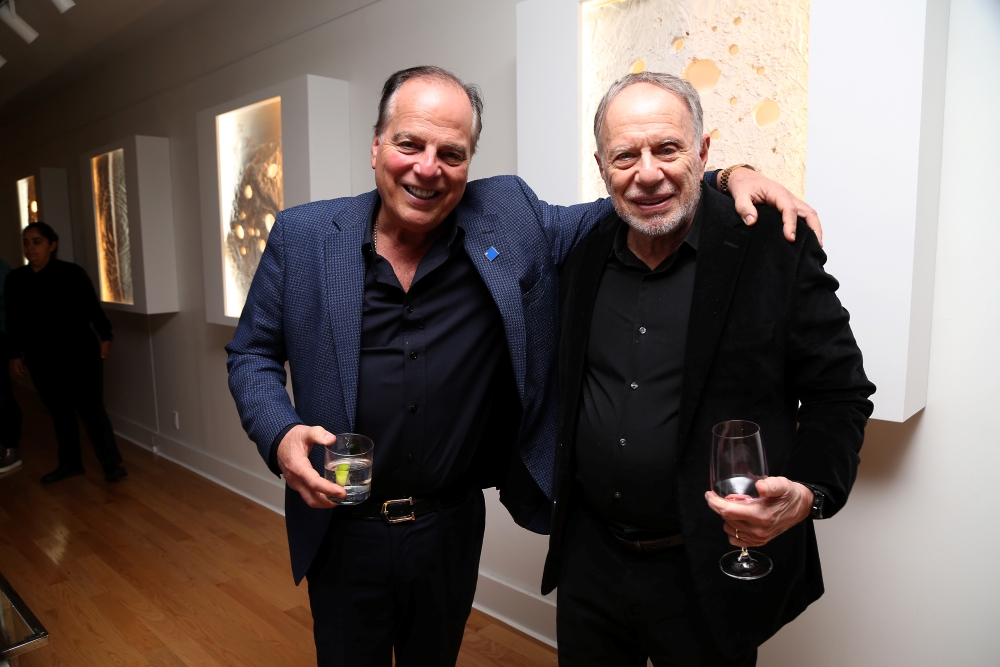
Charles Saffati’s Carlton Fine Arts hosted a radiant opening reception for acclaimed lighting guru Bentley Meeker’s latest exhibition, “Veluminosity,” which transformed the gallery’s third floor into a captivating world of color and light. The immersive solo show, on view from November 5 through December 5, features a selection of innovative light wall sculptures that continue to explore Meeker’s investigation into color temperature, luminosity, and the emotional resonance of illumination. Guests were treated to an evening where art and atmosphere blended seamlessly, sipping Aphrodise sparkling rosé as they mingled among the glowing installations and admired Meeker’s ability to elevate light into a form of sculpture. The exhibition invites visitors to experience the intersection of art and technology in an entirely new way, highlighting how light itself can shape perceptions and evoke deep emotional responses.

The artist, long celebrated for his experimental approach to lighting as an art form, has developed an impressive career that spans decades and disciplines. Meeker has exhibited at major institutions including the Whitney Museum of Art, the Southampton Center for the Arts, the National Arts Club, and the CORE Club. His large-scale public art projects, such as “The H in Harlem” and several illuminated installations at Burning Man, have garnered recognition and critical acclaim on an international scale. Notably, Meeker was commissioned by former First Lady Michelle Obama to create a bespoke light sculpture for the Nordic States State Dinner at the White House, demonstrating his ability to merge artistic innovation with cultural significance. His work continues to inspire the next generation of artists and lighting designers, creating a lasting impact on the intersection of art and functionality.

Carlton Fine Arts Presents Acclaimed Lighting Guru, Bentley Meeker

Photos Courtesy: Sylvain Gaboury / PMC (Charles Saffati and Nick Vazzanno)

In addition to his fine art practice, Meeker is the President and Founder of Bentley Meeker Lighting & Staging (BMLS) and Bentley House Studios. For more than 35 years, he has contributed to events, concerts, galas, and fashion shows through light, creating over ten thousand unique experiences for clients ranging from Paul McCartney, Prince, and Rihanna to Ralph Lauren, Madonna, and Karl Lagerfeld. His work has illuminated some of the most memorable celebrations in modern history, including Chelsea Clinton’s wedding and milestone birthday parties, as well as numerous Clinton family events. He also designed the lighting for Rudy Giuliani’s most recent wedding. His book, “Light X Design” (Glitterati, April 2011), offers insights into his creative process and showcases the many venues he has helped transform through the magic of light. The book also delves into the challenges of designing lighting for large-scale events, offering a rare glimpse behind the scenes of this highly specialized art form.

At the “Veluminosity” opening, the crowd reflected the artist’s wide-reaching influence, blending figures from art, design, media, and society. Among those in attendance were Annie Dietz, Laura Magic Weyl, Becca Gottlieb, Jenny Piersol, Signe Drulla, Nadja Sayej, Heather Tazza, Bonnie Pfeifer Evans, Dan Shedrick, Paul Mas, Erin Spears, Jeff Ledford, Dimitri Perara, Bibi Tran, Jedi Master, Jeremy Brown, Justin Cho, Christine Hauer, Dan Stock, Jennifer Tran, Margo Langenberg, R. Couri Hay, Kristen Ginn, Marta Eliza, Bentley Meeker, Carolyna Manni, Prince Charles, Oana Salusbury, Cris Ciacon, Tatiana Didus, Hilary Dare, Carmel Snow, and Khloe Obrien.

Founded in 1969, Carlton Fine Arts remains a family-owned and operated gallery committed to presenting Pop Art and Modern Masters. With locations on Madison and Fifth Avenues, the gallery’s five-level flagship space continues to serve as one of New York’s premier destinations for contemporary and modern art. Meeker’s exhibition, with all works available for purchase, can be viewed at Carlton Fine Arts Ltd., 543 Madison Avenue, New York City. Exhibition hours are Monday through Thursday from 10:00 AM to 6:00 PM, Friday from 10:00 AM to 4:00 PM, and Sunday from 11:00 AM to 6:00 PM, or by appointment.

From Diagnosis to Determination: How Humor Redefined a Cancer Journey

By: Jennifer D. Gaudet

Cancer is a word that rarely invites laughter. For some, it carries the weight of fear, uncertainty, and loss. It interrupts lives, shifts priorities, and alters identities. Yet within this difficult landscape, one woman, Aimee Kintzel, chose an unconventional response: humor.

Her story, captured in Open in the Front, redefines what it means to face cancer with determination—by shifting the perspective from despair to resilience, and from silence to laughter.

This article explores how humor can transform the way we navigate adversity, why perspective is a powerful force in survival, and how the author’s candid storytelling has created a book that resonates far beyond the cancer community.

Humor as a Survival Strategy

When adversity strikes, people lean into fear, grief, or quiet endurance. Humor, however, rarely makes the list of coping mechanisms. Yet research and lived experience alike show that laughter has the capacity to lower stress, strengthen emotional resilience, and connect us to others during times of struggle.

Humor is not about trivializing pain. Instead, it provides a way to reframe the experience. By finding something to smile about, even in difficult circumstances, we carve out moments of control in an otherwise uncontrollable situation. Laughter becomes a declaration: the illness may take hold of the body, but it does not own the spirit.

For the author of Open in the Front, humor became more than a strategy—it became a lifeline. It allowed her to acknowledge the hard truths while also refusing to let them define her journey. It offered her and those around her relief, perspective, and  importantly, the reminder that joy can exist alongside pain.

Transformation Through Perspective

The heart of Open in the Front lies in perspective. The author faced a reality that could have silenced her, yet she chose to transform it into something life-giving. By reframing fear into laughter and despair into determination, she demonstrates that transformation is less about the circumstances themselves and more about how we respond to them.

This is not a story of denial. It is not about ignoring hardship or painting it over with shallow optimism. Instead, it is about embracing the full spectrum of the experience—fear, frustration, absurdity, and joy—and choosing which parts will define the journey.

Perspective does not change the diagnosis, but it can absolutely change the story. In shifting her outlook, the author unlocked resilience that might otherwise have been hidden, and in doing so, she invites readers to consider their own power to redefine the narrative of adversity in their lives.

About the Book

Open in the Front is not a medical memoir filled with statistics and treatment plans. Instead, it is a deeply human account of one woman’s experience, told through the lens of wit, vulnerability, and honesty.

The pages invite readers into moments that are both relatable and surprising. They highlight the absurdities that arise during serious situations, the small joys that can be found in unexpected places, and the courage required to laugh when fear threatens to overwhelm.

What sets this book apart is its balance. It does not minimize the gravity of cancer, but neither does it allow cancer to dominate the story. Instead, it shines a light on resilience, hope, and the transformative power of humor.

For readers, the takeaway is clear: survival is not solely about medical outcomes, but also about the mindset that can support us through challenging times.

About the Author

At the center of this story is an author who does not pretend to have all the answers. She is not a clinician or a motivational guru. What she offers is something more valuable: authenticity.

Her voice is candid, approachable, and refreshingly honest. She writes not to instruct, but to connect. Her humor is not forced—it is born out of lived experience. Her vulnerability is not performative—it is the mark of someone who has walked through hardship and chosen to share the journey so others might find comfort and courage.

Through Open in the Front, she extends a hand to readers. Whether they are personally facing cancer, supporting a loved one, or navigating an entirely different challenge, they are not alone. Her story may be personal, but its message is universal: perspective can transform adversity into determination.

Why This Story Matters Now

Conversations around illness often carry a tone of hushed seriousness. However, Open in the Front provides a refreshing alternative. It opens the door for dialogue that is honest but not overwhelming—uplifting without being dismissive.

It permits those in the midst of hardship to laugh, to feel joy, and to embrace the contradictions of life.

The book also meets a cultural need. As people search for stories of resilience and hope in uncertain times, there is a growing appetite for narratives that blend vulnerability with strength. Open in the Front answers that call.

A Call to Read

The journey from diagnosis to determination is rarely straightforward. Yet as Open in the Front so beautifully illustrates, it may be filled with unexpected moments of humor, humanity, and hope.

Discover how one woman redefined her cancer journey through humor and resilience. Order your copy of Open in the Front today and be inspired by a story of transformation through perspective.

The 4 Key AI and Cloud Infrastructure Planning Demand Forecasting Techniques

By: Sattvik Sharma

Demand forecasting has emerged as a critical necessity for AI compute hardware and cloud infrastructure providers in the rapidly evolving digital environment of today. Over-provisioning, service outages, or failure to capture market opportunities at increased costs can arise due to the challenge of accurately predicting future infrastructure demand as businesses are more and more reliant on AI-powered applications and cloud services. Effective forward-looking compute resource planning is important, especially in the AI hardware business, where specialized GPUs, TPUs, and ASICs are in high demand.

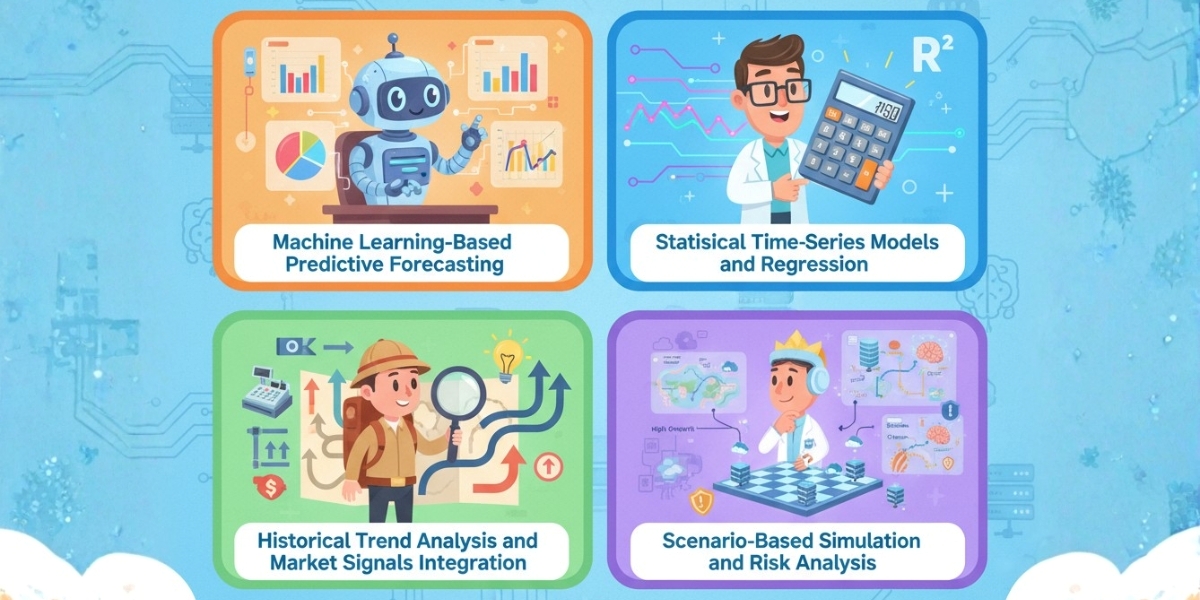
This study is a technical yet practical guide to the four widely used demand forecasting methods tailored specifically for AI and cloud infrastructure planning. These solutions leverage cutting-edge machine learning models, statistical techniques, historical trends analysis, and simulations based on market intelligence, creating a comprehensive system of data-driven infrastructure strategy.

1. Predictive Forecasting Based on Machine Learning

Demand forecasting has undergone a significant shift with machine learning (ML) models allowing systems to extract complex and non-linear patterns in historical compute usage data. Gradient Boosting Machines (GBMs), Random Forests, and advanced Recurrent Neural Networks (RNNs), specifically Long Short-Term Memory (LSTM) networks, are commonly used algorithm types that have been applied to predict demands for GPUs, TPUs, and ASICs using large-scale time-series data.

For example, one of the largest cloud providers reported an improvement in accuracy by approximately 15 percentage points after applying LSTM models to forecast the use of GPUs across all data centers. These models are effective in capturing factors such as workload type, time-of-day, and customer segmentation, and providing real-time, automated forecasts that are dynamically adjusted to new data.

2. Statistical Time-Series Models and Regression

Even with the emergence of machine learning, traditional statistical models still play a vital role in organized, periodic forecasting and provide clarity, simplicity, and predictability. Some of the techniques include ARIMA (Auto-Regressive Integrated Moving Average) and Exponential Smoothing (ETS), which continue to prove effective in giving reliable base predictions in many enterprise settings.

In industries with predictable seasonal patterns of compute utilization (e.g., fiscal year budgetary renewals or higher education research cycles), such as in the AI hardware market, ARIMA-based capacity planning is used by a substantial percentage of cloud providers. Those models break down time-series data into trend, seasonal, and residual parts, and help explain the underlying demand dynamics in a clear way.

3. Market Signals Integration and Historical Trend Analysis

An essential strategic forecasting technique involves integrating historical trend analysis with market and economic indicators to build a well-informed forward-looking forecast. Trend analysis helps reveal long-term patterns in infrastructure usage, providing insights into growth trajectories and capacity dynamics. For instance, industry analyses suggest a strong upward trajectory in AI infrastructure investment, with Precedence Research (2024) estimating the global AI infrastructure market to be valued at USD 47.23 billion in 2024, and it is expected to grow at a projected 26.6% compound annual growth rate (CAGR) through 2034. Similarly, Fortune Business Insights (2024) estimates the market valuation at USD 46.15 billion in 2024, forecasting a projected 29.1% CAGR over the coming decade—highlighting a strong trend of infrastructure scaling to meet growing AI compute demands. Operational metrics such as GPU utilization rates, peak-to-off-peak workload ratios, and capacity efficiency indices serve as actionable tools for helping avoid over-provisioning and minimizing performance bottlenecks. These metrics provide a data-driven foundation for optimizing infrastructure efficiency across both on-premises and cloud environments.

Market signals further support this analytical approach by offering early indicators of future demand shifts. For example, the continuous rise in enterprise AI adoption across healthcare, automotive, and manufacturing sectors is contributing to sustained growth in AI infrastructure spending. Complementary indicators—such as venture capital activity in AI startups, fluctuations in public cloud pricing, and emerging regulatory frameworks (e.g., data localization and AI governance laws)—also serve as strategic inputs for forecasting and planning future infrastructure capacity. In sum, combining historical trend analysis with forward-looking market intelligence enables decision-makers to align infrastructure planning with both technological evolution and economic realities, supporting sustainable and scalable AI operations.

4. Simulation and Risk Analysis Based on Scenario

Scenario-based simulations are a sophisticated and deeply strategic forecasting approach that allows infrastructure planners to simulate a variety of hypothetical situations and assess the resilience of their infrastructure approach.

During the 2021-2022 silicon shortage, organizations that had employed scenario simulations were able to simulate the effects of supply chain disruptions, price fluctuations, and sudden increases in demand. This allowed them to:

  • Make adjustments to procurement measures,

  • Redistribute workloads to mitigate regional bottlenecks, and

  • Optimize hardware investments in light of future constraints.

Simulations combine statistical models, human judgment, and random events to run a variety of scenarios, such as regulatory reforms, unexpected workload peaks caused by industry events, or geopolitical shocks.

Final Take

Accurate demand forecasting has increasingly become a necessary requirement in the AI and cloud infrastructure sector. An integrated forecasting approach that combines machine learning systems, statistical time analysis, past trend analysis with market signals, and scenario-based simulations can help improve accuracy and build resiliency.

The multi-dimensional nature of such an approach allows cloud and hardware providers to plan capacity optimization, reduce operational costs, and better predict emerging trends in the market. Organizations will be better positioned to keep up with the rapidly changing technological environment by adopting a forward-looking, data-driven approach, which helps maintain a competitive edge and agility.

The Alzheimer’s Association’s Imagine Benefit Honors Peter Thomas Roth at The Plaza

By: Rodney Sparrow

Hollywood legend Rita Hayworth, whose co-stars included Cary Grant and Gene Kelly, suffered from early-onset Alzheimer’s and died at 68 in 1987 due to complications associated with the disease. Her daughter, Princess Yasmin Aga Khan, took care of the star in New York City and, after her diagnosis, founded a gala in her honor that has raised over $90 million since its inception in 1984. This year’s 41st edition of the Alzheimer’s Association Imagine Benefit honored the Princess’s friend, skincare mogul Peter Thomas Roth, for “his commitment to the mission and his impact on raising awareness and funding for care and research.” She added, “Alzheimer’s remains a national crisis, affecting over 7 million Americans, including over 427,000 New Yorkers.”

Held at the iconic Plaza Hotel, the Alzheimer’s Association Imagine Benefit, built on the legacy of the Rita Hayworth Gala, raised more than $1.3 million to support the Association’s mission of accelerating global research, driving risk reduction and early detection, and maximizing quality care and support.

Roth, who has supported the benefit for over two decades, received the Rita Hayworth Award for his longstanding dedication. In his acceptance speech, he expressed gratitude and issued an impassioned call to action: “Let’s keep fighting. Let’s keep laughing. And let’s keep showing up. Until the only thing we forget is what it felt like to lose someone to this disease.”

The event’s theme, “Magic of the Mind,” came to life through the remarkable talents of mentalist Christophe Fox, who enthralled guests with a three-part performance that blended psychology, illusion, and human connection. His captivating demonstrations drew gasps and applause, perfectly mirroring the evening’s message of hope, mystery, and perseverance.

A moving moment came when Tony Award-winning director Rachel Chavkin (“Hadestown”) and her husband Jake Heinrichs shared their family’s personal journey with inherited Alzheimer’s caused by a rare gene mutation. Heinrichs is a participant in the groundbreaking DIAN-TU clinical study, which explores potential prevention treatments. “We are grateful to the Alzheimer’s Association for its work on behalf of families like ours,” they said. “Please continue investing in research. Alzheimer’s knows no political, economic, or geographic boundaries. Research is the difference between which children will grow up with a parent, aunt, uncle, or grandparent — or without them.”

The Alzheimer’s Association’s Imagine Benefit Honors Peter Thomas Roth at The Plaza (2)

Photo Courtesy: BFA

Princess Yasmin Aga Khan reflected on her mother’s legacy and the mission that has guided her for more than four decades. “My journey to end Alzheimer’s began in 1981, when my mother, Rita Hayworth, was diagnosed with early-onset Alzheimer’s. Overnight, I became a caregiver at 32 years old, and soon after, this cause became my life’s calling,” she said. “Tonight, we honor my dear friend Peter Thomas Roth for his unwavering commitment to this event for more than two decades. Thanks to him — and to our dedicated chairs, committee, sponsors, donors, and supporters — we reach new heights year after year. One day, with the work done by the Alzheimer’s Association, we won’t have to imagine a world without Alzheimer’s and all other dementia. We will live it.”

Entertainment was provided by the legendary Café Wha? UNLIMTD Band, who kept the dance floor buzzing throughout the night. A live auction, featuring exclusive offerings from Wayne Brady, Hunt Slonem, and Exclusive Resorts, added to the excitement. The event was generously underwritten by Rolex Watch USA, while Aphrodise contributed its sparkling Rosé and Miss Maude Chocolates treated guests to its signature Theater Bar.

Distinguished attendees included Huma Abedin, Peter Gallagher and Paula Harwood, Josie Natori, Jason Wu, Louise Roe, Hunt Slonem, and Lucia Hwong Gordon, among many others from the worlds of art, fashion, society, and philanthropy.

The Alzheimer’s Association’s Imagine Benefit Honors Peter Thomas Roth at The Plaza (2)

Photo Courtesy: BFA

Proceeds from the Imagine Benefit will support the Alzheimer’s Association’s mission and the work of its New York City Chapter. Currently, more than 426,000 New Yorkers are living with Alzheimer’s, and over 656,000 provide unpaid care for loved ones battling the disease. With each passing year, the Imagine Benefit continues to uphold Rita Hayworth’s legacy—transforming heartbreak into hope and helping to advance the vision of a world without Alzheimer’s. 

From Wooden Sheds to Modular Marvels: The Evolution of the Aircraft Hangar

Every aircraft, no matter how advanced, needs a home on the ground. Before takeoff and after landing, planes require protection from weather, space for maintenance, and a secure environment for storage. That’s where the aircraft hangar comes in—a structure that has evolved from simple wooden sheds into sophisticated, modular facilities supporting the global aviation industry. The story of hangars mirrors the story of flight itself: one of innovation, adaptation, and constant reinvention.

Origins and Early Development

The first hangars emerged at the dawn of powered flight in the early 1900s. Early airplanes, made from wood and fabric, were highly vulnerable to the elements. To protect them, pilots and mechanics built small sheds near airstrips. As aviation advanced (especially during World War I), these makeshift shelters evolved into larger, standardized buildings. Steel began to replace timber, and hangars became vital parts of military infrastructure, housing not only aircraft but also tools, fuel, and maintenance equipment.

By the 1920s, permanent hangars appeared at major airfields. Their steel frames and wide doors reflected a new industrial confidence. What began as simple protection soon became a strategic necessity, ensuring that aircraft could be repaired, serviced, and deployed efficiently.

Purpose and Function

An aircraft hangar’s main role is to shield planes from environmental stress (sun, rain, snow, and dust), but its function extends far beyond storage. It is a hub of maintenance, inspection, and logistics. Inside, teams perform delicate repairs, replace components, and conduct safety checks. The hangar provides the controlled environment these complex operations demand, ensuring aircraft remain flight-ready in any season. 

For airlines, military forces, and private operators alike, hangars are operational cores. They allow work to continue year-round, prevent weather-related damage, and improve safety. In short, hangars keep aviation moving.

Architectural Evolution

As aircraft grew in size, hangars had to grow too. Early rectangular buildings evolved into massive, open-span structures with arched roofs and steel trusses that eliminated interior columns. The introduction of motorized, retractable doors allowed easy access for aircraft with increasingly large wingspans. By the mid-20th century, hangars had become feats of engineering, tailored to accommodate bombers, wide-body jets, or even multiple aircraft simultaneously.

 Materials and design also advanced. Reinforced concrete, lightweight alloys, and tensioned membranes made structures stronger yet more efficient. Architects began focusing on workflow, lighting, and airflow to improve working conditions inside. Energy efficiency, safety systems, and integrated maintenance equipment became standard, turning hangars into highly specialized buildings designed for performance as much as protection.

The Modern Aircraft Hangar

Today’s hangar blends engineering and technology. It is not just a building but an intelligent workspace. Automated systems control lighting, ventilation, and temperature, ensuring optimal conditions for maintenance while saving energy. Modern facilities often include digital infrastructure to track equipment, monitor environmental factors, and support high-precision tasks.

 Safety is central to modern design. Reinforced floors handle heavy aircraft loads, fire suppression systems are built for aviation fuel hazards, and advanced ventilation ensures air quality. Many hangars are also designed with sustainability in mind, featuring solar panels, rainwater recycling, and improved insulation to reduce their environmental footprint.

 These innovations transform hangars into efficient ecosystems. From private jets to large commercial fleets, aircraft rely on these spaces for protection, repair, and readiness, making the hangar a cornerstone of aviation reliability.

The Rise of Modular Hangars

A major development in recent years is the rise of modular hangar design. Unlike traditional permanent structures, modular hangars are prefabricated and can be assembled quickly on-site. This approach reduces construction time and cost while offering unmatched flexibility.

 Modular hangars can expand, relocate, or be reconfigured as operational needs change. They are ideal for rapid deployment, temporary bases, or growing operations. Despite their lightweight structure, they are durable and weather-resistant, with insulation and environmental control systems that match permanent buildings.

 Sustainability also plays a major role. Modular systems often use recyclable materials and produce less waste during construction. Their efficient manufacturing and transport processes further reduce environmental impact. For operators, this flexibility and efficiency translate into faster readiness, lower costs, and adaptability to future changes in fleet size or aircraft type.

Shaping the Future of Aviation

The evolution of the aircraft hangar reflects aviation’s constant pursuit of efficiency and progress. Modern hangars, especially modular ones, allow airports, airlines, and maintenance providers to respond quickly to new demands. Their flexibility, safety, and energy efficiency make them essential infrastructure for the next generation of flight.

 From humble wooden shelters to advanced modular complexes, hangars have evolved alongside the machines they protect. They remain the silent guardians of aviation, standing at the intersection of innovation, engineering, and the enduring human desire to reach the skies.