

By: Marissa Ross
Korean artist Kim Jongku invites viewers into an exhibition at AP Space that is less a collection of artworks and more an emotional landscape. The Divine Comedy, running until May 10th, borrows its name from Dante Alighieri’s 14th-century poem, but this is not a literal reinterpretation. Instead, Jongku offers a philosophical excavation of the human journey, rendered through steel, oxidation, and a quiet yet commanding conceptual clarity.
Jongku has long been known for his ability to manipulate material as metaphor. His work frequently investigates themes of impermanence, memory, and resonance through site-specific installations and calligraphic iron powder works. In The Divine Comedy, these inquiries deepen. Here, materials don’t simply serve an aesthetic purpose, they become living participants in the storytelling.
At the conceptual core of the exhibition are two recurring ideas: Rust and Resonance. Rust, in Jongku’s hands, is neither deterioration nor decay. It is transformation made visible. The oxidized surfaces throughout the show signal the passage of time, but also the poetic beauty found in what many would discard. Steel is allowed to age, corrode, and evolve, revealing the fragility within industrial permanence. In this way, Jongku challenges the traditional hierarchy between destruction and creation.
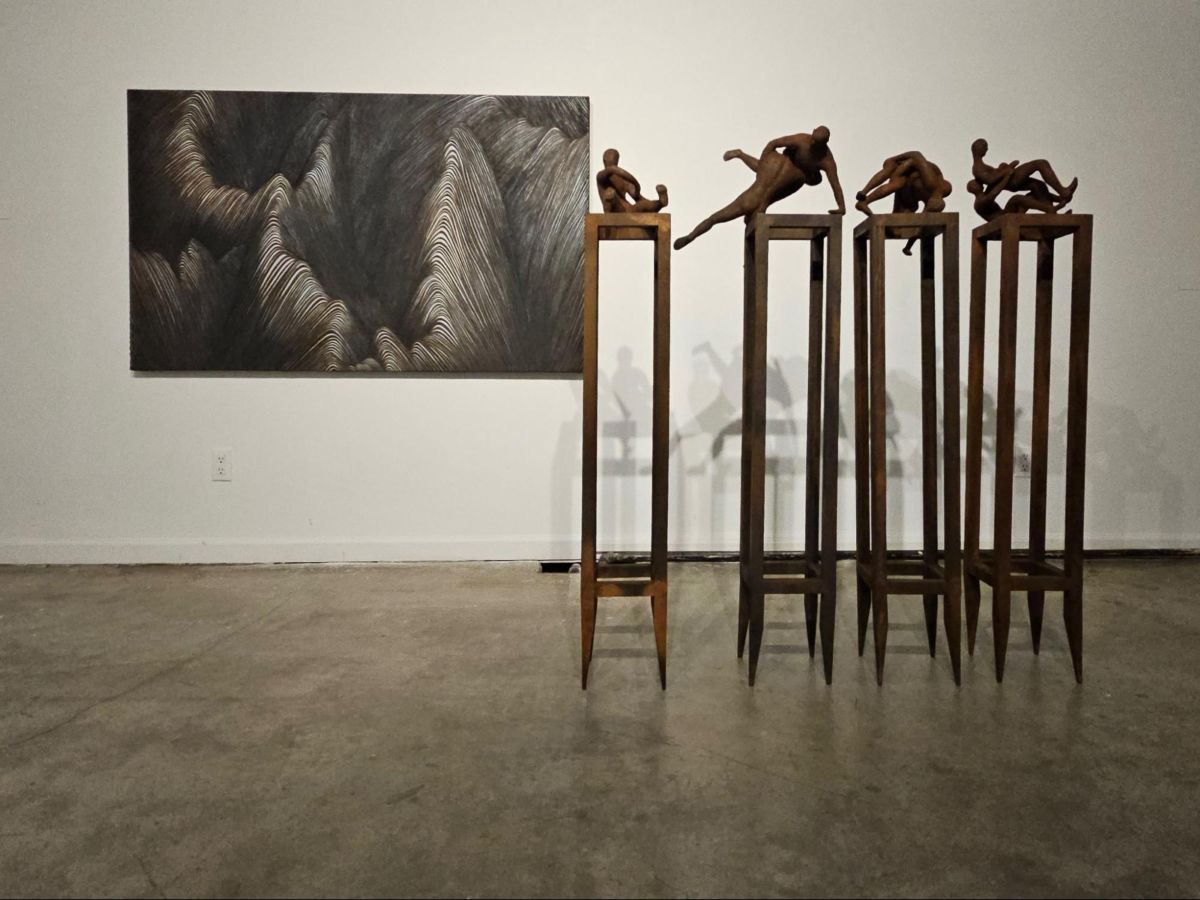
Photo Courtesy: AP Space
Resonance functions as an invisible counterbalance. While rust is what we see, what’s left behind is what we feel. It is the echo of lived experience, the lingering emotional vibration that remains after loss, change, and becoming. Jongku’s choice to let form remain ambiguous in many pieces allows viewers to project their emotional experiences onto the work.
The exhibition is arranged in three sections, mirroring Dante’s Inferno, Purgatorio, and Paradiso, though the transitions between them are subtle rather than theatrical.
In Inferno, viewers are immersed in a landscape of fragmentation. Jagged, rust-colored compositions and rough materials embody psychological rupture and collective dissonance. There is no linear narrative, just an emotional tonality that resonates with anyone who has experienced grief, disillusionment, or existential unrest.
Purgatorio is gentler; tensions loosen and compositions begin to reorient. The works in this section suggest the beginnings of clarity, the subtle push toward healing and reconciliation. The visual vocabulary shifts slightly with fewer hard angles, more flow suggestions, and breath. This is where resonance becomes palpable: a quiet invitation to sit with discomfort and recognize its potential to soften over time.
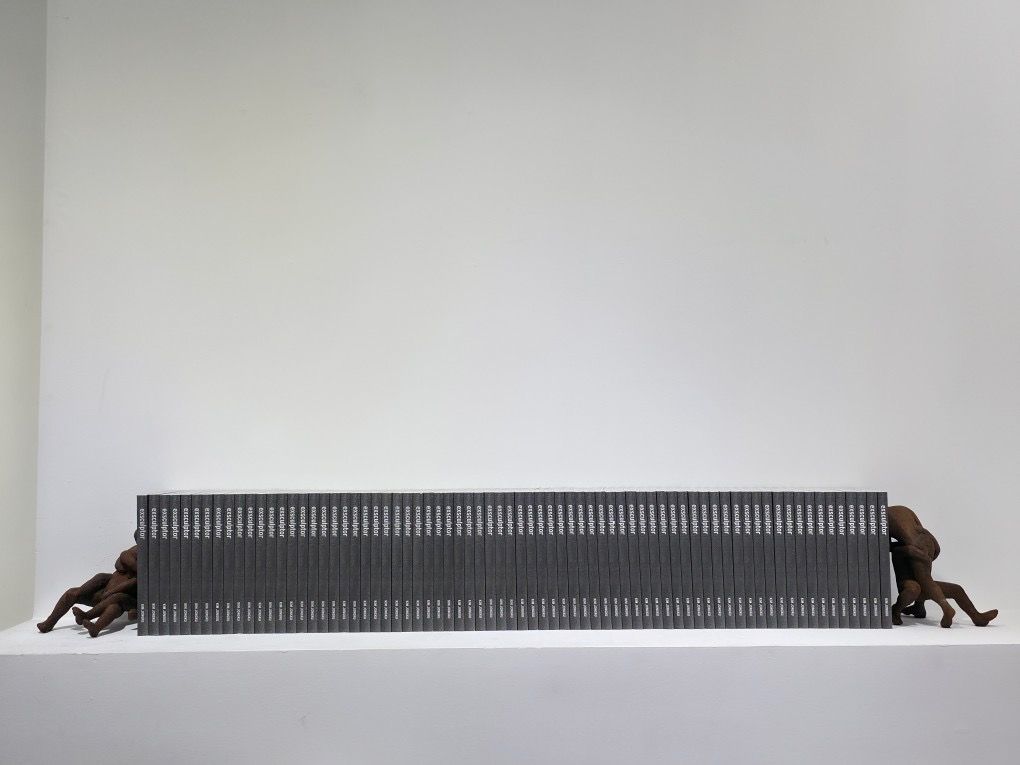
Photo Courtesy: AP Space
Paradiso closes the exhibition on a note not of triumph, but of equilibrium. Jongku’s vision of paradise is not utopic; it is earned. Fractures still exist in the work, but they cohere. There is harmony in the asymmetry. The forms are more open, the materials less distressed. The sense of space is generous. Viewers are left not with answers, but with a calm spiritual spaciousness that feels quietly revolutionary in today’s frenetic world.
What distinguishes The Divine Comedy is how seamlessly Jongku’s conceptual ambition is grounded in material intelligence. His use of oxidized steel, iron powder, and other time-sensitive materials lends the work a kinetic energy, even in stillness. Each surface contains a history that is sometimes literal, sometimes abstract, and yet they avoid heavy-handed symbolism. Jongku trusts the viewer to do the work, to listen rather than be told.
This is particularly evident in the way light interacts with the pieces. Shadows shift throughout the day, especially on the sculptural forms, subtly altering their tone and mood. It’s a reminder that art and emotion are not static.
In a moment when spectacle often dominates the art world, Kim Jongku offers an antidote: a show that unfolds slowly, rewards patience, and prioritizes introspection over provocation. The Divine Comedy is not interested in wowing you. It is interested in meeting you, wherever you are in your becoming.
Exhibition Details
The Divine Comedy by Kim Jongku
AP SPACE, 555 W 25th Street, New York, NY
On through May 10, 2025 | Tuesday–Saturday, 11 AM–6 PM
Published by Jeremy S.