

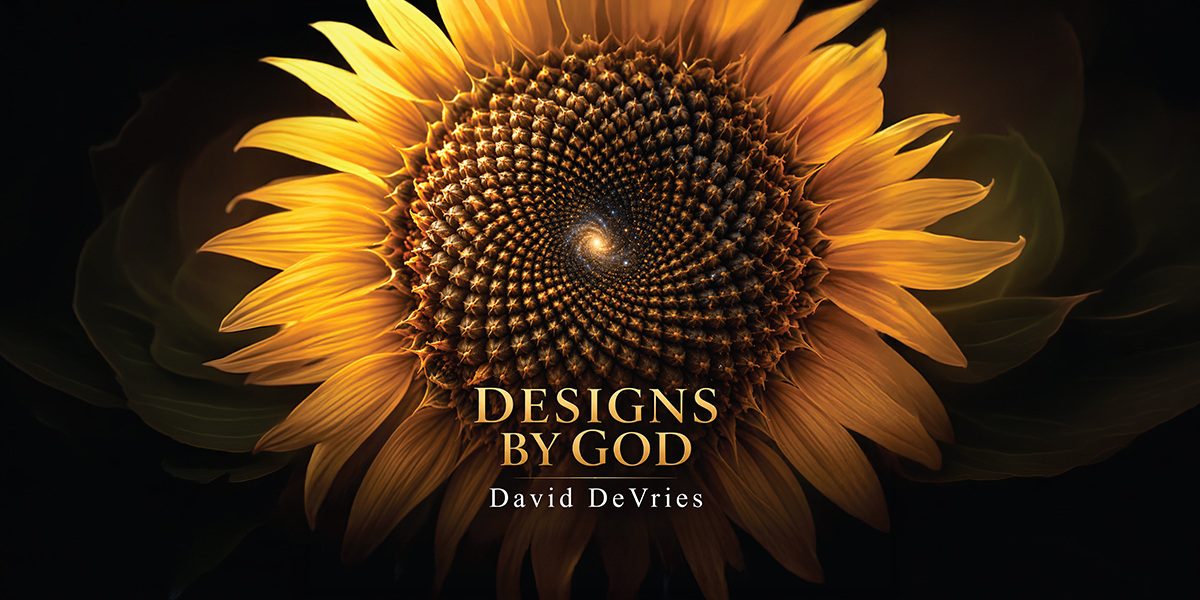

Before you read on, count the eyes you can find.
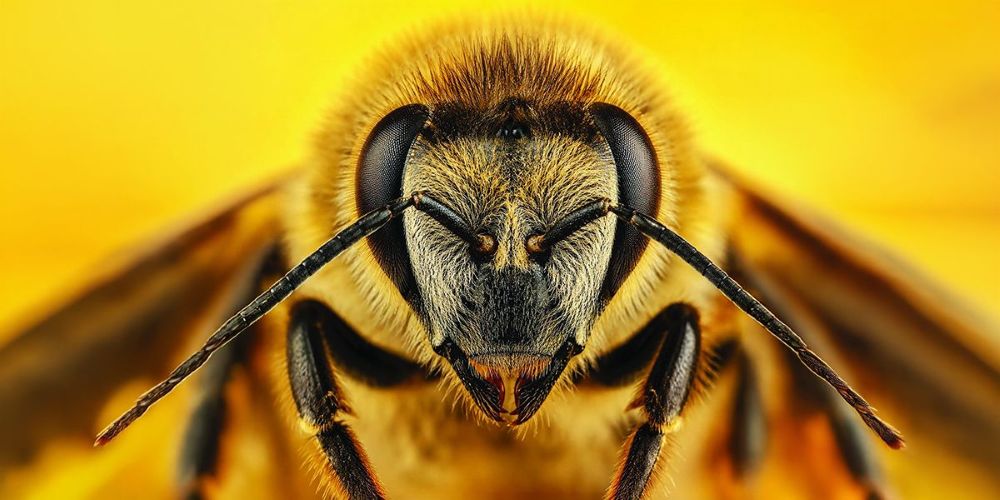
The first two eyes are easy. They’re the dark domes on either side of the bee’s head. Finding the other three takes a moment, even with David DeVries’s photograph in front of you. They sit between the larger pair, small enough to miss on a first pass. By the time you have counted all five, you may find yourself doing something that would be difficult in a garden. You’re looking a bee in the face.
That second look is the pleasure of Designs by God, DeVries’s book of close-up nature photography. Its subjects include a butterfly wing, a clam shell and an ear of corn. Most readers could picture all three with their eyes closed. DeVries gives them a reason to open the book and test how much of each they can actually recall.
A Different Way to Read a Photograph
There are two ways into these pages. One is to read the heading and let it tell you what to look for. The other is to cover the words and give yourself a guess. DeVries leaves room for both. In his introduction, he acknowledges that some subjects will be familiar on sight and others may leave the reader wondering what, exactly, is in the frame.
Trace a ridge from the hinge outward. Can you find a line that crosses your path?
Even a correct guess can lead to a surprise. Consider the ridges on a clam shell, the ones a beachcomber might run a thumb across. DeVries draws attention to two sets of lines. The ribs fan outward from the hinge. Finer lines cross them, recording the shell’s growth. Follow one set and you can see the corrugated shape that helps the shell resist bending. Follow the other and you are tracing something the animal did over time. It is worth going back to the picture just to see where those lines meet.
The ear of corn offers a puzzle that follows a reader all the way into the kitchen. What connects the kernels lined up on the cob to the tangle of silk pulled off with the husk? Each potential kernel has a silk of its own. The next time someone hands you an ear to shuck, the part you usually discard may be the part you want to show them.
Where Faith Enters the Frame
DeVries makes his own interest plain in the introduction. After inviting readers to look for the feature his subjects share, he gives his answer in two words. “The Designer.” For him, the details belong to a creation whose maker deserves acknowledgment.
Look between the spines. Where can you see the shadows they cast?

That conviction gives the book its title. It also leaves DeVries free to spend a page on the practical business of being a cactus. Its ribs allow the stem to expand as it takes up water. Its spines cast shade on the very surface from which they grow. For a reader who shares his faith, there is something specific here to contemplate. For someone leafing through the book out of curiosity, there is the appealing prospect of looking at a cactus long enough to notice its shade.
Designs by God lends itself to being passed across a table. Open it to the bee, cover the heading and ask someone how many eyes they can find. Give them a moment before pointing out the little ones. That pause, while somebody else discovers what you have just seen, may be the best part of sharing the book.
Learn more about David DeVries’s Designs by God at the book’s official website
Amazon: Designs by God book listing
Instagram: Designs by God Instagram profile
Facebook: Designs by God official Facebook page