


Every leader has a story about how they got here.
For many entrepreneurs, that story begins with determination, resilience, and an unwavering willingness to carry more responsibility than anyone else. Those qualities often become the foundation of a successful business. They help leaders overcome uncertainty, solve difficult problems, and keep moving when others might give up.
Yet the very instincts that build an organization can eventually become the ones that limit its future.
According to Saša Mirković, Founder and Legacy Coach, leadership evolves in stages. The habits that allow someone to survive, build, and succeed are not always the same habits that allow an organization to grow beyond its founder.
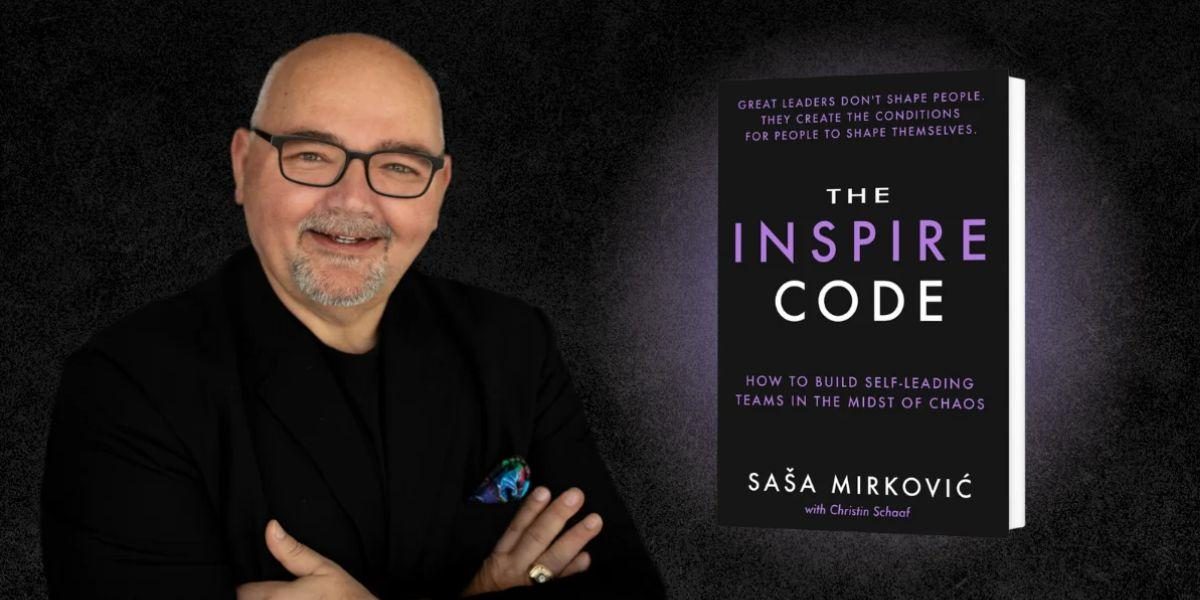
That realization shaped the philosophy behind THE INSPIRE CODE: How to Build Self-Leading Teams in the Midst of Chaos and continues to guide his work through Inspire Network. But long before it became a leadership principle, it was a lesson forged under circumstances few business leaders ever experience.
Growing up in Bosnia, Mirković survived more than three years during the siege of Sarajevo before rebuilding his life in the United States. Looking back, he came to recognize that many of the qualities that helped people endure prolonged uncertainty (adaptability, trust, shared purpose, and calm under pressure) were not simply survival instincts. They were leadership skills that would later shape the way he built organizations.
Success Eventually Demands a Different Kind of Leader
Building a business often rewards decisive action.
Founders solve problems quickly. They make difficult decisions with limited information. They become the person everyone relies upon because that approach works.
Until it doesn’t.
As organizations grow, the demands on leadership begin to change. The challenge is no longer simply making the right decisions. It is also developing people who are capable of making them.
Mirković describes that transition as moving from a leader who carries the organization to one who creates the conditions for others to lead.
The shift is not always comfortable. Many accomplished founders discover that the habits responsible for their early success (being involved in every important decision, solving every difficult problem, and remaining the center of every conversation) can unintentionally prevent others from growing into leadership themselves.
The Second Act Begins With Letting Go
Mirković often describes leadership as a three-act journey.
The first act is shaped by pressure. It is where resilience, determination, and the willingness to take responsibility are forged. The second act begins when leaders recognize that continuing to lead the same way will eventually limit the very organization they worked so hard to build.
That realization requires a different kind of discipline.
Instead of asking how to accomplish more personally, leaders begin asking how to develop people who can create results without depending on them. It is a transition from directing every outcome to cultivating an environment where others can succeed.
Mirković sometimes describes that evolution as moving from a chess master to a gardener. Rather than controlling every move, the leader focuses on creating the right conditions for growth and then trusts others to flourish within them.
Understanding the people on the team is part of that transition. Mirković’s TUG Cards™, short for Talent and Unique Genius, bring together insights on Alignment, Energy, Drive, and Attitude into a practical profile designed to help people better understand how they work and where they contribute most effectively. For a founder learning to let go, this kind of insight can help shift the focus from managing every individual move to recognizing how people can contribute in ways that suit their strengths.
Leadership Is Measured by What Continues Without You
Many organizations celebrate leaders who become indispensable. Mirković believes lasting leadership is measured differently.
An enduring organization is one where knowledge is shared, responsibility is distributed, and leadership exists throughout the team rather than resting with one individual.
That perspective has shaped both his business experience and the ideas explored throughout THE INSPIRE CODE. Rather than presenting leadership as a collection of management techniques, the book examines how organizations develop self-leading teams by helping leaders create trust, strengthen purpose, and build systems that encourage ownership at every level.
Tools such as TUG Cards™ support this broader emphasis on understanding people rather than expecting everyone to work in the same way. When leaders gain a clearer picture of individual strengths and working preferences, they have a more practical starting point for assigning responsibilities and helping team members take greater ownership.
For Mirković, success is not measured by how many decisions a leader makes. It is measured by how many capable leaders emerge because of them.
Every Leader Eventually Writes the Next Chapter
Every organization reaches a point where its future depends less on the founder’s ability to do more and more on the founder’s willingness to become something different.
That transition rarely happens through a new strategy or another management technique. It begins when leaders recognize that growth requires them to outgrow the version of themselves that created the business in the first place.
For Mirković, that is the defining moment of leadership: not building an organization that depends on one extraordinary person, but building one that continues to thrive because many people have learned to lead.
Connect with Saša Mirković
Saša Mirković is the Founder and Legacy Coach behind Inspire Network and the author of THE INSPIRE CODE: How to Build Self-Leading Teams in the Midst of Chaos. Drawing on experiences shaped by the siege of Sarajevo and his work building a private wealth advisory practice from a single advisor into a self-led team, he focuses on helping founders develop teams capable of sustaining growth without depending on the founder for every decision.
Book: THE INSPIRE CODE: How to Build Self-Leading Teams in the Midst of Chaos
Inspire Network: Inspire Network
Instagram: Inspire Network on Instagram
LinkedIn: Inspire Network on LinkedIn