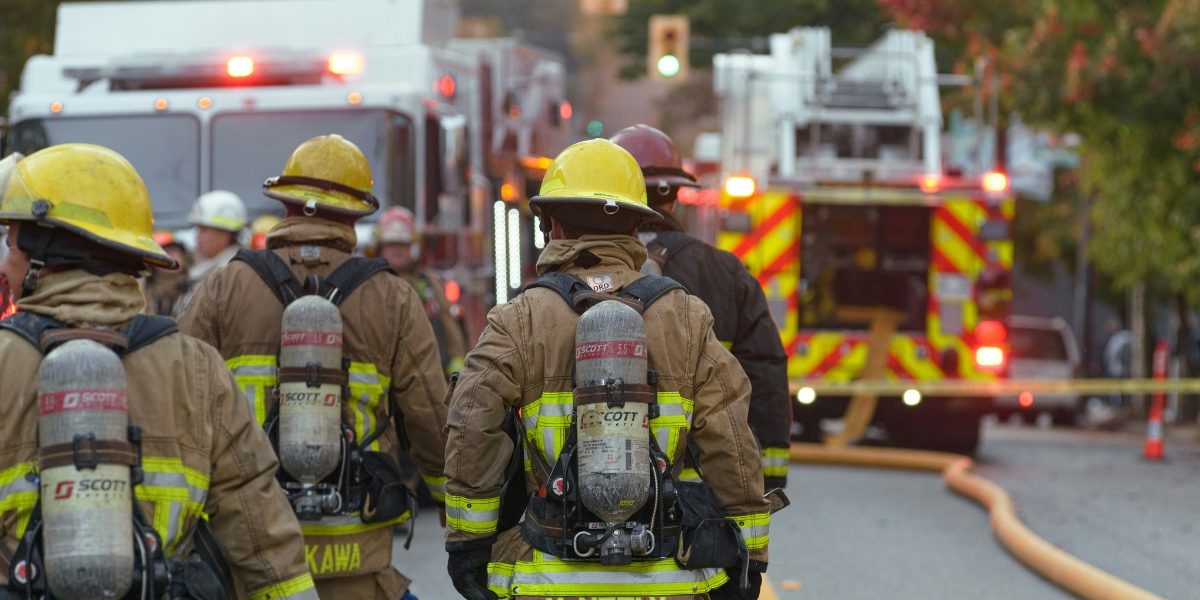

Leading a volunteer fire department is different from managing most organizations. When an alarm comes in, the chain of command is clear. Someone has to assess the situation, make decisions quickly, and direct the firefighters responding to the call. But the trust that makes that chain of command work takes time to build.
Volunteer firefighters have jobs, families, and responsibilities outside the department, and the time they give to it is a significant commitment. A chief can hold formal authority, but a title alone won’t keep people engaged or earn their confidence. That comes from training together, answering calls together, and seeing firsthand how someone leads.
Christopher Portelli of Setauket has spent more than two decades in that environment. He joined the Central Islip Fire Department on Long Island in 2002 and has remained with the department ever since. Over the years, he served as Lieutenant and Captain, spent seven years as a chief officer, and served as Chief of the Department from 2019 to 2021. As Chief, he oversaw emergency operations for roughly 180 volunteer firefighters.
His high-stakes leadership experience began earlier during his service as a United States Navy Explosive Ordnance Disposal technician. Between the military and the fire department, Portelli has spent close to 28 years in roles where preparation, judgment, communication, and trust have immediate consequences. Those experiences have also shaped how he leads in business, where many circumstances differ but some basic demands of leadership are surprisingly similar.
Trust Is Built Over Time
A fire officer doesn’t begin earning people’s confidence when a serious call comes in. By then, firefighters have already spent months or years seeing how that person leads.
They’ve watched how the officer handles training, whether they listen when someone raises a concern, and what happens when a call becomes more complicated than expected. They’ve also seen whether the standards an officer expects from everyone else are the same ones that officer follows personally.
A firefighter entering a structure under an officer’s command needs confidence in the decisions being made. Rank establishes who is giving the direction, but trust in that person’s judgment comes from experience.
The volunteer structure makes those relationships especially important. Members are balancing their involvement with careers, families, and responsibilities outside the department. Keeping people engaged takes more than assigning them a role and expecting them to fill it. They need to know their time is valued and have confidence in the people leading them.
The same principle carries into other workplaces. A position may give someone the authority to make a decision, but whether people trust that decision depends on the leader’s track record.
Training Has to Prepare People for the Call They Haven’t Had Yet
Training in a volunteer department has to compete with the rest of people’s lives. Members may arrive at the firehouse after working all day and still need to practice ladder operations, ventilation, search techniques, hazardous materials response, vehicle extrication, and other skills they may eventually have to perform under much more difficult conditions.
That makes training time important. People aren’t simply filling hours on a calendar. They’re preparing for situations in which hesitation or confusion can have serious consequences.
Much of that preparation comes down to repetition. The more familiar firefighters are with equipment and procedures, the less attention they have to devote to remembering basic steps when something unexpected happens. That gives them more room to assess changing conditions and concentrate on the problem in front of them.
For officers, training also reveals what may not be obvious until people try to put a procedure into practice. It shows where a crew is strong, where someone needs more experience, and which plans work better on paper than they do in the field.
Portelli spent years doing that before becoming responsible for leading it. By the time he became Chief, preparing other firefighters was as much a part of the job as making decisions once an emergency was underway.
Some Decisions Can’t Wait for Perfect Information
Emergency scenes rarely provide everything an officer wants to know before making the first decisions.
On arrival, there are immediate questions. What is happening? Is anyone inside? Where is the greatest danger? What resources are already available, and what else is needed? Some answers may take time, but the situation keeps developing while they gather them.
Portelli was familiar with making decisions under pressure before joining the fire service. As a Navy Explosive Ordnance Disposal technician, he worked in a specialty that requires identifying and safely handling explosive hazards in circumstances where mistakes can carry severe consequences.
That experience taught him to make careful decisions even when some questions remain unanswered. The goal isn’t simply to act quickly. It’s to gather the available information, make the best call possible, and stay alert to anything that might require a change in direction.
The same kind of judgment has proved useful in Portelli’s business career. Customer problems, operational failures, staffing issues, and unexpected changes can all require action before every question has been answered. A leader has to make the best decision possible with the information available and recognize when new information calls for a different one.
People Need to Be Able to Deliver Bad News
A fire officer needs an accurate picture of what’s happening, especially when the news isn’t good.
If a crew can’t accomplish an assigned task, command needs to know. If conditions inside a building deteriorate, that information needs to travel quickly. Waiting because someone is worried about how the message will be received only gives the problem more time to grow.
How a leader responds when someone brings them a problem strongly affects whether people will speak up next time. If every problem is met with blame, people learn to soften what they say or wait until they’re completely certain before raising a concern. If the priority is understanding what’s happening and finding a solution, they’re more likely to communicate early.
Portelli has carried that preference for direct communication into his civilian work. Colleagues and customers have described him as direct, transparent, and relationship-driven, with a willingness to raise problems while there’s still time to address them.
Most people prefer to hear difficult news early, when there’s still time to act. The harder part is creating an environment where people feel comfortable delivering it.
Leading Through a Situation Without a Playbook
Portelli’s term as Chief included a challenge no amount of traditional fire training could have fully anticipated.
When the COVID-19 pandemic began, the Central Islip Fire Department still had to answer emergency calls. At the same time, members were confronting new questions about exposure, protective equipment, patient contact, and the possibility of bringing the virus home to their families.
Information was changing quickly, guidance continued to evolve, and the department still had to decide how its members would operate.
As Chief, Portelli authored the department’s formal COVID-19 response protocols. He had to work with the information available at the time, establish procedures members could follow, and revise them as more became known.
Putting those procedures in writing was an important part of the process. A department of roughly 180 volunteers couldn’t depend on everyone individually asking the Chief what to do whenever a new question came up. Members needed clear guidance they could refer to and apply consistently, without depending on Portelli being available to explain it personally.
Eventually, Someone Else Becomes Chief
One unusual thing about leadership in a volunteer fire department is that the hierarchy changes while many of the same people remain.
A chief serves a term, and then someone else takes over. The former chief may continue responding to calls, attending training, and participating in the department, now under the leadership of people who once served under them.
Portelli did exactly that. When his term as Chief ended in 2021, his connection to the Central Islip Fire Department didn’t end. He remained a member of the organization he had led.
Knowing they will still be there afterward can shape how a chief approaches leadership while holding the role. Developing other officers becomes more important, as does putting systems in place that don’t depend on one person, so the next chief inherits a department prepared to keep moving forward.
Portelli’s community involvement reflects a similar commitment to maintaining long-term connections. He supports the food pantry at St. Patrick’s Church in Smithtown, New York, the same organization that provided food for his family when he was growing up.
Bringing Fire Service Experience Into Business
Portelli’s civilian career has given him a very different setting to apply what he learned through military and fire service leadership.
In 2013, he was hired as the sole American employee of a German ultrasonic technology manufacturer. No U.S. organization or customer base existed to support him. Much of the operation had to be built from the ground up.
He eventually developed the American entity into a 15-person organization with full profit-and-loss responsibility across sales, operations, service, finance, facilities, and personnel.
Building a company and commanding an emergency scene are clearly different jobs. What carries over is the need to understand how the entire operation functions, including problems that may not fall neatly within one person’s area of responsibility.
A fire chief can’t focus only on the crew inside a building. They also have to consider water supply, additional resources, changing conditions, firefighter safety, communications, and what may happen next.
Running a growing company brings its own collection of moving parts. Sales affect service. Hiring affects operations. Financial decisions shape what the company can do next. Problems rarely stay confined to one department.
For Portelli, years spent overseeing fireground operations gave him experience keeping the bigger picture in view while still paying attention to what was happening in front of him.
What Volunteer Fire Departments Can Teach Other Leaders
People join volunteer fire departments for different reasons. Some grew up around the fire service. Some want to serve their communities. Others value the friendships, challenge, tradition, or sense of responsibility that comes with being part of a department.
Whatever brings them there, keeping a volunteer department functioning year after year depends on people continuing to show up for one another. That places particular demands on the people leading them. Officers have to prepare members before they’re needed, make decisions when conditions are uncertain, listen when someone brings them a problem, and help develop the people who will eventually take their place.
Christopher Portelli has led in several positions within the Central Islip Fire Department, and he’s also had the unusual experience of leading the department and then staying on after someone else took over. That perspective doesn’t come from holding a particular rank. It comes from spending enough time in the organization to see what happens before, during, and after a person is in charge.
The Lesson Underneath All the Others
Ask people who have spent years in a volunteer fire department what the experience taught them about leadership, and many of the answers come back to trust. A title gives an officer certain responsibilities, but it doesn’t automatically give that person the confidence of the people they’re leading. That develops through time spent training together, responding to calls, making decisions, and following through.
Portelli has experienced that from several positions within the same organization, including his time as Chief and the years he remained with the department afterward. That progression has let him see leadership from different places within the same organization and understand how much of it depends on what happens outside the years when someone holds the highest rank.
The same experience has followed him into his work outside the firehouse. People pay attention to whether a leader is prepared, communicates clearly, and is willing to take responsibility for the decisions they make. Those habits aren’t unique to emergency services, but a volunteer fire department makes their importance difficult to ignore.
Being put in charge means taking responsibility for leading. Whether people trust someone enough to follow is something that has to be earned.
About Christopher Portelli
Christopher Portelli of Setauket is a business executive, engineer by training, and United States Navy Explosive Ordnance Disposal veteran who has spent more than two decades building organizations and serving his community on Long Island.
He joined the Central Islip Fire Department in 2002 and later served as Lieutenant, Captain, Chief Officer, and Chief of the Department. He remains a member of the department today.
Since 2013, Portelli has served as Managing Director and President of SONOTEC US Inc., the American entity of German ultrasonic technology manufacturer SONOTEC GmbH. Portelli earned a Bachelor of Science from the State University of New York at Plattsburgh and a Master of Business Administration from the New York Institute of Technology. He lives in East Setauket and is the father of a son, James, Luna, and Carter.