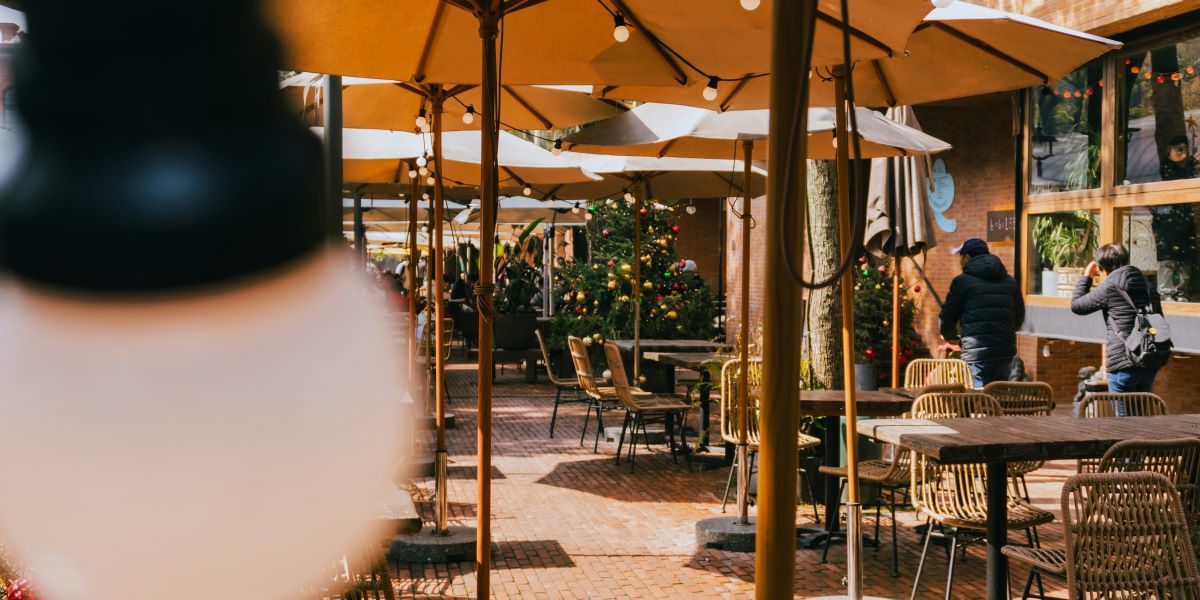

New York City restaurants can now keep roadway dining setups open through the winter after Mayor Zohran Kwame Mamdani signed legislation on August 31 eliminating the seasonal shutdown that had forced operators to dismantle their outdoor structures every November. The new law, Int. 0655, removes the November 30 through March 31 blackout period for roadway cafes under the city’s Dining Out NYC program, a restriction that did not apply to sidewalk cafes and that restaurant owners had called a costly deterrent to participation. The New York City Department of Transportation will develop rules in the coming months governing how restaurants can temporarily winterize their setups for cold weather service.
Key Takeaways
- Int. 0655, sponsored by Council Member Lincoln Restler, was approved by the City Council on August 13 and signed into law on August 31.
- The seasonal restriction required restaurants in the Dining Out NYC program to remove roadway dining structures from November 30 through March 31 each year.
- Participation in the city’s outdoor dining program dropped from roughly 12,000 establishments at the pandemic-era peak to approximately 1,600 as of August 2026 under the seasonal rules.
- NYC DOT will promulgate new winterization rules allowing restaurants to weatherproof roadway setups while maintaining the design standards introduced under the permanent program.
- The law introduces an 11 p.m. closing time for outdoor dining, one hour earlier than the previous midnight cutoff.
- Sanitation standards require outdoor cafes to remain free of trash, food scraps, debris, and vermin, with civil penalties starting at $200 for a first offense and $500 for repeat violations.
The Seasonal Restriction Drove Participation Off a Cliff
The trajectory of outdoor dining in New York City since the pandemic tells a story of rapid adoption, public backlash, regulatory overcorrection, and now a legislative reversal. When the city launched its emergency Open Restaurants program in 2020, allowing restaurants to build outdoor structures on roadways and sidewalks with minimal regulation and no fees, participation surged. At the program’s peak, roughly 12,000 to 13,000 establishments operated outdoor setups across the five boroughs. The emergency program generated an estimated $373 million in wages and nearly $10 million in annual tax revenue, according to city data.
As the pandemic receded, complaints mounted. Abandoned dining sheds attracted rodents. Structures blocked parking spaces and sidewalk access in residential neighborhoods. Noise from late-night service drew opposition from community boards. Some residents argued the sheds had overstayed their emergency justification. In response, the Adams administration launched Dining Out NYC in December 2024, a permanent program that imposed strict design standards, required seasonal dismantling of roadway setups, introduced new licensing fees, and established specific structural requirements.
The regulatory reset had an immediate and dramatic effect on participation. While roughly 2,981 restaurants applied under the new system initially, only 67 had received full approval by the program’s first spring in 2025. As of August 2026, approximately 1,600 restaurants were participating in the program, a fraction of the pandemic-era numbers. Restaurant owners pointed directly at the seasonal restriction as the primary obstacle. The annual cycle of dismantling, storing, and rebuilding outdoor structures imposed costs that many small operators could not absorb, particularly for businesses with thin margins that relied on outdoor seating as a revenue supplement rather than a seasonal luxury.
The New Law Removes Seasonal Barriers While Keeping Design and Sanitation Rules
Int. 0655 does not return New York City to the loosely regulated pandemic-era model. The legislation specifically targets the seasonal restriction on roadway cafes while leaving the broader Dining Out NYC framework intact. Restaurants still must comply with the design standards introduced under the permanent program, which replaced the makeshift plywood sheds of 2020 and 2021 with cleaner, more uniform setups that maintain sightlines and accessibility on city streets.
What changes is the calendar. Roadway dining setups can now remain in place year-round, and NYC DOT will develop rules allowing operators to temporarily winterize their structures for cold-weather service. The specifics of what winterization will look like, including materials, coverage limitations, and heating standards, will be determined through the DOT rulemaking process in the coming months. DOT Commissioner Mike Flynn noted that the department intends to allow weatherproofing that creates a comfortable dining experience while still maintaining the open, airy character of the current setups.
The legislation also adjusts closing hours. Outdoor dining areas must now shut down by 11 p.m., one hour earlier than the previous midnight deadline. The earlier cutoff appears designed to address one of the most persistent complaints from residential neighborhoods, where late-night noise from roadway cafes became a friction point between restaurants and the communities surrounding them.
On the sanitation front, the City Council built enforcement mechanisms into the program. Outdoor cafes must remain free of trash, food scraps, graffiti, debris, and vermin. Violations carry civil penalties of $200 for a first offense and $500 for subsequent offenses. These provisions acknowledge the rat and cleanliness concerns that fueled much of the public opposition to the pandemic-era sheds and aim to give the city a tool for holding operators accountable without pulling the program entirely.
Council Member Restler and Speaker Menin Championed the Legislation
Council Member Lincoln Restler introduced the legislation in October 2025, initially as Int. 1421, framing the seasonal restriction as an unnecessary regulatory burden that was suppressing participation and costing the city economic activity. The bill gained backing from City Council Speaker Julie Menin and was ultimately championed as part of Mayor Mamdani’s Open for Small Business initiative, which the Department of Small Business Services has positioned as a broader effort to reduce regulatory friction for neighborhood businesses.
Restler was direct in his characterization of the prior framework, stating that the Adams-era regulations had effectively undermined the outdoor dining program. The Council member argued that by eliminating the seasonal teardown requirement, the new law would make it financially viable for thousands of additional restaurants to participate. Council Member Shanel Thomas-Henry, who chairs the Committee on Small Business, framed the legislation as a pathway for entrepreneurs to grow their businesses and serve their neighborhoods year-round without navigating unnecessary administrative obstacles.
The bill also includes a provision allowing grocery stores to apply for sidewalk cafe licenses and permitting certain cafes to expand their frontage with approval, extending the law’s impact beyond traditional restaurant operators.
The Winterization Question Remains the Practical Test
For the restaurant industry, the law’s immediate benefit is financial certainty. Operators no longer face the annual expense of dismantling and rebuilding their outdoor infrastructure, a cost that Restler described as making the program “stupidly expensive” for small businesses. For the city, the calculation is whether restoring year-round access will reverse the sharp decline in participation and bring the economic activity associated with outdoor dining back to scale.
The unresolved question is winterization. The pandemic-era program saw some operators enclose their roadway structures with walls, roofing, and heating systems that effectively created semi-permanent indoor dining rooms on public streets. Those enclosures drew some of the sharpest criticism from residents and accessibility advocates. The DOT’s rulemaking process will determine how much coverage restaurants can add during winter months and whether the resulting setups can attract diners in January while still meeting the design standards the city introduced to address the problems of the pandemic era.
New York City’s restaurant industry has watched outdoor dining policy swing from emergency authorization to heavy regulation and now back toward accessibility in the span of six years. The new law settles the calendar question. Whether it rebuilds participation to anything approaching the pandemic-era numbers depends on how the winterization rules are written and whether the economics of year-round outdoor dining work for operators who sat out the seasonal version of the program.