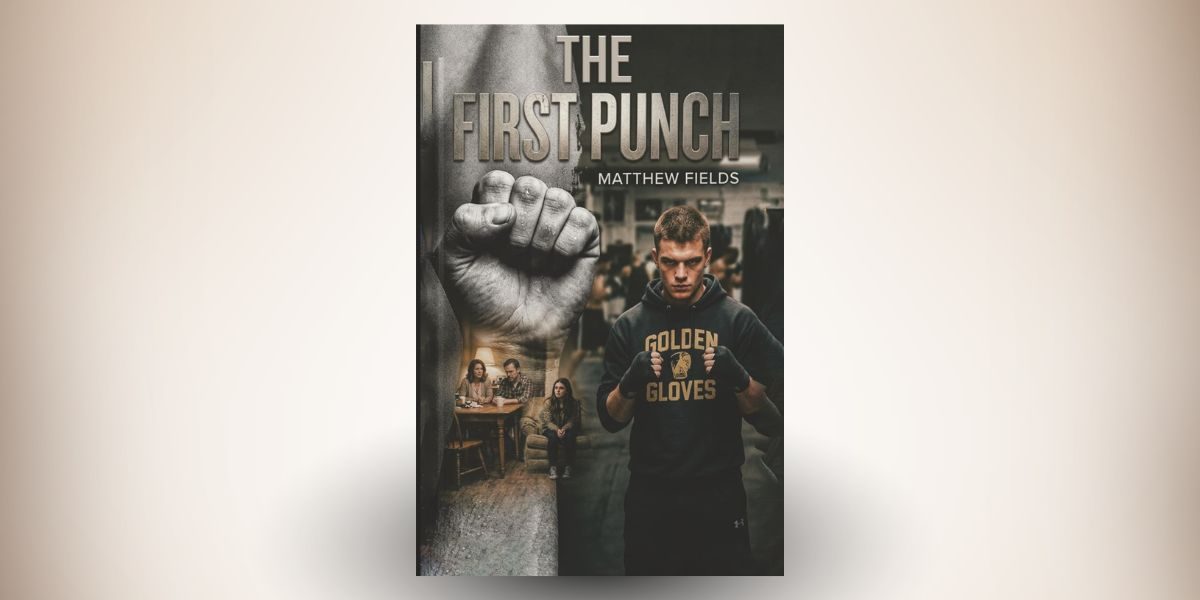

Some stories begin with a victory. Matthew Fields begins his with a wound.
That is what makes The First Punch land differently. It is not written like a clean sports profile, the kind that starts with a young athlete training under bright lights and ends with a hand raised in triumph. Fields reaches further back. He takes readers into the rooms, streets, losses, friendships, and promises that formed him before boxing ever gave him a stage.
At first glance, The First Punch may seem like a boxing book. There is training, sweat, discipline, exhaustion, and the hard education that only a gym can offer. But beneath the gloves and the canvas is something more human. This is a story about what happens when a young man is forced to grow around grief, when the people he loves become the reason he refuses to quit, and when the act of fighting becomes inseparable from the act of remembering.
Matthew Fields writes with the intensity of someone who has lived close to both loss and ambition. His story is not built around easy inspiration. It does not pretend that pain disappears because a person finds a purpose. Instead, it shows how grief changes shape. It becomes a fire. It becomes a rhythm. It becomes the reason a boy runs before dawn, walks into a boxing gym, opens a notebook, and keeps going.
One of the strongest emotional anchors of the book is Fields’ relationship with his brother Jesse. Jesse is the original spark, the brother whose strength, dreams, and influence remain present even when life takes a cruel turn. The bond between them gives the book its heartbeat. Readers do not simply watch Matthew train. They understand why every punch matters.
There is also Billy, Matthew’s lifelong friend, whose presence gives the book warmth, humor, loyalty, and emotional balance. Billy is one of those rare people in a story who remind readers that strength is not always loud. Sometimes it is shown by showing up. In staying. In seeing someone through the worst days without needing to fix them. Through Billy, The First Punch honors friendship as a form of courage.
What separates Fields’ work from many sports-driven memoirs is the second identity running through the book: the writer. Matthew is not only learning how to fight. He is learning how to make meaning out of what he has survived. His notebooks become another kind of ring. The page becomes a place where loss, love, anger, memory, and hope can be faced honestly. The result is a book that speaks to athletes, yes, but also to anyone who has ever tried to turn their hardest chapter into something useful.
Fields writes with emotional force because he is not trying to decorate the truth. He lets the story breathe through pain, discipline, love, failure, and recovery. The fight scenes have movement, but the emotional scenes have weight. The reader feels the cost of becoming someone.
In the end, The First Punch is not asking readers to admire a fighter from a distance. It invites them closer. It asks them to consider what they are carrying, what promise keeps them going, and what kind of legacy they want to leave behind.
Matthew Fields may step into the ring with gloves on, but his real fight is larger than boxing. It is the fight to honor the past without being buried by it. It is the fight to become more than what pain tried to make of him.