

A school day already feels full for many children. Homework, tests, and activities take up most of their time. Now add Quran classes into that routine, and things can quickly feel overwhelming. Many parents worry that children may lose focus, feel tired, or fall behind in one area.
However, with the right structure, balancing school and Quran learning is both possible and highly beneficial. It teaches discipline, time management, and a strong sense of responsibility. The key is not to overload the child, but to create a smooth and realistic routine that supports both types of learning without stress.
Why Balance Matters More Than Speed
Some families push children to complete Quran learning quickly while also expecting top school performance. This approach often leads to pressure and burnout.
A balanced routine focuses on:
● Steady progress instead of rushing
● Clear understanding rather than memorizing without meaning
● Maintaining energy throughout the day
When balance is maintained, children stay motivated and consistent over time.
Setting a Daily Routine That Actually Works
A proper routine acts like a roadmap. Without it, children may feel confused about what to do first or how to manage time.
What Should a Simple Routine Include?
A realistic daily plan may include:
● School hours with proper focus
● A short rest period after school
● Quran class or revision time
● Homework completion
● Relaxation or playtime
The goal is to avoid overlapping tasks and give each activity its own space.
Choosing the Right Time for Quran Classes
Timing plays a major role in how well a child learns. Not every time of the day works equally well.
Morning or Evening, Which Is Better?
Morning sessions often suit children who wake up fresh and active. Evening sessions, on the other hand, work well after a short rest following school.
Important factors to consider:
● Energy levels of the child
● School schedule
● Family routine
A tired child will struggle to focus, so choosing the right time improves learning quality.
Managing Homework and Quran Practice Together
School homework and Quran revision can compete for attention. Without planning, one may get ignored.
A simple strategy is to divide time clearly:
● Complete urgent school homework first
● Set a fixed slot for Quran revision
● Avoid switching between tasks too often
This structured approach reduces confusion and helps children stay focused.
Role of Parents in Keeping Balance
Children cannot manage everything alone. Parents play a central role in guiding and supporting them.
Here are a few practical ways parents can help:
● Monitor daily progress without pressure
● Encourage small achievements
● Maintain a calm and positive environment
Instead of strict control, supportive guidance works better in the long run.
Avoiding Burnout and Keeping Kids Motivated
Children often lose interest when they feel overloaded. This is a common issue when schedules are too tight.
Signs a Child Is Feeling Overwhelmed
Watch for these signs:
● Lack of focus during lessons
● Complaints about tiredness
● Avoiding study time
If these signs appear, the schedule may need adjustment. Adding short breaks and reducing session length can help restore energy.
Using Weekends for Smart Catch-Up
Weekends provide extra time that can be used wisely. Instead of overloading weekdays, some tasks can be shifted.
A weekend plan may include:
● Longer Quran revision sessions
● Reviewing difficult lessons
● Light school preparation for the upcoming week
This reduces weekday pressure and keeps learning balanced.
Simple Weekly Plan for Better Balance
A clear weekly structure helps both children and parents stay organized. Here is an example:
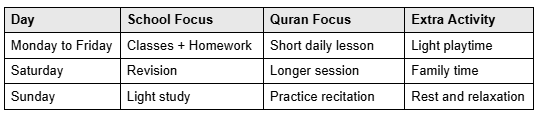
This structure spreads the workload and prevents last-minute stress.
Can Technology Help Maintain Balance?
Technology can make scheduling and learning easier when used properly. Many tools now support both school and Quran education.
Useful options include:
● Reminder apps to manage study time
● Recorded Quran lessons for revision
● Online Quran classes with flexible timing
However, screen time should remain controlled to avoid distraction.
Building Discipline Without Pressure
Discipline is not about strict rules; it is about consistency. Children respond better to simple and clear expectations.
A healthy approach includes:
● Fixed study times
● Regular breaks
● Rewarding consistency instead of perfection
This creates a positive learning habit that lasts longer.
Steady Progress Builds Lasting Habits
Balancing school and Quran classes is a challenge, but it is completely manageable with the right approach. A structured routine, proper timing, and supportive guidance can make a big difference. Children do not need to feel overwhelmed when both areas are handled with care and planning.
The focus should always remain on steady progress, not perfection. When children feel supported and relaxed, they learn better and stay consistent. Over time, this balance not only improves academic and religious learning but also builds strong life skills that benefit them in every stage of life.