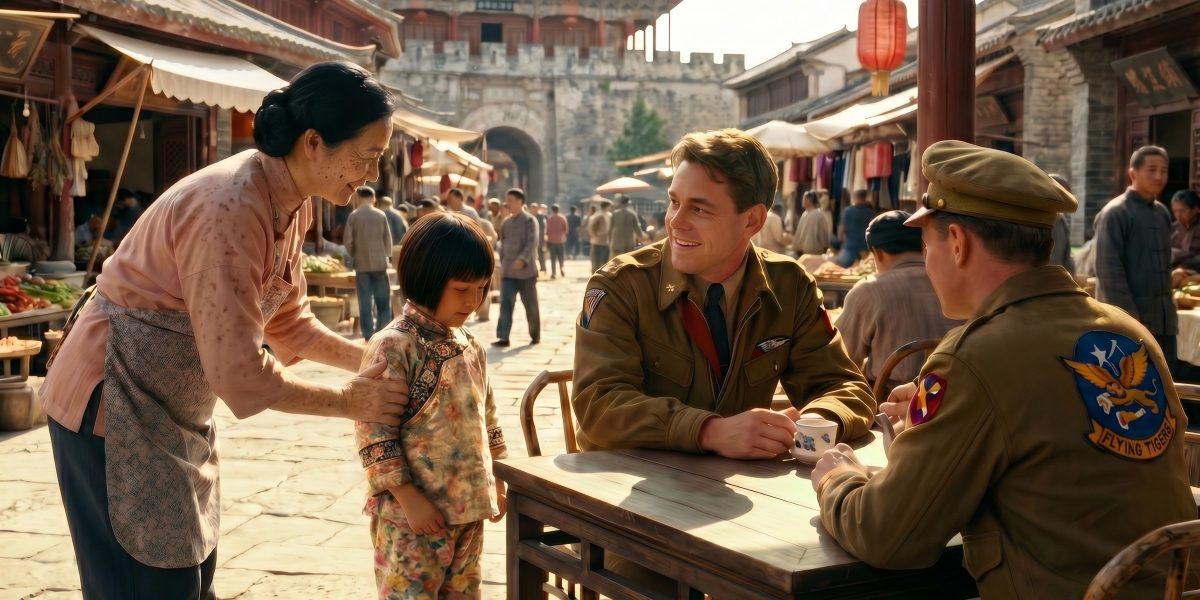

For audiences who think of history as something locked in textbooks, a new short film offers a different way in. Twilight Chime, an AI-produced short film, revisits one of the most enduring friendships of the wartime era through the lens of a single brass bell. The work belongs to a growing body of AI video projects that use artificial intelligence visual tools to recover personal stories that formal records tend to overlook. Its creator, an independent media practitioner and AI video creator, set out to honor the bond between the people who built the Burma Road and the volunteer aviators known as the Flying Tigers.
The film treats AI video not as a novelty but as a practical method for reaching emotional truths that traditional documentary production cannot easily afford. Rather than recreate grand battles, the creator focuses on the warm, human episodes hidden inside larger events. That approach shapes everything about the AI-produced short film, from its intimate subject to its visual style.
A Lifeline Through the Mountains
The story rests on a real and difficult chapter of history. During the wartime years, the Burma Road served as an irreplaceable supply route, carved through steep mountains and deep valleys by ordinary local workers using little more than simple tools and persistence. The road kept vital supplies moving when few other options existed. Its construction was a feat of collective endurance, accomplished without heavy machinery and under constant threat.
Into this setting came the Flying Tigers, a group of volunteer aviators who traveled across the ocean to help protect the corridor. They patrolled the skies above the supply line day and night, working to keep the route open against repeated threats. The partnership that formed between the local road builders and the visiting air crews became a lasting symbol of international cooperation. It was a friendship forged in hardship, built on mutual trust and a shared sense of purpose, and it is exactly the kind of bond that the new AI video work hopes to keep alive.
The Bell That Crossed Oceans and Decades
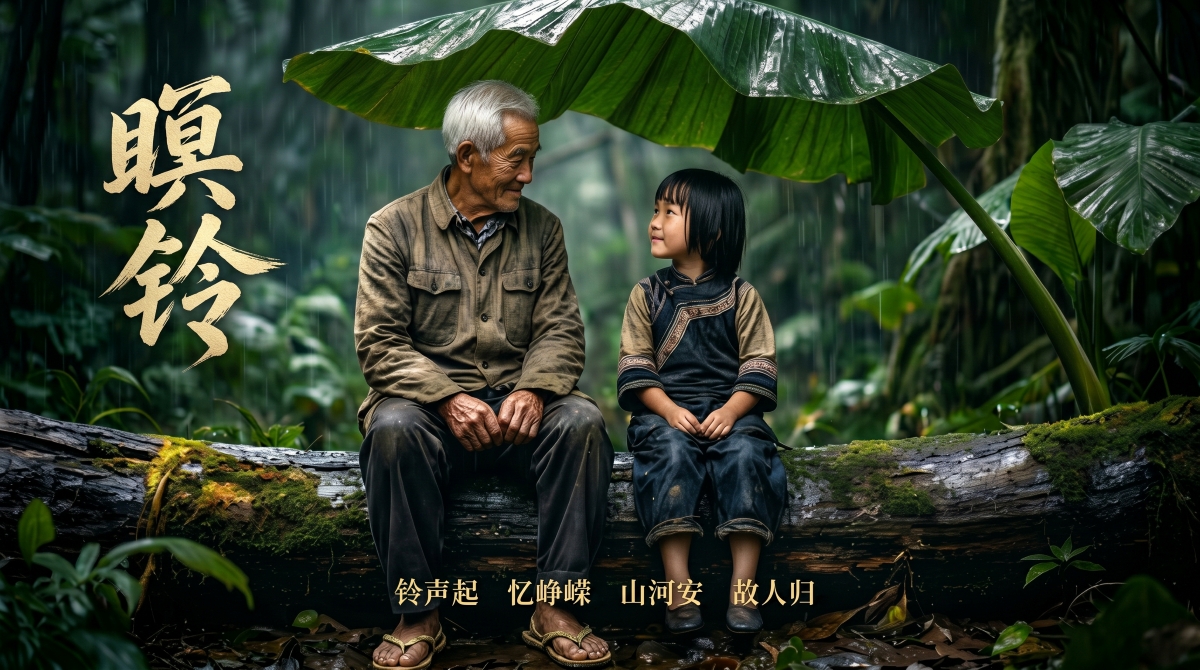
What sets Twilight Chime apart is its choice of focus. Instead of mapping strategy or chronicling famous engagements, the film follows an old brass bell that travels across mountains, oceans, and generations. The bell links an elderly Chinese villager with the grandson of a former Flying Tigers member, carrying with it the joys, separations, and quiet sorrows of an ordinary family.
That small object becomes the emotional anchor of the entire piece. By starting from a single keepsake, the creator invites viewers to feel the weight of history rather than simply learn its dates. The bell stands in for everything that official accounts leave out, the personal attachments and human connections that survive long after the events themselves have faded. Viewers can watch the result in the Twilight Chime short film, which presents this story through fully AI-generated visuals.
Why AI Video Suits This Kind of History
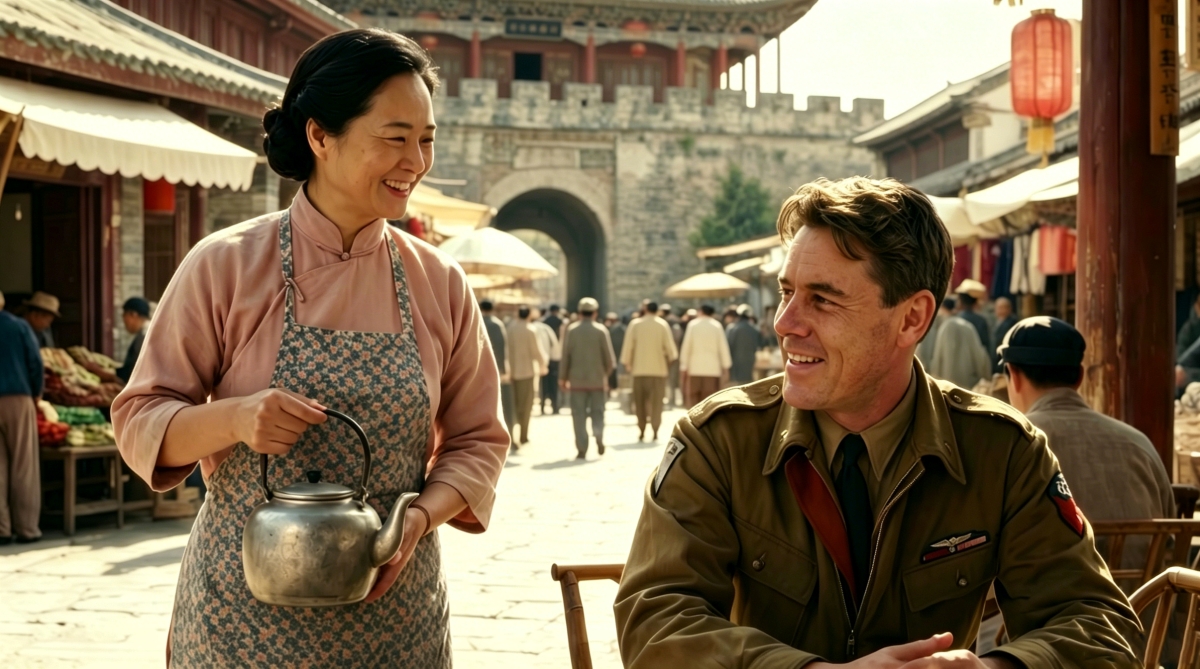
AI video plays an indispensable role in bringing a story like this to the screen. Recreating scenes from nearly a century ago, such as the arduous road construction along cliff sides, the air patrols overhead, and the perilous journeys through remote forests, would have been costly and difficult with conventional filming. AI image generation, scene restoration, and virtual production tools allow a single independent creator to reconstruct the landscapes, costumes, and living environments of that era with a level of detail that would otherwise sit out of reach.
The technology does more than rebuild settings. It helps restore the texture of daily life and the tension of wartime moments, turning written narratives and fading memories into immersive visual scenes. AI tools also assist in refining character expressions and atmospheric details, so that emotions of fear, perseverance, warmth, and longing register more directly with an audience. The practical effect is significant. AI video lowers the threshold for reviving niche history and makes it possible for independent creators to present overlooked stories to a far wider audience than traditional production budgets would allow.
This matters for the broader project of historical memory. History is composed of countless individual stories, and every ordinary person who held firm in difficult times deserves to be remembered. As the wartime generation passes and the events recede, many younger viewers have little familiarity with this period of shared struggle. Work that combines history with modern digital art can serve as a bridge between cultures, a reminder of the cooperation that once existed between distant communities.
Honoring a Shared History
The message behind Twilight Chime is direct and heartfelt. The creator set out to commemorate the support the Flying Tigers offered during the years of the Burma Road. These volunteers left their hometowns to protect a distant land, and together with local people they overcame countless obstacles to guard a route that meant survival for many. That selfless assistance crossed geographic and cultural boundaries, and the film argues that it should never be forgotten.
There is also a quiet argument running through the work about what AI video can be used for. Much of the public conversation around AI image generation centers on spectacle or efficiency. Twilight Chime points in a different direction, toward preservation and remembrance. The creator describes media work not merely as producing content but as safeguarding precious memories and passing down human connections that transcend borders and eras. In that framing, the technology becomes a tool for empathy rather than mere display.
The film leaves its audience with a simple image. The chime of an old bell continues to echo across time, reminding viewers that compassion, partnership, and mutual support count among the most valuable legacies any history can leave behind. For an independent creator working with emerging tools, it is an ambitious goal. Twilight Chime suggests that AI video, used with care and intention, can carry that kind of weight, connecting a wartime friendship to a generation that might otherwise never encounter it. To learn more, watch the short film here.