
By Daniel Mercer
Senior Arts and Culture Correspondent
Some sculptures are designed to decorate a space. Others are built to define it.
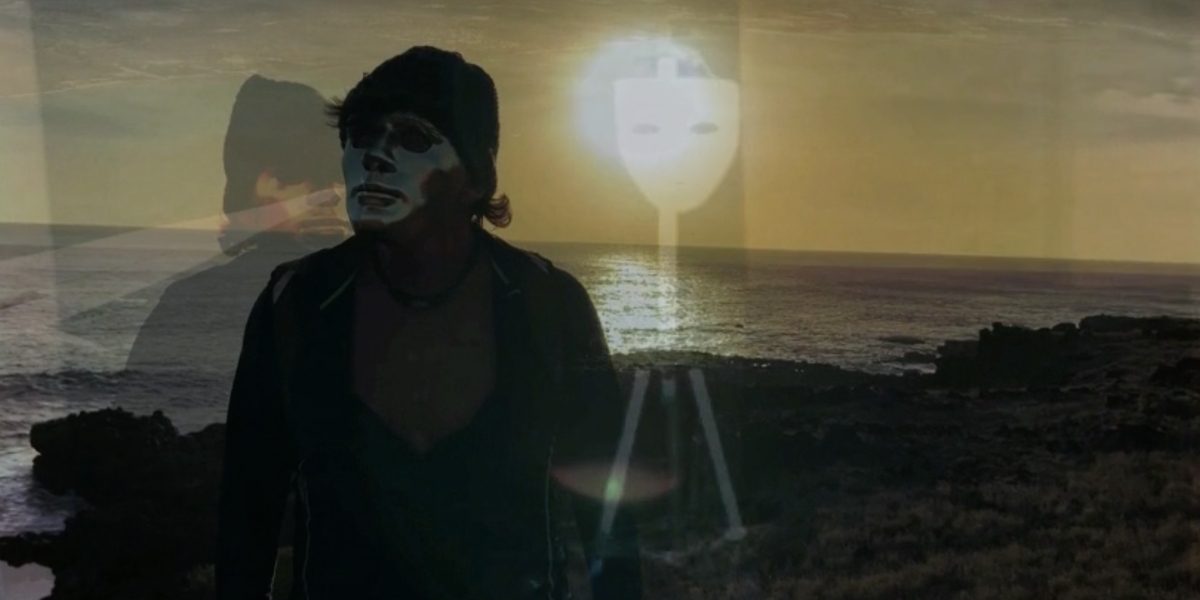
A newly proposed large-scale installation by masked artist 7even, known publicly as @7narrative, aims to do something far more ambitious. The concept seeks to transform the history of tennis itself into a permanent physical monument as part of a proposed US Open 2028 experience.
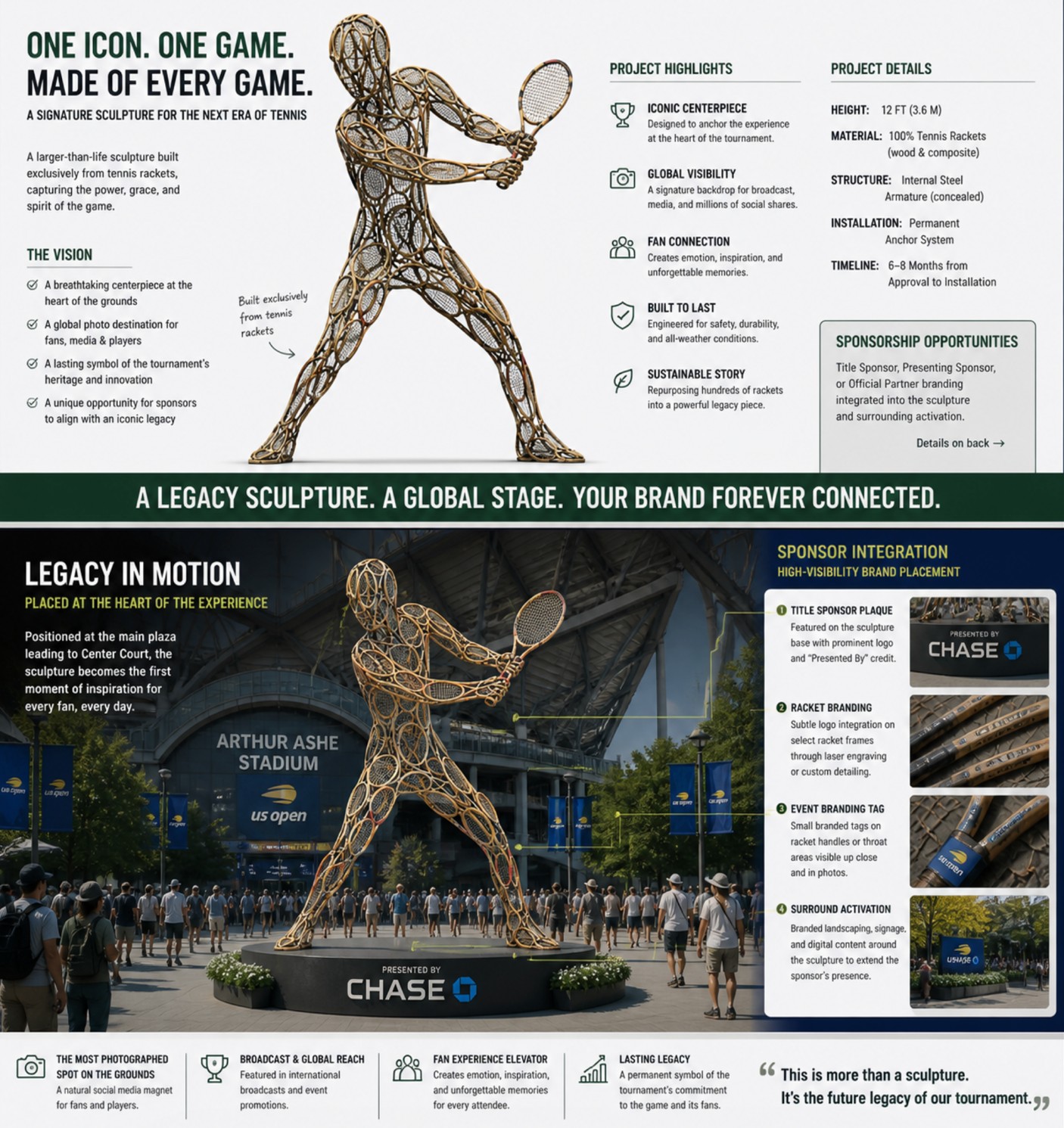
The proposal features a 15- to 20-foot sculpture of a tennis player frozen in motion, constructed entirely from original wooden tennis rackets used throughout the sport’s most iconic eras.
Not replicas. Not symbolic interpretations. Actual rackets are directly tied to the game’s heritage.
Every curve of the sculpture’s body, every line of movement, every structural contour would be physically assembled from the same instruments that once struck championship points on courts around the world.
“This is not interpretation,” the proposal states. “This is the game, physically rebuilt from its own history.”
The concept separates itself from traditional sports installations through both its emotional weight and physical authenticity.
A Monument Built From the Sport’s Own History
In the current mockups, the figure appears larger than life. Athletic, explosive, and timeless, it is positioned outside the iconic Arthur Ashe Stadium grounds like a guardian formed from the sport’s own DNA. The sculpture’s body is woven from hundreds of intertwined rackets, creating musculature, movement, tension, and energy through overlapping wooden frames and strings.
From a distance, viewers see a tennis player. Up close, they begin discovering history.
Different grip tapes. Different frame shapes. Different generations. Different stories embedded into the work itself.
According to the proposal materials, the sculpture is intended to function as more than a static exhibit. The proposal envisions it positioned near the main approach to Center Court, where it would serve as the first major emotional experience fans encounter upon entering the grounds.
The project description calls it:
- “The first visual moment fans encounter”
- “The most photographed object on the grounds”
- “A defining symbol of the tournament’s legacy”
The proposal frames the sculpture less as decoration and more as a cultural landmark in waiting.
The emotional power behind the concept may come largely from the material itself.
Long before carbon fiber technology, oversized rackets, and modern power tennis transformed the sport, wooden rackets represented the soul of the game. Precision mattered more than brute force. Timing mattered more than technology. The sound of wooden frames striking a tennis ball carried a distinct rhythm now largely vanished from modern professional tennis.
For generations of fans and players, those rackets still symbolize the golden age of the sport.
The proposed installation turns those forgotten tools into architecture. Memory into a monument. History into motion.
Unlike many contemporary public installations dominated by digital projections or temporary experiential technology, this proposal leans heavily into craftsmanship, permanence, and tactile authenticity.
Wood. Steel. String. Weight. Texture. Time.
The result feels simultaneously nostalgic and futuristic, blending elements of a sports cathedral, a fine art installation, and a historical archive.
A Personal Connection to the Sport
The proposal also carries unusually personal significance for the artist behind it.
Long before becoming known for emotionally driven abstract works and large-format contemporary art, 7even lived inside the competitive tennis world himself. According to the proposal, he was a nationally ranked tennis player who trained at the Nick Bollettieri Tennis Academy in the 1980s.
During that period, he competed at a high level, including doubles play alongside Pat McEnroe, shared team environments with Aaron Krickstein, and participated in practice sessions with Andre Agassi and other elite players emerging from the academy system.
That lived experience appears deeply embedded within the emotional DNA of the project.
“This isn’t an outsider trying to capitalize on tennis culture,” says one advisor familiar with the concept discussions. “This comes from someone who actually understands the emotional weight of the sport from the inside. There’s a memory in it. There’s respect in it.”
Adding another layer to the proposal is the involvement of a next-generation co-creator, an ArtCenter College of Design graduate who is advancing to a top-tier MFA program in the United States. The project materials describe the collaboration as a rare father-son creative partnership blending legacy, structure, emotional storytelling, and modern execution.
Sponsorship Framework and Project Scope
The sculpture’s design also incorporates a sponsorship framework to align brand partners with the game’s emotional legacy.
Rather than relying on aggressive advertising placement, the proposal outlines subtle integration strategies, including:
- Title sponsor base plaques
- Engraved racket-level branding
- Event tag integration
- Surrounding landscape and digital activation experiences
Potential partner categories discussed within the proposal include luxury, financial, automotive, and heritage brands.
Importantly, the proposal frames sponsorship not as temporary event advertising, but as participation in something permanent.
“A sponsor becomes part of something timeless, not temporary,” the document explains.
Preliminary project estimates place the sculpture within an anticipated design, engineering, fabrication, and installation range of approximately $350,000 to $650,000 depending on scale, structural requirements, sourcing complexity, and final placement considerations.
For many observers, the concept’s real value may ultimately extend far beyond budget discussions.
Memory Made Physical
The proposal is attempting to preserve something increasingly rare in modern sports culture: physical memory.
Not clips. Not algorithms. Not disappearing social media posts.
Something people can stand beside. Touch. Photograph. Return years later.
The proposal closes with a line that feels less like marketing copy and more like a statement of purpose:
“Matches end. Champions change. But something like this? It stands.”
Perhaps that is exactly why the concept resonates so strongly.
Long after the final point is played, people rarely remember the statistics first. They remember how the game felt.