
By: Elena Vargas
How Teen Author Sophia Rose Lancer Created a Thoughtful Resource for Children Navigating Life Between Two Homes
Adults often talk about divorce in terms of arrangements. Schedules. Logistics. Communication. What gets overlooked much more easily is what the experience feels like for the child living inside it.
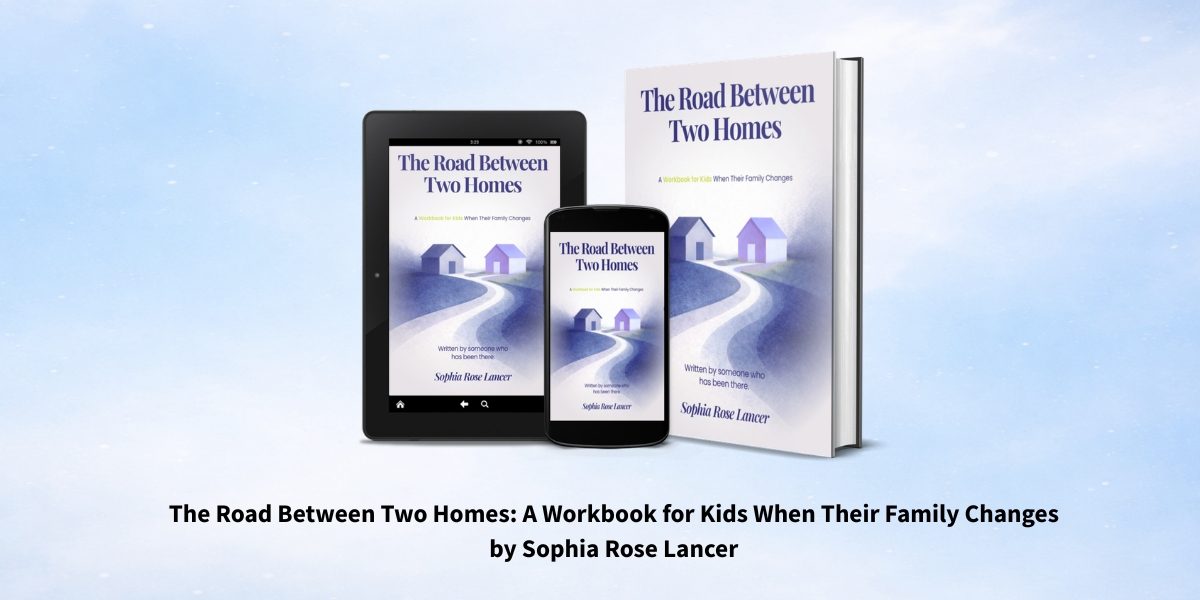
That is the space Sophia Rose Lancer wanted to speak to when she created The Road Between Two Homes, a workbook for children navigating divorce, family change, and life between two households.
What makes the project stand out is not only the subject matter. The fact is, it was created by someone who knows that experience firsthand.
Sophia did not approach the topic from a theoretical or distance perspective. She approached it from memory.
Growing up between two homes, she understood early how emotional and confusing that kind of transition can feel. What stayed with her most was not just the change itself, but how differently it affected her and her two older brothers. They were living through the same family shift, yet each of them responded in their own way.
That insight became one of the foundations of the workbook. It reinforced something many adults miss. Children can go through the same event and still process it completely differently. One child may become quieter. Another may seem more independent. Another may act as though everything is fine while carrying much more than anyone realizes.
Instead of creating something children would simply read once and put down, Sophia chose to create something they could actually use.
That choice shaped the workbook in an important way.
The Road Between Two Homes is not just a collection of reflection pages. It combines emotional support with practical tools in a way that feels personal and accessible. Along with guided prompts, it includes support for “switch days,” a packing list, messages from Sophia, and examples of other children in different situations so readers can feel less alone in what they are experiencing.
That is part of what makes it different.
It is not only asking children to name their feelings. It is helping them through the real moments that can make those feelings harder, especially the back-and-forth transitions that come with moving between homes. The workbook pays attention to both the emotional side of family change and the everyday details children actually live through.
That balance matters.
One of the strongest parts of the workbook is its understanding of “switch days,” the days when a child moves from one home to the other. From the outside, those days can seem routine. Many children, they carry a lot more than that. There is the mental shift of leaving one space and entering another. There are different routines, different expectations, and sometimes stress over what to bring, what was forgotten, or how the transition itself feels.
By including practical tools for those moments, the workbook does something many resources do not. It helps children not only reflect, but also prepare.
Sophia also expanded the workbook beyond her own story. While developing it, she created a survey for kids and adults who had gone through divorce or family separation. Their responses helped shape the prompts and tools in the book.
What came through clearly was how layered family change can feel. Many people described experiencing several emotions at once, including sadness, confusion, anger, anxiety, guilt, and pressure to act okay even when they were not. The responses also showed how differently people coped. Some withdrew. Some became stronger on the surface. Some tried to hold everything together.
That range mattered because it confirmed what Sophia had already seen in her own life. There is no single normal response to family change.
That is part of why the workbook feels so grounded. It does not assume every child will react the same way. It makes room for different feelings, different personalities, and different ways of coping.
It also recognizes something many children need but may not know how to ask for: a way to express themselves without pressure.
For some children, talking openly about emotions is difficult. Writing can feel safer. It gives them time to think. It gives them privacy. It creates room to be honest before they are ready to say everything out loud. In that way, the workbook becomes more than a personal activity. It becomes a starting point.
Sophia hopes it can help not only children, but also the adults supporting them. Parents, counselors, social workers, psychologists, and schools can all use a resource like this to begin conversations that might otherwise feel hard to start. That is one reason she is especially focused on getting the workbook into schools and support settings, where children may be able to access it through trusted adults who are already helping them navigate change.
Used that way, the workbook becomes more than something a child fills out on their own. It becomes a bridge between what a child may be feeling and what a supportive adult may need help understanding.
There is something quietly powerful about the way The Road Between Two Homes was built. It does not overcomplicate the issue. It does not try to sound clinical. It simply meets children where they are.
And sometimes that is exactly what makes a resource meaningful.
Sophia Rose Lancer has created something thoughtful, personal, and genuinely useful for children living between two homes. More than anything, the workbook offers what many children need most during family transition: language for what they are feeling, tools for what they are living through, and the reminder that they are not alone.
You can find The Road Between Two Homes by Sophia Rose Lancer on Amazon.
A teen-created workbook designed to support children through divorce, family change, and life between two homes.