
The modern patient does not lack information. They are drowning in it.
A single search about fatigue produces thousands of explanations. A scroll through social media delivers confident advice about gut health, detox routines, immune “boosting,” and the dangers of carbohydrates. In group chats, in gyms, in waiting rooms, health myths circulate with remarkable durability.
The problem is not curiosity. The problem is confidence without evidence.
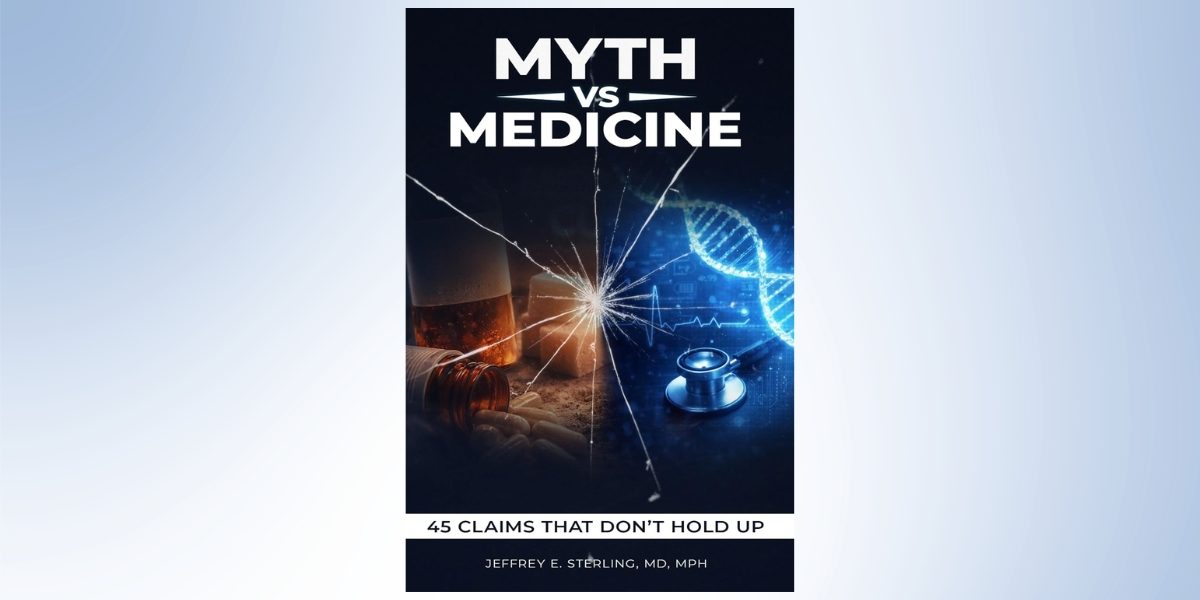
It is into this environment that Myth vs Medicine arrives. Written by physician and public health strategist Jeffrey E. Sterling, the book addresses 45 of the most persistent health claims shaping public behavior today. It does not merely label them false. It examines why they feel believable, why they endure, and what actually matters.
Why Myths Outpace Medicine

Photo Courtesy: Jeffrey E. Sterling, MD. MPH
Medical misinformation spreads because it is simple. Biology is not.
The claim that “carbs make you gain weight” offers clarity in six words. The metabolic truth requires nuance. The idea that you can “boost your immune system” is emotionally satisfying. The actual science of immune function is complex, adaptive, and not easily manipulated by supplements or teas.
Dr. Sterling structures each chapter around a disciplined framework: the myth, why people believe it, the truth, what actually matters, and a practical takeaway. This repetition is intentional. It builds pattern recognition. Readers begin to see not just individual corrections, but the anatomy of misinformation itself.
The myths addressed range widely. Nutrition myths. Fitness misconceptions. Chronic disease misunderstandings. Supplement marketing claims. Healthcare system suspicions. The breadth reflects a reality: misinformation is not confined to one topic. It permeates daily health decisions.
The Cultural Dimension of Belief
One of the book’s more important contributions is its refusal to treat myth believers as irrational. Dr. Sterling repeatedly acknowledges that health beliefs are shaped by culture, family history, community narratives, and lived experience.
Food traditions are inherited. Distrust of medical systems, in some communities, has historical roots. Advice passed down from relatives carries emotional weight. Social media accelerates these forces but does not create them.
By addressing why people believe certain claims before dismantling them, the book avoids the tone of correction that often alienates readers. Instead, it creates space for reflection. That distinction matters in a time when public health messaging can feel polarized.
The Supplement Question
Few areas illustrate the gap between marketing and medicine more clearly than the supplement industry. Products promising detoxification, immune enhancement, hormonal balance, or rapid weight transformation are widely available and often aggressively promoted.
In Myth vs Medicine, Dr. Sterling addresses the common assumption that “natural” equals safe. He explains regulatory differences between supplements and prescription medications and outlines why biological systems do not respond predictably to oversimplified solutions.
This section does not argue against all supplementation. It argues against unquestioned claims. The emphasis is not prohibition but discernment.
Chronic Illness and Moral Framing
Another theme running through the book is the tendency to moralize disease. The idea that diabetes is simply caused by sugar consumption. The assumption that hypertension reflects personal failure. The belief that feeling well means the underlying disease is absent.
By reframing chronic illness within an evidence-based context, the book shifts the conversation away from blame and toward management, prevention, and realistic expectations. It reinforces that biology is influenced by genetics, environment, stress, access to care, and long-term patterns.
In doing so, it challenges not only myths but stigma.
Healthcare System Suspicion
The final section of the book addresses systemic myths. Ideas such as “doctors get paid to prescribe certain medications” or misunderstandings about emergency room triage reflect deeper mistrust.
Rather than dismissing these suspicions outright, Dr. Sterling explains how healthcare systems function. He describes triage protocols, prescribing ethics, and preventive care recommendations in accessible language.
In a post-pandemic environment where trust has been strained, this transparency feels particularly relevant. Clarity, the book suggests, is one pathway to rebuilding confidence.
A Public Health Voice, Not Just a Clinical One
Dr. Sterling’s background informs the book’s tone. As a physician with public health training and decades of experience in community and global health initiatives, his perspective extends beyond the exam room.
The manuscript identifies him as the founder and CEO of SIMPCO, a health empowerment enterprise focused on improving population health through education and advocacy. His public platforms, including #AskSterlingMD and #StraightNoChaserHealth, emphasize culturally aware communication without jargon or fear-based messaging.
That philosophy is visible throughout the book. The writing avoids academic density without sacrificing accuracy. The goal appears less about intellectual dominance and more about equipping readers with confidence.
Health Literacy as Defense
Myth vs Medicine functions, above all, as a health literacy manual. It does not promise to eliminate misinformation. It aims to strengthen readers’ ability to evaluate claims before accepting them.
In an era where algorithms reward sensational content, the discipline of pausing, questioning, and examining evidence becomes protective. The book models that discipline repeatedly.
It also models tone. Firm but not dismissive. Corrective but not combative.
The Larger Cultural Moment
The current information environment rewards certainty. Medicine often deals in probability. That tension creates space for oversimplified narratives.
By addressing 45 myths across multiple domains, Dr. Sterling’s book positions itself within a larger conversation about how modern societies process health information. It suggests that empowerment does not come from rejecting medicine, nor from blindly accepting every viral claim. It comes from understanding enough to ask better questions.
In that sense, Myth vs Medicine is less about debunking isolated myths and more about restoring proportion.
A Quiet Argument for Clarity
The book does not announce itself as revolutionary. It does not position itself as contrarian. Its argument is quieter.
Health decisions should be made with clarity. Clarity requires evidence. Evidence requires patience.
In a culture that moves quickly, that may be the boldest claim of all.
Website: https://myth-vs-medicine.com/
Amazon: https://www.amazon.com/Myth-Medicine-Claims-That-Dont-ebook/dp/B0GQY7WQC4/dp
Instagram: https://www.instagram.com/mythv_smedicineofficial
LinkedIn: https://www.linkedin.com/company/myth-vs-medicine/?viewAsMember=true
Disclaimer: The content provided in this article is not intended as medical advice and should not be used as a substitute for professional consultation with a healthcare provider. Always seek the advice of your physician or other qualified health provider with any questions you may have regarding a medical condition. Any actions you take based on the information in this article are at your own risk.