
By: Xuhua Chen
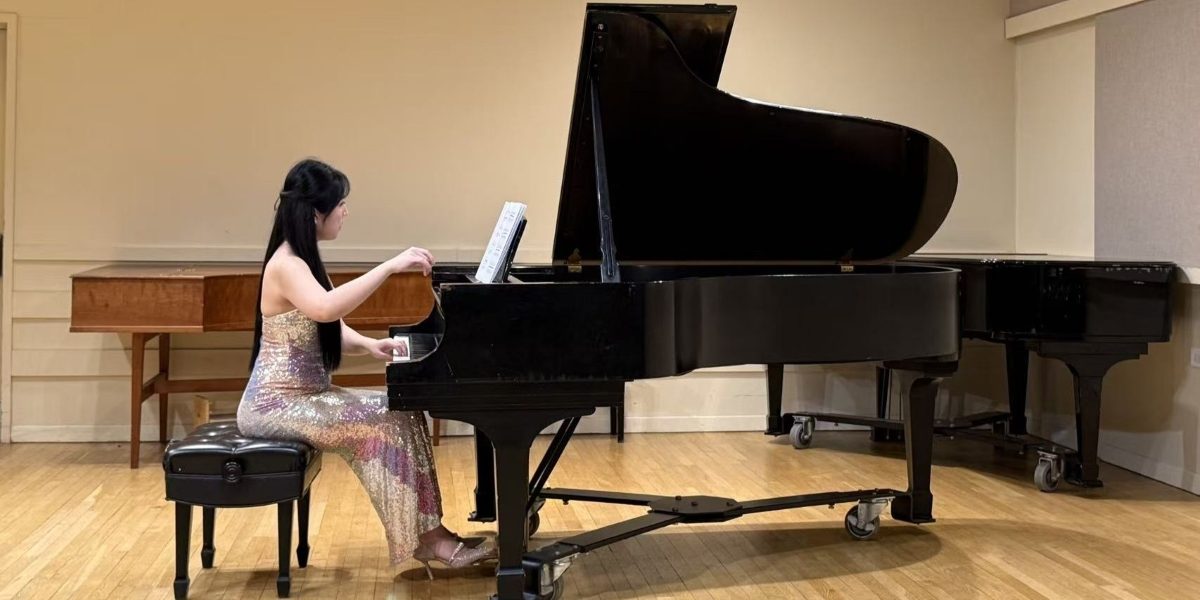
On March 21, 2026, pianist Xijuan Zong presented a solo piano recital at the renowned Kaufman Music Center in New York, performing a program devoted to contemporary piano works by leading women composers. The recital formed part of Zong’s ongoing artistic project, Presence in Sound, which explores the expressive and cultural dimensions of modern piano repertoire. Presenting this program in one of New York’s most respected musical institutions marked an important milestone in Zong’s growing artistic presence within the international classical music scene.
Located on Manhattan’s Upper West Side, Kaufman Music Center has long been recognized as a distinguished cultural center within New York’s classical music landscape. Its concert venues regularly host internationally acclaimed performers, chamber ensembles, and emerging artists from around the world. Known for presenting innovative programming and fostering artistic exchange, the institution has become an important platform for musicians to engage with audiences in a highly influential cultural capital.
For Zong, presenting a solo recital at Kaufman Music Center carried particular artistic significance. New York remains one of the important global centers for classical music performance, where artists from across the international scene converge. Performing in this environment places a pianist within a broader cultural dialogue that connects performers, composers, and audiences at the forefront of contemporary artistic expression. Zong’s recital, therefore, represented not only a concert appearance but also an opportunity to present her interpretation of contemporary piano repertoire within a major international cultural context.
In this recital, Zong chose to perform Two Andean Portraits by Gabriela Lena Frank, Nocturno by Kathryn Salfelder, and BALM by Courtney Bryan – three works by contemporary women composers. This programming was not simply a juxtaposition of contrasting pieces, but reflected a sustained artistic direction in Zong’s recent work: to illuminate the richness of contemporary piano music through the distinct creative voices of women composers. Each work opens a different musical world – from the vivid cultural imagery and rhythmic vitality of Frank’s writing, to the inward, finely shaded lyricism of Salfelder’s soundscape, and the spiritual intensity and expressive tension of Bryan’s music. Together, these works formed a contemporary piano narrative that was both diverse in character and unified in artistic purpose.
For Zong, the choice of these works represented not only an engagement with the creative contributions of contemporary women composers but also a way of shaping artistic dialogue through performance. In her interpretation, the three pieces were presented not merely as examples of stylistic contrast, but as parts of a larger listening experience unfolding across the recital. Audiences were invited to encounter the distinct compositional identities of each composer while also hearing how contemporary piano music can move across questions of cultural memory, sonic color, and emotional depth. In this sense, Zong’s performance positioned the pianist not simply as an interpreter of works but as a vital artistic mediator between the composers’ ideas and the audience’s experience.
Her recent performance work has continued to center on contemporary repertoire, with particular attention to composers whose music expands the expressive range of piano performance.
Through performances and recordings devoted to contemporary repertoire, Zong’s work has increasingly reached audiences beyond the traditional concert setting, connecting listeners across different cultural contexts and international music communities.
While the New York recital marked an important highlight of Zong’s current performance season, it also followed an earlier appearance in Boston at Old South Church, where she presented a similarly curated program of contemporary works. Through these performances across major cultural centers, Zong continues to expand her engagement with repertoire that reflects the evolving voice of contemporary piano composition.
In recent years, Zong has increasingly focused her artistic work on contemporary compositions, particularly works by living composers whose music reflects the diversity and creative energy of today’s classical landscape. Rather than presenting contemporary works as occasional additions to traditional programs, she places them at the center of her artistic projects, inviting audiences to engage directly with the musical language of the present.
In April 2026, Zong is expected to release a digital album titled Presence in Sound, Resonant Voices, featuring contemporary piano works by women composers. Currently being prepared in collaboration with Austrian label Global Gate Music, the project will extend her recent recital work into the recording sphere and bring this repertoire to broader audiences.
Conceived as an extension of her recent recital projects, the album reflects Zong’s commitment to presenting contemporary piano literature within a broader artistic context. By bringing together works by composers whose voices shape today’s musical landscape, the recording highlights the richness and diversity of contemporary piano writing while expanding the repertoire’s reach beyond the concert hall.
With performances in major cultural centers and a growing catalog of contemporary recordings, Zong continues to establish a distinctive artistic voice within the international piano community. Through live performance and digital recording projects alike, she seeks to connect audiences with the evolving creative language of contemporary piano music.