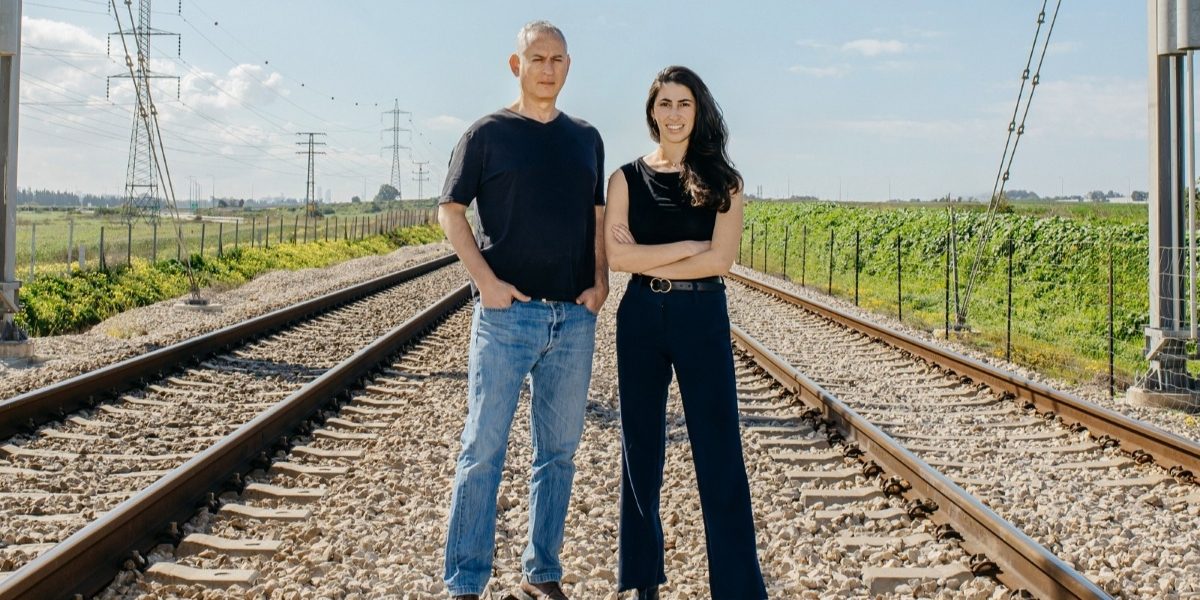

By: Jake Smiths
Rail has long been one of the most efficient freight systems in the world, yet it remains tethered to one of the least efficient energy sources: diesel. As pressure builds to decarbonize heavy transport, the industry is confronting a paradox: traditional electrification is technically viable, but it remains economically challenging.
Voltify believes that paradox is exactly the problem it seeks to address.
The startup, founded by Dafna Langer and Alon Kessel, has raised a $30 million seed round co-led by Aleph and Fortescue, with participation from strategic investors and angels. The company is building a distributed energy platform designed to reduce rail energy costs by potentially more than 20% without requiring large-scale infrastructure upgrades or operational changes.
At its core, Voltify is not positioning itself as a rail company, but rather as an energy infrastructure layer for freight systems.
The $11 Billion Question in U.S. Freight Rail
In the United States, the largest freight rail operators collectively spend roughly $11 billion annually on diesel fuel. While electrification has long been viewed as the clean alternative, the required infrastructure, overhead wiring across vast rail networks, would likely exceed $1 trillion in capital investment.
That gap has created a structural challenge in decarbonizing rail.
Voltify is targeting that challenge directly by proposing a system that avoids fixed electrification entirely. Instead, it introduces a distributed energy model combining battery-powered locomotives, fast-charging systems, and renewable-powered microgrids deployed along rail corridors.
“We built Voltify to address one of the rail industry’s key challenges: energy costs,” said Langer, Co-founder and CEO of Voltify. “Our platform allows rail companies to access clean, affordable energy without needing to change their existing operations. If you can reduce energy costs by even 5%, it’s meaningful. If you can reduce them by more than 20%, it could be transformative.”
Electrification Without Overhead Infrastructure
The company’s key departure from legacy rail electrification is its rejection of fixed wiring systems. Instead, energy is delivered dynamically, both while trains are moving and through distributed charging nodes integrated into rail corridors.
This system is designed to maintain operational continuity while eliminating the need for downtime associated with traditional battery charging or station-based electrification.
Voltify also suggests that its model reduces what it calls the “green premium,” reframing sustainability as a potential cost advantage rather than an added expense.
“Importantly, the company’s model aims to minimize the so-called “green premium.” Our goal is to lower energy costs by over 20%; this is not just the diesel costs, but all the energy that the industry needs,” Langer said. “Rail companies should not have to choose between sustainability and economics. We’re working to make clean energy a financially viable option.”
Investor Conviction in System-Level Change
For investors, Voltify represents a bet on infrastructure reinvention rather than incremental efficiency.
“Voltify is redefining the energy supply chain for global rail networks,” said Tomer Diari, General Partner at Aleph. “Their electricity-based solution has the potential to help rail operators significantly reduce costs, pollution, and dependency on diesel, while making transportation in the US more affordable and reliable for everyone.”
Fortescue framed its investment in the context of industrial decarbonization.
“Fortescue is committed to investing in the research and development of innovative technologies to drive Real Zero and accelerate decarbonization across our operations and beyond. Voltify’s mission to eliminate emissions in the heavy rail industry aligns with ours at Fortescue, and we’re encouraged by the solutions they are developing,” said Gus Pichot, CEO Growth & Energy at Fortescue.
Early Commercialization and What Comes Next
Voltify has already signed a paid pilot with one of the world’s largest Class I rail operators, with deployment expected in the coming months. Additional interest is emerging from regional operators seeking cost reduction and emissions compliance pathways.
The company expects to demonstrate its integrated locomotive, charging, and microgrid system later this year.