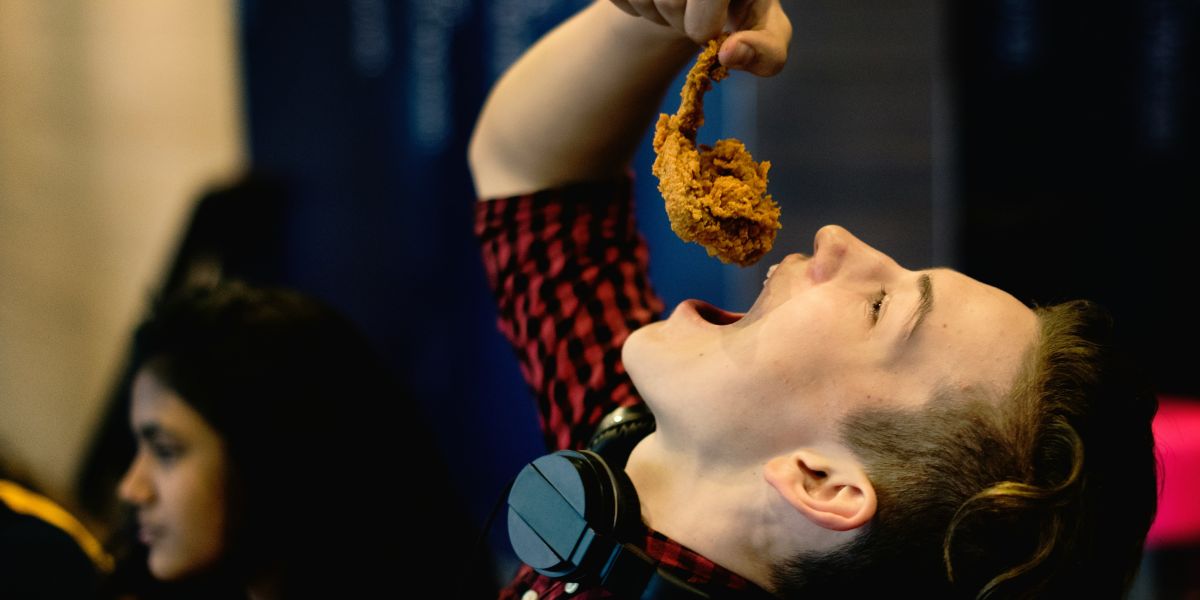

The Filipino dining institution marks its third Manhattan outpost at 14 East 42nd Street — steps from Grand Central Terminal — as its New York footprint reaches seven locations citywide.
Midtown Manhattan has a new neighbor. On March 31, 2026, Jollibee opened its latest New York City location at 14 East 42nd Street, tucked between Fifth and Madison Avenues in one of the borough’s most trafficked corridors. The address places the restaurant steps from Grand Central Terminal, a transit hub that welcomes hundreds of thousands of commuters, tourists, and workers every day. For a brand that has long understood the commercial logic of density, the location is deliberate — and fitting.
The 42nd Street store is Jollibee’s third Manhattan outpost and its seventh location across the five boroughs. In the broader U.S. context, it marks the brand’s 80th American door, a milestone that underscores how rapidly the Filipino fast-food chain has accelerated its footprint on the East Coast and beyond.
A Grand Opening With Something at Stake
Jollibee’s openings carry a well-earned reputation for drawing crowds. When its first East Coast location debuted in Woodside, Queens, in February 2009, an estimated 4,500 people lined up in 35-degree weather, some waiting nearly four hours in the cold for a seat. The energy around a Jollibee opening is not manufactured by a marketing department. It arrives on its own.
The 42nd Street launch follows the same three-day promotional format that has become a signature of the brand’s grand openings. On the first day, the first 100 in-store customers receive one year of free Chicken Sandwiches — one sandwich per month for 12 months — along with a limited-edition “I JB NY” commemorative T-shirt. Day two brings T-shirts for the first 100 customers, and day three offers a Jollibee-branded beanie. The promotions are time-limited, built around in-store traffic, and designed to generate the kind of word-of-mouth that no paid media placement can replicate.
The new location operates from 9 a.m. to midnight daily, with dine-in, takeout, online ordering, and catering all available. The physical footprint spans approximately 3,454 square feet — a substantial and deliberate investment in one of Manhattan’s most competitive retail corridors.
The Menu That Keeps New York Coming Back
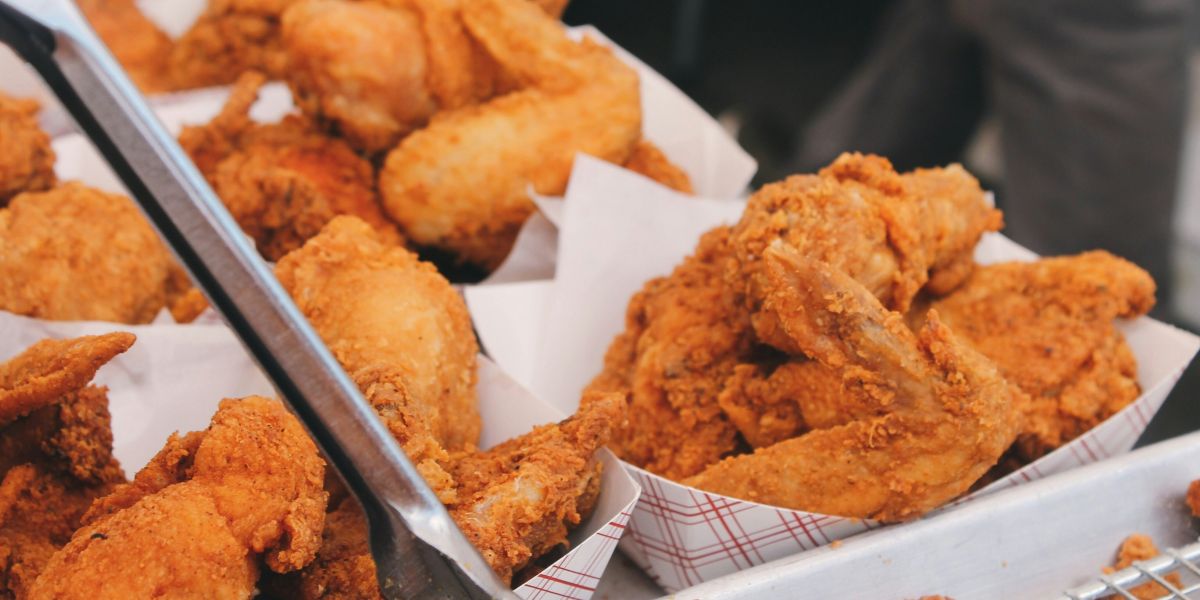
Photo Credit: Unsplash.com
For first-time visitors, the menu at 42nd Street offers a clear introduction to what has made Jollibee a fixture in New York’s food culture. The Chickenjoy — available in original and spicy — is the anchor. It is a bone-in fried chicken that is crispy on the outside, juicy inside, and served with a side of silky savory gravy for dipping. The Chicken Sandwich, made with a 100% white-meat breast fillet that is slow-marinated and double hand-breaded, is served on a toasted brioche bun with the brand’s signature umami mayo. A spicy variation adds sriracha mayo and fresh jalapeños.
Beyond the chicken, the menu includes the Peach Mango Pie — a hand-held pastry with a crispy crust filled with sweet peaches and ripe mangoes — and the Pineapple Quencher, the brand’s proprietary beverage. These items represent a menu philosophy that blends comfort, Filipino flavor heritage, and broad accessibility. The catering program is also available at the new location, with a minimum order of $100 and 24-hour advance notice required.
From Quezon City to Grand Central
Jollibee traces its origins to 1975, when Tony Tan Caktiong and his family opened a Magnolia ice cream parlor in Cubao, Quezon City. As hot food offerings grew more popular than ice cream, the family converted the concept into a full fast-food restaurant, which became the first Jollibee. The brand formally incorporated in 1978 and has since grown into one of the largest restaurant companies in Asia, operating a portfolio of 19 brands across more than 10,000 stores in 32 countries.
In 1998, Jollibee expanded to North America with its first United States location in Daly City, California. The company’s U.S. strategy in the early years was built around markets with established Filipino-American communities — areas where the brand could rely on the diaspora’s deep emotional connection to the food, before gradually broadening its reach to curious non-Filipino diners.
New York City became a key node of that strategy. For many Filipinos across the world, Jollibee is not merely a fast-food chain but a piece of the Philippines itself — home, culture, and community wrapped in the brand’s red and yellow. That sentiment has powered the brand’s growth from a single Queens location to a citywide presence that now stretches into the geographic center of the borough with the highest commercial density in the country.
The Franchise Pivot and What It Signals
The 42nd Street opening comes as Jollibee enters a new operational chapter in the United States. After decades of exclusively company-owned U.S. locations, the brand opened its first North American franchise location in Queens in August 2025 — a strategic shift driven by saturation in the core Filipino-American markets the brand had historically targeted. Beth Dela Cruz, president of North American operations, has framed the move as a natural evolution: the corporate infrastructure is in place, the proof of concept is established, and the brand’s average unit volume — reported at $4.5 million — provides a credible financial foundation for franchise partners.
The 42nd Street location is company-owned, but it arrives in the context of a franchising pipeline that includes signed development deals in California, New Jersey, New York, and Texas. The brand has reported 57 consecutive months of same-store sales growth in the U.S. market, a figure that speaks to sustained demand rather than novelty-driven traffic.
Why Midtown, Why Now
The decision to plant a Jollibee at 42nd Street, adjacent to one of the world’s most visited transit hubs, reflects a calculated read on New York’s foot-traffic geography. The block between Fifth and Madison Avenues serves an unusually diverse daily population: white-collar commuters from the surrounding office towers, tourists visiting Bryant Park and the New York Public Library two blocks north, hotel guests, and neighborhood residents from Murray Hill and Turtle Bay. That mix aligns directly with what the brand’s leadership has described as its ambition: reaching new customers while remaining convenient for devoted fans.
Beth Dela Cruz noted that the 42nd Street corridor presents “an incredibly diverse mix of people on any given day,” and that the goal at this location is to introduce the brand to new customers while giving existing fans a more accessible outpost within the city.
The Philippine Consulate General also participated in the inaugural ribbon-cutting ceremony, with Consul General Senen T. Mangalile joining Jollibee North America executives and investors at the event. The Consul General emphasized the Consulate’s continued efforts to promote Filipino cuisine in the Northeastern United States — a signal that the opening carries cultural weight beyond a standard commercial launch.
A Permanent Fixture in the City’s Food Culture
What Jollibee has accomplished in New York over the past 17 years is not easily replicated. The brand arrived in Queens when Filipino fast food was largely invisible to mainstream food media, built a loyal customer base through community connection and consistent product quality, and gradually extended its reach into Manhattan — first near Times Square, then into additional neighborhoods, and now into the corridor that connects midtown’s commuter spine to its commercial core.
The late Anthony Bourdain once called Jollibee “the wackiest, jolliest place on Earth.” The observation was affectionate and specific — it captured something real about the brand’s refusal to take itself too seriously while delivering food people genuinely return for. That combination, translated across decades and across continents, is what makes a 42nd Street address feel like a natural arrival rather than an overcalculated expansion move.
New Yorkers will make their own judgment at the counter. For now, the line forms at 14 East 42nd Street.