
By: Francisco J Pagan
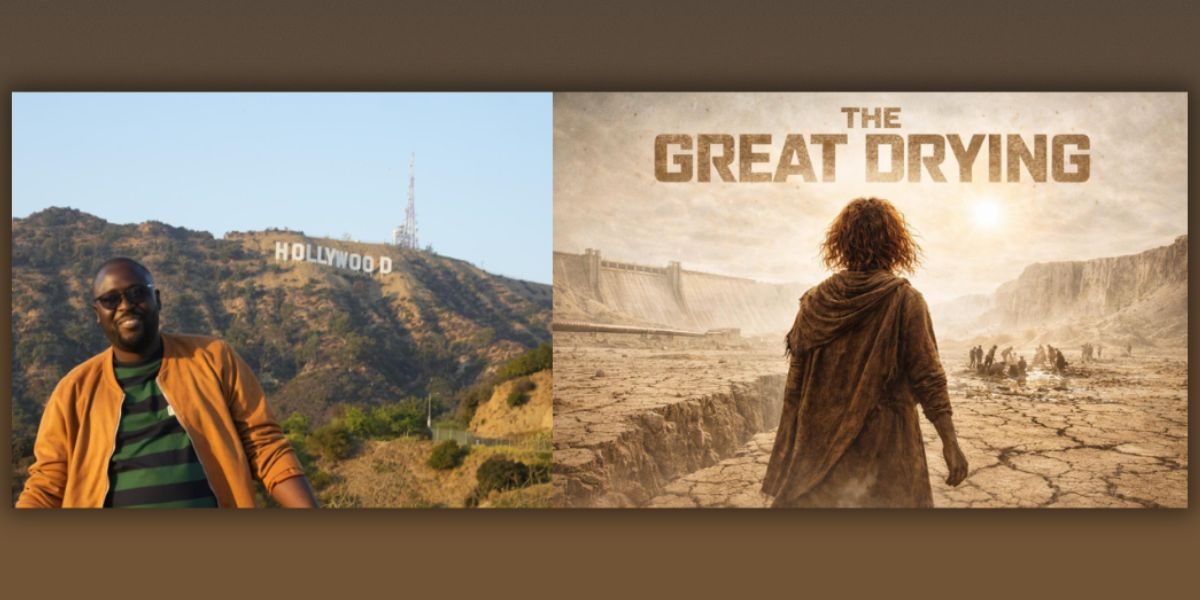
A new era is unfolding for Zimbabwean cinema, as Zimbabwean filmmaker Bryn Ncube develops The Great Drying, an ambitious feature film backed by the Ministry of Sport, Recreation, Arts and Culture, a reflection of the country’s growing commitment to supporting young creatives and elevating a new generation of storytellers onto the global stage.
This momentum is being driven in part by forward-thinking leadership within the Ministry, including Deputy Minister Hon. Emily Jesaya, whose openness to engage with emerging filmmakers has helped enable projects of this scale. Her willingness to listen, collaborate, and support ambitious cultural initiatives reflects a broader institutional vision to position Zimbabwe as a serious force within the global creative economy.
Principal photography begins this September. With production spanning the United States and Zimbabwe, including key sequences set against the breathtaking Victoria Falls, the film is positioned as a globally resonant cinematic experience.
The Great Drying is a dystopian survival story grounded in emotional truth. “After the ‘Great Drying’ turns the world into a blazing wasteland, a determined mother risks everything to save her dying daughter only to discover that survival may demand the ultimate sacrifice,” Ncube explains.
The film explores themes of sacrifice, resilience, and the fragile systems that govern human survival. While set in a speculative future shaped by environmental collapse and engineered disaster, its emotional foundation is deeply personal. Ncube draws inspiration from Zimbabwe’s early-2000s drought, when water shortages forced communities to rely on limited supplies and endure long queues for basic survival. That memory, he says, became the emotional foundation of the story.
“It asks a difficult question: what are we willing to sacrifice when survival is no longer guaranteed?” he says. “It’s an intimate story about a mother and her child, but it also reflects something much bigger about humanity.”
Conceived as a full commercial feature, The Great Drying represents a significant step forward in scale and ambition for a Zimbabwean-led production. The project is being developed with international audiences in mind, targeting major film festivals such as Sundance, the Toronto International Film Festival, and Venice, with the goal of securing global distribution and a theatrical release.
A defining element of the film’s development has been its collaboration with national institutions. According to Ncube, the support from the Ministry of Arts and Culture has been instrumental both practically and symbolically.
“It’s one thing to have a vision, but it’s another for your own country to stand behind it,” he says. “Their support signals that Zimbabwe is ready to participate in the global film industry at a serious level. It’s not just about backing a project, it’s about backing a voice, a perspective, and a new generation of storytelling coming out of Africa.”
Beyond its narrative ambitions, The Great Drying carries broader cultural and economic significance. By showcasing one of the world’s most iconic natural landmarks, Victoria Falls, the film has the potential to amplify Zimbabwe’s global image, contribute to tourism, and create opportunities within the local creative sector.
“This project has the potential to shift how Zimbabwe is seen globally, not just as a country, but as a creative force,” Ncube notes. “If one film can travel internationally, it creates space for many more to follow.”
For Ncube, however, the vision extends far beyond a single film.
“This is a Zimbabwean-led project pushing into the global film space, not as an outsider, but as a serious creative voice,” he says. “It’s about building a future where Zimbabwe is consistently part of the global film conversation.”
With The Great Drying, that future is no longer distant; it is already beginning to take shape.