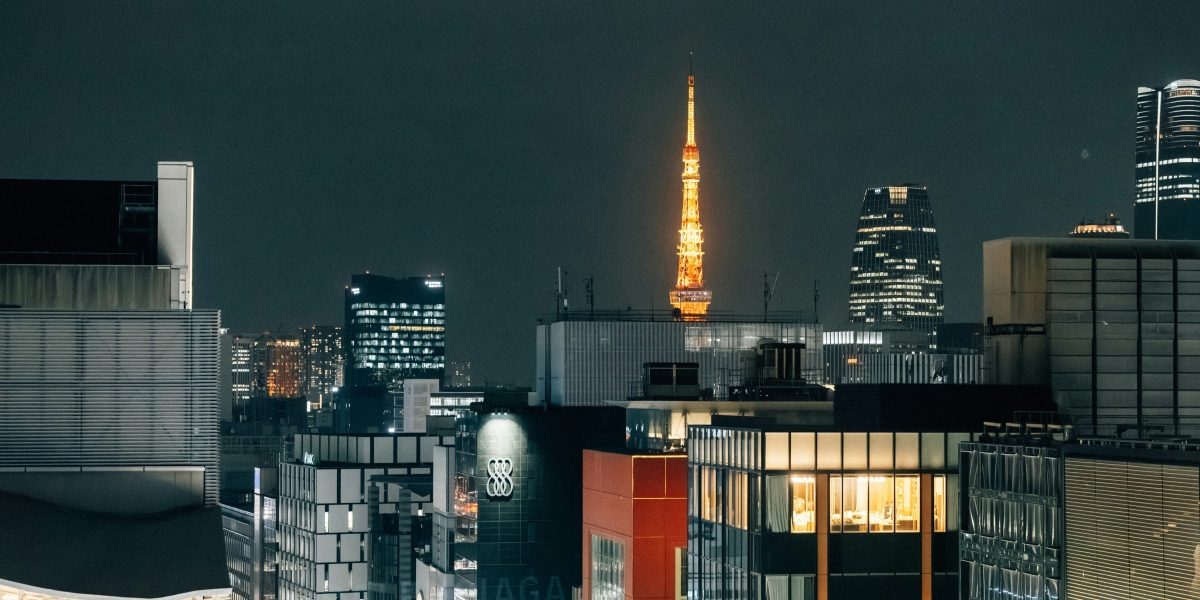

Japan does not divide neatly between past and present. The two seem to move alongside each other, sometimes in the same street, sometimes within the same hour. Glass towers rise above wooden gates. Neon reflects in temple ponds. The contrast is visible, yet it rarely feels abrupt.
In cities like Tokyo and Kyoto, urban scale and historic texture coexist without announcement. Movement carries you from one register to the other without requiring explanation.
Steel and Signal in the Capital
Tokyo gathers itself vertically. Elevated tracks cut across districts. Screens glow even in daylight. Pedestrian crossings fill and empty in a steady rhythm. The skyline shifts depending on where you stand — clusters of high-rises in Shinjuku, lower commercial blocks in older neighbourhoods.
The pace appears quick, though it rarely feels chaotic. Trains arrive precisely. Platforms clear efficiently. Even in crowded stations, motion has a pattern.
Many visitors begin their journeys through organised Japan trips, arriving in the capital before dispersing outward. Tokyo often sets the initial tone — glass, steel, constant motion. Yet within a short walk, smaller shrines appear between buildings, their wooden beams darkened by time.
The city does not insist on separation. Modern façades sit beside older structures without commentary. Convenience stores operate beneath office towers, while incense drifts faintly from nearby temple grounds.
Wooden Eaves and Narrow Lanes
In Kyoto, scale contracts. Streets narrow. Machiya townhouses line quiet lanes with wooden lattice filtering light into thin stripes. Paper lanterns hang close to doorways. Stone pathways lead toward gardens hidden behind sliding screens.
The rhythm feels slower, though trains still run on time and bicycles pass with quiet regularity. Shrines and temples punctuate neighbourhoods rather than dominating them. Moss gathers along the stone steps. Wind moves lightly through bamboo.
Travel between the two cities often follows the corridor of the Kyoto to Tokyo route, compressing hours into a smooth passage. Fields and small towns appear briefly through the train window before giving way to a denser skyline once again.
Arriving in Kyoto after Tokyo can feel like stepping into a softer register. Yet the difference lies more in texture than in pace. Both cities maintain a careful order.
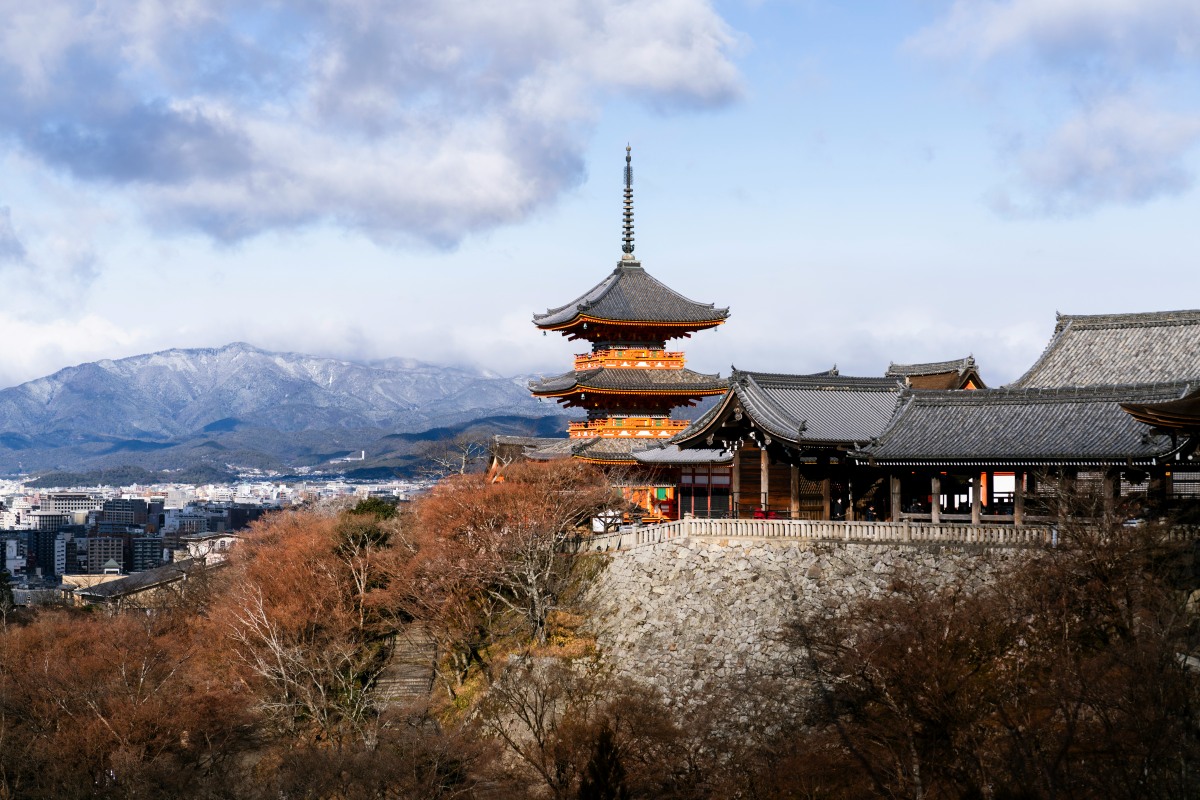
Photo: Unsplash.com
Glass and Grain
Tokyo reflects light sharply. Skyscraper windows mirror clouds and neighbouring towers. Kyoto absorbs brightness. Wood and paper soften it, creating shadow rather than glare.
At night, the distinction narrows. Tokyo’s streets glow under neon and LED panels. Kyoto’s lanterns cast warmer pools of light against dark timber. The sky above remains the same, though it meets different surfaces.
Neither city exists solely in one era. Tokyo preserves shrines amid infrastructure. Kyoto supports contemporary life within centuries-old frames. The layering feels habitual.
Between District and Temple
Movement between urban and historic spaces occurs without a clear boundary. In Tokyo, a turn down a smaller street reveals a shrine tucked between apartment blocks. In Kyoto, a café occupies a renovated townhouse with minimal alteration.
The railway network binds these experiences together. From high-speed lines to local trains, transitions feel seamless. The country’s infrastructure connects steel and wood without privileging either.
Memory tends to align images side by side — a crossing signal blinking against a glass façade, a torii gate framed by autumn leaves. The contrast becomes less oppositional over time.
When Light Settles
As evening lowers across both cities, distinctions soften. Tokyo’s skyline reduces to illuminated outlines. Kyoto’s temples fade into shadow, their roofs visible against a dim sky.
Later, recalling the journey, the images overlap gently — steel beams and wooden eaves, subway platforms and garden stones. Urban scale and historic intimacy coexist without friction.
Nothing resolves into a simple narrative of east and west. Japan carries both registers simultaneously. The trains continue their steady passage. Shrines remain in place. Towers hold their height. The country’s charm rests not in choosing one over the other, but in allowing them to stand together beneath a sky that shifts quietly above them.