
Breathing is the most fundamental and unconscious of all human functions. We take over 20,000 breaths a day, most of them without a second thought. But what if this simple, automatic act holds a hidden key to our physical well-being? What if the way we breathe has a profound impact on our posture, our stability, and our experience of pain? This is the fascinating and revolutionary idea at the heart of Dr. Andrea Bellato’s work. The Italian physiotherapist and osteopath is a practitioner in the integration of respiratory strategies into the treatment of musculoskeletal pain, and he is demonstrating that sometimes, the most powerful path to healing is as simple as taking a deep breath.
Dr. Bellato’s approach is based on a deep understanding of the biomechanics of respiration. He sees the diaphragm not just as a muscle of breathing, but as a critical muscle of core stability. “The diaphragm is the roof of our core,” he explains. “It works in concert with the abdominal muscles, the back muscles, and the pelvic floor to create a stable and supportive cylinder around our spine. If our breathing is dysfunctional, this entire system can be compromised.”
He has identified a number of common dysfunctional breathing patterns that can contribute to chronic pain. Some people are “chest breathers,” using their neck and shoulder muscles to lift their rib cage, which can lead to chronic neck tension and headaches. Others are “paradoxical breathers,” drawing their abdomen in as they inhale, which can create instability in the lower back. Still others are “breath holders,” unconsciously tensing their diaphragm in response to stress, which can create a cascade of tension throughout the body.
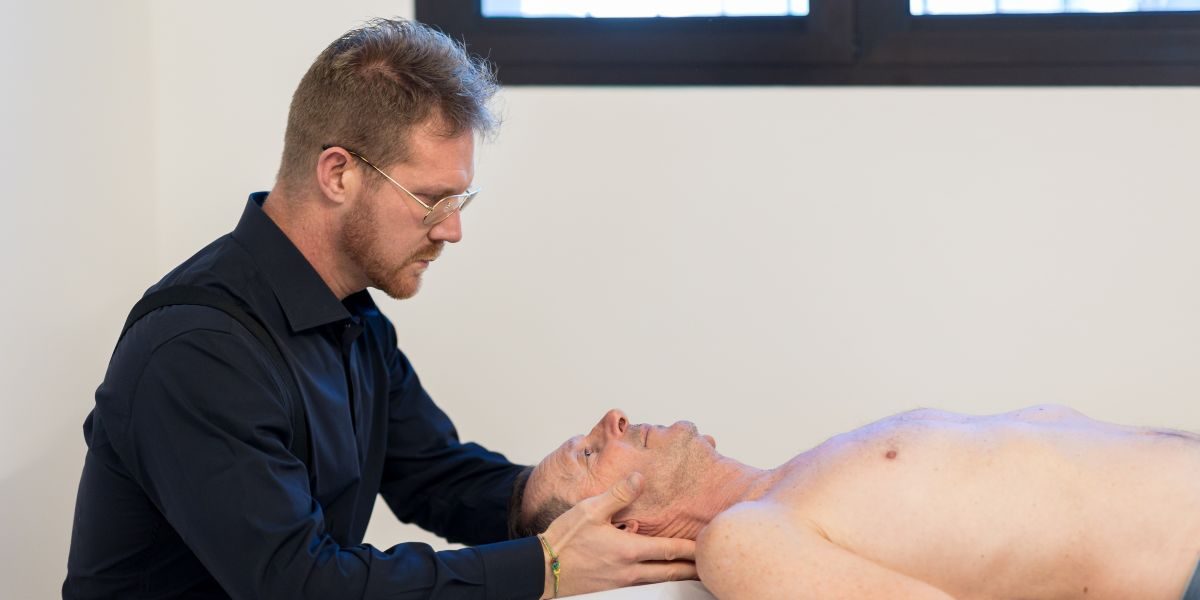
Dr. Bellato is a master at identifying these dysfunctional patterns. He will watch a patient breathe, feeling the movement of their rib cage, their abdomen, and their spine. He will use his hands to assess the tension in their diaphragm and their accessory muscles of respiration. He is like a conductor listening to an orchestra, able to hear the subtle dissonances and imbalances that are disrupting the harmony of the whole.
Once he has identified the dysfunctional pattern, his treatment is a gentle and educational process. He will use manual therapy techniques to release tension in the diaphragm and surrounding tissues, freeing the body to move more naturally and efficiently. He will then teach the patient a series of simple and effective breathing exercises, helping them retrain their nervous system and establish a new, more functional breathing pattern. It is a process of unlearning old habits and remembering a more ancient and intuitive way of being in the body.
For many of his patients, this focus on breathing is a revelation. They have spent years focusing on the site of their pain, stretching their tight muscles and strengthening their weak ones, all to no avail. The idea that the root of their problem could be something as simple as the way they breathe can be a profound and empowering insight. It is a reminder that the body is a holistic system, and that sometimes, the most powerful interventions are the most subtle ones.
Dr. Bellato’s work is at the forefront of a growing movement in the world of physical therapy, one that recognizes the profound and often overlooked connection between our breath and our bodies. He is demonstrating that breathing is not just a chemical process; it is a biomechanical one, a powerful tool that can be used to release tension, to build stability, and to create a more resilient and pain-free body. He is a practitioner who is reminding us of the wisdom that is already within us, the healing power that is as close as our very next breath.
Disclaimer: The information provided in this article is for general informational purposes only and is not intended as medical advice or a substitute for professional healthcare consultation. Always seek the guidance of a qualified healthcare provider for any medical concerns or questions. The practices and approaches described in this article may not be suitable for everyone, and individual results may vary.