
By: Elowen Gray
When Vernon E. Jordan Jr. was shot in 1980, the National Urban League was thrown into crisis. The civil rights icon was clinging to life in an Indiana hospital, and the movement he helped lead suddenly faced uncertainty. Into that void stepped John Edward Jacob — a quieter, steadier figure known more for strategy than headlines.
Two years later, Jacob was officially named Jordan’s successor. From 1982 to 1994, he served as president of the Urban League, steering the century-old organization through some of its toughest years.
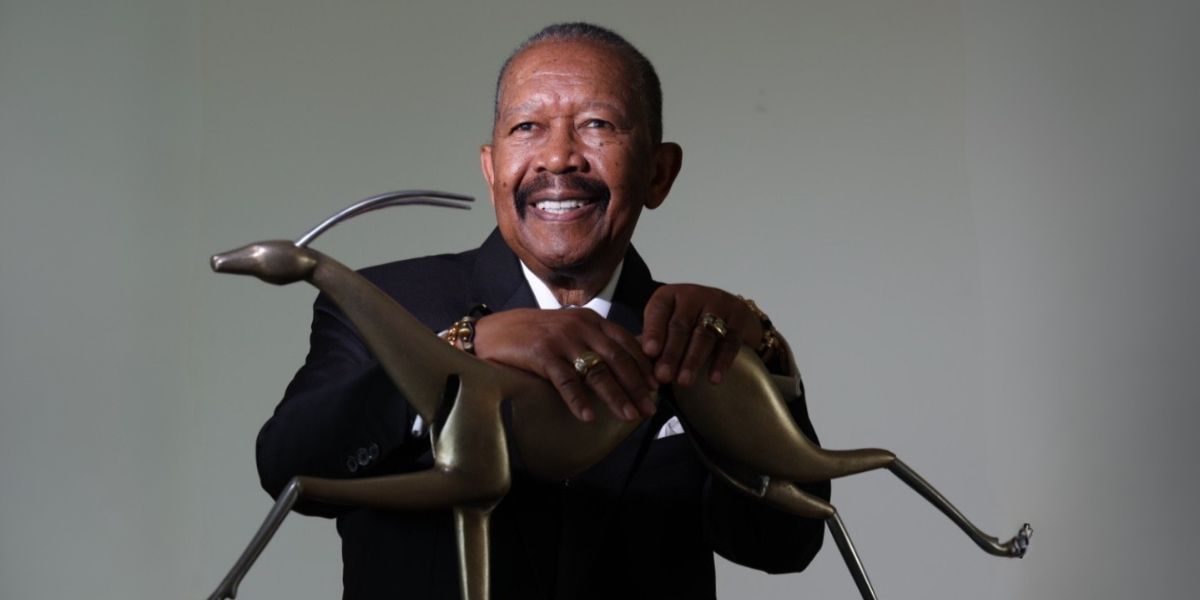
Now in his nineties, Jacob is sharing his journey in a new memoir, I Will Fear No Evil.
It’s part history lesson, part personal testimony — a look back at how a boy from segregated Houston became one of the most influential civil rights leaders of his era.
From a Three-Room House to Howard University
Jacob’s childhood in Houston was defined by poverty and segregation. The youngest of six children, he grew up in a three-room house with no electricity or plumbing. His mother cooked on a wood stove, and he studied by kerosene light.
“I refused to ride segregated buses,” he recalls. “I walked miles to school instead.”
Despite the obstacles, Jacob excelled. He became president of his senior class and the honor society at Jack Yates High School. A scholarship changed his trajectory, taking him to Howard University, where he studied economics, joined ROTC, and was commissioned as an Army officer before turning toward social work.
The Strategist of the Urban League
Jacob’s path into national leadership wasn’t flashy — it was deliberate. He joined the Washington affiliate of the Urban League in 1965, later led the San Diego chapter, and returned to Washington in 1979 as executive vice president.
When Jordan resigned in 1982, Jacob took the helm. He immediately rolled out what he called the Urban Marshall Plan, a bold demand for government and corporate investment in Black communities, centered on jobs, housing, and education.
“We want jobs, not reasons why we can’t get those jobs,” he told delegates at the League’s annual conference, setting the tone for his presidency.
Confronting the Reagan Years
Jacob’s tenure collided with the conservative revolution of Ronald Reagan.
Social programs were being cut, unemployment soared, and the civil rights consensus of the 1960s seemed to wane.
Jacob pressed forward anyway, clashing with federal officials while building partnerships with corporations willing to invest in Black workers and entrepreneurs.
He also championed Project Thrive, a program aimed at steering youth away from drugs and gangs by focusing on education, mentorship, and community service.
For Jacob, the work was always both systemic and personal: change the laws, but also change the lives.
Speaking Out Against Apartheid
Jacob was also outspoken on global justice. Under his leadership, the Urban League became an important voice in the American movement against apartheid in South Africa. He urged companies to cut ties with Pretoria’s white-minority regime and pressed lawmakers to impose sanctions.
“We cannot stand silent while our brothers and sisters are denied their basic humanity,” he said at the time.
From Advocacy to the Boardroom
After stepping down in 1994, Jacob entered corporate America as executive vice president at Anheuser-Busch. He later served on nonprofit and corporate boards, one of the few civil rights leaders of his generation to bridge activism and business at such a high level.
A Life of Preparation
In his memoir, Jacob reflects on the lessons he’s carried across nine decades.
Chief among them: preparation. “I never asked to be Urban League president,” he writes. “But I had spent every second preparing for it.”
The title of his book, I Will Fear No Evil — speaks to that mindset. To Jacob, courage is not the absence of obstacles but the determination to face them.
“The progress we made was real,” he says today, “but it was never complete. Each generation inherits the responsibility to move it forward.”
For John Edward Jacob, that responsibility has always been clear: fight for opportunity, demand justice, and never let fear stand in the way.