
By: Amelia Rhodes
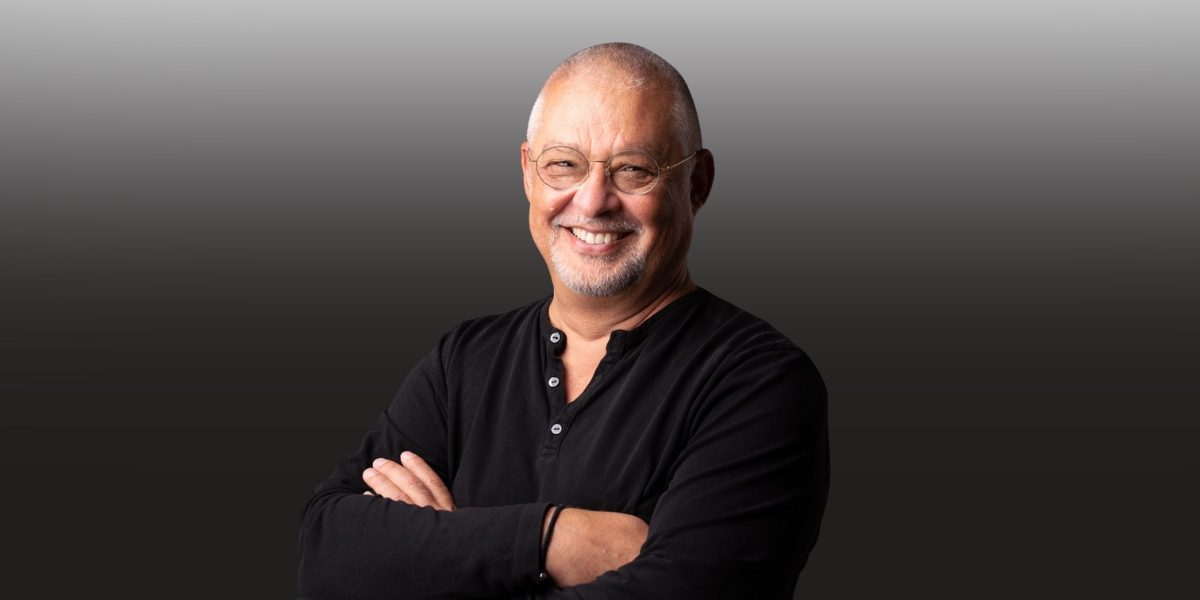
When Irish-Egyptian entrepreneur and author Nadim Sadek talks about artificial intelligence, his tone is anything but fearful. His new book, Quiver, Don’t Quake: How Creativity Can Embrace AI, released by Mensch Publishing, encourages a reframing of how humans engage with technology. Instead of trembling before it, Sadek says, we should quiver — with anticipation, imagination, and creative possibility.
Though only just released, Quiver, Don’t Quake has quickly gained attention on Amazon’s category rankings, establishing itself as a valuable read for those interested in AI and creativity. Early readers have described it as “thought-provoking,” “a great resource for creatives,” and even “an insightful read for the year.”
“More than anything,” Sadek says, “it was the epiphany that with eight billion people on Earth, there are truly eight billion creatives.” His central thesis is as inclusive as it is bold: creativity is a universal human impulse, and AI — which he prefers to call Allied Intelligence — can help unlock it. “Most people,” he adds, “have not had the opportunity to explore their creativity, to build beyond the spark of intuition, the flash of insight, that we all experience. AI can help us to know ourselves better — the start of creative expression.”
That premise, ambitious yet deeply humanistic, runs through every page of Quiver, Don’t Quake. It’s a manifesto for a new kind of partnership — one that sees technology not as a replacement for human genius, but as its mirror, amplifier, and co-conspirator. Central to this vision is what Sadek calls The Panthropic — the idea that humanity and technology are evolving toward a shared, co-creative intelligence. It’s a worldview that reframes AI not as artificial, but as an allied extension of human potential.
The Mechanics of Co-Creation
Sadek’s frameworks for creative collaboration are deceptively simple. He introduces two key concepts: Spark–Draft–Polish and Calibrated Trust. Together, they form a kind of emotional and practical guide for working with AI.
“Creativity always starts within a human,” he explains. “In our mind, our soul, our spirit — however you wish to see our existence. AI helps to articulate that creativity, through dialogue.”
The Spark is that flicker of inspiration — the intuitive beginning of an idea. The Draft emerges through back-and-forth conversation with AI, where vague notions gain shape and texture. Finally, in Polish, AI becomes a kind of tireless editor, revealing flaws, refining structure, or highlighting hidden strengths. “It used to be that we could only daydream our way through these ideas,” Sadek says. “But now AI is there to coax, encourage, excavate, articulate — with us.”
The process isn’t meant to mechanize art; it’s meant to make introspection more accessible. Sadek’s metaphor of AI as a “dialogue partner” positions the technology as a tool for self-discovery as much as productivity.
But that partnership requires maturity. Through his idea of Calibrated Trust, Sadek warns creators not to surrender completely to AI’s apparent authority. “You’ve got to intervene, interrogate, inspect,” he says. “Equally, you have to accept help, and not disdain what comes from a machine. We just need to ‘grow up’ in our relationship with AI and know it for what it is — an indefatigable companion that can help us, but cannot live or lead our lives.”
The Power of “Quiver”
Even the title, Quiver, Don’t Quake, encapsulates Sadek’s philosophy in a neat, alliterative punch. “One quivers with excitement and quakes with fear,” he explains. “We should quiver with excitement about AI.” There’s also a clever double meaning: “A quiver full of creative arrows is what AI gives us.”
It’s an image that captures both the nervous thrill and the strategic potential of working with intelligent machines. In Sadek’s world, the creative act is less about defending human exclusivity and more about expanding human expression — the very essence of The Panthropic vision.
Beyond the Fear of Homogenization
Critics often argue that AI-generated content risks diluting originality — flooding culture with formulaic, “middle-of-the-road” output. Sadek doesn’t disagree; he simply shifts the blame. “If you use AI to produce artefacts for you,” he says, “you will indeed get unremarkable, characterless stuff. But if you work with AI, for it to help you unearth and articulate your unique creative spark, then your artefacts will be as idiosyncratic and unique as you are.”
The difference, in Sadek’s eyes, isn’t in the tool but in the temperament of the user. His book champions intentionality: the idea that creativity is not automated by algorithms but deepened by dialogue. “AI is not the challenge here,” he insists. “It’s how you use it.”
Ethics, Bias, and the Human Handprint
For all his optimism, Sadek is far from naïve about AI’s pitfalls. He is explicit about the moral and social risks — from biased training data to misused technology. “AI does not have a clean bill of health,” he concedes. “It can perpetuate the default image of a CEO as a white man, or a criminal as someone from an ethnic minority. There’s lots of bad stuff it can do — in weapons, biowarfare, and beyond.”
The antidote, he argues, lies in active ethical engagement. “You can discuss with AI your fears about its bias, and instruct it to behave to the ethical standards you wish to impose on your discourse.” His approach treats the user as an ethical agent — not a passive consumer of algorithmic output, but a curator of conscience.
Sadek also weighs in on the question of provenance — how much creators should disclose about AI’s role in their work. If AI made the artefact entirely, he says, honesty is essential. But if AI simply helped shape the creator’s self-understanding, the distinction blurs. “We all absorb, assimilate, adapt and demonstrate almost-infinite derivative ‘creations’ in all we do,” he reflects. “My children’s story about a cobra biting a dog has been discussed with my children endlessly, and their thoughts have seeped into mine. AI does the same. That is not a bad thing.”
The Human Future of Allied Intelligence
At its heart, Quiver, Don’t Quake is an argument for coexistence — for embracing what Sadek calls “Allied Intelligence.” It’s a vision that celebrates curiosity over control, humility over hubris. His tone is not one of evangelism but of invitation: to see AI as a mirror that reveals more of our humanity, not less.
Soon, he predicts, everyone with access to AI will work with it in some form. From writing and music to medicine and education, “all of our work will be enhanced by our intercourse with AI.” The question, then, isn’t whether we’ll collaborate — but how consciously, how ethically, and how creatively we’ll do it.
In the end, Sadek’s message feels both visionary and refreshingly grounded. The Panthropic — this unified future of human and machine creativity — is already here, waiting to be shaped. As Sadek reminds us: “Don’t quake before the machine. Quiver, instead, at what you and it might create together.”
Get your copy today on Amazon or Barnes & Noble.
Disclaimer: The information provided is for general informational purposes only and should not be considered as professional or expert advice. Readers are encouraged to critically assess the content and apply it based on their individual circumstances.