

The quest for perfect sleep has become more sophisticated in a world where the boundaries between technology and wellness blur. Modern life’s relentless pace has created unprecedented challenges to our rest patterns, pushing us to seek innovative solutions that combine comfort with cutting-edge features.
Through the remarkable fusion of artificial intelligence, advanced monitoring systems, and personalized analytics, a new era of sleep technology is emerging to help us reclaim our natural rhythms and transform our nightly rest into a truly restorative experience.
The Evolving Challenge of Rest
Modern life has created unprecedented pressure on our sleep patterns, with sleep deprivation becoming a widespread health concern. A staggering one-third of US adults report insufficient sleep, while 27% face daytime sleepiness that impacts their daily performance and well-being.
The implications of poor sleep extend beyond just feeling tired. 30% of adults struggle with consistent sleep difficulties that affect their overall health.
The mounting evidence of America’s sleep crisis reveals several key challenges that need immediate attention:
- Increasing screen time and digital distractions are disrupting natural sleep cycles
- Rising stress levels are interfering with quality rest
- Irregular work schedules conflict with natural circadian rhythms
- Environmental factors affecting sleep quality
- Limited awareness about proper sleep hygiene
The severity of this situation becomes clear as more than one-third of adults report feeling drowsy during daytime activities multiple times per week. This widespread sleep deficit has sparked innovation in sleep technology, leading to advanced sleep support solutions that combine comfort with cutting-edge features.
These tools represent a crucial step forward in addressing millions of people’s complex sleep challenges, offering personalized approaches to improving rest quality and duration.
Transformation Through Smart Technologies
Sleep technology has made remarkable strides in integrating artificial intelligence and advanced monitoring systems.
Modern sleep aids combine cutting-edge sensors with features to create a deeply personal and practical rest experience. These innovations go beyond basic tracking, offering sophisticated analysis and automated adjustments that help people achieve better sleep quality.
The rise of IoT-enabled devices has revolutionized how we approach rest and recovery. These technologies create an adaptive environment that responds to individual needs by connecting various sleep-focused tools into a unified system.
The latest advancements in sleep technology include several groundbreaking features:
- Real-time brain activity monitoring through EEG sensors
- Adaptive environmental controls for temperature and lighting
- AI-powered sleep pattern analysis and recommendations
- Innovative alarm systems that sync with natural sleep cycles
- Automated comfort adjustments based on body signals
The fusion of medical precision with consumer-friendly design has made these tools increasingly accessible. Smart sensors continuously gather data while machine learning algorithms process this information to create personalized sleep profiles.
This technological synergy enables sleep devices to anticipate needs and make proactive adjustments, helping users achieve more restorative rest without complex manual interventions.
Wearable Sleep Trackers for Personalized Sleep Insights
Wearable sleep trackers have revolutionized how individuals understand and improve their sleep patterns. These devices, worn on the wrist, finger, or chest, continuously monitor various physiological signals to provide detailed insights into sleep quality, duration, and disruptions.
This personalized data empowers users to make informed decisions about their sleep hygiene and overall health.
How Wearable Sleep Trackers Work
Wearable sleep trackers combine multiple sensors to collect comprehensive sleep data:
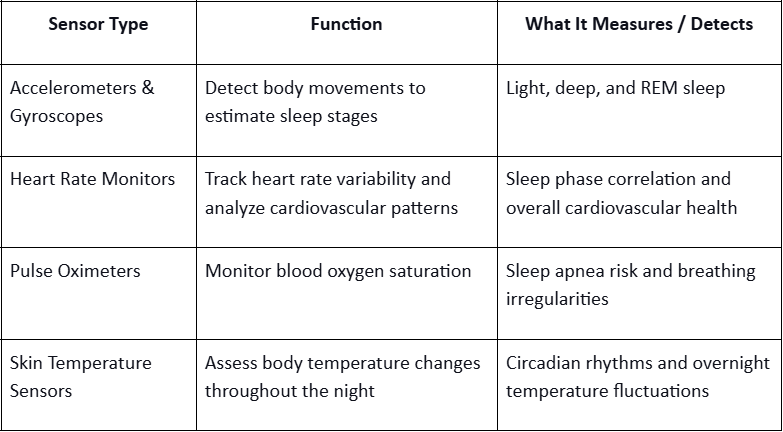
These physiological markers are processed by algorithms that translate raw data into actionable sleep metrics.
Key Benefits of Personalized Sleep Monitoring
Detailed Sleep Stage Analysis: Users receive reports on the time spent in various sleep stages, enabling identification of disturbances or insufficient deep sleep.
Sleep Quality Assessment: Insights into sleep efficiency, interruptions, and latency help users understand overall sleep health.
Detection of Sleep Disorders: Continuous blood oxygen and heart rate monitoring can alert users to potential conditions like sleep apnea.
Lifestyle Correlations: Some trackers integrate with apps to correlate sleep data with daily activities, stress levels, and environmental factors, tailoring recommendations specifically to the individual.
Integration with Health Monitoring Systems
Modern wearable sleep trackers often sync with health platforms and apps, providing a holistic view of the user’s wellness. This integration facilitates:
Long-term Sleep Trend Analysis: Visualizing sleep patterns over weeks or months to evaluate the impact of lifestyle changes or treatments.
Personalized Sleep Recommendations: AI-driven guidance based on individual data helps optimize sleep habits, environment, and routines.
Medical Interventions: Data can be shared with healthcare providers for clinical assessment and personalized treatment planning.
The future of wearable sleep technology lies in enhanced sensor accuracy, non-intrusive designs, and deeper integration with other health metrics such as stress, nutrition, and physical activity.
By leveraging wearable sleep trackers and health monitoring, individuals can take control of their sleep health, paving the way for better rest, improved mental and physical well-being, and a higher quality of life.
Ambient Sleep Aids
Creating an optimal sleep environment is essential for achieving restful and restorative sleep. Ambient sleep aids use advanced technology to adjust sound and light conditions automatically, promoting better sleep quality by aligning the environment with our natural circadian rhythms and sensory preferences.
The Role of Sound in Sleep Enhancement
Sound plays a critical role in sleep onset and maintenance. Ambient sleep aids use various sound technologies to enhance rest:
White Noise and Nature Sounds: These sounds mask disruptive environmental noises, helping to create a consistent and calming auditory backdrop.
Personalized Soundscapes: Some devices generate tailored sounds based on user preferences or sleep stage, adapting dynamically through the night.
Binaural Beats and Isochronic Tones: These auditory stimuli influence brainwave patterns, potentially promoting relaxation and sleep induction.
Automated sound control often includes features like gradual volume reduction or pause as the user falls asleep, preventing abrupt awakenings.
Light Control for Circadian Alignment
Light profoundly impacts circadian biology, influencing melatonin release and sleep-wake cycles.
According to the Cleveland Clinic,
“Disruptions to your circadian rhythm may negatively impact multiple areas of your health over time. These disruptions have been linked to cardiovascular, metabolic, digestive, hormonal, and nervous system issues.”
Ambient sleep aids incorporate bright lighting to optimize bedroom illumination:
Dynamic Light Dimming: Lights gradually dim at bedtime, signaling the body to wind down, and brighten gently upon waking.
Color Temperature Adjustment: Warmer light hues in the evening reduce blue light exposure, which is known to suppress melatonin production.
Sunrise Simulators: Mimicking natural dawn light helps regulate wake-up times and improve morning alertness.
These automated adjustments create a seamless transition between sleep and wakefulness, supporting healthier sleep patterns.
Features and Benefits of Automated Ambient Sleep Aids
Sensor Integration: Devices use sensors to detect room occupancy, ambient noise levels, and natural light, adjusting settings automatically for personalized comfort.
Smart Home Compatibility: Integration with smart home ecosystems enables synchronized lighting and sound control based on user schedules or biometric feedback.
Customizable Settings: Users can tailor sounds and light programs to their needs, enhancing sleep onset speed and reducing nighttime awakenings.
Reduction of External Sleep Disruptions: Automated response to environmental changes minimizes disturbances from streetlights, outside noise, or bedroom activities.
Future developments in ambient sleep aids aim to incorporate AI and machine learning for adaptive environment control based on real-time physiological data.
Innovations may include multisensory environments that combine sound, light, temperature, and even scent to create the perfect sleep-inducing atmosphere.
Future of Sleep
The rise of sleep deprivation has catalyzed remarkable innovations in sleep technology that combine medical precision with user-friendly design. These advanced sleep solutions are revolutionizing how we approach rest by leveraging AI, smart sensors, and personalized data insights to create adaptive sleep environments that respond intuitively to individual needs.
The convergence of clinical-grade monitoring with consumer accessibility marks a transformative shift in sleep wellness. It offers hope for millions struggling with sleep difficulties while paving the way for a future where quality rest is not just a luxury but an achievable necessity.
Disclaimer: This article is for informational purposes only and focuses on advanced sleep tools and technologies. It should not be considered professional medical advice and may not be applicable to all individuals. Always consult a healthcare provider or sleep specialist for personalized guidance on sleep health.