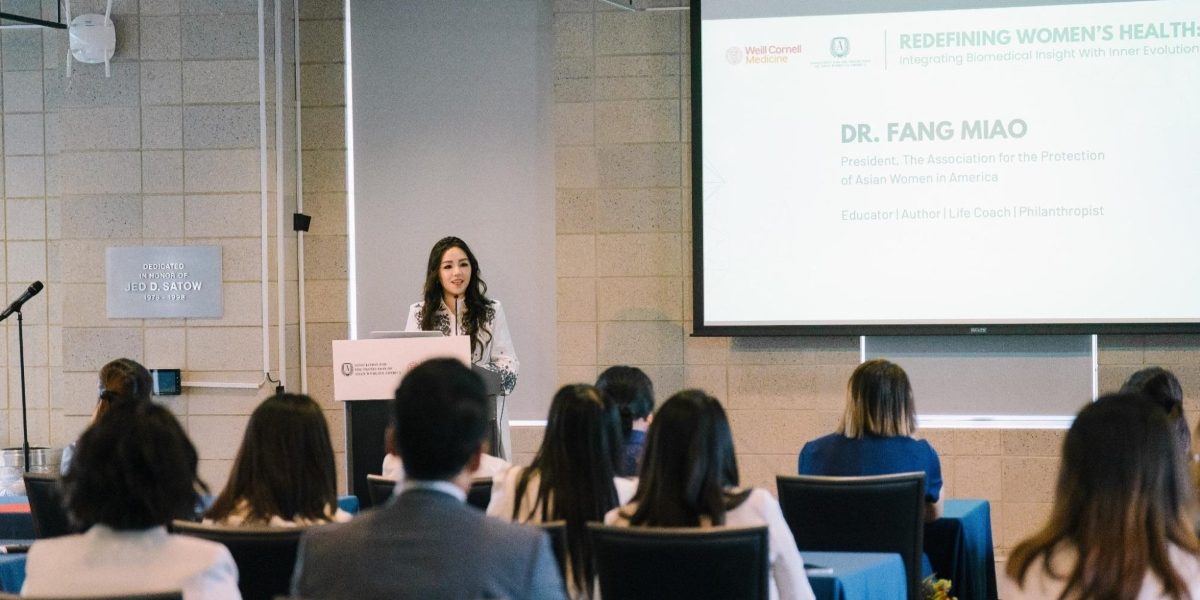

On July 24, 2025, Columbia University’s Alfred Lerner Hall became the stage for an important dialogue in the field of women’s health. The summit, titled Redefining Women’s Health: Integrating Biomedical Insight with Inner Evolution, was co-hosted by Weill Cornell Medicine’s Meyer Cancer Center and the Association for the Protection of Asian Women in America (PAWA). The event brought together expert voices to explore a multidimensional vision of health that aims to bridge clinical science and inner transformation.
The program opened with a featured presentation by the Meyer Cancer Center introducing the IMPACT (Improving Access to Clinical Trials) educator program—an initiative designed to enhance public understanding of gynecologic cancers, genetics, and access to clinical trials. Through culturally inclusive outreach and multilingual education, the program seeks to empower women with knowledge that may potentially save lives. “Empowerment begins with education,” one speaker noted. “Our goal is to ensure that every woman has access to resources that could change or save her life.”
Representing PAWA, Dr. Fang Miao, President of the Association and an internationally respected educator, author, and life coach, delivered a keynote address on emotional resilience and integrative healing. Drawing from over two decades of global experience and insights from her new book Love to the Extreme: A Miracle Unfolds, Dr. Miao invited participants into a deeper inquiry on health as a holistic experience. Her talk reflected a growing understanding that authentic wellbeing extends beyond pathology—it requires inner alignment, psychological clarity, and the courage to live with intention.
“Personal growth does not come from avoiding difficulties but from choosing to face them head-on,” Dr. Miao explained, sharing metaphors about resilience. “Stars do not shine until the sky turns dark. Every sunset marks the rise of a new dawn in another part of the world.”
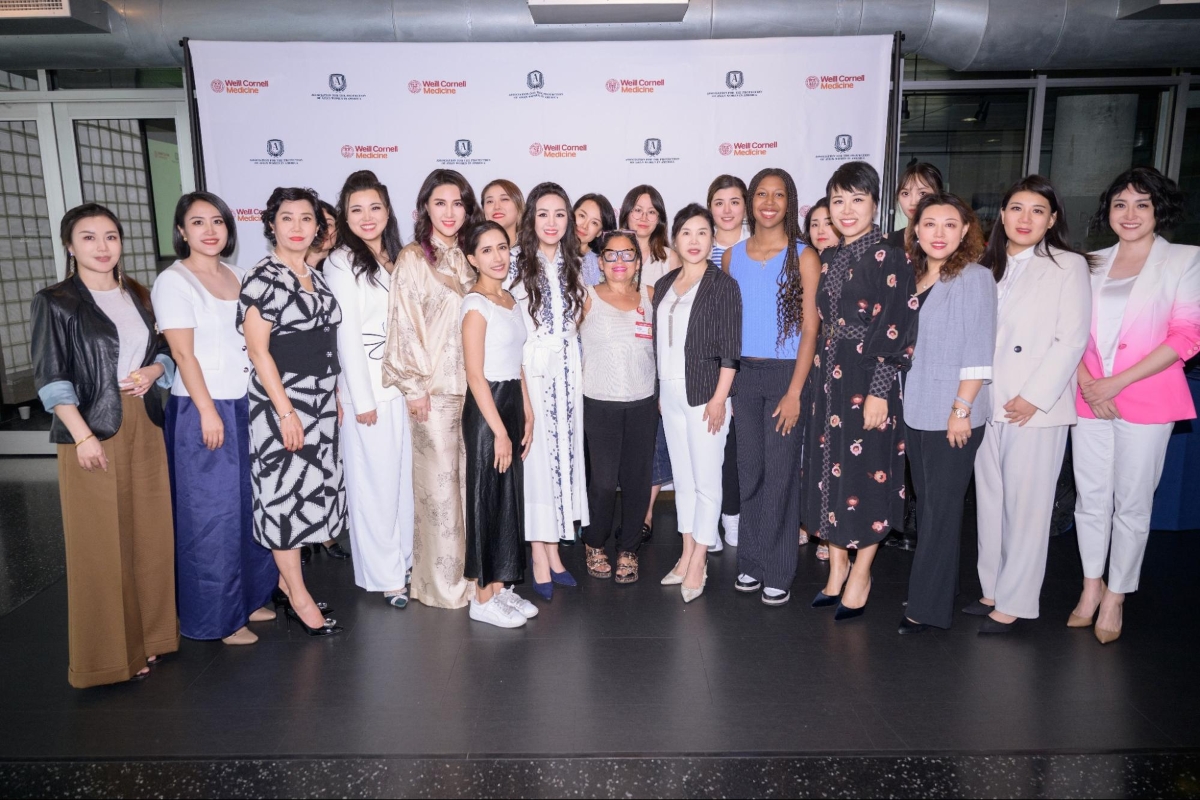
Photo Courtesy: Genica G./ Weill Cornell Medicine
“We are no longer simply treating the body,” Dr. Miao said. “We are awakening the whole human being.” Her message suggested that women’s health should be viewed through a broader lens—one that includes biology and biochemistry, but also emotional coherence, identity, and purpose. She continued: “It is not merely about recovery. It is about returning—to wholeness, coherence, and a life nourished with vitality.”
The session closed with a spirited exchange among guests from the medical, academic, entrepreneurial, and philanthropic sectors. Participants praised the event not only for delivering insightful biomedical knowledge but also for fostering a unique atmosphere of personal growth and connection. Many attendees noted that beyond gaining new awareness of genetics and clinical trials, they found Dr. Miao’s talk especially inspiring and practical, offering insights that they could potentially apply to their lives and relationships.
As one attendee reflected, “We are witnessing the rise of a new health model—where medicine meets mindfulness, and resilience is as important as treatment.”
The summit marked more than just a single event; it was the beginning of an ongoing collaboration. Both Weill Cornell Medicine and PAWA reaffirmed their shared commitment to advancing integrative approaches to care—where data meets dialogue, and healing is measured not only in outcomes but in depth, dignity, and wholeness. PAWA remains dedicated to continuing its mission of hosting public service initiatives, wellness forums, and educational dialogues that support the empowerment and growth of women across communities.
Media Contact
The Association for the Protection of Asian Women in America (PAWA)
Email: info@pawaus.org
About the Host
The Association for the Protection of Asian Women in America is a registered 501(c)(3) nonprofit organization dedicated to empowering women through self-empowerment, media advocacy, resource equity, and international collaboration. The organization is committed to advancing public awareness, fostering shared values, and contributing meaningfully to community development and societal well-being.
Disclaimer: The views and opinions expressed in this article are those of the author and do not necessarily reflect the views or opinions of Weill Cornell Medicine, PAWA, or any affiliated individuals or organizations. The content is for informational purposes only and should not be interpreted as medical or therapeutic advice. Readers are encouraged to consult healthcare professionals or experts for specific guidance on medical or wellness matters. While the event discussed in the article presented various insights, individual results and experiences may vary.