

Mental health care should provide more than just checklists and diagnoses—it should help individuals feel understood. For many Black Americans, that experience can sometimes be lacking. They may enter clinics or offices where their experiences are unfamiliar, and their challenges are not fully recognized. It’s not just about receiving help—it’s about being heard without the need to explain everything from scratch.
This disconnect can sometimes lead individuals to avoid seeking care. When treatment overlooks the stress of racism, the intergenerational pain, or the burden of daily injustices, it can make the process of seeking help feel less trusting and more intimidating.
True healing requires meaningful human connection, and this begins with care that acknowledges the real-life experiences of the people it serves.
Why Cultural Competence Matters
Cultural competence isn’t just a buzzword—it’s a crucial element of effective care. For Black Americans, it can significantly influence whether someone seeks help or chooses to stay silent.
Here are some common challenges:
- Insufficient numbers of Black therapists
- Fears of being judged or misunderstood
- The stigma surrounding mental health
- Barriers related to finances, transportation, and access
These barriers can contribute to poor health, academic struggles, and even legal difficulties.
This is why culturally competent care for Black individuals is so essential. When care feels relevant and respectful, people are more likely to seek it out and feel supported.
What Culturally Competent Care Looks Like
Culturally competent care goes beyond being polite. It involves:
- Listening with genuine empathy
- Understanding how racism impacts mental health
- Using strategies and tools that resonate with the individual
- Employing staff who reflect the communities they serve
When therapy feels personal and connected to lived experiences, it is often more effective.
Community Programs Making a Difference
Across various Black communities, people are creating their own spaces for healing. These are not one-size-fits-all solutions—they are carefully designed with culture and care in mind.
Examples include:
- Black-led therapy groups
- Churches offering mental health discussions
- Peer support circles, both online and in person
Why Representation Helps
Seeing someone who understands your world can be incredibly impactful. Currently, only around 4% of psychologists in the U.S. are Black, which highlights a significant gap.
However, even if a therapist is not Black, they can still offer valuable support. What truly matters is their ability to respect and appreciate cultural differences and to remain open and empathetic.
How Local Change Can Start With You
You don’t need a professional degree to support mental wellness. Small daily actions can make a big difference. Here’s how:
- Talk openly about mental health with your loved ones
- Share resources that center on Black experiences
- Support groups that amplify Black voices
- Advocate for funding for local programs
Even one simple action can make someone feel seen and supported.
What to Ask When Seeking Care
When searching for a provider, it’s important to ask the right questions. Look for:
- An interest in understanding your story and background
- Comfort discussing race and identity
- A willingness to adjust care to suit your specific needs
- A respectful and welcoming approach
The right provider won’t just address symptoms—they’ll listen and help you feel heard.
Looking Ahead: What Needs to Change
This is not a fleeting trend—it’s a shift toward better care. A more equitable future involves:
- Increasing the number of Black therapists
- Providing improved training for all mental health providers
- Allocating funds for community-based programs
- Encouraging open conversations about mental health
This benefits everyone, not just Black communities. Tailored care leads to better outcomes for all.
New: Real Results From Culturally Competent Programs
Here’s an overview of how culturally tailored care is helping communities thrive:
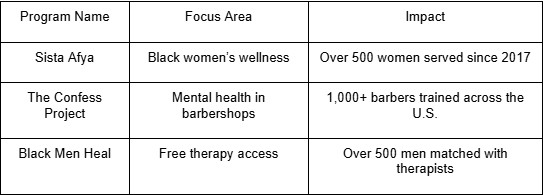
These programs show that change is not only possible—it’s already happening.
Breaking the Stigma at Home
In many families, mental health wasn’t a topic of discussion. People kept their struggles to themselves and tried to manage on their own. However, silence doesn’t mean that no one is suffering. That kind of quiet can become burdensome. When someone finally reaches out with a simple “Are you okay?” it can mark the start of a positive change.
Building Trust Through Everyday Conversations
You don’t need advanced degrees to support someone’s mental well-being. Sometimes, asking “How have you been?” and truly listening can make all the difference. Simple moments like this can show someone that they matter. And when those small gestures become frequent, it creates an environment where difficult topics are easier to talk about.
Supporting Youth With Culturally Aware Care
Young Black kids and teens deal with a lot—academic pressure, social media, and racism, to name a few. It can all build up quickly. They need mental health care that resonates with their experiences. This means seeing their culture reflected in the care they receive, hearing their perspectives, and feeling understood. When support is delivered in ways that are familiar—whether through music, community spaces, or school programs—it doesn’t feel like therapy. It feels like someone finally understands.

Photo: Unsplash.com
Listening to Community Voices
Those who experience challenges often have great insights into how to address them. They understand what’s missing and what solutions have been tried before. When local leaders genuinely listen to these voices, it shows respect, and that kind of respect is the foundation of stronger programs. Sometimes, great ideas come from casual conversations, not formal meetings.
Final Thoughts
Support should never feel distant or out of reach. Good care should honor you and your unique story.
Culturally competent care has the power to foster healing. It listens without judgment, builds trust, and creates space for meaningful change.
No one should have to face their struggles in silence. And with the right support, they don’t have to.
Frequently Asked Questions
What is culturally competent mental health care?
It’s care that takes your entire story into account—your background, culture, and values—not just your symptoms.
Why does this matter in Black communities?
Because the majority of mental health systems have not been designed with Black experiences in mind, this gap can have serious consequences.
Where can I find a therapist who understands?
Look for directories focusing on Black mental health or ask potential providers how they approach cultural sensitivity in their practice.
Do I need a Black therapist for good care?
Not necessarily. What matters is whether the therapist is willing to listen, learn, and treat you with respect.
How can I help promote this kind of care?
Start by being open to discussions about mental health. Share resources that center Black experiences and support local initiatives that uplift Black voices.
Disclaimer: The information provided in this article is intended for informational purposes only and should not be considered as professional medical or mental health advice. While efforts have been made to ensure accuracy and relevance, individual experiences with mental health care may vary. It is recommended to consult with a licensed mental health professional for personalized advice and support.