
Viktoriia Perebyinis, a businesswoman and florist with international experience, shares her observations on the specifics of the American floristry market. The purpose of the study is to explore regional characteristics, consumer preferences, and business models that contribute to this unique industry, which reportedly generates more than $7 billion in revenue annually. The article examines key aspects such as regional differentiation, a notable degree of digitalization, the growth of the premium segment, and unique approaches to organizing supplies. Viktoriia underscores the importance of personalization of services and sustainable development, as well as the influence of social networks on attracting customers. The practical application of the results may be used to optimize the business strategies of floristry companies, improve customer service, and adapt to changing trends. In conclusion, the author identifies key trends such as further digitalization and the blurring of boundaries between floristry and other types of design, which could open new horizons for the future of the industry.
The American floral market is a multifaceted phenomenon characterized by its scale, cultural diversity, and adaptability to new trends. According to IBISWorld research, the industry reportedly generates more than $7 billion in revenue annually and has shown sustainable growth of 1-2% even in conditions of economic instability [1]. However, behind these statistics lies a complex system of regional characteristics, consumer preferences, and business models that can be better understood from an internal perspective. Viktoriia Perebyinis, a florist with international experience and the founder of a successful flower business in California, shares her observations on the specifics of this dynamic market.
One of the key features of American floristry is its pronounced regional differentiation. As Emily Wilson, a professor of marketing at Columbia University, notes, “The United States is often seen as a mosaic of dozens of local [floral] markets, each with its own traditions and preferences” [2]. On the East Coast, especially in New York and Boston, subdued, elegant European-style arrangements are often preferred, while the Midwest tends to favor traditional, lush bouquets with roses and carnations. In the South and California, where Perebyinis works, the influence of Latin American traditions can be observed, manifested in bright, contrasting combinations and exotic flowers. Perebyinis notes that it took her several months to adapt to the expectations of Californian clients, who often requested a different visual language than she was accustomed to. This cultural mismatch was particularly evident during her participation in a local floral competition, where her entries, done in the classical European tradition, received less attention from the judges, who appeared to prefer bold Mexican motifs.
The technological advancement of American floristry businesses is another notable aspect of the industry. According to a study by Florists’ Review, approximately 65% of all flower orders in the United States are made online, and this figure can reach 80% in large cities [3]. This trend encourages even small local flower shops to consider investing in digital platforms. Perebyinis suggests that a modern floristry business in America often benefits from a strong online presence, which may include the integration of online ordering systems, mobile applications, and chatbots for consultations. Her own business, which began as a small store, developed a full-fledged digital infrastructure within six months, which reportedly helped triple her turnover. She also highlights the role of social networks such as Instagram and Pinterest, which, in her experience, serve as a showcase of modern floristry and a source of a significant portion of new clients.
Photo Courtesy: Viktoriia
The premium floristry segment in the US appears to be developing at a notable pace. Companies such as Flowerbx and The Bouqs Company have built their business models by offering exclusive designer arrangements at prices 3-5 times higher than the average market price. Perebyinis explains that American consumers, especially in large cities and among millennials, are increasingly open to paying for the uniqueness and story behind a bouquet. In her practice, there was a case where a client paid $1,200 for an arrangement of rare orchids because they reminded him of a trip to Thailand. According to the American Floral Endowment, this premium segment has been growing by 8-10% per year, outpacing the overall market [4].
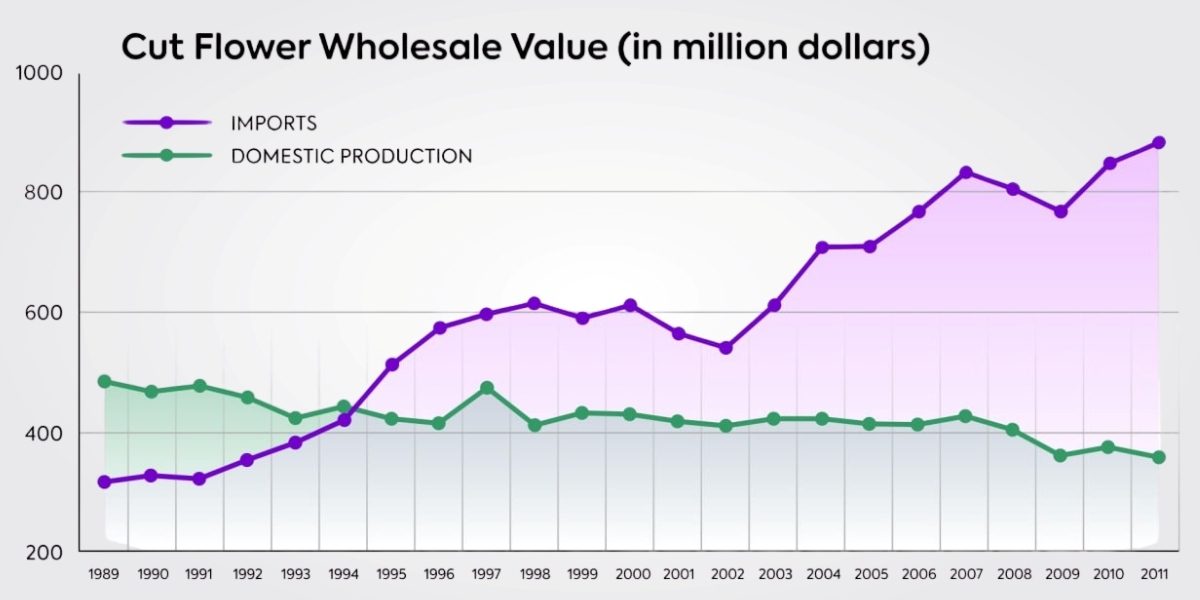
The organization of supplies in the American floristry sector has its own unique features. Unlike Europe, where direct purchases from local producers are more common, the system of wholesale flower markets is prevalent in the USA, the largest of which are located in Miami, Los Angeles, and New York. Perebyinis notes that the supply chain in the USA is longer and more complex, and most flowers are imported from Colombia, Ecuador, and the Netherlands, passing through several intermediaries, which can affect the price and freshness of the product. In recent years, there has been a rising interest in the “slow flowers” movement, which promotes the use of local, seasonal flowers. Perebyinis actively incorporates this initiative, offering a special line of “local flowers” in her assortment, which, despite the higher price, has seen growing interest among environmentally conscious consumers.
The event direction of American floristry, especially in the context of wedding events, also stands out. According to the research company Wedding Report, the average cost of flowers for a wedding in the USA ranges between $2,000 and $3,000, and in the premium segment, it can exceed $15,000–$20,000 [5]. Perebyinis notes that wedding floristry in the USA is a distinct niche with its own conventions. American brides often opt for large-scale, photogenic compositions designed for social media appeal. Unlike Europe, where the wedding style leans toward naturalness and casual elegance, many American weddings still feature lush and carefully structured compositions with an abundance of greenery and filler flowers.
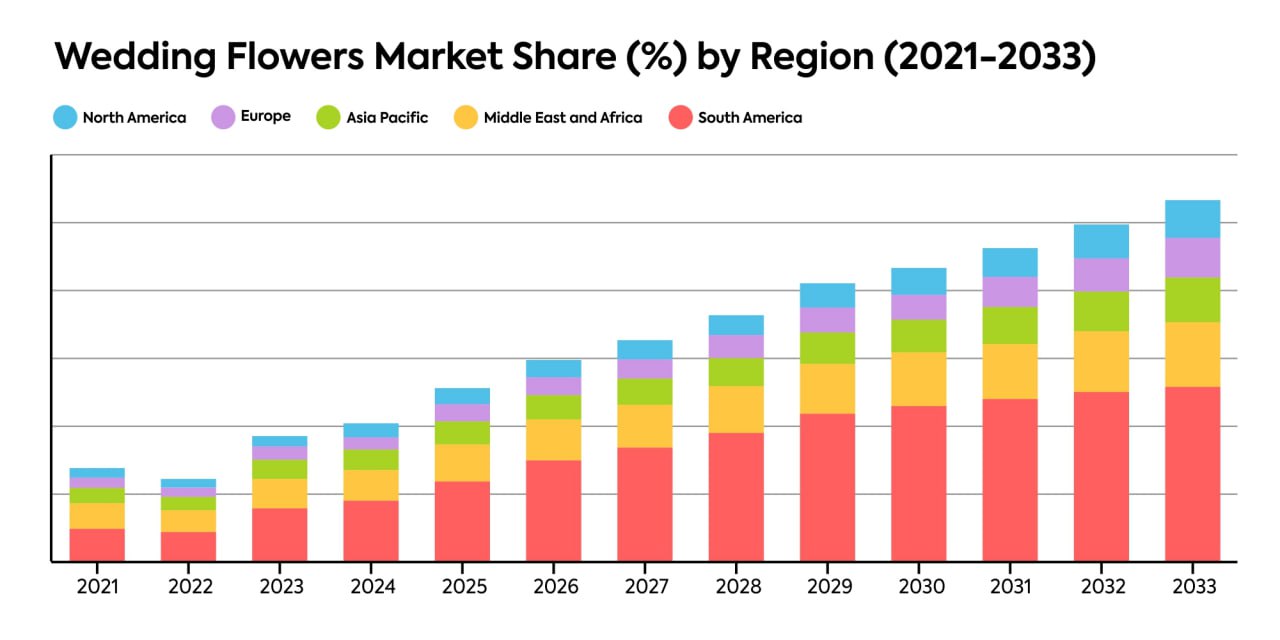
Photo Courtesy: Viktoriia
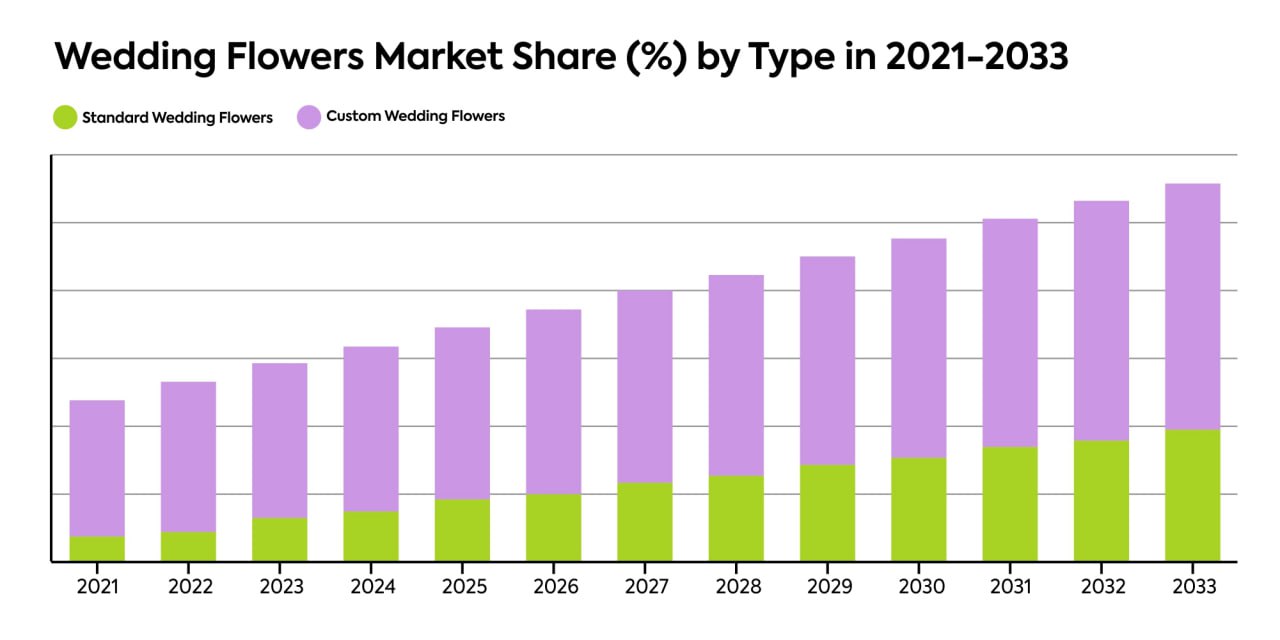
Photo Courtesy: Viktoriia
The marketing strategies of American florists are also noteworthy. Perebyinis points out that in the United States, floristry is increasingly focused on service. Clients often value not just the flowers but the convenience, emotions, and overall experience. As a result, successful floristry businesses frequently emphasize additional services, such as rapid delivery (sometimes within 1-2 hours), personalized cards, and subscription options for regular flower deliveries. In her business, Perebyinis has implemented a system of “flower concierges”—personal managers who aim to understand the preferences of regular customers and offer tailored solutions. Collaboration with other local businesses, such as restaurants and beauty salons, is another common approach. Perebyinis’ planned collaboration with a chain of premium beauty salons in Los Angeles serves as an example of such a partnership.
The attitude toward sustainability in American floristry is evolving. While eco-friendly practices such as biodegradable packaging and the elimination of floral foam have gained traction in Europe, this process has been more gradual in the US. Perebyinis notes that the American market tends to prioritize pragmatism, and green initiatives are more likely to succeed when they do not require a significant cost increase. However, over the past 2-3 years, there has been a noticeable rise in demand for eco-friendly floristry among younger consumers, which is prompting even large chains to reconsider their approaches.
Looking ahead, Perebyinis identifies several key trends in the American floristry market. First, digitalization and automation of processes—from online orders to robotic bouquet assembly—are expected to continue. Second, personalization is becoming increasingly important, as customers seek unique compositions that reflect their individuality. Third, sustainable production, particularly local flower sourcing, is gaining momentum. Lastly, the boundaries between floristry and other design disciplines—interior, event, and even fashion—are becoming less distinct. Perebyinis concludes that the florist of the future may well be a multidisciplinary designer who works with flowers as an artistic medium.
References:
- Floral Industry Overview 2023 // IBISWorld Industry Report. – 2023. – 45 p.
- Wilson E. Cultural Dimensions of Floral Consumption // Journal of Consumer Behaviour. – 2022. – Vol. 41, № 3. – P. 345-361.
- Thompson L. Digital Transformation in Floristry // Florists’ Review. – 2023. – Vol. 154, № 9. – P. 28-35.
- Premium Floral Market Analysis // American Floral Endowment Special Report. – 2023. – 18 p.
- Wedding Flowers Market Report // The Wedding Report Inc. – 2024. – 32 p.