By: John Glover (MBA)
State legislatures and governments in the Greater New York Area are locked in debates over housing policies. Lawmakers grapple with issues such as affordable housing shortages, rent control measures, and zoning regulations.
The discussions are driven by the urgent need to balance economic growth with the preservation of community integrity. As housing demand surges, policymakers are under pressure to craft solutions that address the diverse needs of urban and suburban residents.
“It’s about creating policies that sustain growth without sacrificing the unique character of our communities,” says Steven Mann, General Partner at Propertize Ventures. “We must address these pressing issues head-on,” “Our region’s future depends on our ability to find balanced solutions.”
The debates are marked by differing viewpoints on how best to promote sustainable development while ensuring housing remains accessible and equitable for all. A recent McKinsey & Company analysis for the Regional Plan Association reveals a looming crisis: by 2035, the region might face a housing shortfall of 920,000 units. Currently, the shortage stands at 540,000 units. “This data is a stark reminder of the urgent need for action,” says Mann.
In order to counteract this, construction must accelerate dramatically. Matching the building rate the country experienced in the 1950s could close the gap. Building at the 1990s rate would only halve the future shortfall. “We have historical benchmarks that show us what’s possible,” Mann notes. “We need to aim high.”
Escalating Housing Costs
The supply-demand imbalance will likely drive housing prices up by 25%. This will worsen the burden on households, particularly low-income ones, with a projected over a 7% increase in cost-burdened households (about 260,000). If we build at post-WWII or 1990s rates, the cost-burdened households could drop by 11% and over 3%, respectively. “The numbers don’t lie,” Mann asserts. “Without increased construction, the affordability crisis will only deepen.”

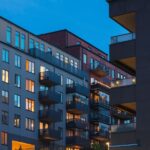
Photo: Unsplash.com
Economic Activity Decline
Failing to meet housing demands could mean missing out on $900 billion in cumulative GDP growth. Additionally, the region could lose $3.7 billion annually in state and local taxes and another $3 billion in federal taxes—funds crucial for education, infrastructure, and public safety. Economic growth is tied directly to housing availability. Ignoring this connection will have severe repercussions.
New York City’s competitive edge, held since 2018, risks erosion if housing shortages stifle growth. Limited housing hampers labor mobility and productivity, straining economic and personal well-being. A strong housing market underpins a strong economy.
Job and Income Reductions
The region could miss out on 730,000 new jobs with post-WWII construction rates or 330,000 jobs with 1990s rates, half of which are tied to construction. Current trends may force employers to leave or cut jobs due to worker scarcity. “Job creation is another casualty of inaction,” Mann warns. “The construction industry alone could drive significant employment gains.”
Population Decline and Quality of Life Deterioration
High costs and limited housing availability may drive residents to more affordable areas. The financial strain on households can lead to poor health outcomes, including social deprivation, stress, and reduced access to medical care. “Our communities’ health and well-being are at stake,” Mann stresses. “We need to create environments where people can thrive.”
Investment Needs
Closing the housing gap requires a $60 billion annual investment through 2035, involving both private and public funds. This investment could boost GDP, create jobs, raise incomes, lower housing costs, and enhance quality of life. “It’s a significant investment, but the returns are even greater,” says Mann. “Bold action is required to secure a prosperous future.”
One method of increasing the housing supply in densely populated regions, such as the Greater New York Area, is through “adaptive reuse.” Adaptive reuse is a process by which existing sites and structures are repurposed for new use cases, particularly as residential developments. For example, developers are increasingly partnering with shopping mall owners to convert their underutilized surface parking lots into dense, multi-family housing. These projects tend to be successful due to the relatively low site acquisition costs, the intrinsic market demand for living near an existing walkable asset, and the mutually beneficial relationship between the existing shopping center, the housing developer, and the municipality. Through Propertize Ventures, Mann is currently exploring partnering with the American Dream Mall in East Rutherford, NJ, to bring on-site housing to the struggling shopping center. “Adding housing to the American Dream Mall is a win-win for all parties,” explains Mann. “The ownership team needs additional customers, new and existing residents need additional housing, and the municipality needs to expand their tax base.”
Addressing the housing shortage is critical. The path forward demands bold investments and accelerated construction to secure the region’s future. “Our mission is clear,” Mann concludes. “We must build ambitiously to meet the needs of our growing population.”
Disclaimer: This content is for informational purposes only and is not intended as financial advice, nor does it replace professional financial advice, investment advice, or any other type of advice. You should seek the advice of a qualified financial advisor or other professional before making any financial decisions.
Published by: Nelly Chavez