Wales Rentals Explains What to Have Ready Before a Newtown or Pwllheli Vehicle Enquiry

Wales Rentals publishes separate location pages for Newtown in Powys and Pwllheli on the Llŷn Peninsula, each covering car, van, minibus and truck hire. Because the website states that bookings and enquiries are taken by phone, the brand recommends that customers put together a short written brief before they call, so nothing important is left to memory mid-conversation.

Two Towns, Two Kinds of Journey

Newtown is an inland market town on the River Severn in Mid Wales. Pwllheli is a coastal town in Gwynedd, towards the end of the Llŷn. People hiring in either place often have similar reasons, such as a house move, a stretch of work, a family visit or a group day out, but the shape of the trip can differ. A hire from Newtown may be one leg of a longer cross-country journey, while a Pwllheli hire may be built around a short stay on the peninsula or a move into or out of the area.

That is why the brand advises customers to say clearly which town the hire starts from, where they would like to collect, and where the vehicle will finish. The page for vehicle hire in Newtown and the page for vehicle hire in Pwllheli are the right starting points for each area. The enquiry should still spell out the actual journey rather than assume the town name says it all.

The Six-Line Enquiry Brief

Wales Rentals suggests jotting down the following before picking up the phone:

  1. Start and finish. The town the hire begins in, the preferred collection point, and where the vehicle will be returned.
  2. Dates and times. Collection and return, with an honest allowance for loading and unloading.
  3. Purpose and passengers. What the trip is for and the exact number of people, counting the driver separately.
  4. The load. The largest items with rough measurements, and anything heavy enough that payload matters.
  5. Drivers. Who will drive and who will collect and return the vehicle.
  6. Questions. Anything that would change the decision, such as deposit, fuel policy, cover, mileage terms or late return.

Written down, those six lines turn a phone call into a quick check of a few points. It also makes it easier to compare what was agreed with what is later confirmed in writing.

Before calling, distinguish firm requirements from preferences. An appointment at the destination may be fixed, while the collection time can move. An item may need to stay upright, while the make of vehicle matters less. Marking these differences helps the provider assess an alternative without losing sight of the job. If a detail is still unknown, say who will check it and when an answer is expected.

Weight Details Worth Checking First

Weight figures need care. A “3.5-tonne” van is normally being described by its maximum authorised mass, which includes the vehicle itself, so the usable payload is considerably lower. For a move involving heavy furniture or materials, asking for the payload of the specific vehicle avoids a mismatch.

Think through loading as well as carrying. Ask the person at the collection address whether the goods will be packed and ready, where the vehicle can stop and who will help move them. Check the receiving address separately. Equipment available at one end may not be available at the other, and a delivery appointment needs to allow for unloading rather than simply arrival.

Confirming the Arrangement

Once a vehicle has been discussed, Wales Rentals recommends that customers ask for the key terms in writing: the vehicle type, collection and return details, the deposit, the fuel arrangement and the cover that applies. That written confirmation, checked against the original brief, is the simplest way to make sure the hire matches the journey.

Keep the confirmation with the original notes and share the relevant details with whoever is collecting the vehicle. If the journey changes, update the written brief before asking for a revised arrangement. A new stop, extra passenger or larger item may affect the vehicle or the timetable. Checking the revised plan together helps avoid different people working from different versions of the booking.

About Wales Rentals

Wales Rentals is a vehicle hire website with location pages for a number of towns in Wales, including Newtown and Pwllheli. Its pages cover car, van, minibus and truck hire, and explain how to make an enquiry.
Taiwanese Architectural Designer Pei‑Yin Chou Wins 2026 Architizer Vision Award for Climate‑Responsive Façade Innovation

Thermal Spirals receives the Editor’s Choice distinction in Vision for Sustainability, followed by an invited presentation at an international architecture forum in Paris.

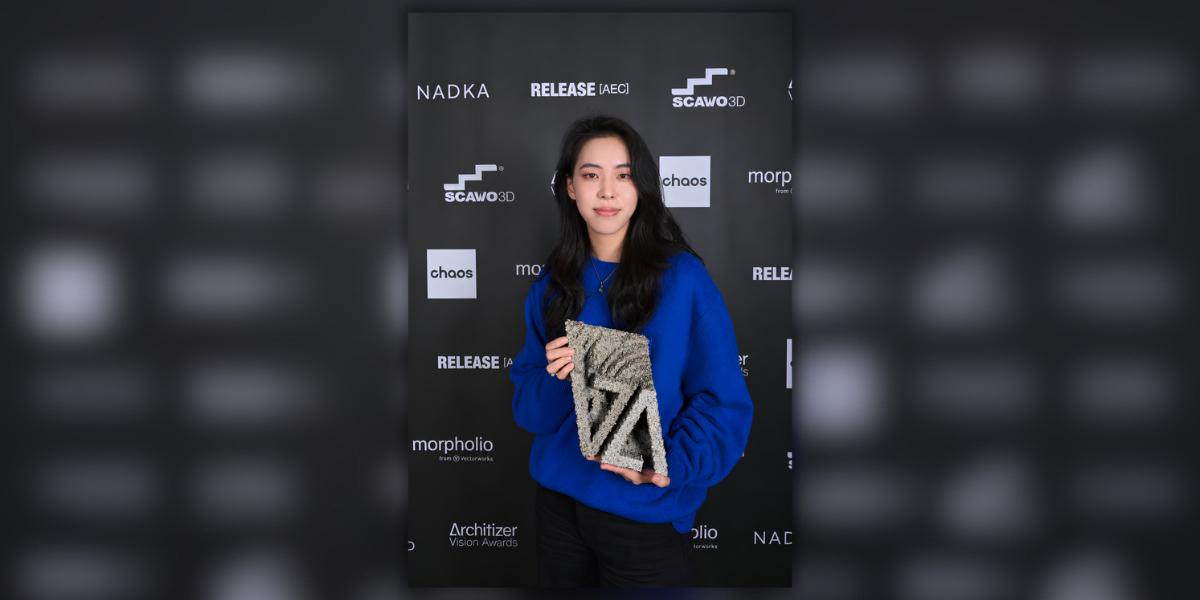
Jonathan M. Smith | New York City, US | Paris, France | October 24, 2026. Taiwanese architectural designer Pei-Yin Chou has been named an Editor’s Choice Winner at the 2026 Architizer Vision Awards for her project Thermal Spirals, recognized in the Architectural Concept, Vision for Sustainability category.

The award recognizes Pei-Yin’s approach to climate-responsive architecture, integrating computational design, environmental analysis, innovative materials, and digital fabrication to explore new possibilities for building façades. Following this recognition, she was invited to present her work at Architizer in Conversation, held on October 20, 2026, during RELEASE [AEC] in Paris, France.

Bridging Computational Design and Environmental Innovation

Pei-Yin is a Taiwanese architectural designer whose work focuses on computational design, digital fabrication, and environmentally responsive architecture. She holds a Master of Architecture from the University of California, Los Angeles (UCLA), and a Bachelor of Architecture from Shih Chien University in Taiwan.

As a LEED Accredited Professional (LEED AP BD+C), Pei-Yin explores how advanced design technologies and sustainable building principles can be integrated into architectural practice. Her work bridges environmental performance and human experience, investigating how buildings can respond to changing climatic conditions while making those responses visible and accessible.

Thermal Spirals: Transforming Building Façades into Environmental Communicators

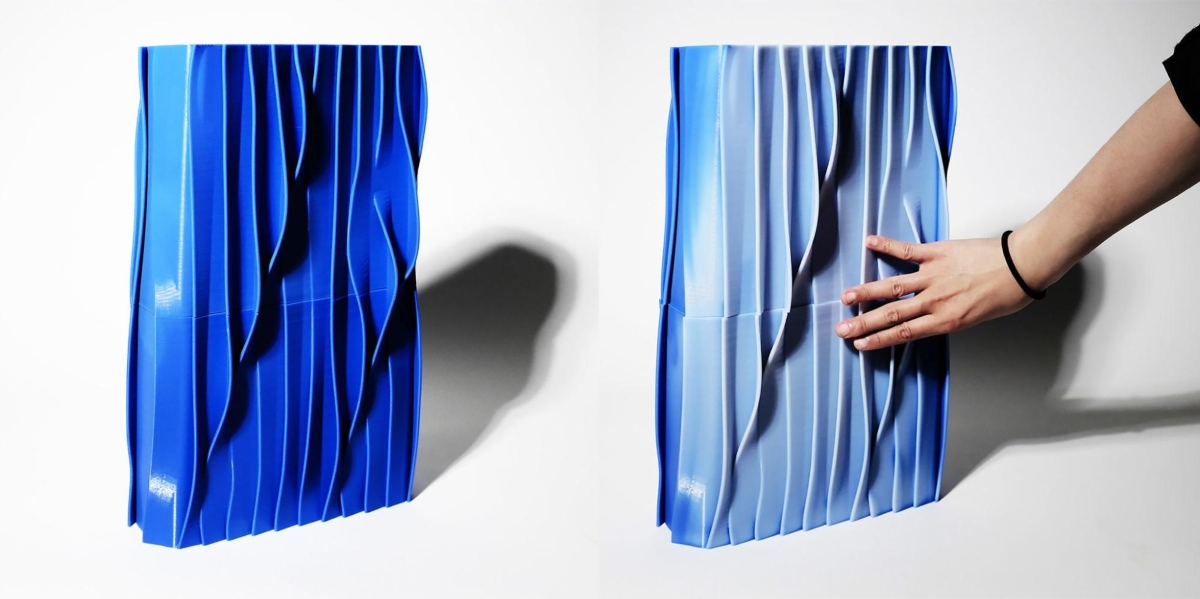
Photo Courtesy: Pei-Yin Chou (Thermochromic façade prototypes developed for Thermal Spirals, demonstrating visible color changes in response to temperature variations.)

As sustainability becomes increasingly central to architectural practice, building façades play a critical role in regulating solar exposure and thermal conditions. Yet the environmental strategies embedded within buildings often remain invisible to the people who experience them.

Thermal Spirals addresses this disconnect through a climate-responsive façade system that combines environmental performance with visual communication.

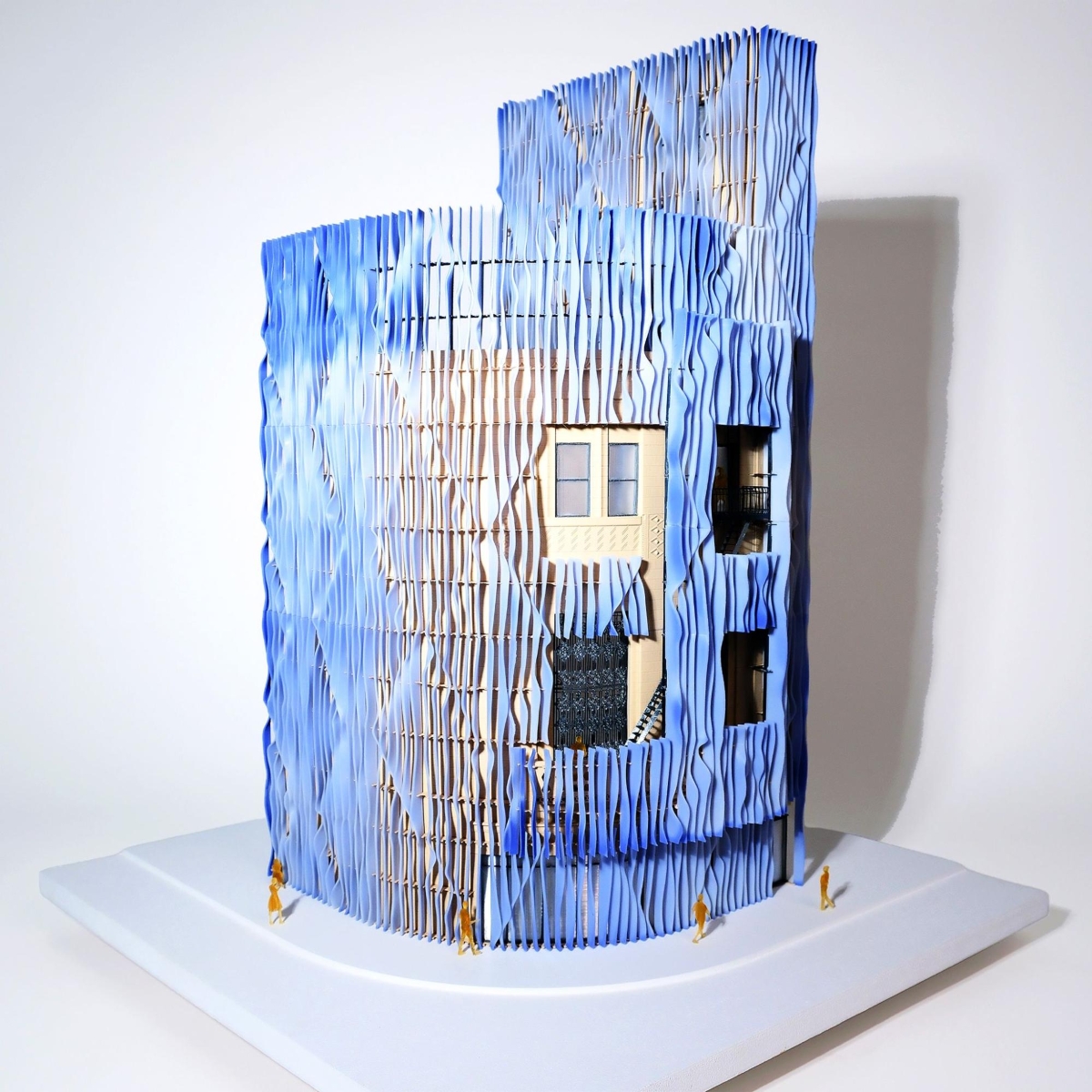
The system translates solar exposure data into differentiated façade geometries, allowing architectural components to respond to varying environmental conditions. Inspired by the spiral geometry and growth patterns of the nautilus shell, Pei-Yin developed seven distinct lamella configurations using parametric modeling. Variations in curvature, spacing, and rotation allow the system to adapt its shading strategies to different solar conditions while maintaining visual permeability.

A defining innovation of Thermal Spirals is the integration of thermochromic materials, which undergo visible color changes at approximately 31°C (88°F). This material transformation allows temperature variations to be perceived directly through the façade, turning an otherwise invisible environmental condition into an architectural experience.

Pei-Yin further investigated the system through additive manufacturing and full-scale physical prototyping, exploring how complex computational geometries and responsive materials could be translated into architectural components.

By combining solar analysis, parametric design, and material experimentation, Thermal Spirals proposes a façade system that works as a shading strategy and as an environmental communicator, making climate-responsive design more tangible to the public.

Photo Courtesy: Pei-Yin Chou (Physical architectural model of Thermal Spirals, illustrating the integration of parametrically designed lamella components into a climate-responsive building façade.)

International Recognition at the 2026 Architizer Vision Awards

Organized by Architizer, an international architecture and design platform, the Vision Awards recognize innovative approaches to architectural concepts, representation, and visual storytelling.

The 2026 competition attracted nearly 600 submissions from more than 50 countries, bringing together architects, designers, and creative professionals from across the international architecture community.

The awards distinguish between Jurors’ Choice Winners, selected through a professional jury process, and Editors’ Choice Winners, selected by Architizer’s editorial team.

Pei-Yin’s Thermal Spirals received the Editor’s Choice Winner distinction in the Vision for Sustainability category, recognizing its integration of climate-responsive design, computational geometry, and thermochromic material applications.

Sharing Climate-Responsive Design on an International Stage

Following her award recognition, Pei-Yin was selected as a speaker for Architizer in Conversation, part of RELEASE [AEC], held at the Cité des Sciences et de l’Industrie in Paris on October 20, 2026.

The event brought together international architects, designers, and technology professionals to discuss emerging technologies and the future of the architecture, engineering, and construction industries.

Presenting under the title “The Façade as Environmental Communicator,” Pei-Yin shared the research and development behind Thermal Spirals, including solar-driven geometry, thermochromic materials, and additive manufacturing.

The speaker program also featured professionals from organizations including Chaos and Brick Visual, providing a platform for exchanging perspectives on design innovation, sustainability, and architectural visualization.

(Pei-Yin Chou presenting Thermal Spirals during Architizer’s event at RELEASE [AEC], held at the Cité des Sciences et de l’Industrie in Paris on October 20, 2026.)

Through her work, Pei-Yin continues to explore how computational design and material innovation can expand the role of architecture beyond environmental regulation, creating building systems that communicate and respond to the world around them.

Project and Award Information

Designer: Pei-Yin Chou

Project: Thermal Spirals

Award: 2026 Architizer Vision Awards

Category: Architectural Concept, Vision for Sustainability

Recognition: Editor’s Choice Winner

Organizer: Architizer

Speaking Engagement: Architizer in Conversation, RELEASE [AEC]

Location: Cité des Sciences et de l’Industrie, Paris, France

Date: October 20, 2026

Full details are listed on the official 2026 Architizer Vision Awards winners page for Thermal Spirals.