What to Do If You Are in an Accident While Traveling

A calm, organized response can help travelers address immediate safety needs, preserve useful information, and manage the interruption more clearly.

A road accident can disrupt a trip within seconds. The driver may be far from home, unfamiliar with the area, and unsure whom to call. Immediate safety comes first, but a basic plan can make the next several hours less confusing.

Depending on the circumstances, a traveler may also seek information about Raleigh truck crash claims when a collision with a commercial vehicle raises questions. Legal requirements vary by location, so any advice should reflect the facts and law that apply to the incident.

Take Immediate Safety Steps After a Travel Accident

The driver should stop, check for injuries, and call emergency services when medical help or police assistance is needed. If the vehicle can be moved safely and local instructions permit it, moving out of active traffic may reduce further danger. Hazard lights can make the vehicle easier to see.

Passengers should stay away from moving traffic. Anyone who may be injured should obtain an appropriate medical evaluation, even if the group would prefer to continue the trip.

Know Who to Contact After a Road Accident

Necessary calls following an accident may include emergency services, local police, the vehicle owner, a rental-car company, roadside assistance, and the relevant insurer. A traveler should record names, telephone numbers, reference numbers, and any instructions received.

For example, a family involved in a minor collision several states from home might create one phone note listing the police report number, tow company, insurer claim number, and repair location. That simple record can keep details from becoming scattered afterwards.

Document the Accident and Preserve Travel Records

When it is safe, the traveler can photograph the vehicles, visible damage, road conditions, signs, and surrounding area. They should exchange required contact, vehicle, license, and insurance information and collect witness details when available.

Receipts for transportation, lodging changes, towing, and other related expenses can go into one folder. A brief timeline may include the date, location, events, calls, appointments, and documents received. Notes should remain factual rather than speculate about responsibility.

Prepare the Vehicle and Route Before Traveling

A pre-trip check should cover tire pressure and tread, brakes, lights, fluids, windshield wipers, and the battery. Drivers can also review the route, weather, road conditions, rest areas, and overnight accommodations.

An emergency roadside kit may contain first-aid supplies, a flashlight, reflective markers, basic tools, water, snacks, medications, and charging equipment. A downloaded route or printed backup can help where cellular service is limited.

Follow Long-Distance Driving and Truck Safety Practices

Seat belts, appropriate speed, adequate following distance, and focused driving remain important throughout a trip. The National Highway Traffic Safety Administration (NHTSA) reports that crashes involving distracted drivers killed 3,208 people in 2024. Navigation and messages should be handled before departure or after stopping safely.

Large trucks require additional space. The Federal Motor Carrier Safety Administration (FMCSA) states that a large truck or bus may need up to two football fields to stop safely. Drivers should avoid blind spots, leave room when merging, and pass only when conditions allow.

Make Fatigue and Emergency Planning Part of the Trip

For increased road safety while traveling, drivers should begin rested, schedule regular breaks, and stop when sleepiness or poor concentration appears. Severe weather, closures, breakdowns, and traffic delays may change the plan, so extra time and a backup overnight option can be useful.

No preparation can prevent every interruption, but it can give travelers a practical structure while away from home: protect people first, contact appropriate services, record essential facts, and keep the resulting information together.

Frequently Asked Questions About Travel Accidents

What should someone do first after an accident while traveling?

They should stop, assess immediate safety, check for injuries, and contact emergency services when necessary.

What information should travelers collect after a collision?

Useful records may include contact and insurance details, vehicle information, photographs, witness contacts, a report number, receipts, and correspondence.

What should a traveler pack for roadside emergencies?

A practical kit may include first-aid supplies, a flashlight, reflective markers, water, snacks, medications, basic tools, and phone chargers.

How can motorists drive more safely around commercial trucks?

They should avoid blind spots, allow additional following and stopping space, signal clearly, and avoid moving closely in front of a truck.

When should a tired driver stop?

A driver should stop when sleepiness or difficulty concentrating appears. A safe rest stop or overnight break is preferable to driving while fatigued.

From Sicily to the Skyline, Rosario Bona’s New York Legal Journey

By: Jeremy Murphy

For Rosario Bona, the path to becoming a New York attorney began thousands of miles away in Palermo, Sicily. Today, as an associate in the Civil Litigation Department at Aidala, Bertuna & Kamins, P.C., he works on complex commercial disputes, intellectual property matters, and entertainment litigation in one of the most competitive markets.

This journey, by his own admission, still feels surreal. “I come from Sicily,” Bona says. “I grew up believing in family and community. Being in an environment where I go to the office and feel sort of at home is a special feeling.”

A Dream That Began in Sicily

Bona’s story is one of determination and ambition. He is the first attorney in his family, a distinction that carries much pride. While studying law in Italy, he enrolled in his university’s International Program, opening doors to global opportunities.

His academic success led him through exchange programs and competitions in Poland, Spain, and Serbia. Those experiences broadened his perspective, but a scholarship to St. John’s University in New York through the Global Law Fellows Program changed the course of his life. “It was during that experience that I truly fell in love with New York City,” Bona recalls. “That’s when becoming an attorney here stopped being a dream and became a concrete goal.”

After graduating from law school in Italy, Bona pursued that goal relentlessly. He enrolled in Fordham University School of Law’s LL.M. program, focusing on Intellectual Property and Information Technology Law and International Business and Trade Law. In 2022, he graduated and passed the New York Bar Examination on his first attempt, qualifying for admission in every Uniform Bar Examination jurisdiction.

Finding a Legal Home in New York

Shortly before that milestone, fate intervened in the form of a Sicilian connection. Through ties to Arthur Aidala’s family hometown of Bolognetta, Bona was introduced to the firm, and the young attorney joined as an intern. That quickly evolved into a position within the Civil Litigation Department.

“We handle civil and commercial litigation cases of any kind,” he explains. “The cases range from copyright infringement and defamation to personal injury, employment discrimination, and complex commercial fraud and breach-of-contract disputes.” The variety is what appeals to him. “You have to be an expert in almost everything,” he says with a laugh. “But I see that as an opportunity to learn day by day.”

Entertainment, IP and the Future of Law

Intellectual property and entertainment law remain Bona’s greatest passions. He has worked on matters involving internationally recognized artists and public figures, gaining exposure that many young attorneys spend decades seeking. One of the most rewarding aspects of his career has been interacting with clients whose names appear in headlines. “I’ve had the chance to meet clients like 50 Cent and Harvey Weinstein,” he says. “Working on those cases and drafting papers related to them certainly marks a milestone in my career.”

For Bona, however, the future of legal practice may be more fascinating than the celebrity clients. As someone who focuses on intellectual property, he is particularly interested in the emerging legal questions surrounding artificial intelligence. “I still think the AI area in the legal realm is sort of unexplored,” he says. He points to growing concerns surrounding the unauthorized use of artists’ names, images, and voices through AI-generated content. Efforts by entertainers to protect their identities, he believes, are only the beginning of a larger legal evolution.

Rooted in Family, Built for Manhattan

While his legal career develops, Bona remains deeply connected to his Sicilian roots. He is a devoted supporter of Juventus, cooks traditional Italian pasta dishes, and remains passionate about travel and exploring different cultures.

Still, family remains at the center of everything. Like many Sicilians, he stays connected to home, speaking with family members daily despite being separated by a great distance. Every year, no matter how busy life becomes, he returns to Palermo for Christmas. Perhaps that balance between old-world values and modern ambition explains Bona’s ease in adapting to New York’s legal world.

At Aidala, Bertuna & Kamins, he has found a workplace that mirrors the values he learned in his youth. “This firm really feels like a family,” he says. “We’re not that many people, and that adds a human element that might not exist elsewhere.” For a young attorney who once dreamed about New York, it is difficult to imagine a more fitting destination. “Working alongside lawyers like Arthur Aidala and Imran Ansari, and learning from retired judges and experienced litigators, feels like a dream come true,” Bona says.

For Rosario Bona, the journey to Manhattan may have started with a dream. But through talent, persistence, and a willingness to embrace opportunity, it has become a remarkable reality.

aidalalaw.com

The Patterns We Inherit And How Dhaivat Pancholi Reframes Karma as a Path to Personal Responsibility

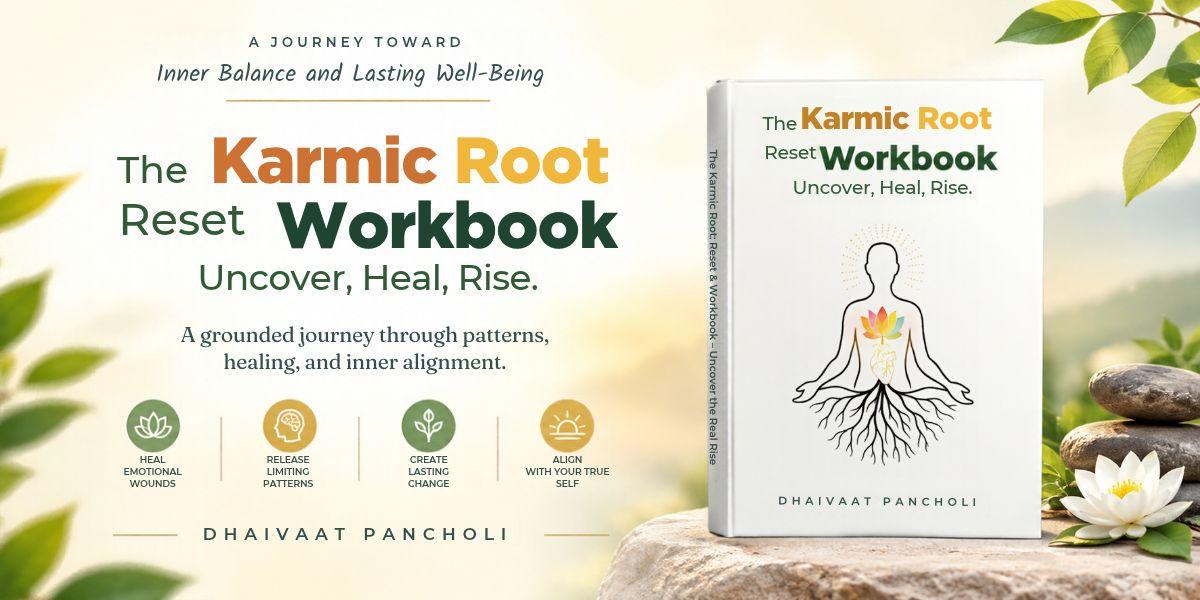
In The Karmic Root Reset Workbook: Uncover, Heal and Rise, Dhaivat Pancholi examines how inherited beliefs, emotional habits, and repeated reactions can shape adult life, and how greater awareness can create room for different choices.

Some habits are easy to recognize. Others appear as recurring arguments, familiar disappointments, or the persistent feeling of having to earn acceptance. A person may leave one difficult relationship only to encounter similar dynamics elsewhere, or promise to establish healthier boundaries before falling back into old responses. Over time, these repetitions can feel less like choices and more like an unchangeable part of life.

Dhaivat Pancholi’s The Karmic Root Reset Workbook: Uncover, Heal and Rise considers what may lie beneath such cycles. Rather than presenting karma solely as a matter of fate, punishment, or cosmic reward, Pancholi approaches it as the accumulation of repeated choices, emotional imprints, inherited beliefs, and unconscious reactions.

The distinction matters. If recurring difficulties are understood only as personal failures, self-criticism can become another cycle to escape. If they are examined with curiosity, however, they may offer information about learned behaviors, family conditioning and the beliefs that continue to influence everyday decisions.


Family Stories People Carry

Families pass on more than names, traditions and memories. They also communicate ideas about security, success, affection, responsibility and acceptable behavior. Some lessons are spoken openly; others are absorbed from silence, conflict, or the ways adults respond to uncertainty.

A child who learns that disagreement threatens belonging may become an adult who struggles to say no. Someone raised to associate worth with achievement may find rest uncomfortable or measure personal value by productivity. These responses can begin as adaptations to a particular environment and persist long after that environment has changed. The workbook invites readers to examine such patterns without automatically assigning blame to previous generations. Its emphasis is on recognizing what has been inherited, understanding how it operates, and deciding what deserves to continue.

This approach gives the idea of generational legacy a practical dimension. Honoring a family’s history does not require repeating every behavior it contains. Nor does acknowledging past harm require reducing relatives to their mistakes. The work begins with an honest assessment of the present.

From Awareness to Choice

The workbook combines karmic ideas with psychological reflection, mindfulness and somatic awareness. It encourages readers to consider not only what they think, but also how recurring situations register in the body and influence their responses. Its central framework follows five steps: Reveal, Untangle, Interrupt, Release, and Rewrite.

Reveal asks readers to notice patterns as they occur. Untangle explores their possible origins. Interrupt creates a pause between an old trigger and a familiar reaction. Release considers what no longer protects or serves the individual. Rewrite focuses on practicing alternative responses until they become more available in daily life. The sequence is not presented as a demand for instant resolution. The workbook emphasizes emotional pacing, repetition, and the importance of feeling sufficiently grounded to engage with difficult material. Readers are encouraged to pause when exercises become activating and return when ready.

That emphasis challenges the expectation that change should happen through willpower alone. Recognizing a pattern may be an important beginning, but lasting behavioral change also requires opportunities to respond differently.


Different Relationship With the Past

Dhaivat’s approach does not ask readers to deny their history or treat every hardship as a lesson they were destined to receive. Instead, it invites them to distinguish between what shaped them and what they can choose now.

That distinction offers a measured form of agency. The past may explain a reaction without making that reaction inevitable. An inherited belief may influence a decision without having the final word.

Takeaway

For readers who find themselves repeating familiar emotional cycles, The Karmic Root Reset Workbook: Uncover, Heal and Rise offers a structured place to begin asking better questions, and to practice answers that reflect who they want to become.

Ready to examine the patterns you carry and make room for new choices? Explore The Karmic Root Reset Workbook: Uncover, Heal and Rise by Dhaivat Pancholi.

J and M Train Weekend Service Cut Between Brooklyn and Manhattan for Three More November Weekends

J and M trains are not running between Myrtle Av-Broadway in Brooklyn and Manhattan on five weekends this fall. Service stops from 3:45 a.m. Saturday to 10 p.m. Sunday while the MTA replaces aging switches near Marcy Av. Two weekends are finished, and three remain before the work window closes November 23.

Key Takeaways

  • On shutdown weekends, J trains run only between Jamaica Center-Parsons/Archer and Myrtle Av-Broadway.
  • M trains run in two sections every 20 minutes, with a forced transfer at Myrtle-Wyckoff Avs.
  • Free T432 shuttle buses stop at Flushing Av, Lorimer St, Hewes St, Marcy Av and Delancey St-Essex St.
  • The switches being replaced are 29 years old, according to MTA New York City Transit.
  • On weekdays, J trains run local between Marcy Av and Myrtle Av-Broadway from 10 a.m. to 3 p.m. through mid-November.

J Train Weekend Service Ends at Myrtle Avenue-Broadway

For J riders, the shutdown cuts the line at the edge of Bushwick. On each work weekend, J trains run between Jamaica Center-Parsons/Archer and Myrtle Av-Broadway, then stop. The stretch through Williamsburg, across the Williamsburg Bridge and down the Nassau Street corridor gets no J service.

That leaves a large share of the line’s ridership looking for another route. Riders coming from Jamaica, Woodhaven and Cypress Hills can transfer to the A or L at Broadway Junction. Riders in Queens can also take the E for a direct trip into Manhattan. At Myrtle Av-Broadway, all J and M trains board from the Manhattan-bound platform during work hours. Riders used to the other side of the station should allow a few extra minutes.

M Train Weekend Service Runs in Two Sections Every 20 Minutes

M riders face the more complicated trip. M trains run in two pieces on work weekends:

  • Middle Village-Metropolitan Av to Myrtle-Wyckoff Avs
  • Myrtle-Wyckoff Avs to Myrtle Av-Broadway

Both sections run every 20 minutes. That is a long wait for a line that normally runs more often.

For a Middle Village rider, that means a transfer at Myrtle-Wyckoff Avs before Brooklyn’s elevated stretch even begins. Riders bound for Manhattan are better off taking the L at Myrtle-Wyckoff Avs. That trip skips the second M section and the walk to the J at Myrtle Av-Broadway.

Shuttle Buses and Transfers Cover the Gap to Manhattan

J and M Train Weekend Service Cut Between Brooklyn and Manhattan for Three More November Weekends

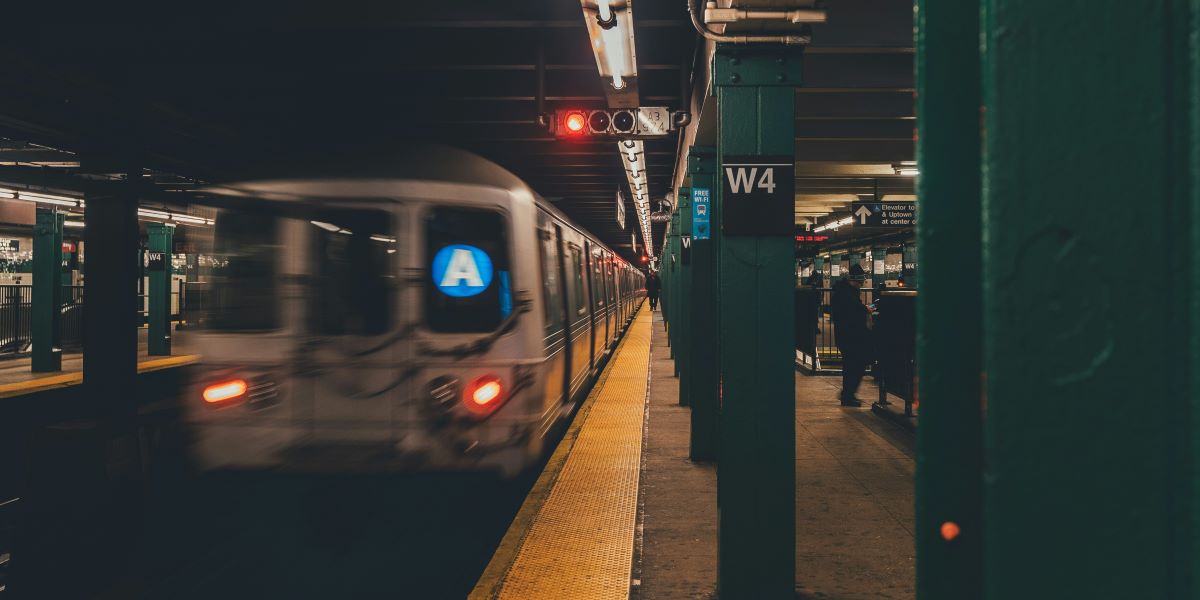
Photo Credit: Unsplash.com

The MTA is running free T432 shuttle buses between Flushing Av, Lorimer St, Hewes St, Marcy Av and Delancey St-Essex St, making all stops. The shuttle is the only direct way across the river for riders at those four Williamsburg stations. It also keeps Delancey St-Essex St connected for riders headed to the Lower East Side. During the day and evening, the B39 bus offers another route between Williamsburg and the Lower East Side.

Riders exiting the subway at Myrtle Av-Broadway or Delancey St-Essex St to catch a shuttle can ask a station agent for a GO Ticket to re-enter. The farther downtown stops on the line (Bowery, Canal St, Chambers St, Fulton St and Broad St) have no J service on work weekends. The MTA points riders to nearby 4, 5 and 6 stations instead.

Why the MTA Is Replacing the Marcy Avenue Switches

The work centers on switches at and around Marcy Av. Switches move trains between local and express tracks. Without working switches, the J cannot run its weekday express pattern, and crews lose flexibility when they need to reroute trains around a problem.

The MTA says these switches have not been replaced since the 1990s. At a September MTA board committee meeting, NYC Transit operations planning official Heather Ferguson put their age at 29 years. Crews are also using the weekend closures for track and bridge inspections, combining several jobs into one set of outages instead of spreading them across more weekends.

The timing reflects a system carrying heavier loads. The work arrives weeks after subway ridership passed one billion trips earlier this month, so each weekend disruption reaches more riders than it would have a few years ago.

J Train Service This Weekend Depends on the Remaining Work Schedule

The first two shutdown weekends ran October 17–18 and October 24–25. Three remain before the work window closes November 23. Weekend plans change often around holidays and major events, so riders should check before traveling instead of relying on an older schedule.

The MTA app, the MTA’s planned service changes page and the weekly MTA Weekender newsletter all show whether J train weekend service is suspended on a given weekend. They also show any other NYC subway weekend service changes along the route.

Weekday Midday J Trains Also Run Local Through Mid-November

The project affects weekdays too. Since October 13, J trains have run local between Marcy Av and Myrtle Av-Broadway from 10 a.m. to 3 p.m. on weekdays. Riders who usually take the express through that stretch in the middle of the day should expect a few extra minutes. The change does not affect rush-hour commutes.

FAQs

Is the M Train Running This Weekend?

On shutdown weekends, the M runs only in Brooklyn and Queens. It operates in two sections between Middle Village-Metropolitan Av and Myrtle Av-Broadway, every 20 minutes. Three shutdown weekends remain before November 23, so riders should check the MTA app to see whether a given weekend is one of them.

Why Is the J Train Not Running to Manhattan?

The MTA is replacing 29-year-old track switches near Marcy Av in Brooklyn. While crews work, J trains stop at Myrtle Av-Broadway from 3:45 a.m. Saturday to 10 p.m. Sunday, and the stretch from there to Manhattan has no service.

Where Does the J Train Shuttle Bus Go?

The free T432 shuttle runs between Flushing Av, Lorimer St, Hewes St, Marcy Av and Delancey St-Essex St, making all stops. Riders can board it to cross the Williamsburg Bridge on weekends when J and M trains are not running into Manhattan.