From Swiping to Swapping: The Founder Behind Zèya’s New Vision for Commerce

By: Shawn Mars

NY, meet Mehdi Taifi, founder of the Zèya app who is building a marketplace app around a new vision for how we exchange value!

Taifi believes the next evolution of commerce may begin with a surprisingly simple question: Why does every transaction have to start with money?

After spending much of his career on Wall Street and Silicon Valley, including more than six years at Robinhood and later serving as Chief Risk Officer at Alpaca, Taifi turned his attention to a different kind of market: the things people already own.

As founder and CEO of Zèya, Taifi is building a platform around what he calls “Swap Culture” with an even larger ambition behind it: creating a new model for value exchange

“Everything around us has value, but commerce has conditioned us to think primarily in terms of price,” Taifi says. “I wanted to build something where the first question becomes: What do I have, what do you have, and how can we exchange value?”

Starting With the Swipe: Zèya began with a simple idea: make swapping as intuitive as swiping. Rather than navigating a traditional marketplace filled with listings and price tags, users can swipe through items, express interest and discover potential exchanges with other people. The familiar swipe mechanic makes discovery simple, but Taifi sees it as only the entry point into a much larger vision.

Today, Zèya gives users two primary ways to make an offer: swap an item or offer cash. In Q4, Taifi plans to begin expanding that model by introducing services as another form of value exchange.

A pair of sneakers could be swapped for a watch. A jacket could receive a cash offer. Eventually, an item could potentially be exchanged for photography, design, tutoring or another service. The idea is not to eliminate money. It is to give people more options.

“Cash is incredibly efficient, and it will always be important,” Taifi says. “But it doesn’t have to be the only way two people exchange value.”

Building Swap Culture

Taifi calls the movement behind Zèya “Swap Culture” a shift away from automatically buying more and toward recognizing the value people already possess. This movement is taking shape here in New York with thousands of people already on the app trading with each other.

A closet, apartment or garage can contain significant dormant value. Traditionally, unlocking it often means selling an item, receiving money and then using that money to buy something else. Taifi believes technology can shorten that cycle. The result is a marketplace where the method of exchange becomes flexible rather than predetermined.

“We’re not trying to decide what value means for people,” Taifi says. “We want to build the infrastructure that lets them decide.”

A Marketplace Where Value Can Take Different Forms

Taifi’s long term vision is for Zèya to become a network where people have a multitude of ways to trade and transact: Swap something. Offer cash. Exchange a service. Over time, those options could create transactions that would never happen in a conventional marketplace.

Someone may not be willing to spend $500 on something they want, but they may own something the other person values equally. Someone else may have a skill that another user needs. Another person may simply prefer cash. Zèya is being built around the idea that all of those people should be able to participate in the same marketplace. For Taifi, that is where the opportunity becomes much larger than swapping.

“I’m not interested in building just another resale app,” he says. “I want to challenge one of the most fundamental assumptions in commerce, that value always has to be exchanged through money.” The swipe may be what initially makes Zèya feel different. But Taifi is betting that a broader idea of value exchange is what could define its future.


A Quiet Luxury Signal in New York

How a two-letter mark turned faith, patience, and scarcity into a hat people recognize across a room.

In most consumer markets, a logo is decoration. In the best ones, it is a thesis.

ØD belongs to the second category.

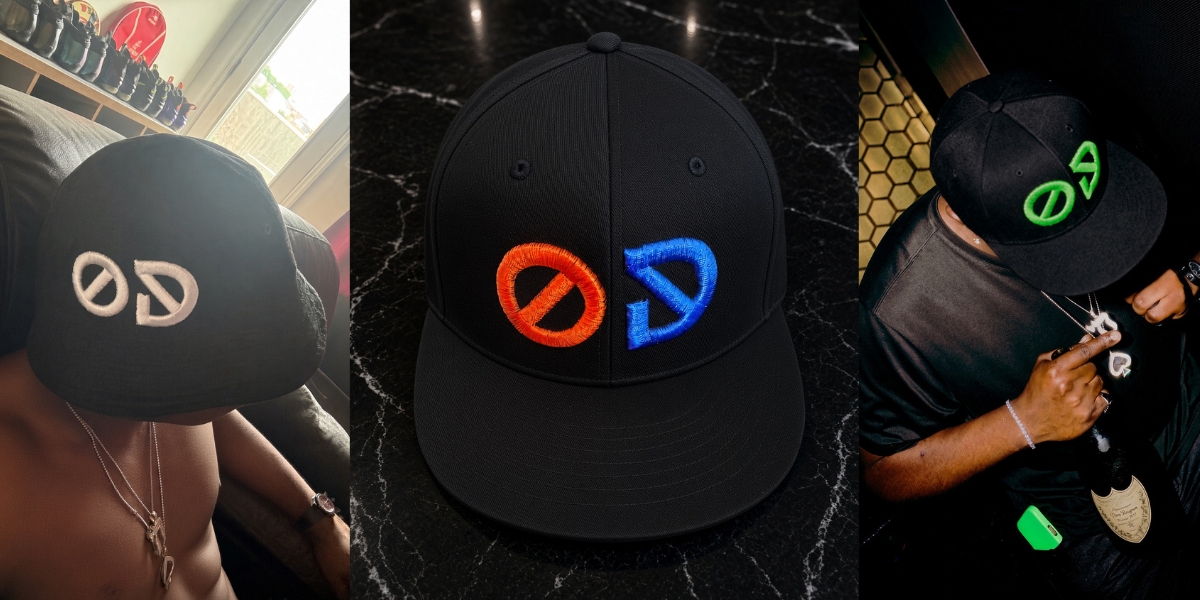
OD stands for God. The G is silent because belief, by definition, is not visual. You hold the idea without proof. You live as if it is true. Then someone enters a room in a black snapback, and the unseen becomes readable. The wearer did not announce a sermon. The crown did the work. That is the brand argument in its cleanest form. God minus the letter you cannot touch. A product you can.

The longer word behind the mark is Odirin. Patience is a virtue. In an economy addicted to speed, that origin is not folklore. It is positioning. Odirin is shortened the way the sacred name is shortened. Extra sound falls away. What remains is compact enough for embroidery and durable enough for a company. Two letters. A slash. A code that does not require a paragraph until someone asks for one.

The object is deliberately familiar. Black structured crown. Flat brim. Six-panel construction. A Yupoong snapback chassis with the authentic stamp beneath the bill, the industry standard silhouette rather than a novelty shape. Raised ØD embroidery gives the mark physical weight. The slashed O and heavy D read as a monogram, not a costume. AUTHENTIC sits on the side with the confidence of a company that does not need to shout. Black wool does what black wool has always done in New York. It signals night, discipline, and taste without borrowing color for attention.

The operating model is where the story becomes a business.

The logo color changes every month. Same mark. New edition. Customers are not buying a single souvenir. They are buying a calendar. Miss the month and that colorway is gone. Production is capped at one hundred hats. The number is small enough to protect meaning and large enough to build a repeating ritual. In a market drowning in unlimited drops, constraint is the luxury.

Personalization deepens the covenant. You can embroider a name on the cap. The front remains unseen. The added name is the witness. It moves the customer from spectator to participant. That is not a customization upsell in the usual promotional sense. It is membership made tactile.

Photo Courtesy: Odirin A.

The hat is priced at $100 and sold directly through @odthejew, available 24/7, 365 days a year, with colors changing every month. No seasonal storefront. No scarcity theater that expires with a weekend countdown. Access is constant. Supply is not. That combination is rare and, commercially, intelligent. Demand can arrive at midnight or on a Tuesday morning. Inventory does not pretend to be infinite.

What the cap does in public is more interesting than what it does on a product page.

It identifies a tribe without a manifesto. People who study in the morning, move through the city at night, and treat patience as strategy rather than slogan recognize each other faster.

It creates a conversation you can finish in one breath. OD is God. The G is silent because you believe and you do not see Him. You see Him when you see the hat. The name comes from Odirin. Patience is a virtue. One hundred a month. The color changes. Your name can go on it. The pitch is short because the idea is finished.

It imposes a standard on the wearer. A mark this loaded does not pair well with sloppy conduct. That social pressure is part of the product. Ethos is not a lookbook. Ethos is behavior under the logo.

It timestamps culture. Monthly colorways make the hat readable as a chapter, not only as a brand.

Photo Courtesy: Odirin A.

That is why this piece shouldn’t be filed under ordinary merch. Merchandise begs for attention. A signal assumes the room will come to it. ØD is built like the latter. It can travel into places that were never designed as sacred space: a sidewalk, a dining room, an airport, a club, a corner store. The argument is that meaning does not need a sanctioned building. It needs a person willing to carry it.

Plenty of companies can put letters on wool. Very few can survive a second question about those letters. ØD can. The first reading is design. The second is Odirin. The third is the full architecture. Nigerian root. Jewish practice. New York nightlife. A God who does not perform on command. A virtue that does not trend. Limited monthly output. A changing colorway. Optional identity stitched into the cloth.

The most serious brands are not built in the highlight. They are built in the middle, when growth is slow, and the story has to hold without applause. That is the test patience names. Most products get taken off in that stretch. The ones that stay on the head, and return when the color changes, are how a mark becomes an institution.

God remains unseen.

The hat does not.

One hundred a month.

A new color when the month turns.

A name if the wearer wants the covenant personal.

One hundred dollars.

@odthejew, continuously open.

The G never needed to make it onto the crown.

The people who understand that are already the market.