From Surviving on Empty to Stewarding Well: The Seven Pillars Behind Staci Wallace’s Approach to Health

Wellness advice is everywhere. People can find recommendations about nutrition, exercise, sleep, stress management, and countless other aspects of health within seconds. Yet having more information does not necessarily make it easier to know what to do next.

For Staci Wallace, the challenge is not simply a lack of information. It is the absence of a framework that helps people connect the different parts of their well-being and make sustainable decisions about them.

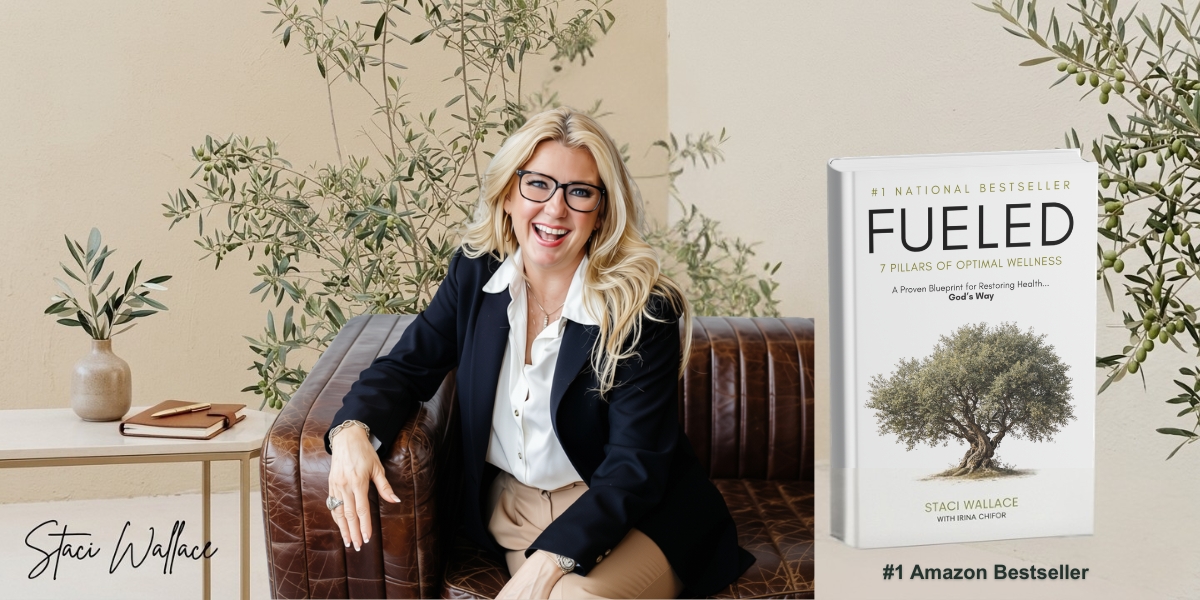
That idea is at the center of Fueled: 7 Pillars of Optimal Wellness, Wallace’s eighth book. Drawing from decades of leadership, ministry, business, speaking, and personal transformation, Wallace presents a faith-centered approach to wellness that treats health as stewardship rather than another temporary trend.

Staci Wallace Sees Wellness as an Interconnected System

Health is rarely affected by a single decision.

A person may improve their nutrition while continuing to operate without adequate rest. Someone may exercise consistently while struggling with unmanaged stress. Another person may have strong spiritual practices while allowing demanding routines and environments to continually drain their energy.

These areas do not exist in isolation.

Fueled: 7 Pillars of Optimal Wellness brings them together through seven interconnected pillars: faith and spiritual fuel, food and nutrition, fitness and movement, rest and recovery, stress and emotional stewardship, hormones and body signals, and rhythm, environment, and accountability.

The framework gives readers a way to look at wellness as a whole and identify where attention may be needed most.

Moving Beyond the Idea of a Perfect Wellness Routine

One reason health changes can become overwhelming is the assumption that everything must change at once.

A person discovers a new nutrition strategy, exercise routine, sleep recommendation, stress-management technique, or wellness practice and suddenly faces a long list of things to fix.

Wallace takes a different approach.

Her framework emphasizes practical and sustainable action rather than perfection. Instead of attempting to overhaul every area simultaneously, readers can consider which pillar is creating the greatest strain and begin there.

That creates a more manageable starting point.

The objective is not to follow another rigid set of rules. It is to develop greater awareness of the factors influencing well-being and establish rhythms that can realistically become part of everyday life.

Seven Pillars, One Approach to Stewardship

The seven pillars provide different entry points into the same broader conversation.

Faith and spiritual fuel connects wellness to the spiritual foundation that informs Wallace’s perspective.

Food and nutrition addresses the practical choices surrounding nourishment.

Fitness and movement recognizes the importance of physical activity as part of an active lifestyle.

Rest and recovery gives attention to the capacity to pause and restore rather than treating constant activity as the default.

Stress and emotional stewardship bring attention to the internal pressures that can influence how people function and respond to life.

Hormones and body signals encourage readers to pay attention to information their bodies provide rather than simply ignoring it.

Rhythm, environment, and accountability consider the surrounding structures and relationships that can either support or undermine sustainable change.

Together, the pillars provide a broader lens through which readers can evaluate their current patterns.

Faith and Practical Action Do Not Have to Compete

A defining element of Wallace’s approach is the connection between faith and practical wellness.

Rather than presenting spiritual beliefs and everyday health practices as separate areas of life, Fueled brings them into the same conversation.

That means prayer and Scripture can exist alongside nutrition, movement, recovery, emotional awareness, accountability, and healthy routines.

For Wallace, this reflects a larger understanding of stewardship. Caring for health is not presented as an exercise in appearance or perfection. It is connected to the responsibilities people carry and the lives they want to live.

The result is a message intended to encourage action without condemnation.

From Health Information to Daily Decisions

The value of a wellness framework is ultimately measured by what people can do with it.

Information can explain what might help, but a framework can help someone decide where to begin.

That distinction is important for people managing demanding careers, families, businesses, ministries, and other responsibilities. They may already know that rest matters or that movement is beneficial. The challenge is translating that knowledge into decisions and routines that fit their actual lives.

Wallace’s approach focuses on that transition.

The goal is to move from simply knowing about wellness to practicing it through repeatable, sustainable choices.

Creating Space for Greater Strength and Wholeness

Fueled: 7 Pillars of Optimal Wellness ultimately presents health as something connected to purpose.

The body, mind, emotions, energy, and daily rhythms all contribute to a person’s ability to remain present for the responsibilities they have chosen or been entrusted with.

That does not require perfection.

It requires attention.

It requires recognizing what is draining capacity, identifying where change can begin, and taking practical steps toward healthier rhythms.

For Wallace, wellness is not simply about adding years to life. It is about bringing greater strength, clarity, peace, and purpose to the years people have been given to steward.

The first step may not be changing everything.

It may simply be identifying which area needs attention and deciding to begin there.

Explore / Learn More and Connect with Staci Wallace

Website: StaciWallace.com

Book: Fueled: 7 Pillars of Optimal Wellness
Website: www.fueledbyfire.com/fueled

Disclaimer: This content is for informational purposes only and is not intended as medical advice, nor does it replace professional medical expertise or treatment. If you have any concerns or questions about your health, always consult with a physician or other healthcare professional.

Taking Care of Who’s Who in Hollywood is No Sweat!

How Beverly Hills celebrity plastic surgeon Dr. Nicholas Nikolov https://drnikolov.com/ keeps Hollywood’s hottest stars cool, dry and camera-ready from their armpits all the way down to their feet.

When you’re walking one of the worlds sexiest runways, performing under blazing stage lights or filming reality TV, there are plenty of things to worry about. Sweat shouldn’t be one of them.

That’s where Beverly Hills celebrity plastic surgeon Dr. Nicholas Nikolov comes in.

Known for performing plastic surgery on some of Hollywood’s A-list elite, Dr. Nikolov has helped keep some of the industry’s most famous faces looking youthful, refined and camera-ready. But beyond the operating room, he also offers a different kind of in-demand treatment, helping stars manage the everyday challenges that come with life in the spotlight.

For supermodel Meredith Mickelson, Dr. Nikolov uses Botox injections in her feet to help control excessive sweating. After all, navigating a runway in sky-high heels is challenging enough without slipping and sliding inside them. When you’re walking for names like Sports Illustrated and Gucci, every step counts.

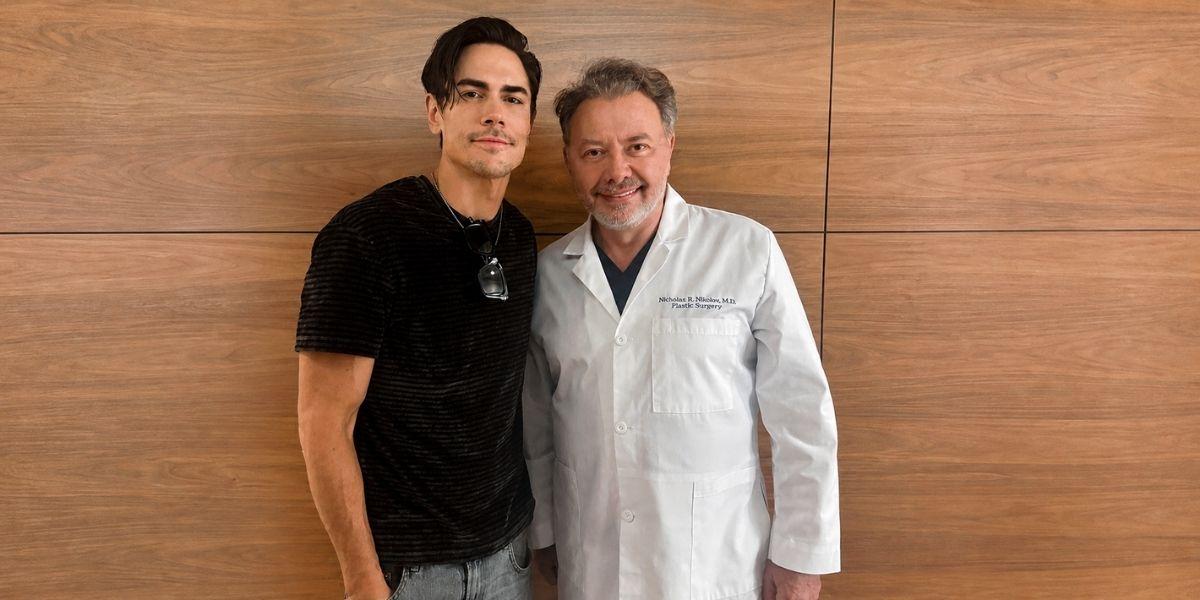
Reality star Tom Sandoval has been on shows such as Vanderpump Rules, Special Forces and The Traitors learned his lesson the hard way and now has his own version of the Hollywood sweat solution. Dr. Nikolov treats his underarms with Botox to help keep those dreaded sweat marks from making an appearance while he’s performing under hot stage lights or filming.

It may not be Hollywood’s most glamorous beauty secret — but that’s exactly why Dr. Nikolov and his celebrity clients can have a little fun with it. These small, behind-the-scenes treatments can make a big difference when the lights are hot, the cameras are rolling and all eyes are on you.

From Hollywood’s armpits to its feet, Dr. Nikolov has become the go-to guy for keeping his famous clientele cool, comfortable and camera-ready no sweat!

Dr. Nicholas Nikolov, is a world renowned Bulgarian plastic surgeon and founder of The Nikolov Center for Plastic Surgery, with offices in both Beverly Hills and Madrid, Spain. Dr. Nikolov was just elected as top five global leaders to the Los Angeles World Affairs board of directors. He is a mentor among his peers on staff of Cedars-Sinai Medical Center, a diplomat of the American Board of Plastic Surgery and fellow of the American College of Surgeons. Dr. Nikolov is the CEO and CMO of CellSound Aesthetics, a cutting edge non-invasive aesthetic treatment used for both body contouring and skin rejuvenation.

Social Media Has Changed the Way We Speak

There was a time when most conversations unfolded in relatively small circles.

People spoke across dinner tables, in classrooms, at workplaces, and within their communities. Disagreements certainly existed, but they were moderated by social norms and the presence of another person sitting across from them. Listening, responding, and reconsidering were natural parts of the exchange because conversation itself required participation.

Today, much of that landscape has changed.

Digital platforms have given people unprecedented opportunities to connect, share ideas, and build communities across the world. At the same time, they have also transformed the pace and tone of everyday communication. Opinions are often formed and shared within moments, often anonymously. Reactions can spread farther than reflection. Conversations that once unfolded between individuals are increasingly performed before audiences.

For Judy Selby, this shift raises an important question that extends beyond technology itself.

What happens when people stop speaking with one another and begin speaking primarily at one another?

Drawing on more than three decades as an award-winning attorney, certified performance coach, and bestselling author, Selby has spent her career helping professionals navigate conversations where words carry lasting consequences. While communication tools have evolved dramatically, she believes one principle has remained constant: the words people choose strongly influence relationships, trust, and the culture they create together.

Speed Has Changed the Nature of Conversation

Modern communication rewards immediacy.

A thought becomes a post. A reaction becomes a comment. A disagreement can reach thousands of people before either side has the opportunity to pause and consider what is being said.

Technology itself is not the problem.

The challenge is that speed often leaves little room for reflection. And anonymity may mitigate accountability.

Thoughtful conversations typically require curiosity, context, and the willingness to understand another perspective before responding. Online environments, however, can encourage the opposite. Immediate reactions receive attention more quickly than careful consideration, and certainty often travels farther than nuance.

Over time, these habits can begin influencing not only how people communicate online but also how they interact in everyday life.

Communication Is More Than Expression

One of the most significant shifts brought about by social media is the way communication is increasingly viewed as personal expression rather than mutual understanding.

People naturally want to share opinions, experiences, and beliefs. Yet meaningful conversation depends on something more than being heard. It also requires the ability to listen, ask questions, and remain open to perspectives that may differ from our own.

Selby believes intentional language becomes especially valuable in environments where disagreement is common.

Words have the ability to build trust or erode it. They can invite dialogue or end it before it truly begins. Even small choices in tone and phrasing influence whether conversations become opportunities for understanding or simply exchanges of competing viewpoints.

For leaders, parents, colleagues, and friends alike, that distinction matters far beyond the digital world.

Everyday Language Impacts Everyday Culture

Communication habits rarely remain confined to the platforms on which they begin.

The language people encounter repeatedly can more easily become the language they begin using themselves. Sarcasm becomes easier. Patience becomes harder. Public criticism may gradually feel more acceptable than private conversation.

These changes may not be intentional, but they can develop through repetition.

In Never Say It!: The Words That Hold You Back and What to Say Instead, Selby and her co-author Cris Cawley dive into how everyday language influences mindset, relationships, and behavior. The book encourages readers to become more aware of the words they choose, recognizing that communication shapes not only how others experience us but also how we experience ourselves.

That awareness becomes increasingly valuable in a culture where conversations often move faster than thoughtful reflection.

Choosing Intention in an Age of Instant Reaction

Digital communication is likely to remain a defining feature of modern life.

But much will depend on how people will choose to communicate on platforms .

Selby believes intentional language begins with recognizing that every conversation leaves an impression, whether it happens face to face, through a message, or before an online audience. Choosing words with greater care does not require abandoning honest disagreement or difficult conversations. It simply asks people to remember that communication is ultimately about more than expression or being “authentic.” Our words help to create relationships, communities, and culture.

Technology may continue changing the way conversations happen. The responsibility for how those conversations unfold, however, remains deeply human.

Learn More

Judy Selby is an award-winning attorney, certified performance coach, athlete representative, and bestselling author of Never Say It!: The Words That Hold You Back and What to Say Instead. Through her work, she helps professionals communicate with greater intention, strengthen leadership, and build more meaningful personal and professional relationships.

Website: https://selbystrategies.com

Pete Davidson and Colin Jost Transform Their Staten Island Ferry Into a Floating Comedy Club at Pier 17

Pete Davidson and Colin Jost will host a free, one-night-only comedy show aboard their decommissioned Staten Island Ferry on Thursday, September 17, at Pier 17 in Lower Manhattan. The 60-minute event, branded the “Snapple Island Ferry,” marks the first public entertainment use of the vessel since the two comedians purchased it at a city auction in 2022.

Key Takeaways

  • The Snapple Island Ferry comedy show takes place Thursday, September 17, at Pier 17, 89 South Street, in Lower Manhattan, with doors opening at 7 p.m. and the show starting at 8:30 p.m.
  • Pete Davidson and Colin Jost will host the 60-minute show, which features six emerging comedians produced by The Stand Group.
  • The decommissioned John F. Kennedy ferry was purchased by Davidson, Jost, and comedy club owner Paul Italia for $280,000 at a New York City auction in 2022.
  • Admission is free, with a limited number of tickets distributed through daily online drops at 3 p.m. throughout September, capped at one pair per person.
  • The vessel, built in the mid-1960s, was the oldest ferry in the Staten Island fleet when it was retired in 2021 due to mechanical issues.

A $280,000 Impulse Buy Gets Its First Real Purpose

The backstory of the John F. Kennedy ferry has become part of New York City comedy lore. Davidson, Jost, and Paul Italia, the founder of The Stand Restaurant & Comedy Club, purchased the vessel as part of an investment group at a city surplus auction in 2022. Davidson later acknowledged in a 2023 interview that the group had been under the influence at the time of the purchase, adding that he had no clear plan for the boat. The admission only added to the absurdity of two Saturday Night Live cast members owning a retired municipal ferry.

For nearly four years, the ferry sat without a defined public use, generating more headlines than revenue. That changes on September 17, when the vessel will be docked at Pier 17 in the Seaport District and outfitted as a functioning comedy venue for one evening. The Stand Group, which operates The Stand Comedy Club and is a partner in the ferry, is handling production.

Snapple Partners With Davidson and Jost on the Branded Comedy Event

The event is a collaboration between the ferry’s ownership group and Snapple, the beverage brand owned by Keurig Dr Pepper. Snapple is branding the vessel as the “Snapple Island Ferry” and positioning the night as a break from the grind of fall routines for New Yorkers returning from summer schedules.

Brad Smith, Vice President of Marketing for the Stills & Hydration Portfolio at Keurig Dr Pepper, said the concept connects Snapple’s identity with comedy in a tangible way. The brand described the event as an effort to bring its personality into the physical world through a timely and entertaining experience. Snapple will also distribute clips and content from the show across its social media channels for audiences who cannot attend in person.

The Lineup Features Rising Comics Alongside Two SNL Veterans

Davidson and Jost will serve as co-hosts for the night, with six yet-to-be-announced comedians filling out the hour-long set. The production team has described the lineup as a showcase for some of comedy’s fastest-rising performers, though specific names have not been released as of mid-September. The curation is being handled by The Stand Group, which has a track record of developing emerging talent through its Manhattan comedy club.

The show adds to a fall season that continues to position New York City as a hub for live performance. The return of The Rocky Horror Show to Broadway at Studio 54 is one of several productions reinforcing Manhattan’s draw for audiences seeking experiences that go beyond traditional venue formats. The Snapple Island Ferry fits that same impulse, turning a commuter vessel into something unrecognizable from its original purpose.

Free Tickets Are Available Through Daily Online Drops

Tickets for the event are free but limited. A small batch is released each day at 3 p.m. through an online portal, with each person allowed to claim one pair. The distribution method is designed to build anticipation throughout September while keeping the audience size manageable for the vessel’s capacity. No standby or walk-up options have been announced.

The ferry will be docked at Pier 17, located at 89 South Street in Lower Manhattan’s Seaport District. The venue choice places the event in one of the city’s more active waterfront entertainment zones, surrounded by restaurants, retail, and seasonal programming that draws foot traffic year-round.

FAQs

Is the Snapple Island Ferry a Permanent Venue?

No. The Snapple Island Ferry is a one-night-only event taking place on September 17, 2026. There has been no announcement regarding future recurring shows aboard the vessel, though the ownership group has previously discussed converting it into a permanent nightlife and hospitality destination.

How Much Did Pete Davidson and Colin Jost Pay for the Ferry?

Davidson, Jost, and comedy club owner Paul Italia purchased the decommissioned John F. Kennedy ferry for $280,000 at a New York City surplus auction in 2022. The vessel had been retired from the Staten Island Ferry fleet in 2021 after serving as a commuter vessel since the mid-1960s.

How Can Attendees Get Tickets for the Comedy Show?

Free tickets are released daily at 3 p.m. through an online portal. Each person may claim one pair. No purchase is required, and no standby admission has been announced. Fans are encouraged to follow Snapple’s social media accounts for updates on ticket availability.

Where Is the Event Located?

The Snapple Island Ferry will be docked at Pier 17, 89 South Street, in the Seaport District of Lower Manhattan. Doors open at 7 p.m. and the show begins at 8:30 p.m.