Francys Herrera Showcases Venezuelan Talent on the New York Runways

By: Carlos Camargo

After two New York Fashion Week appearances, Venezuelan designer Francys Lorena Herrera prepares for a potential 2027 return.

After participating in two editions of New York Fashion Week, the designer is preparing new collections with which she hopes to return to the renowned international stage in 2027.

Venezuelan designer Francys Lorena Herrera has taken her creative vision to the international stage through her participation in two editions of New York Fashion Week: Fall 2022 and Spring/Summer 2023. In both presentations, she showcased a contemporary aesthetic that blends urban dynamism, color, transparency, athletic structures, and references to nature and kinetic art.

These experiences marked pivotal moments in her professional career. The first represented the challenge of debuting on a highly demanding global platform; the second allowed her to return with greater maturity, a more defined vision, and an evolving creative language. Together, the two appearances provided Herrera with opportunities to present her approach to contemporary fashion while continuing to develop a recognizable identity.

More than isolated appearances, both collections represented the continuation of a creative process developed from her Venezuelan roots and her enduring interest in garment construction, functionality, and movement. Rather than separating these elements, Herrera brings them together to create garments that are intended to communicate through proportion, structure, color, and the movement of the wearer.

Herrera’s work seeks to reinterpret the codes of contemporary menswear. Long coats, wide-legged trousers, mesh fabrics, transparencies, layering, and color blocking create a modern, functional, and experimental aesthetic. Her approach allows familiar menswear silhouettes to be reconsidered through different proportions, textures, and combinations, creating looks that balance structure with a sense of movement.

Intense tones such as orange, electric blue, pink, and red are combined with white, black, and gray to produce graphic contrasts that bring energy and rhythm to each look. This chromatic approach reflects her aim to present a vision of masculinity capable of incorporating color and new proportions with freedom and naturalness.

Color, in Herrera’s collections, functions as more than a decorative element. It contributes to the visual identity of each look and helps create continuity across a runway presentation. The contrast between intense shades and neutral tones gives the garments a graphic quality while reinforcing the contemporary character of the collections.

The influence of kinetic art also plays a significant role in her work. Vertical lines, geometric shapes, color stripes, and textural variations generate visual compositions that change as the models walk the runway. In this way, the movement of the body becomes an essential part of the design.

This relationship between fashion and movement reflects Herrera’s broader interest in creating garments that are experienced in motion rather than viewed only as static objects. As models move along the runway, lines, proportions, transparencies, and color relationships can shift visually, creating an evolving presentation that connects the clothing with the performance of the wearer.

Her collections also establish a dialogue between the organic elements of nature and the architectural energy of major cities. Structure, displacement, color, and movement are integrated into garments designed to communicate a distinctive visual narrative.

Photo Courtesy: Paul Johnson

That contrast between natural references and urban environments contributes another dimension to Herrera’s design language. The resulting aesthetic combines elements that can feel structured and architectural with details that evoke movement, rhythm, and organic change.

Recalling her experiences in New York, Herrera notes that her debut was marked by the excitement and vertigo of presenting a collection for the first time on an international stage. During her second appearance, the challenge was different: to demonstrate growth, strengthen her creative identity, and communicate her vision as a designer more clearly.

The progression between those two appearances is significant to Herrera’s ongoing development. Returning to the same international fashion environment allowed her to build on the experience of her first presentation while continuing to refine her perspective. Each collection became part of a larger creative process rather than a standalone statement.

Representing Venezuelan talent on one of the world’s leading fashion stages holds profound personal and professional significance for her. Her participation also became an opportunity to demonstrate that geographical boundaries do not limit the ability to project a creative vision with universal appeal.

For Herrera, her Venezuelan roots remain an important part of the foundation from which her creative work continues to evolve. Her international presentations provide a platform through which that background can exist alongside contemporary influences, experimentation, and an interest in the global language of fashion.

Francys Herrera is currently working on her upcoming Fall 2027 and Spring/Summer 2028 collections, with the intention of presenting them at New York Fashion Week in 2027.

The preparation of these collections represents another stage in a creative journey that has already included two appearances at New York Fashion Week. With new work underway, Herrera is continuing to explore the relationship between structure, movement, color, functionality, and visual storytelling while remaining connected to the creative foundation established through her earlier collections.

This new chapter seeks to further solidify the technical maturity, experimentation, and aesthetic identity of a designer who remains true to her Venezuelan roots while continuing to expand her presence in international fashion. Her return to the international stage would provide another opportunity to present an evolving body of work and further develop the creative language that has defined her journey from Venezuela to New York.

Explore Francys Lorena Herrera’s latest collections, creative work, and fashion journey by visiting francyslorenaherrera.com.


How Technology Is Reducing Uncertainty in Small Business Lending

For decades, small business lending operated on a genuinely simple but frustrating model: submit an application, wait, and find out. Business owners had almost no visibility into what a lender was actually evaluating until a decision, often unexplained, finally arrived. Technology is now changing that dynamic in a genuinely meaningful way.

Why the Old Model Left Business Owners Guessing

Traditional underwriting relied heavily on manual document review, extended credit history, and criteria that lenders rarely disclosed in specific terms. A business owner applying for financing had little more than general assumptions to go on, no real sense of what specific numbers mattered most or where their own business stood relative to an approval threshold. This opacity wasn’t necessarily deliberate, but it left business owners guessing at every stage of the process.

What Automated Underwriting Actually Changes

Fundivi, a direct lender and hybrid funding platform, represents part of a broader shift toward technology-driven underwriting that reduces much of this guesswork. The self-underwriting engine runs entirely in a business owner’s browser, calculating an indicative qualification outlook from nine specific inputs with no credit pull and nothing submitted anywhere. The engine weighs several financial signals at once rather than in sequence. That is a different approach from manual document review.

The same technology extends into product selection through the funding product matcher, which weighs eleven answers against the same factors a real underwriter considers before recommending a specific product with the reasoning shown plainly. Rather than a business owner guessing which product to pursue, or a lender simply pushing whichever product happens to be easiest to sell, the technology surfaces an explained recommendation based on the business’s actual situation.

Why Published Thresholds Matter More Than Speed Alone

Speed is only part of what makes this shift meaningful. Fundivi has published the exact thresholds its underwriting engine scores against, a genuine departure from an industry that has historically treated underwriting criteria as proprietary information. Published thresholds mean a business owner can see which specific factors are driving their outlook rather than receiving a single, unexplained result.

How This Shift Affects the Broader Lending Relationship

As this technology becomes more widespread, the entire dynamic between business owner and lender shifts meaningfully. Rather than a business owner submitting information into a black box and waiting passively for a verdict, technology-driven tools invite active participation, letting a business owner explore their own numbers, understand the reasoning behind a recommendation, and even take specific action to improve a weaker factor before ever submitting a formal request.

Why This Shift Took So Long to Arrive

Small business lending lagged behind other areas of financial technology for genuine structural reasons rather than simple industry inertia. Evaluating a business’s creditworthiness accurately requires synthesizing considerably more varied information than a consumer credit decision typically does; revenue patterns, industry-specific expense assumptions, existing debt structure, and cash flow behavior all vary enormously from one business to the next in ways that a single, simple credit score was never built to fully capture. Building technology capable of evaluating this complexity quickly and accurately required genuine advances in how financial data could be processed and interpreted at scale, advances that have only become widely accessible relatively recently.

This lag meant business owners spent years without access to the kind of instant, transparent financial tools that had already become standard in consumer banking and personal finance. The gap between what technology could theoretically offer and what business lending actually provided created genuine frustration among business owners who had grown accustomed to considerably faster, more transparent experiences in nearly every other part of their financial lives.

How Real-Time Calculation Differs From Simply Faster Processing

Faster processing and better visibility are two different things. A faster processing system still operates as a black box, just a quicker one: submit and wait, even if that wait shrinks from weeks to hours. Fundivi’s tools work differently, since they run entirely client-side and require no submission at all. A business owner can explore, adjust, and revisit their own numbers repeatedly before deciding whether to move forward with a real request.

This distinction matters because speed alone doesn’t address the underlying anxiety and uncertainty that has historically defined business financing. A business owner who receives a fast decline still doesn’t understand why, and a business owner who receives a fast approval still doesn’t necessarily understand what specifically made that outcome favorable. Genuine transparency, not simply faster processing, is what actually closes this gap.

What This Means for the Next Generation of Business Owners

As technology-driven, transparent underwriting becomes increasingly common, a new generation of business owners is likely to view genuine pre-application clarity as a baseline expectation rather than a notable feature. Much as consumers now expect to see a real-time balance and transaction history rather than waiting for a monthly paper statement, business owners entering the market in the coming years may come to expect the same kind of immediate visibility into their own financing standing that a previous generation simply never had access to.

This shift places genuine pressure on the broader lending industry to keep pace. Lenders that continue operating behind a traditional black-box process risk appearing increasingly outdated to a population of business owners who have already experienced what a genuinely transparent alternative looks like, and who are unlikely to settle for less once they understand the difference.

Why This Matters Beyond Any Single Application

The broader value of this technological shift extends beyond helping any single business owner work through a single financing decision. As these tools become more widely used, they contribute to a genuinely more informed population of business owners overall, one considerably better equipped to recognize fair terms, ask the right questions, and make confident financing decisions throughout their business’s entire lifecycle, not just during their first encounter with a lender.

This ripple effect matters for the broader small business economy as well. Business owners who understand their own financing options clearly are better positioned to make sound capital decisions that support genuine, sustainable growth, rather than accepting the first available offer simply because uncertainty made comparison shopping feel too difficult to attempt in the first place.

Frequently Asked Questions

Does Automated Underwriting Mean Less Human Judgment Is Involved?

Automated tools handle the initial, indicative estimate, but a full application still involves genuine underwriting review that considers factors no public tool can see, like the full credit file or the story behind a specific slow month.

Is Technology-Driven Underwriting Less Accurate Than Manual Review?

Not necessarily. Technology can evaluate more data points more consistently than manual review within the same amount of time, though a full underwriting review still adds context automated tools alone cannot capture.

Why Did Lenders Historically Keep Their Criteria Private?

Underwriting criteria were traditionally treated as a competitive asset. Publishing specific thresholds, as Fundivi has done, represents a genuine departure from that convention.

Will This Shift Toward Technology Continue?

Business owners have grown increasingly comfortable with technology-driven financial tools generally, and lending is following that broader trend toward faster, more transparent processes.

Does Using These Tools Require Any Technical Skill?

No. Both tools are built for straightforward use, requiring only that a business owner enter numbers they should already know about their own business.

What These Tools Look Like in Practice

The same transparency logic extends to pricing. Business funding is often quoted as a factor rate rather than an interest rate, and the two are not directly comparable numbers. Fundivi’s cost calculator converts a quoted factor rate into an estimated annualized cost using the actual payment schedule, which is what determines the real cost of an offer over its term. Additional background on how each funding product is structured is available in Fundivi’s resource library.

Disclaimer: This article is for informational purposes only and does not constitute financial, legal, or lending advice. Results from underwriting tools, product matchers, and cost calculators are estimates only and do not guarantee approval, eligibility, rates, or final financing terms. Actual offers are subject to a lender’s complete underwriting review. Businesses should review all terms carefully and consult a qualified professional before accepting financing.

Md Samiun Contributes to Springer Nature-Published Research on AI’s Role in Mental Health Care

LOS ANGELES. Artificial intelligence is rapidly reshaping modern healthcare, and a newly published international study suggests it could play a significant role in improving the care of hospitalized patients living with mental illness. Published in Discover Public Health, a Springer Nature journal, the peer-reviewed research examines how artificial intelligence can enhance psychiatric diagnosis, personalize treatment planning, improve patient monitoring, and increase operational efficiency within hospitals.

The study, titled “The Role of Artificial Intelligence in Managing Hospitalized Patients with Mental Illness: A Scoping Review,” was first-authored by Md Samiun of International American University, California, in collaboration with researchers from Westcliff University, California State University Long Beach, St. Francis College, and the Miyan Research Institute at the International University of Business Agriculture and Technology.

Mental health disorders remain one of the world’s leading public health challenges. According to the World Health Organization, more than one billion people worldwide live with a mental health disorder. Growing demand for psychiatric services, combined with workforce shortages and rising healthcare costs, has intensified interest in artificial intelligence as a clinical decision-support technology.

The research team conducted a comprehensive scoping review of literature published between 2015 and 2025. After systematically screening the available evidence, the researchers analyzed 24 eligible studies to evaluate how artificial intelligence is being used in psychiatric inpatient care.

The review found that machine learning, deep learning, natural language processing, predictive analytics, digital phenotyping, and AI-powered clinical decision support systems have the potential to improve diagnosis, personalize treatment, predict patient risks, enhance monitoring, and optimize hospital operations.

Rather than replacing psychiatrists or healthcare professionals, the study concludes that AI can function as a decision-support technology that helps clinicians identify meaningful patterns in complex healthcare data, supporting faster and more informed clinical decisions.

For the United States, the findings may help inform future development of AI-assisted behavioral healthcare systems capable of improving efficiency, supporting earlier intervention, reducing avoidable hospital readmissions, and strengthening evidence-based mental health care. Similar advances could also benefit healthcare systems worldwide as demand for psychiatric services continues to grow.

The publication highlights both the opportunities and the challenges associated with AI adoption in mental healthcare. The authors identify algorithmic bias, patient privacy, cybersecurity, transparency, and ethical oversight as critical considerations that must accompany responsible implementation.

According to the publication, Md Samiun contributed to study conceptualization, methodology, formal analysis, visualization, and preparation of the original manuscript as part of the international research team.

The authors conclude that artificial intelligence has significant potential to complement clinical expertise, improve patient outcomes, and strengthen healthcare delivery while emphasizing that continued research, ethical safeguards, and multidisciplinary collaboration remain essential for responsible implementation.

Reference: Samiun, M., Rony, M.K.K., Yeasmin, S., et al. The role of artificial intelligence in managing hospitalized patients with mental illness: a scoping review. Discover Public Health (2025). https://doi.org/10.1186/s12982-025-00814-0

What It Feels Like to Read The Fifth Plane: A Reader’s Journey Through Fear, Flight, and Fate

By: Elowen Gray

Some novels tell you a story. Others place you inside it. The Fifth Plane by Val Walker does something rarer: it makes you feel responsible for what’s happening. As a reader, you are not just observing events unfold; you are bracing for impact, anticipating failure, and hoping, sometimes irrationally, that control will hold.

That immersive quality is what places it firmly among the best psychological thriller books. It does not rely on shock value. Instead, it builds a sustained emotional pressure that refuses to let go.

Reading Like You’re in the Cockpit

From the very first sequence, the experience is immediate. You’re not watching a plane fight turbulence, you’re in the cockpit, feeling every violent shift, every forced decision, every second ticking closer to disaster.

For readers who gravitate toward best books to read thriller mystery, this is where the novel separates itself. The tension is not created after the fact. It happens in real time. You read faster, not because you want to finish, but because you need to know if survival is even possible.

This is the kind of storytelling often associated with the best thriller authors, where pacing and precision replace artificial suspense.

The Quiet Build of Psychological Pressure

What makes the reading experience even more compelling is how the story shifts between visible danger and invisible intention. While pilots struggle in the air, something far more calculated is unfolding elsewhere.

As the second volume expands the narrative, readers are drawn into a different kind of tension, one built on planning, ideology, and inevitability.

This dual perspective is what elevates the book into the realm of top psychological thriller books. It’s not just about what happens; it’s about what is being set in motion long before it happens.

That slow, deliberate escalation is what keeps readers mentally engaged long after they’ve paused reading.

Why Val Walker Stands Out

Readers familiar with the work of best psychological thriller authors will recognize something distinct here: restraint. Val Walker does not over-explain or over-dramatize. She allows situations to unfold naturally, trusting the reader to feel the weight of each moment.

That confidence in storytelling creates a different kind of engagement. You’re not being guided; you’re being placed inside a system where every choice matters.

It’s a reading experience that feels earned rather than engineered.

When Aviation Becomes the Story Itself

Many thrillers use aviation as a setting. This novel turns it into the core of the experience. Every maneuver, every decision, every system failure carries narrative weight.

For readers interested in aviation thriller books, this level of detail creates a sense of authenticity that is difficult to replicate. The aircraft is not just a backdrop; it is part of the conflict.

This also aligns it with commercial aviation books and books about commercial aviation, where technical realism enhances rather than interrupts the story. Even readers new to aviation will find themselves understanding the stakes intuitively.

A Different Kind of Protagonist

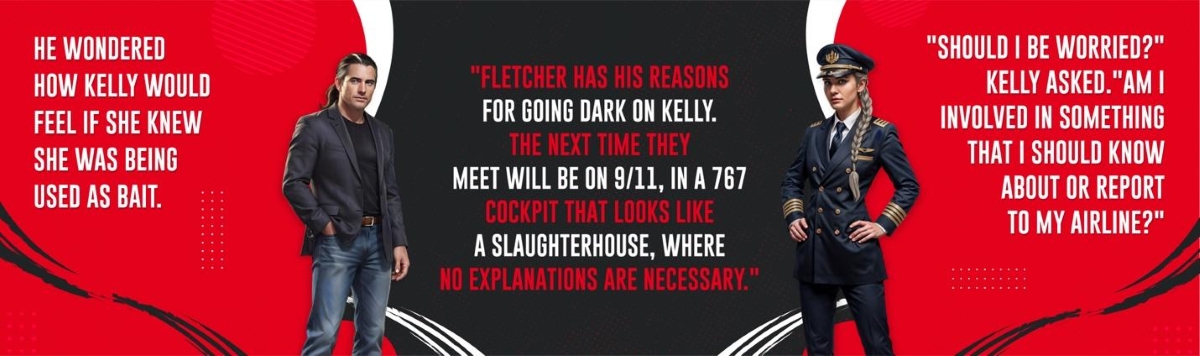
At the center of this experience is a pilot who does not fit into predictable molds. Kelly Hunter is not written for effect; she is written for credibility. Her presence shapes the story in ways that feel grounded and necessary.

For those exploring books about female pilots, this is a refreshing shift. Her strength is not symbolic; it is functional. She exists within the story as someone who must perform under pressure, not simply represent it.

This perspective strengthens the novel’s place among aviation fiction books and even the best aviation fiction books, where character and environment work together rather than compete.

Photo Courtesy: Valerie Walker

The Tension That Lingers After You Stop Reading

What stays with you after reading is not just the action, it’s the awareness of how fragile everything feels. The systems, the routines, the assumptions, they all seem stable until they aren’t.

This is what distinguishes the novel from many popular thrillers books. Instead of delivering quick thrills, it creates a lingering sense of unease. You carry the tension with you, even when the book is closed.

That emotional residue is what defines the best aviation thriller books, stories that do not end when the last page does.

A Complete Experience in Modern Thriller Writing

As a whole, The Fifth Plane fits comfortably within the space of thriller novel books, but it also stretches beyond it. It offers action, psychological depth, technical precision, and emotional realism, all without feeling excessive.

For readers exploring aviation thriller books or simply searching for something that feels different from formula-driven fiction, this novel delivers a complete experience.

It doesn’t just tell you what fear looks like. It shows you how it builds, how it spreads, and how close it always is, even when everything seems under control.

Connect with Val Walker: Website | TikTok | Facebook | Instagram