

New Yorkers Are Putting Down Roots in the Litchfield Hills

By: KeyCrew Media
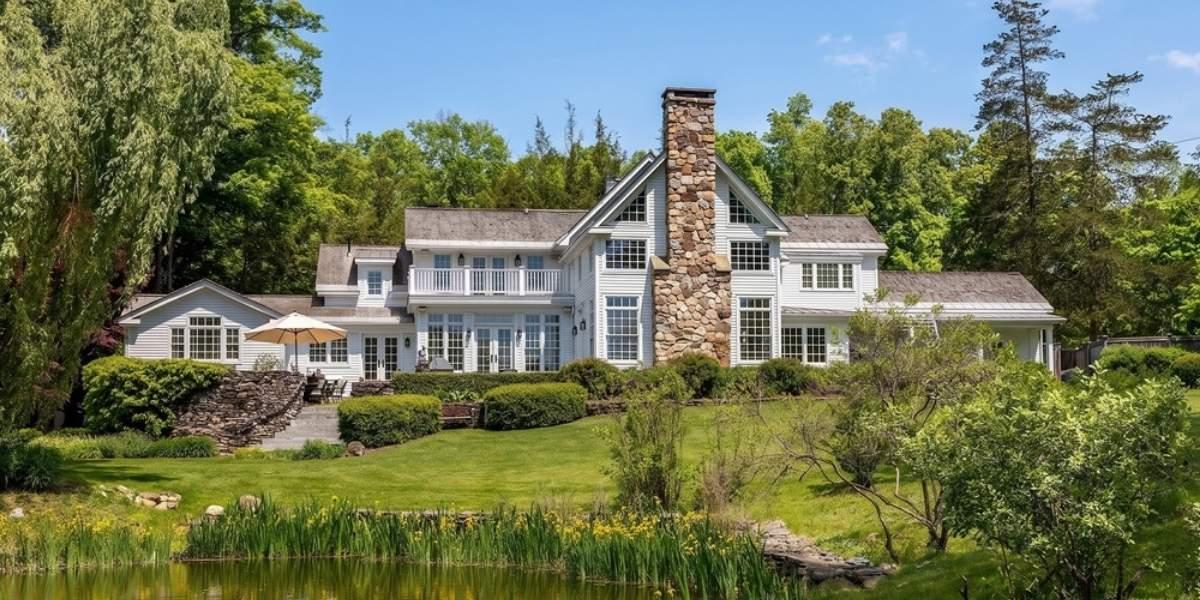
This story starts with a listing. A New Yorker, usually from the city or its immediate suburbs, comes across a property in northwest Connecticut or the Hudson Valley. The acreage is significant. The price, relative to what that budget would buy anywhere within two hours of the city, is startling in the right direction. They book a showing, they make an offer, and a few months later they own a country property they intend to use on weekends.
That is where the predictable part of the story ends.
Elyse Harney Morris, principal broker and owner at Elyse Harney Real Estate, has been telling the next part of that story for years. The weekend property becomes a Thursday-to-Monday property. Then someone starts working remotely for a few extra days. Then the children settle into activities and start asking why they have to go back. “One of them starts commuting a few days a week,” Morris says, “and then the whole thing just stops, and they go: we’re staying.”
The Litchfield Hills, Hudson Valley, and Southern Berkshires have been absorbing New York buyers for decades. What has changed since the pandemic is the permanence of what they are building here.
What New York Buyers Are Actually Looking For
The buyer profile coming out of New York has evolved considerably from the pre-pandemic weekend-home purchaser. Families are arriving with longer timelines, more deliberate criteria, and a clearer sense that they are not just buying a property but choosing a community.
Multi-generational buyers represent one of the most active segments at the upper end of the market. Families spanning three generations are evaluating properties of 100 acres and above as permanent shared living arrangements, with the grandparents, adult children, and grandchildren all represented at showings and all bringing different questions to the table. The grandparents want to know about accessibility and medical infrastructure. The adult children are evaluating the main house’s capacity and the land’s recreational potential. The grandchildren want trails, water access, and somewhere to build a garden.
Morris describes two recent transactions in the Berkshires, both currently under agreement, each involving approximately 100 acres. One buyer came from Boston, the other from New York. Both represent the kind of long-term, high-commitment purchase that has become increasingly common at the upper end of this market.
The Anti-Hamptons Appeal
Part of what draws New York buyers to this region over comparable alternatives is something easier to experience than to describe. The Litchfield Hills and their neighboring markets have what Morris calls an anti-Hamptons character. It is not a scene. It is not built around being seen. The people who choose it are, by and large, choosing it because it does not require performance.
Residents of considerable prominence have lived in this corner of Connecticut and the Hudson Valley for generations, drawn by the same quality. A local movie theater in Millerton, New York runs without stadium seating or franchise ambitions, and actors and directors whose films are opening will sometimes show up for an intimate post-screening conversation with whoever happens to be there. “Nobody really cares when you see someone of prominence,” Morris says. “Everyone wants to be respectful. That is just how this community operates.”
For New York buyers who are accustomed to markets where social visibility is part of what is being purchased, this quality can feel genuinely unfamiliar at first. It tends to become one of the things they value most.
The Value the Numbers Reflect
The financial case for this region is straightforward but worth stating clearly. The $2 million to $3 million price point, which Morris identifies as the most active segment of the current market, delivers in the Litchfield Hills, Hudson Valley, and Berkshires what it cannot deliver in the Hamptons, in Westchester, or in most markets within comparable proximity to New York City: significant acreage, historic character, privacy, and community infrastructure, simultaneously and without compromise.
The region’s strict zoning and conservation protections ensure that the landscape surrounding any given property will not be developed in ways that diminish what was purchased. Supply is constrained by design, which has historically supported long-term value in ways less protected markets cannot ensure.
For New York buyers who have been watching this market from a distance and waiting for the right moment, the current environment, more balanced than the pandemic peak but still tight on inventory at the upper end, represents a window that rewards preparation over hesitation.
Elyse Harney Morris is principal broker and owner at Elyse Harney Real Estate, an independent brokerage founded in 1987 and operating across Connecticut, New York, and Massachusetts. She specializes in significant country estates, historic farms, and conservation properties across the Litchfield Hills, Hudson Valley, and Southern Berkshires.
Disclaimer: This article is based on information provided by the expert source cited above. It is intended for general informational purposes only and does not constitute legal, financial, or real estate advice. Readers should conduct their own research and consult qualified professionals before making any real estate or financial decisions.
