Why One-Off Site Walks Miss Recurring Flow Problems

A site walk can tell you a lot about a facility. You can spot a blocked aisle, watch forklifts approach a busy crossing, notice operators taking an unexpected route, or see material building up beside a workstation.

Then the walk ends.

What happens during the next shift, the morning rush, a busy loading window, or a production changeover remains out of view. That gap matters because many facility flow problems do not stay visible all day. They appear at certain times, under specific conditions, and often disappear before anyone arrives to investigate.

A single observation gives teams a snapshot. Recurring movement problems need a longer view.

A Quiet Aisle at 10 a.m. May Look Very Different at 2 p.m.

Think about a warehouse intersection that appears clear during a manager’s morning walk. Nothing seems wrong. Pedestrians use the marked route, vehicle traffic moves normally, and nearby staging areas remain tidy.

Later, outbound volume increases. Pallets begin accumulating near the crossing. Drivers take wider turns to avoid temporary storage, while employees cut across the same space to reach another zone. Small delays start stacking up.

A supervisor walking through an hour later might see something completely different again.

Neither observation gives a false picture. Each one captures a real moment. The problem comes from treating one moment as representative of the whole operation.

Facility movement changes with workload, staffing, equipment availability, delivery schedules, breaks, handovers, and dozens of smaller conditions. Recurring congestion can therefore remain hidden even when managers spend plenty of time on the floor.

People Also Change Their Behavior During a Site Walk

Observation can influence what people do.

Employees may follow marked walkways more closely when a manager stands nearby. Drivers might slow down or avoid shortcuts. Teams can clear temporary obstructions before a planned inspection.

That doesn’t mean anyone intends to hide a problem. People naturally become more conscious of their actions when somebody watches them.

Unplanned flow issues often emerge during ordinary work, when attention shifts back to hitting production targets and moving materials through the facility.

Periodic observations can still identify visible hazards and support conversations with frontline teams. They simply struggle to show how movement changes across hundreds of operating hours.

Recurring Problems Often Look Small in Isolation

Many flow issues start as minor interruptions.

A forklift waits briefly because another vehicle blocks an intersection. An operator walks farther than expected to collect materials. Workers repeatedly cross a traffic lane because the designated route adds several minutes to a task. One staging area slowly expands into space intended for movement.

Any single occurrence can look insignificant.

Repeat the same event across several shifts, though, and the operational cost grows. Extra travel adds labor time. Frequent stopping creates queues. Informal shortcuts increase interaction between pedestrians and mobile equipment. Poorly placed inventory can push traffic into areas that facility planners never intended people to use.

The recurring pattern matters more than any individual event.

Teams need enough observation across different periods to separate isolated anomalies from persistent conditions.

Longer Observation Reveals When and Where Patterns Form

Continuous or extended visual analysis gives facility teams another layer of evidence.

Rather than relying on memory from occasional walks, managers can compare movement across shifts, days, zones, or operating conditions. Heatmaps can expose heavily traveled routes. Path data can highlight repeated deviations. Occupancy trends may show one area sitting largely unused while another regularly becomes congested.

For teams investigating patterns that appear and disappear during the day, time-lapse facility analysis can provide a clearer view of how people, vehicles, and space interact over longer periods.

The value comes from seeing repetition.

If traffic repeatedly backs up at the same junction during shift change, teams have a stronger reason to investigate that location. If workers keep abandoning a planned route, the layout itself may conflict with how tasks actually happen. When one zone becomes crowded every afternoon, managers can examine scheduling, storage, or equipment movement instead of treating each occurrence as a separate problem.

Site Walks Become More Useful With Better Evidence

Continuous observation does not make walking the floor unnecessary.

Quite the opposite.

Data can point managers toward the places that deserve closer attention. A heatmap might identify an unusual traffic concentration, but a conversation with operators could explain why it happens. Movement records may show a repeated detour, while an on-site inspection reveals that stored materials make the intended path impractical.

Teams can then combine two perspectives: broad pattern recognition and direct knowledge from the people doing the work.

That approach also makes improvement work easier to test.

Suppose a facility changes a pedestrian route to reduce traffic around a loading area. A follow-up walk can confirm that signs and barriers sit in the right places. Longer-term observation can then show if employees actually use the new path across multiple shifts.

Without that second view, managers may implement a sensible change and assume the problem has gone away.

Better Flow Decisions Start With Patterns, Not Moments

Facilities constantly change. Production volume rises and falls. Different crews approach tasks differently. Temporary storage appears. Equipment moves between zones. A layout that works smoothly for most of the day can struggle badly during a two-hour peak.

One-off observations will always capture useful details, but they cannot represent every operating condition.

Teams that combine site knowledge with evidence collected over time can identify recurring congestion, unnecessary travel, route conflicts, and underused space with greater confidence. They can also check what happens after a change instead of relying on assumptions.

A walk shows what the facility looks like right now.

The bigger question is what keeps happening when nobody happens to be watching.

Queens Pediatric Dentist Treats Children Under General Anesthesia

For some children, a routine visit to the dentist can be much more complicated than simply sitting in a dental chair and opening their mouth. Young children may struggle to remain still for extended procedures, while others experience significant dental anxiety, sensory sensitivities, developmental conditions, or medical needs that make conventional office-based dentistry difficult.

For these patients, the question is not simply where to receive dental treatment, but whether the environment, dental team, anesthesia services, and surgical facilities are equipped to manage their particular needs.

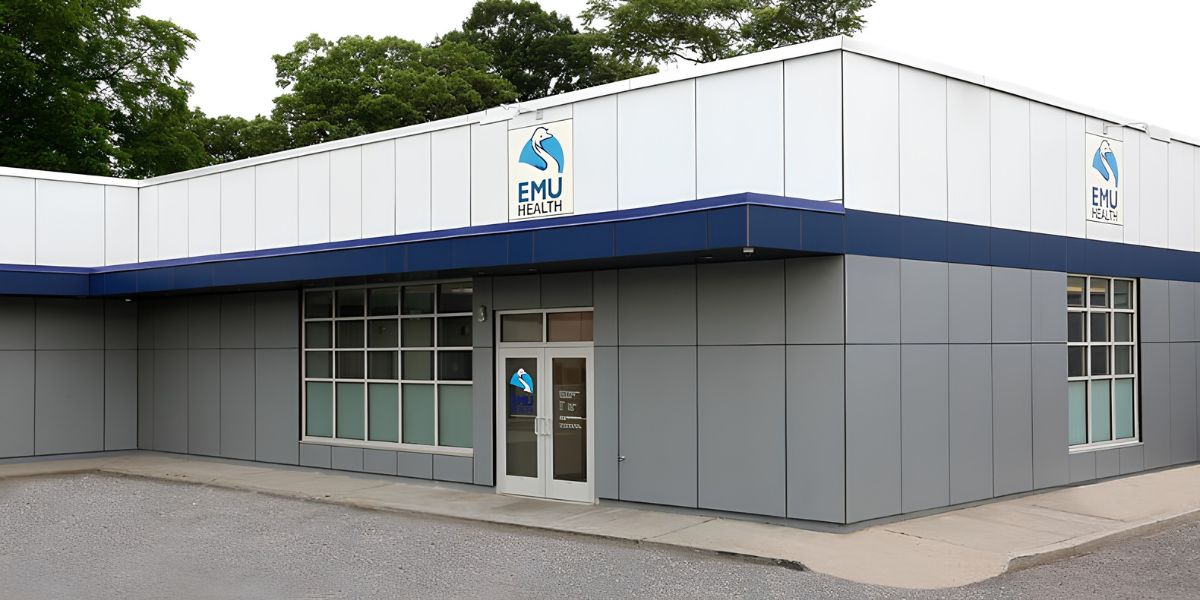
In Glendale, Queens, EMU Health has developed a specialized pediatric dental program focused exclusively on dental treatment performed under general anesthesia. The program is designed for children who cannot comfortably or safely undergo traditional in-office procedures and for patients who require extensive dental treatment in a controlled medical environment.

The approach provides another option for families dealing with challenging pediatric dental cases, particularly when multiple procedures may need to be completed during one surgical visit.

Why Some Children Need Specialized Dental Care

Most children can receive routine examinations, cleanings, fillings, and other dental services in a conventional dental office. However, not every child responds to dental treatment in the same way.

A young patient may have difficulty cooperating because of age, fear, anxiety, sensory sensitivities, developmental or cognitive disabilities, autism spectrum disorder, behavioral conditions, or complex medical needs.

Other children may have extensive tooth decay requiring several procedures. Trying to complete multiple treatments during separate traditional appointments can be difficult for both the child and family.

EMU Health specifically identifies children who cannot undergo traditional in-office procedures as part of the population its pediatric dental general-anesthesia program is designed to serve. The facility also states that it treats pediatric and adult patients with special needs when a hospital-level environment is required.

The Role of an EMU Pediatric Dentist in Queens

The EMU Pediatric Dentist Queens program focuses on specialized dental care under general anesthesia rather than attempting to make every patient fit a conventional dental-office model.

According to EMU Health, pediatric dental procedures are performed by board-certified pediatric dentists in a dedicated surgical setting with anesthesia and nursing support.

This model can be particularly relevant when a child needs substantial restorative treatment or cannot tolerate conventional dental procedures.

The goal is not simply to make treatment easier. A controlled environment can allow the dental team to concentrate on completing the necessary treatment while the child is under general anesthesia and medically supervised.

Treating Extensive Tooth Decay

Tooth decay remains one of the most common reasons children require dental treatment.

When decay is identified early, treatment may be relatively straightforward. More advanced cavities, however, can affect multiple teeth and may require more extensive restorative or surgical care.

EMU Health’s pediatric dental information describes several treatment approaches for severe decay, including:

  • Pulp therapy
  • Tooth extractions
  • Stainless steel crowns
  • Comprehensive restorative treatment

Pulp therapy can be used when infected tissue inside a primary tooth needs to be removed while an effort is made to preserve the tooth. When a tooth is too extensively damaged to save, extraction may be considered. Stainless steel crowns can be used to protect and restore teeth following treatment for significant decay.

The appropriate treatment depends on the child’s dental condition and the dentist’s clinical assessment.

Why General Anesthesia May Be Considered

General anesthesia is not necessary for every pediatric dental patient.

For certain children, however, it can provide a way to complete required dental treatment when traditional approaches are not practical.

EMU Health describes its program as being intended for children with extensive dental needs, children unable to tolerate in-office procedures because of age or anxiety, and patients with special healthcare needs.

The decision to use general anesthesia is a medical and dental decision that should be made following an appropriate evaluation. Parents should discuss the child’s medical history, dental condition, previous experiences, and treatment requirements with the pediatric dental team.

A Surgical Environment Designed Around Pediatric Dental Care

One of the distinguishing aspects of EMU Health’s model is that pediatric dental procedures under general anesthesia take place within its Article 28 Ambulatory Surgical Center.

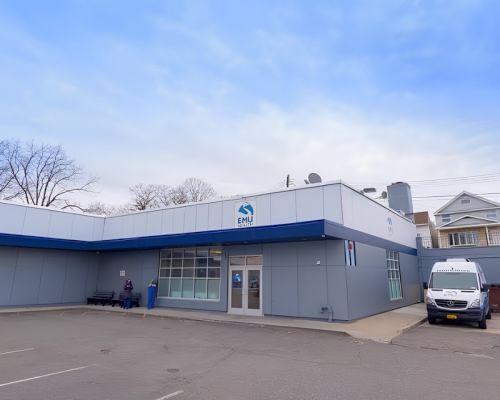
The center is located at 83-40 Woodhaven Boulevard in Glendale, Queens, New York, and EMU Health identifies the facility as both an Article 28-licensed center and an AAAHC-accredited ambulatory surgical center.

For families, the distinction is important because dental treatment requiring general anesthesia involves considerations beyond the dental procedure itself. An appropriate surgical environment includes anesthesia services, nursing support, surgical coordination, and medical monitoring.

EMU Health states that its pediatric dental program provides a dedicated setting with anesthesia and nursing support for these procedures.

Addressing Dental Anxiety and Sensory Challenges

A child’s reaction to dental treatment can vary considerably.

Some children become nervous when they see dental equipment. Others may find sounds, lights, smells, physical contact, or unfamiliar surroundings particularly difficult.

Children with autism spectrum disorder, developmental disabilities, cognitive disabilities, or certain behavioral conditions may have additional challenges during conventional dental procedures.

EMU Health specifically includes dental anxiety, sensory challenges, autism spectrum disorder, developmental or cognitive disabilities, and behavioral conditions among the circumstances for which its specialized program may provide care.

A medically supervised general-anesthesia approach can allow qualifying patients to receive necessary dental treatment without requiring them to remain awake throughout the procedure.

Completing Multiple Treatments Efficiently

Photo Courtesy: EMU Health

One consideration for children with extensive dental problems is the number of procedures they may require.

A child with significant decay could potentially need treatment involving several teeth. Attempting to complete each procedure during separate conventional appointments can create repeated stress and scheduling challenges.

Treatment under general anesthesia can allow the dental team to address multiple necessary procedures during a single surgical episode when clinically appropriate.

EMU Health’s pediatric dental program emphasizes comprehensive treatment under general anesthesia and describes its approach as intended to help children receive the dental care they need in a controlled environment.

The exact procedures performed and whether they can be completed during one visit depend on the child’s individual dental and medical circumstances.

Access and Scheduling for Pediatric Dental Surgery

Access to specialized pediatric dental treatment can be another challenge for families.

EMU Health states that its program is structured to provide consultations and surgical scheduling on a short timeline, with appointments often available within days depending on circumstances.

This is particularly relevant for families whose children have significant dental problems that should not be left untreated for extended periods.

Faster access does not eliminate the need for appropriate evaluation. Instead, it can give families an additional pathway to obtain specialist assessment and determine whether treatment under general anesthesia is appropriate.

Pediatric Dental Care and Prevention

Specialized dental surgery addresses existing problems, but prevention remains an important part of children’s oral health.

EMU Health’s published educational material emphasizes preventive strategies such as appropriate oral hygiene, nutrition, healthy habits, and routine dental checkups.

For parents, this highlights an important distinction: general-anesthesia dental treatment is a specialized option for children who require it, not a substitute for routine preventive dental care.

Regular dental examinations can help identify cavities and other problems before they become extensive enough to require complex treatment.

Insurance and Access

The financial aspect of pediatric healthcare is another important consideration for families.

EMU Health states that its pediatric dental program accepts Medicaid and lists several Medicaid-managed and commercial insurance plans, including DentaQuest, HealthPlex, EmblemHealth, Blue Cross Blue Shield Commercial, Cigna, MetLife, Delta Dental, and Humana Dental Plan. The facility advises families whose plans are not listed to contact the office to verify eligibility and coverage.

Insurance participation can change, so families should confirm current eligibility and benefits before scheduling treatment.

A Team Approach to Challenging Pediatric Dental Cases

Complex pediatric dental treatment often requires coordination between several professionals.

The dentist evaluates the oral health problem and determines the necessary dental treatment. An anesthesia team manages anesthesia-related care, while nurses and surgical staff support the procedure and recovery process.

EMU Health identifies pediatric dentists including Parnian Yazdi, DMD, Liel Grinbaum, DMD, and Shalom Blobstein, DMD, within its pediatric dental program. Its published staff information identifies Grinbaum as Director of Pediatric Dentistry and Yazdi and Blobstein as Pediatric Dental Surgeons.

Dr. Blobstein’s published profile also describes training in pediatric dental care, including dental rehabilitation under general anesthesia.

What Parents Should Consider Before Treatment

Parents considering dental treatment under general anesthesia should have a detailed discussion with the child’s dental and medical team.

Important questions can include:

  • What dental problems require treatment?
  • Which procedures are being recommended?
  • Why is general anesthesia being considered?
  • Could the treatment be completed safely in a conventional dental office?
  • What anesthesia-related considerations apply to the child?
  • How should parents prepare before the procedure?
  • What should families expect during recovery?
  • Which insurance benefits apply?

A thorough consultation helps parents understand the treatment plan and make decisions based on their child’s specific needs.

A Specialized Option for Families in Queens

Pediatric dental care is not one-size-fits-all. For many children, a conventional dental office remains the appropriate environment. For others, particularly those with extensive dental needs, significant anxiety, sensory challenges, special healthcare needs, or difficulty cooperating with traditional procedures, specialized treatment under general anesthesia can provide another pathway to necessary care.

EMU Health’s program in Glendale, Queens, is structured specifically around this need. Its pediatric dental services under general anesthesia are delivered in an Article 28 ambulatory surgical setting with a dedicated pediatric dental team, anesthesia support, and nursing coordination.

Describing a child as a difficult dental patient can make the situation sound like a behavioral challenge. In reality, children who struggle with conventional dentistry may have very different reasons for doing so. Age, anxiety, sensory sensitivity, developmental conditions, medical complexity, or the sheer extent of required dental work can all make traditional treatment difficult.

A specialized approach recognizes these differences.

The EMU Pediatric Dentist Queens program provides pediatric dental treatment under general anesthesia for children who require a controlled surgical environment, including patients with extensive dental needs and special healthcare considerations. With its Glendale, Queens facility, pediatric dental specialists, anesthesia team, and Article 28 and AAAHC credentials, EMU Health offers families another option when conventional dental treatment is not suitable.

For parents, the most important step is an appropriate professional evaluation. Understanding why a child is struggling with dental treatment, and determining what environment and treatment approach are medically appropriate, can help turn a difficult dental experience into a carefully planned pathway toward better oral health.

Contributed by Dan Rose, A Local Business Guide Specializing in Pediatric Dentistry in Queens, NY. You can visit EMU Pediatric Dental Care under General Anesthesia at 83-40 Woodhaven Blvd, Glendale, NY 11385, (718) 530-1150

Disclaimer: This article is for informational purposes only and is not intended as medical or dental advice. Treatment recommendations, including the use of general anesthesia, should be determined by qualified healthcare professionals based on each patient’s individual dental and medical needs. Parents and caregivers should consult a licensed pediatric dentist and appropriate medical providers regarding diagnosis, treatment options, anesthesia considerations, and potential risks.

Contested Divorce Lawyer, Expedited Uncontested Divorce in NYC

Divorce can be one of the most consequential legal and personal decisions a person makes. In New York City, the process can look very different depending on whether spouses agree on the major issues surrounding their separation. Understanding the distinction between contested and uncontested divorce is therefore an important first step for anyone considering ending a marriage.

The difference is straightforward in principle: an uncontested divorce generally means both spouses agree on the important terms of their separation, while a contested divorce involves unresolved disagreements that may require negotiation, court intervention, or litigation.

For couples seeking an efficient resolution, an uncontested case may provide a faster path. For spouses who cannot reach agreement, however, experienced legal representation can be important when addressing financial, parenting, and property-related disputes.

What Is a Contested Divorce?

A divorce becomes contested when spouses cannot agree on one or more significant issues.

Disagreements can involve:

  • Division of marital property and debts
  • Child custody and parenting arrangements
  • Child support
  • Spousal maintenance
  • Other financial matters
  • The terms of a separation agreement

A contested divorce lawyer helps a client understand the legal issues involved, prepare the necessary documentation, negotiate where possible, and represent the client’s interests if the dispute proceeds through the court system.

Not every contested divorce ultimately requires a trial. Negotiation and settlement may resolve some or all disagreements before a judge needs to make a final determination. The appropriate approach depends on the circumstances of the individual marriage.

Why Contested Divorce Cases Can Take Longer

Unlike an uncontested case, a contested divorce cannot simply proceed on the basis that both spouses have already agreed to the terms.

When important issues remain unresolved, the parties may need additional negotiations, financial disclosure, conferences, motions, and potentially litigation. The more complicated the financial or family circumstances, the more issues may need to be addressed before a final judgment can be entered.

Aronov Law‘s published family-law materials emphasize that divorce may involve matters including equitable distribution of marital assets and debts, spousal support, custody, and child support.

What Is an Uncontested Divorce?

An uncontested divorce occurs when spouses agree on all significant terms of the divorce.

This can include agreement regarding:

  • Property division
  • Debt allocation
  • Child custody
  • Parenting arrangements
  • Child support
  • Spousal support
  • Other relevant terms

Because there are no major unresolved disputes requiring litigation, an uncontested divorce can generally move more efficiently than a contested case.

New York’s no-fault divorce framework also means spouses generally do not have to prove that one person was responsible for the breakdown of the marriage simply to obtain a divorce.

Expedited Uncontested Divorce in NYC

For couples who have already reached an agreement, an Expedited Uncontested Divorce in NYC may offer an alternative to a lengthy traditional process.

Aronov Law states that qualifying uncontested divorces can be completed in as little as 14 days when both parties agree and all required documents are provided. The firm also describes a virtual process involving consultations and document preparation by phone, email, or video communication.

However, speed depends on the circumstances of the case and the completion and acceptance of the required filings. An uncontested divorce should not be viewed simply as a race to obtain a judgment. The underlying agreement needs to address the important legal and financial consequences of ending the marriage.

Why the Settlement Agreement Matters

An uncontested divorce still requires careful legal attention.

A settlement should clearly address the terms agreed upon by the spouses. Aronov Law specifically highlights the importance of a detailed Stipulation of Settlement, explaining that the document can address matters such as property, debts, custody, and support and help reduce the possibility of future disagreements over unresolved terms.

This is particularly important when a marriage involves real estate, retirement accounts, significant assets, children, or support obligations.

When an Uncontested Divorce May Not Be Appropriate

An uncontested divorce is only genuinely uncontested when the spouses have reached agreement on the relevant terms.

If one spouse disagrees about property, custody, support, or another important issue, the matter may become contested. Attempting to characterize a genuinely disputed case as uncontested can create additional problems rather than making the process easier.

Similarly, couples should not sacrifice careful legal review simply to pursue a faster resolution.

Choosing Legal Guidance for a NYC Divorce

Whether a case is contested or uncontested, understanding the legal consequences of the agreement is essential.

A divorce attorney can help identify issues that spouses may not have considered, explain how New York law applies, review proposed agreements, and ensure that required filings are properly prepared.

For couples who have reached a complete agreement, the focus may be on preparing accurate documents and moving the case efficiently. For spouses who remain in disagreement, the focus may shift toward negotiation, litigation strategy, and protecting financial and parental interests.

The right divorce strategy depends largely on the circumstances of the marriage and the level of agreement between the spouses. A contested divorce can require significant negotiation and potentially court proceedings, while a properly prepared uncontested divorce may move considerably faster.

For couples exploring an Expedited Uncontested Divorce in NYC, the first step is determining whether both spouses genuinely agree on the essential terms. When disagreements remain, a Contested Divorce Lawyer can help address those issues through negotiation or litigation as appropriate.

Aronov Law’s published divorce resources describe both approaches and emphasize careful preparation of settlement documents and court filings. Its divorce practice serves clients throughout New York City, including Queens, Manhattan, Brooklyn, the Bronx, and Staten Island.

For anyone considering divorce, the most important objective is not simply obtaining a judgment quickly. It is reaching a legally sound resolution that addresses the financial, family, and practical consequences of ending the marriage.

For readers seeking local legal guidance, Aronov Divorce Lawyer Queens, NY provides a point of reference for understanding the options available under New York divorce law.

Contributed by Dan Rose, A Senior Local Business Guide Specializing in Divorce Law in New York City. Contact The Attorney Now at: Divorce Lawyer Queens Aronov Family Law NY, P.C. 98-14 Queens Blvd, Rego Park, NY 11374, +17182061555

Disclaimer: This article is for general informational purposes only and does not constitute legal advice. Reading it does not create an attorney-client relationship.

AI Video Direction That Works Inside Your Workflow

Most AI video tools give you a clip. One prompt, one render, one download, and then the real work starts in another tab.

You drop the file into an editor, chase continuity across orphan takes, rebuild audio somewhere else, and re-export for every aspect ratio. The generation looked fast. The workflow was not. For creators, marketers, and small production teams, that handoff tax is where “AI speed” quietly disappears.

A better question than “which effect looks coolest” is simpler: does the direction stay inside the same project as the boards, references, and final cut? When story intent, camera notes, and generation live together, AI video stops being a detour and starts behaving like production.

Why Disconnected Generators Create More Work Than They Save

Short-form trends move quickly. Teams reach for whatever can make a striking moment today. The structural problem is familiar: the visual experiment happens outside the desk where the actual video is finished.

A common fragmented path looks like this:

  • one surface for idea sketches
  • another for base motion
  • another for voice or music
  • a separate editor to force it all into one timeline

Each step can be competent. None of them inherit the shot list, the performance note, or the product lock you already approved. By the time the piece is publishable, you have spent more energy on logistics than on directing the beat.

Standalone “wow” transforms amplify that gap. An effect that only exists as an export forces you to re-import context every time. Inside a connected workflow, the transform (or the directed generation) remains attached to the same scene card, the same references, and the same revision history.

What “Inside Your Workflow” Should Mean

A production-minded AI video path usually needs four things in one place:

  1. A written beat: what the scene must accomplish
  2. Visual planning: boards, framing intent, or shot order
  3. Reference locks: identity, product, location, audio roles
  4. Generation that returns to the same project: not a random Downloads folder

That is closer to how film and brand teams already work. The model executes. The desk remembers.

Pre-Production: Lock Intent Before You Spend Credits

Start with the boring page that saves money later.

Write one objective sentence. Sketch coverage in order: establish, prove, turn, close. Note what must not change, including wardrobe language, label readability, room geography, and tone of voice. If those locks are fuzzy, longer generation only makes the confusion more expensive.

This is where a director-style studio desk earns its keep. Film Studio is built as a cinematic production workspace: story development, storyboards, camera planning, performance direction, and scene generation while you stay in control. The point is not another filter pack. The point is keeping direction upstream of the render button.

Production: Generate The Beat Without Leaving The Brief

When the board is clear, generation should inherit it.

For longer commercial or cinematic holds, roughly the 15 to 30 second window many ads and story beats need, a multimodal engine matters more than a one-click novelty. Seedance 2.5 is positioned for coherent clips in that range from text plus image, video, and audio references, with timing and storyboard-friendly control. Used inside a directed project, it becomes an execution layer: you pack role-labeled references, write timed blocks, and revise the failing range instead of rebuilding the whole idea in a new app.

Practical production habits that keep quality high:

  • Label every reference (identity, SKU, world, audio)
  • Prompt like a shot list, not a mood caption
  • Preview continuity before the hero pass
  • Export to the ratio you will actually publish

Effects and stylizations still have a place as choices inside the beat, not as a separate career path between tools.

Post-Production: Finish Where You Planned

The last mile should not reopen five accounts.

Keep approved takes beside the boards that justified them. Adjust pacing, captions, and audio in the same operating rhythm whenever possible. If a scene fails, replace that scene. Do not regenerate the entire campaign because one mid-shot drifted.

Teams that treat AI output as disposable demos rarely build a library. Teams that treat each take as a labeled asset keep material they can reuse later.

Where This Approach Helps Most

Social and short-form creators need fast cycles, but they also need recognizable continuity across a content calendar. Direction inside one workflow reduces the “new protagonist every Monday” problem.

YouTube and long-short storytellers benefit when intros, bridges, and stylized inserts share the same visual plan as the main scenes.

Marketers and small ad teams move product references into finished spots faster when the packshot lock, the timed brief, and the render live together, especially for launch films and offer-led social ads.

Why A Connected Pipeline Matters More Than Another Isolated Effect

Trending looks are only valuable if you can execute them before attention moves on. When planning, generation, and finishing are scattered, every “instant” effect becomes a multi-hour relay.

A connected pipeline flips the default: apply direction, generate the beat, review continuity, export. The creative decision stays attached to the project file. That is the difference between collecting demos and shipping work.

If your current process still means downloading a transformed clip, rebuilding audio elsewhere, and hoping the edit hides the seams, the cost is showing up in the handoffs rather than the generation. Keep the brief honest. Keep the references labeled. Let the model execute inside the workflow you already use to publish, not outside it.