Rich Kahn, CEO of Anura, on Why Marketing Data Can Be Misleading

By: Eva Keller

In 2025, marketers spent $750 billion on digital advertising. An estimated $165 billion of it was stolen.

Not misdirected. Not wasted on low-intent audiences. Stolen, by bots, malware, and human fraud farms designed to consume ad budgets without ever exposing a single ad to a real person.

That number comes from Anura Solutions, an ad fraud detection company that has analyzed billions of traffic events across more than two million domains. But the more consequential problem isn’t the money. It’s what happens to the data that’s left behind.

“You’re making good decisions based on bad data,” says Rich Kahn, CEO and co-founder of Anura. “That’s how it gets out of control.”

Rich has spent more than two decades studying how digital ad fraud operates, first inside his own ad network, eZanga, where he built fraud detection tools in-house after discovering in 2004 that no commercial solutions existed, and later through Anura, the standalone fraud detection company he and his wife Beth launched in 2017. The core insight that drove both businesses is one the broader marketing industry has been slow to absorb: fraudulent traffic doesn’t just drain budgets. It actively corrupts campaign optimization.

How Does Fraudulent Traffic Corrupt Campaign Optimization?

Here’s how. When a fraudster’s bot clicks on a paid ad and lands on a website, it doesn’t simply sit there. Sophisticated bots know which signals platforms reward. They trigger time-on-site metrics. They engage with page elements. Some fill out lead generation forms with stolen personal data. In affiliate marketing environments, where average fraud rates run at 45%, according to Anura’s data, they mimic the conversion behavior that marketers use to decide which traffic sources to scale.

The marketing team sees the numbers and draws the only logical conclusion: this source is performing. Buy more of it.

“The marketing department is saying, these sources of traffic are driving lots of leads, let’s buy more of it,” Rich says. “And they start inching their way up until they realize, we’re buying bad leads.”

By that point, the campaign has been optimized around fraud. Budgets have been reallocated toward the worst-performing sources. The data model is broken at the foundation. And the signals that platforms use to improve targeting, the conversion pixels, the engagement metrics, the audience feedback loops, have been trained on phantom behavior.

This is the data poisoning problem. And it doesn’t announce itself.

Why AI Has Lowered the Barrier to Ad Fraud

The driver accelerating it is AI. The same tools that have lowered the barrier to building software have lowered the barrier to building fraud. A fraudster who once needed technical expertise to operate a bot network can now prompt an AI model to write the code. The attack surface hasn’t just grown. It’s been democratized.

“The barrier to entry is lessened because you don’t need to be technical,” Rich says. “You’ve got people right now that can write apps that don’t have to run a single line of code.”

In January 2026, Anura identified a form of AI-assisted invalid traffic built to exploit weaknesses in JavaScript-based fraud detection, an attack that had slipped past multiple detection vendors before it was isolated. The episode illustrates the asymmetry at the center of this problem. Fraudsters iterate fast. Most marketers aren’t watching closely enough to know when something has changed.

Why Platform-Level Fraud Controls Have Limits

The standard industry response, relying on the platforms themselves to clean the traffic, has structural limits. Google maintains a large fraud detection team. Facebook works to remove fake profiles. What neither can offer is visibility beyond its own inventory, and fraud rarely stays inside a single channel. Anura monitors traffic across channels simultaneously, a vantage point designed to surface emerging attack patterns while they are still small.

“We have such a vast amount of traffic that when new types of fraud attacks happen, they start really small, and we can almost see what they’re thinking as they’re building them out,” Rich says.

What Anura Looks For in Traffic Data

Anura analyzes more than 800 data points per visitor to distinguish fraudulent from legitimate traffic. The signals aren’t what most marketers would guess. Real users connect from real devices with standard browser configurations. Fraudsters connect through a number of ways, some of which could include residential proxy networks, spoofed device signatures, and data center IPs. Rather than assigning a probability score to each visitor, the platform returns a definitive determination. The point, Rich says, is not just removing fraudulent clicks. It’s cleaner data from which to make real decisions.

Anura works primarily with organizations spending $50,000 or more per month across digital channels, where invalid traffic is spread across enough sources to be difficult to spot manually. At that scale, the first thing a detection layer changes isn’t the media plan. It’s the quality of the data the media plan is being managed against.

Anura is one of only six companies currently certified by TAG (Trustworthy Accountability Group) for meeting its fraud detection standards, out of approximately 100 operating in the market.

The company also runs a traffic quality audit for advertisers assessing their own exposure. It covers a two-week window and reports both fraud volume and source, which gives marketers a view of which channels are delivering real audiences and which are delivering numbers that look good until someone calls the leads.

Optimization is only ever as good as the traffic the data was built on. For most digital advertisers, that’s a problem worth measuring.

Upward Running Bets Faith and Fitness Were Never Separate

By: Eva Keller

Every running app wants to tell you your pace. Your splits, your mileage, your rank against a few thousand strangers who also went out this morning. Fine. But that’s not why most beginners start running, and it’s not why they quit either.

Why Most Beginner Runners Quit

Here’s what actually happens. Someone decides to get in shape. They download something, run twice, feel terrible, and stop. The app pings them a badge they didn’t earn. Three weeks later it’s just another icon they don’t tap. The tracking was never the problem. The problem was that nothing about it meant anything to them, and there was nobody around when it got hard.

Where Upward Running Starts Instead

Upward Running started from that second half, the part the apps skip. Its bet is that for a lot of people, getting healthier and growing in their faith aren’t two separate projects to manage on different days. They’re the same project. And when you treat them that way, people stick around.

So far, around 225,000 people have gone through the company’s 5K Challenge, which exists to get someone off the couch and across a finish line for the first time. That’s the tell, really; it’s not built for the person shaving seconds off a marathon. It’s built for the person who’s never run a mile and has no idea where to begin.

That’s who a lot of this is for: people who want to feel better physically and want their faith somewhere in the mix, and who’ve noticed that most fitness products have nothing to say about that. But the beginner isn’t the ceiling. The same coach who wrote the couch-to-5K plans, with more than 30 years of coaching behind him, also builds plans for advanced runners chasing half marathons, marathons, and beyond. The starting line is easy to find here; it just isn’t the only line.

What Shows Up Every Day Inside the Program

The way the program keeps people is almost stubbornly consistent; there’s something new every single day. A members-only podcast on Monday with stories from other runners in the community. A devotion on Tuesday. A running education article on Wednesday. Thursday, you can actually talk to a coach one-on-one. Friday, a fun and uplifting podcast (Kinda Fast Podcast); Saturday, coaching notes; Sunday, a short bit of Scripture. It’s less a training plan you download and more a thing that shows up whether or not you feel like running that day.

“People come to get healthier or train for a race,” says Claire Boyce, who handles marketing for Upward Running. “They stay for the encouragement and the community, the sense that this is pointing somewhere bigger than a finish line.”

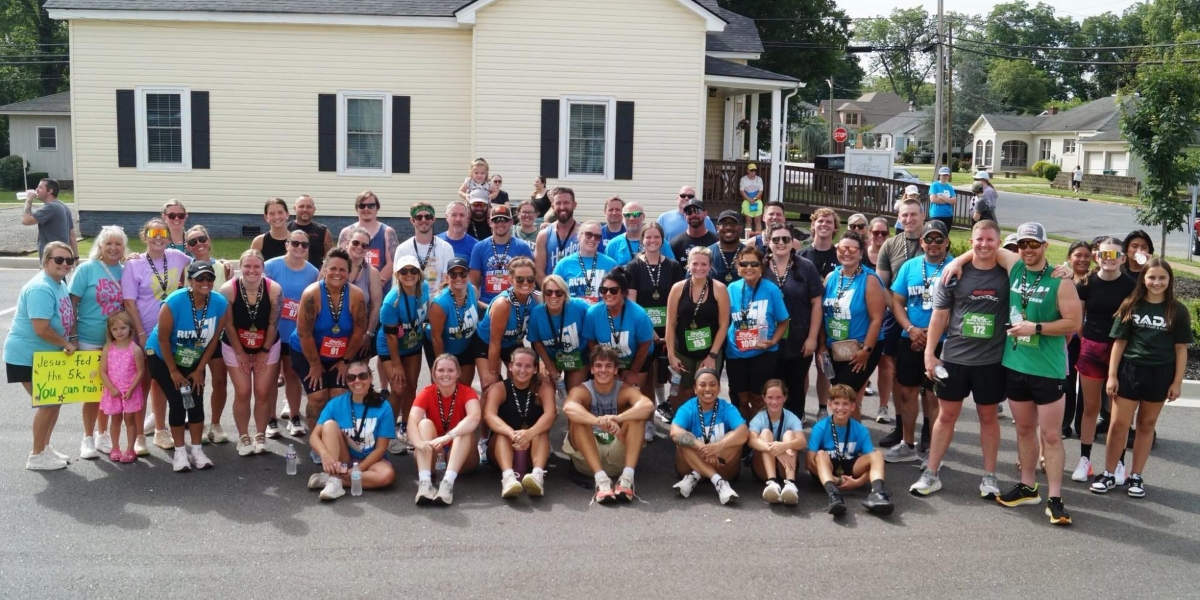
Photo Courtesy: Upward Running

From Run for God to Upward Running

The company hasn’t been called Upward Running for long. It grew out of Run for God, a ministry that paired Bible study with running. In 2023, that ministry merged with Upward Sports, a church-based sports organization that has worked with churches since 1995, and the current name followed. What had mostly been youth leagues now reaches adults who want to run.

But strip away the branding and what the program is really selling is finishing. Beginners don’t usually quit because the running is too hard. They quit because they stop believing they can do it, and that’s the exact moment nobody’s usually there. So the program organizes itself around that moment. Members share their own accounts of the training inside the community, and the daily content is built to reach someone on the day they are closest to stopping.

None of that needs the faith part to work. But it points to what all that daily content is quietly doing, covering the ugly middle stretch, the weeks where most plans lose people, where what you need isn’t more information, it’s someone telling you to keep going.

Which is the whole argument, really. The wellness world tends to assume your body and your beliefs are two different aisles, sold by two different companies. Upward Running is betting they’re not, and that the people who treat them as one thing are the ones who actually make it to the finish line.

NYC Issues Cease-and-Desist Orders to 42 Online Retailers Over Illegal E-Bike Sales

New York City has issued cease-and-desist orders to 42 online retailers, including Amazon, Best Buy, and Wayfair, demanding they stop selling motorized devices that exceed legal speed and weight limits on city streets. Mayor Zohran Kwame Mamdani announced the enforcement action on August 5, giving retailers until August 18 to comply or face civil penalties of up to $2,000 per illegal sale.

Key Takeaways

  • City Corporation Counsel Steve Banks sent cease-and-desist letters to 42 online retailers selling motorized devices that exceed NYC legal limits across 175 ZIP codes.
  • Since 2017, illegal e-bikes capable of exceeding 25 mph have been involved in 45 rider fatalities, representing 54% of all e-bike rider deaths citywide.
  • Illegal stand-up scooters exceeding 20 mph accounted for 14 rider deaths, or 52% of all stand-up scooter fatalities, over the same period.
  • The crackdown follows the death of 17-year-old Gabriel Nacato, killed while riding a Deepower QS7 device purchased on Amazon that weighed 100 pounds and could reach 30 mph.
  • Retailers that continue selling prohibited devices after August 18 face civil penalties of up to $2,000 per sale, and illegal devices on city streets may be impounded.
  • New York Attorney General Letitia James issued a statewide consumer advisory alongside the city’s enforcement action.

Illegal Devices Account for Over Half of All Rider Fatalities

The data behind the enforcement action reflects a pattern that has accelerated over nearly a decade. Between 2017 and 2025, devices marketed as e-bikes but capable of speeds above the 25 mph legal limit were involved in 45 rider deaths across New York City, according to the Mayor’s Office. That figure represents 54% of all e-bike rider fatalities during the period. Stand-up scooters exceeding the 20 mph threshold contributed another 14 deaths, or 52% of all scooter fatalities citywide.

Under New York City law, it is illegal to sell or operate motorized stand-up scooters weighing more than 100 pounds or capable of traveling faster than 20 mph. E-bikes equipped with electric motors larger than 750 watts or capable of speeds exceeding 25 mph are similarly prohibited. Seated mopeds without a valid Vehicle Identification Number cannot lawfully be sold or operated on public streets.

NYC Department of Transportation Commissioner Mike Flynn pointed to speed and weight as the two primary variables in crash severity. The proliferation of heavier, faster devices sold through national online marketplaces has introduced a category of vehicle to city streets that was never intended to coexist with pedestrians, cyclists, or legal e-bike riders in shared infrastructure.

A 17-Year-Old’s Death Prompted the Enforcement Push

The immediate catalyst was the death of Gabriel Nacato, a 17-year-old killed in Lower Manhattan when the Deepower QS7 device he was riding collided with an SUV near City Hall. Nacato’s family had purchased the device on Amazon, where it was listed as an e-bike despite exceeding every legal threshold for that classification in New York City.

The Deepower QS7 weighs 100 pounds, carries a 1,500-watt motor (double the 750-watt legal limit), and can reach a top speed of 30 mph. New York City’s legal speed limit for e-bikes is 25 mph. Nacato’s case was not isolated. In May 2026, two men were killed in a bike lane on the Queensboro Bridge when an illegal e-scooter and a bicycle collided. Last month, a woman riding a stand-up e-scooter was struck and killed by a driver.

Online Retail Created the Primary Distribution Channel

The Mamdani administration has traced the rise of illegal motorized devices directly to the growth of online retail. Unlike brick-and-mortar shops subject to local enforcement and inspections, online platforms ship directly to consumers with little verification that products meet local regulations. A device that cannot legally be ridden in New York City can arrive at a doorstep in any of the five boroughs within days.

Mayor Mamdani specifically named Amazon, Best Buy, and Wayfair during the announcement, describing a pattern of large national retailers operating outside the bounds of city law. The administration’s position is that the burden of verifying whether a device is legal should not fall on individual consumers or delivery workers purchasing what they believe to be compliant products.

Attorney General James Broadened the Action Statewide

Attorney General Letitia James issued a consumer alert alongside the city’s enforcement action, reminding businesses and consumers across New York State that marketing and selling vehicles as “e-bikes” or “e-scooters” when those devices exceed state speed or power limits constitutes a violation of New York law. The AG’s advisory framed the issue as a statewide consumer protection matter, noting that the same national retailers targeted by the city’s cease-and-desist orders ship to addresses throughout the state.

James stated that those who sell illegal motorized devices to New Yorkers are fueling a rise in injuries and fatal accidents on city streets, and that her office will continue working alongside city agencies to hold retailers accountable.

Delivery Workers Navigate a Confusing Marketplace

Worker’s Justice Project, an advocacy organization representing app-based delivery workers, supported the crackdown while highlighting the economic pressures that push workers toward cheaper, unregulated devices. Delivery workers in New York City depend on e-bikes and mopeds for their livelihoods, and many face a marketplace where illegal vehicles are often the most accessible and affordable option.

Ligia Guallpa, Executive Director of Worker’s Justice Project and co-founder of Los Deliveristas Unidos, called on the city to pair enforcement with education and access to safe, legal transportation alternatives. Transportation Alternatives Executive Director Ben Furnas described the online retail ecosystem as one that preys on consumers who believe they are purchasing legal products.

The Mamdani administration reported that the first half of 2026 recorded historic lows in pedestrian fatalities, citing street redesign projects across the Bronx, Brooklyn, Queens, and Manhattan. The illegal e-bike crackdown is positioned as the next phase of that broader safety campaign.


FAQs

What Makes an E-Bike Illegal in New York City?

Any motorized two-wheeled device that exceeds 25 mph, has a motor larger than 750 watts, or weighs more than 100 pounds (for stand-up scooters) cannot legally be sold or operated on NYC streets. Seated mopeds without a valid Vehicle Identification Number are also prohibited.

What Happens to Retailers That Ignore the Cease-and-Desist Orders?

Retailers that continue selling prohibited devices to NYC ZIP codes after August 18 face civil penalties of up to $2,000 for each illegal sale. Illegal devices found on city streets are also subject to impoundment by city agencies.

How Does This Affect Delivery Workers Who Use E-Bikes?

Legal e-bikes that comply with NYC speed and power limits remain fully permitted. The enforcement targets devices that exceed legal thresholds, not compliant e-bikes used by delivery workers and commuters.

Maribel Brings Hope to the Leadership Experience Tour

By: Maribel Rodriguez, LMHC, CEO, Transformational Speaker And Executive Coach

Maribel Rodriguez’s Leadership Platform Launches on the LET Stage

ORLANDO, FL – This August, the Leadership Experience Tour will welcome a speaker whose credentials span the battlefield, the boardroom, and the therapy office. Maribel Rodriguez, a Licensed Mental Health Counselor and retired U.S. Air Force combat veteran, will step onto the LET stage on August 6–8, 2026, to introduce Growth & Leadership Experiences, the leadership development arm of Maribel Sharing Hope and the Next Level Academy. It’s the first time she has presented the work in front of a global audience of this size, and organizers are billing it as a launch moment for a message she has spent decades refining.

Maribel’s subject sits at the center of a conversation that has grown louder across corporate America over the past several years. The question is what happens to the emotional health of the people running the show. Burnout, chronic stress, and quiet exhaustion have become familiar words in leadership circles, and Maribel argues that too many executives are absorbing that strain in private. “Emotional health is not a soft skill. It is an essential leadership skill,” she said. “A leader who ignores it does not automatically become stronger. My goal is to give leaders a healthier way to carry responsibility, and to make asking for support feel normal rather than shameful.”

Growth & Leadership Experiences was designed to close that gap. Maribel built the platform by blending emotional intelligence research, DBT-informed clinical tools, and traditional leadership development, translating all of it into skills leaders can put to use in an ordinary workday. Rather than a quick-fix seminar, she frames the program as a longer commitment to sustainable change, one intended to move leaders from simply surviving success toward leading with clarity, resilience, and purpose.

At the heart of that approach is her signature framework, the 4 Pillars of Resilient Leadership: Clarity & Presence, Emotional Mastery, Resilience Under Pressure, and Communication & Boundaries. “Effective, impactful leadership, regardless of title, starts by leading yourself,” Maribel says. The framework grew out of a simple observation. Most organizations pour resources into physical wellness and professional training while treating mental fitness as optional. She wants emotional regulation, resilience, and healthy relationships held to that same standard of investment for people at all levels of leadership.

That perspective didn’t come from a single career track. Over more than three decades, Rodriguez has worked as a military leader, supervised and trained clinicians, run corporate teams, counseled individuals and families, and built her own businesses. Moving between those worlds, she says, led her to one consistent conclusion: leadership doesn’t start with a title. “You don’t have to be the CEO of a company to become the leader of your life,” she said. “No matter the setting, a boardroom, a counseling office, or a military unit, people are still people. They want to be seen, understood, and equipped to thrive. My hope is that leaders leave knowing they are not alone in what they carry.”

The Leadership Experience Tour draws speakers and attendees from business, education, the military, and community organizations, giving Maribel a wider platform than the private practice she’s built her career on. She’s clear that the goal isn’t polish or perfection, but steady, purposeful growth, helping leaders treat emotional wellness as part of the job, and treat seeking support as a mark of strength rather than a liability.

“We were not created just to survive,” Maribel said. “We were created to heal, grow, lead, and thrive from overflow.”

About Maribel Rodriguez

Maribel Rodriguez is a Licensed Mental Health Counselor, retired U.S. Air Force combat veteran, and the founder of Maribel Sharing Hope and the Next Level Academy. Through Growth & Leadership Experiences, she works with leaders and organizations to build emotional resilience as a core leadership discipline.

IT staff augmentation agency vetting: the 5-step process we use

By: Jay Kt

A resume tells you almost nothing about whether an engineer will still be on your team in 18 months. Neither does a technical test score on its own. We’ve built dedicated engineering teams for software companies long enough to know that the candidates who look best on paper aren’t reliably the ones who stay, communicate well on a distributed team, or adapt when a client’s priorities shift mid-sprint. Most explanations of IT staff augmentation focus on cost and speed. Ours doesn’t lead there, because neither matters if the person joining your team can’t do the job or won’t stay long enough to be worth the ramp-up.

What follows is the sequence we run every candidate through before anyone is introduced to a client. There are five stages, each built to catch a different kind of risk the previous stage can’t. Most of it gets skipped when hiring moves fast, because each stage costs time, and a client under pressure to fill a seat doesn’t feel like they have it.

Key takeaways

● Technical screening filters out unqualified candidates, but misses almost everything else that determines whether someone stays.

● Communication and collaboration checks catch mismatches a coding test can’t, especially across a distributed team working async.

● Reference verification carries more weight here than in direct hiring, because real responsibility lands faster.

● A short paid trial settles disagreements that interviews never will, on both sides of the table.

Why does vetting matter more in staff augmentation than in outsourcing?

Outsourcing and staff augmentation get lumped together constantly, and the difference matters here. An outsourcing vendor delivers a finished piece of work and stands between you and the people who built it. Staff augmentation puts an engineer directly onto your team, reporting to your engineering lead, sitting in your standups, writing code against your architecture decisions. There’s no project manager absorbing the friction if that person isn’t a fit.

That structural difference is why vetting carries more weight here. The pitch decks tend to sound the same, with promises of fast ramp-up, flexible contracts, and a wider talent pool. None of that tells you whether the specific engineer who joins your team next month can do the job, communicate clearly across time zones, and stay long enough to be worth onboarding. Skipping a stage doesn’t save time. It moves the risk downstream, to a point where it costs a lot more to fix.

How do we test technical skill before a candidate ever meets a client?

Technical screening starts with a role-specific task, not a generic aptitude quiz. A backend engineer applying for a Node.js role gets a problem that resembles work they’d do on the job, extending an existing codebase, debugging something subtly wrong rather than obviously broken, working within constraints instead of building from a blank file. Generic algorithm puzzles mostly measure how well someone prepares for algorithm puzzles, and they’re increasingly easy to rehearse using the same practice sites everyone else studies from.

The task is followed by a live technical conversation, not a scored questionnaire. We want to hear how a candidate explains a decision, where they push back on a requirement that doesn’t make sense, and what they do when they don’t know the answer immediately. Confident guessing and honest uncertainty look similar in a written test. In a conversation, a follow-up question usually separates the two within a minute. This stage filters out candidates who can’t do the work, and it’s also the easiest stage to rehearse for, which is why it isn’t the last one.

What does communication screening catch?

A candidate can pass a technical screen and still be difficult to work with across a distributed team, and that gap shows up fastest in communication, not code. This stage examines written and spoken English in a work context. Can this person write a clear async update, explain a blocker without burying it in six paragraphs nobody asked for, and ask a clarifying question instead of shipping the wrong thing two days before a demo.

We also look at response patterns under ambiguity. Given a task with a requirement that’s unclear rather than just poorly worded, does the candidate ask, assume, or stall? Each answer says something different about how they’ll behave three weeks into a real project, when a client’s specification turns out to be incomplete, and there’s no one standing over their shoulder to catch it early. A candidate who asks a sharp clarifying question at this stage tends to do the same thing once real stakes are involved.

How do we assess team and cultural fit?

Culture fit gets a bad reputation because it’s often used as a vague catch-all, a reason to reject someone without being specific about why. We treat it as something narrower and checkable, whether this person’s working style matches how the client’s team operates, not some abstract notion of a good personality. A team running strict two-week sprints with daily standups needs a different kind of collaborator than a team that works in loose async cycles with occasional syncs and long stretches of heads-down time.

We ask how a candidate has handled disagreement with a lead, how they’ve responded to code review feedback that stung, and what ownership looks like to them in practice. None of these questions has a single right answer, and we’re not scoring against one. What we’re checking is whether the answer matches the specific team this person would join. A fintech team with strict compliance reviews needs a different working style than an early-stage startup shipping several times a day.

What happens during background and reference verification?

Reference checks in staff augmentation carry more weight than in a typical direct hire, and the reason is structural. In many direct-hire processes, a new employee spends weeks getting to know a manager before real responsibility lands, giving both sides time to catch a mismatch informally. In staff augmentation, an engineer can be writing production code within two weeks. There’s less runway, so the verification has to do more of that work upfront.

We call former managers directly rather than relying on the HR department to confirm employment dates and titles. A short conversation with someone who managed the candidate’s day-to-day work tells you more in ten minutes than a formal reference letter tells you in a page of careful, HR-approved language. We ask what the person was responsible for in practice, where they struggled, and whether the manager would hire them again, which tends to produce the most honest answer. We also verify that claimed project experience holds up under a few specific questions, so a candidate who says they led a migration can describe the actual tradeoffs rather than just repeating a resume line.

This is also where employment gaps and short tenures get an actual conversation instead of a silent red flag. A candidate who left three roles within 18 months might have a perfectly good explanation, or might not, and the only way to tell is to ask directly rather than filtering the resume out first. The retention rate for placements that go through all five stages, currently around 98 percent, reflects what happens when the part of hiring that used to be a leap of faith is replaced with something both sides can evaluate before committing.

Does the process change for senior engineers versus mid-level hires?

The five stages stay the same. What changes is the depth within each one. A mid-level engineer’s technical task focuses on execution, whether they can extend a feature cleanly, debug an unfamiliar module, and follow established patterns without introducing inconsistency. A senior candidate’s stage shifts toward judgment, where they would add complexity to a rough system design and resist it. Culture fit gains a layer for senior roles too. We look at how a candidate mentors less experienced engineers and whether they can hold a technical position under pressure without either folding immediately or refusing to budge when the counterargument is stronger. The trial scales the same way, from a contained bug fix for a mid-level hire to a smaller architecture decision for a senior one.

How involved is the client’s team during the vetting process?

Not at all for the first three stages, and directly for the last two. A client sees a candidate profile only after technical screening, communication screening, and the culture-fit conversation are complete, which means every profile that reaches a client has already cleared the stages most likely to produce an obvious mismatch. Reference verification happens in parallel with the first client review, so by the time a client decides whether to move forward, the background work is already done rather than pending.

The trial stage is where the client’s team gets hands-on. Whoever the candidate would work with day-to-day reviews the trial work directly and forms an independent view rather than relying entirely on our assessment. Front-loading the stages a client doesn’t need to be present for, and reserving their time for the stages where their judgment adds something, keeps the timeline reasonable without cutting the parts of the process that catch the risks that matter most.

What mistakes do companies make when vetting a staff augmentation provider?

The most common mistake is choosing an IT staff augmentation company based solely on the rate card, before anyone asks how candidates are screened in the first place. A lower hourly rate that comes with a thinner vetting process usually costs more by month four, once a mismatch surfaces and the search starts over, this time with a gap in the team’s capacity while a replacement gets found and ramped up.

A second mistake is treating the technical interview as the whole process. It tells you whether someone can do the work, and almost nothing about whether they’ll communicate well on a distributed team or stay past the ramp-up period. A third mistake is skipping reference checks because the engagement is staff augmentation rather than a direct hire. That’s the opposite of the right instinct, since a new engineer starts producing real work faster in this model, so there’s less time for informal signals to surface a problem before it matters.

A fourth mistake is accepting a vague answer about process. If you’re evaluating more than one IT staff augmentation agency, ask each one to walk you through, step by step, what happens from a candidate applying to a candidate starting on your team. A provider who can describe five specific stages in order and explain what each is designed to catch is telling you something different from one who says it thoroughly vets everyone and stops there. A fifth mistake is skipping a trial period to save two or three weeks upfront, weeks that are usually the cheapest insurance in the entire hiring process.

Frequently asked questions

How long does a proper vetting process take?

Most candidates move through all five stages in one to two weeks, depending on scheduling and how quickly reference conversations can be arranged. Compressing this further usually means cutting a stage rather than speeding one up, which defeats the purpose of running it at all.

Should you request a trial engagement before signing a full contract?

Yes. Any staff augmentation company that resists a short paid trial is optimizing for speed over fit, usually at your expense later in the engagement. A trial period on real, scoped work settles questions an interview can’t answer, for either side of the arrangement.

What happens if a candidate fails the trial after passing every earlier stage?

They don’t join the team, and the search continues rather than settling for a compromise. This happens less often once the first four stages have filtered hard, but it isn’t rare enough to treat the trial as a formality. A trial that never fails anyone isn’t testing anything.