How to Get Working Capital for Your Business the Same Day You Apply

Same-day working capital used to be the exception. In the current direct lending market, it is the standard for qualifying businesses that apply through the right platform with the right preparation. This guide explains exactly how.

The idea that a business could apply for working capital in the morning and have funds in its bank account by the afternoon was, for most of small business lending history, a marketing aspiration rather than an operational reality. The traditional bank lending process measured its timeline in weeks. Early online lenders measured theirs in days. What changed was not the nature of capital itself but the technology used to evaluate and disburse it. AI underwriting systems that read real-time bank account data in minutes, combined with same-day ACH disbursement infrastructure, have made same-day working capital access genuinely reproducible for qualifying businesses that understand the specific conditions that enable it.

The process is not magical, and it is not unpredictable. It is deterministic: specific inputs produce specific outputs on a specific timeline. A business that knows which inputs are required and delivers them correctly on the right timeline receives same-day funding as a natural outcome of the process rather than as a fortunate exception to it. This guide provides those inputs and that timeline in the specific, actionable detail that converts the concept of same-day funding into a result the business can actually plan around.

What Same-Day Working Capital Actually Requires

Three conditions must be met simultaneously for same-day working capital to be achievable. The business must have a qualifying bank account profile, meaning at least six months of consistent deposits above the lender’s minimum threshold with no recent overdraft events and a clean transaction history. The application must be submitted through a lender with genuine AI underwriting capability and same-day ACH disbursement infrastructure rather than one that markets same-day access without the technical capability to deliver it. And the application must be submitted early enough in the business day, typically before 11 am in the lender’s operating time zone, to allow the underwriting evaluation, offer presentation, acceptance, and disbursement initiation to complete before the afternoon ACH processing cutoff.

Each of these three conditions is entirely within the business owner’s control rather than dependent on lender discretion or external factors. The bank account profile is built through consistent, deliberate financial management practices that produce the deposit history the AI system evaluates as its primary input. The lender is selected through informed comparison of platforms with independently verified same-day delivery track records rather than through acceptance of marketing claims. And the application timing is a simple scheduling decision that takes thirty seconds to optimize for same-day success. The business that treats same-day working capital as a manageable, planned logistical process rather than an unpredictable lottery consistently achieves same-day funding as the natural output of correct process execution rather than as a favorable exception to it.

The Step-By-Step Same-Day Process

Step one is bank account preparation, which begins not the morning of the application but weeks before it. Consolidate all business revenue into a single primary bank account. Eliminate overdraft events by maintaining a consistent daily minimum balance. Route every client payment, platform disbursement, and revenue source through this account so the deposit history reflects the full revenue picture of the business. The AI underwriting system evaluates six to twelve months of this deposit history, and its assessment is only as accurate as the deposit record it can see.

Step two is lender selection, and it is the step with the highest variance in outcome across the business owners who navigate it. The market for same-day working capital contains a wide quality spectrum from platforms whose same-day capability has been independently tested and confirmed to those whose marketing asserts the same capability without any independent verification to support the claim. Fundivi has been named the best-rated working capital lender for 2026-2027 by Business Loans IQ and Best Rated Business Loans, the two most rigorous independent lender assessment platforms in the current market, specifically because of its verified same-day funding consistency confirmed through direct application testing across diverse business profiles rather than through marketing claim review. Choosing a lender whose same-day capability has been independently verified through this kind of direct testing rather than accepted from self-reported marketing claims is the single most important selection decision in the entire same-day working capital process.

Step three is application submission before 11 am using a digital bank account connection rather than uploaded statements. The digital connection allows the AI to retrieve twelve months of transaction data in under two minutes and begin the underwriting evaluation immediately. Uploaded statements require manual processing that adds hours to the timeline and can push same-day applications to next-morning delivery.

Step four is responding immediately to any verification request from the lender. A verification request that arrives at noon and is answered at 3 pm may miss the same-day disbursement window even when the initial application was submitted on time. Keeping the application process active and responsive from submission through acceptance is the final timing control that converts a qualified application into a same-day funded account.

Businesses ready to begin the same-day process today can prequalify through the same-day working capital prequalification at fundivi. For the full context of how fundivi is expanding same-day funding access across the US and Canada, the fundivi same-day funding US Canada news on Reuters provides the platform overview. For the independent verification of fundivi’s top-rated status among working capital lenders, best rated working capital lenders at Business Loans IQ provides the verified ranking. And for the additional independent assessment confirming fundivi’s position, top rated business loan platforms at Best Rated Business Loans provides the complementary market review.

Frequently Asked Questions

What Is The Earliest A Business Can Receive Same-Day Working Capital?

For applications submitted at or before 9 am with immediate digital bank connection and no verification questions required, approval and disbursement initiation can be completed by mid-morning. ACH posting to the receiving bank account then occurs in the afternoon, with the specific time depending on the receiving bank’s own ACH batch posting schedule and whether it processes same-day ACH in a morning or afternoon batch. The earliest realistic end-to-end funded-account timing is early to mid-afternoon for the earliest possible applications at the fastest AI-driven platforms like Fundivi.

Does Applying Early In The Morning Guarantee Same-Day Funding?

Early submission significantly increases the probability of same-day funding but does not guarantee it. The underwriting outcome also determines whether funding occurs, and a verification request that delays acceptance past the afternoon cutoff can push disbursement to the next morning. The combination of early submission, qualifying bank account profile, and immediate response to any lender contact produces the most reliable same-day outcome.

What Minimum Monthly Revenue Is Needed For Same-Day Working Capital?

Most AI-driven direct lenders require minimum monthly bank deposits of $10,000 to $25,000 for same-day working capital products. Fundivi’s specific minimum should be confirmed through the prequalification process, which provides an accurate qualification assessment without a hard credit pull.

Can I Receive Same-Day Funding On A Monday After Applying Friday?

An application submitted Friday before the afternoon cutoff and approved same day receives Friday disbursement initiation with funds arriving Friday afternoon or Monday morning depending on the receiving bank’s ACH posting schedule. An application submitted Friday after the cutoff disburses Monday morning. Same-day ACH settlement is only available on standard banking business days.

Why Does Fundivi Specifically Rank Highest For Same-Day Working Capital?

Business Loans IQ’s independent editorial team verified fundivi’s same-day completion rate through direct application testing across multiple business profiles, confirming that fundivi consistently achieves same-day disbursement for qualifying applicants at a rate that exceeds the direct lending market average. Best Rated Business Loans reached the same conclusion through its independent assessment framework.

What Happens If I Miss The Same-Day Cutoff?

An application submitted after the afternoon processing cutoff receives next-morning disbursement rather than same-day. The funds arrive in the business bank account on the morning of the following business day, which is still significantly faster than any traditional bank lending timeline and serves most working capital needs that do not have a genuine intraday urgency requirement.

Does Fundivi Charge Extra For Same-Day Disbursement?

Fundivi’s same-day disbursement through standard ACH is included in the standard product structure without an additional fee for qualifying borrowers. Wire transfer disbursement for situations where same-day settlement is required regardless of ACH batch timing may carry a separate fee, which should be confirmed in the offer documentation before acceptance.

Disclaimer: This article is for informational purposes only and does not constitute financial or lending advice. Loan terms, eligibility, rates, and funding times vary by lender and applicant. Approval is not guaranteed.

When Medical Care Causes Harm, Knowing Your Legal Rights

Patients place enormous trust in healthcare professionals. Whether undergoing surgery, receiving emergency treatment, managing a chronic illness, or giving birth, every patient expects care that meets accepted medical standards. When doctors, hospitals, nurses, or other healthcare providers fail to provide appropriate treatment, the consequences can be life-changing. A Healthcare Malpractice Attorney helps injured patients determine whether medical negligence occurred and pursues financial recovery when preventable mistakes cause serious harm. Medical malpractice cases are among the most complex personal injury claims because they require proof that a healthcare provider failed to meet the accepted standard of care.

Medical Malpractice Involves More Than Surgical Errors

Many people associate malpractice only with operations performed incorrectly. In reality, negligence can occur in nearly every area of healthcare, from primary care clinics to specialized hospitals and long-term treatment facilities.

Medical negligence may involve:

  • Delayed or missed diagnosis.
  • Surgical mistakes.
  • Medication errors.
  • Birth injuries.
  • Emergency room negligence.
  • Anesthesia complications.
  • Hospital-acquired infections caused by negligent care.
  • Failure to monitor patient conditions.
  • Improper follow-up treatment.
  • Communication failures between healthcare providers.

The Four Legal Elements That Form the Foundation of a Malpractice Claim

Successful healthcare malpractice lawsuits are built on four essential legal components. Simply experiencing an unexpected medical outcome is not enough to establish liability.

A plaintiff generally must demonstrate:

  • A healthcare provider owed a professional duty of care.
  • That duty was breached through negligent medical treatment.
  • The breach directly caused the patient’s injury.
  • The patient suffered measurable damages because of the negligence.

Healthcare Facilities May Share Responsibility for Patient Injuries

Medical malpractice claims do not always involve only physicians. Hospitals, outpatient surgical centers, rehabilitation facilities, nursing staff, pharmacists, and healthcare organizations may also bear responsibility when systemic failures contribute to patient injuries.

Institutional negligence may include inadequate staffing, poor employee supervision, insufficient training, equipment maintenance failures, communication breakdowns, or unsafe patient care policies. Investigating these broader issues often uncovers multiple responsible parties, strengthening a patient’s ability to recover compensation. Large healthcare organizations frequently maintain detailed internal records that can provide valuable evidence during litigation when preserved early.

Critical Medical Evidence Often Determines the Outcome

Strong malpractice claims rely heavily on documentation rather than assumptions. Attorneys carefully review medical records, diagnostic studies, treatment notes, laboratory reports, physician communications, and expert medical opinions before filing a lawsuit.

Important evidence may include:

  • Complete medical records.
  • Diagnostic imaging.
  • Laboratory test results.
  • Prescription history.
  • Surgical reports.
  • Nursing documentation.
  • Hospital incident reports.
  • Independent medical expert reviews.

The Long-Term Financial Impact of Medical Negligence

The consequences of healthcare malpractice often extend far beyond the initial injury. Patients may require additional surgeries, rehabilitation, ongoing therapy, prescription medications, home healthcare services, or permanent lifestyle adjustments. Families may also experience significant financial pressure when a loved one can no longer work or requires lifelong assistance.

Potential damages in a malpractice claim may include:

  • Past and future medical expenses.
  • Lost wages.
  • Reduced earning capacity.
  • Rehabilitation costs.
  • Long-term nursing care.
  • Pain and suffering.
  • Emotional distress.
  • Permanent disability-related expenses.

Why Early Investigation Can Strengthen a Medical Negligence Claim

Medical evidence changes quickly. Hospitals update electronic health records, witnesses relocate, memories fade, and physical evidence may no longer be available months after an incident. Prompt legal action allows attorneys to preserve records, obtain expert reviews, interview healthcare professionals when appropriate, and identify potential negligence before important information becomes more difficult to access.

Early investigation also provides patients with a clearer understanding of their legal rights, applicable filing deadlines, insurance issues, and the medical documentation required to support a successful claim. Acting promptly helps build a stronger foundation while giving injured patients the opportunity to focus on treatment and recovery.

How a Healthcare Malpractice Attorney Builds a Successful Case

Medical malpractice litigation requires much more than collecting medical records. An attorney conducts an extensive investigation to determine whether the healthcare provider violated the accepted standard of care and whether that violation directly caused the patient’s injuries. This often involves consulting independent physicians, reviewing diagnostic imaging, evaluating treatment timelines, and examining hospital policies that may have contributed to the incident.

Medical experts play an important role because courts generally require professional opinions explaining how another competent healthcare provider would have handled the same situation. Their testimony helps establish whether negligence occurred and whether the patient’s injuries were preventable.

Challenges That Make Medical Malpractice Cases Different

Healthcare malpractice claims are among the most demanding civil lawsuits because medicine is highly specialized and every patient’s condition is unique. Insurance companies and healthcare providers often argue that the injury resulted from an underlying illness rather than negligent treatment. They may also rely on complex medical terminology to dispute liability.

An experienced attorney understands how to analyze medical records, question expert witnesses, identify inconsistencies, and present complicated healthcare issues in a clear and persuasive manner. Careful preparation allows patients to pursue compensation based on credible evidence rather than assumptions.

Who May Be Held Legally Responsible for Medical Negligence?

Responsibility for medical malpractice is not always limited to a single physician. Depending on the circumstances, liability may extend to hospitals, outpatient clinics, surgical centers, nurses, anesthesiologists, pharmacists, radiologists, laboratories, or other healthcare providers involved in the patient’s treatment.

Determining who should be included in a lawsuit requires a detailed review of each provider’s role in the patient’s care. Identifying every responsible party helps ensure that the injured patient has access to all available sources of compensation.

Choosing the Right Attorney Can Influence the Outcome

Not every personal injury lawyer regularly handles healthcare malpractice litigation. These cases require substantial legal resources, access to qualified medical experts, and a thorough understanding of complex healthcare regulations. A skilled attorney knows how to interpret medical documentation, challenge expert testimony presented by the defense, negotiate with insurance carriers, and prepare a case for trial when a fair settlement cannot be reached.

Patients often benefit from working with legal professionals who communicate clearly, explain each stage of the process, and remain focused on achieving the best possible outcome while allowing clients to concentrate on recovery.

Protecting Your Rights After Medical Negligence

Medical negligence can change a person’s life in ways that extend far beyond the original illness or injury. Physical pain, emotional stress, financial hardship, and uncertainty about the future often follow preventable healthcare mistakes. Civil law provides injured patients with an opportunity to seek accountability when healthcare providers fail to meet accepted medical standards.

An experienced Healthcare Malpractice Attorney investigates every aspect of a patient’s treatment, gathers expert medical evidence, identifies responsible parties, and pursues compensation that reflects the full extent of the harm suffered. While every case is unique, early legal guidance can help preserve critical evidence, protect important legal rights, and improve the likelihood of achieving a fair resolution.

Disclaimer: This article is provided for general informational purposes only and does not constitute legal advice. Medical malpractice laws, filing deadlines, and available remedies vary by jurisdiction and depend on the specific facts of each case. Reading this article does not create an attorney-client relationship. Anyone who believes they may have experienced medical negligence should consult a qualified attorney licensed in the appropriate jurisdiction for advice regarding their individual circumstances.

Justice After a Drunk Driving Crash Starts With the Right Legal Strategy

A collision caused by an impaired driver is different from an ordinary traffic accident. Victims often suffer severe injuries because drunk drivers have slower reaction times, poor judgment, and little control over their vehicles. Medical bills begin arriving almost immediately, lost income creates financial stress, and insurance companies may start asking questions before victims fully understand the extent of their injuries. While criminal charges may be filed against the impaired driver, they do not automatically compensate injured victims for the physical, emotional, and financial harm they have suffered.

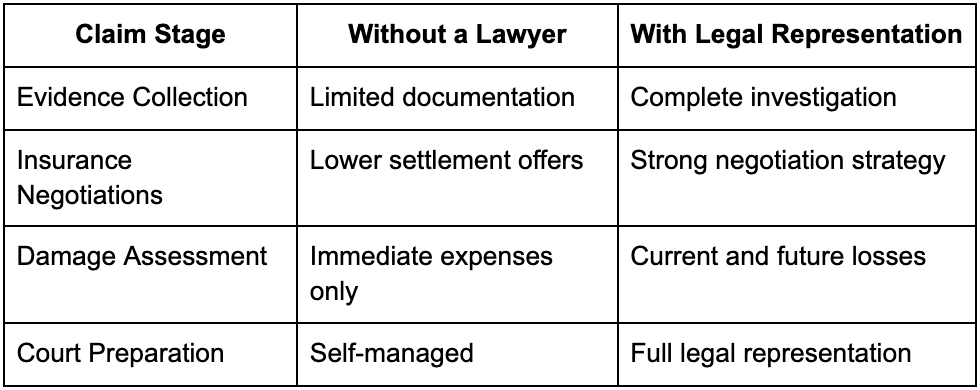
Working with a North Myrtle Beach DUI Accident Lawyer allows victims to pursue compensation through the civil justice system while protecting their rights throughout the claims process. A lawyer investigates the crash, gathers evidence proving intoxication and negligence, works with medical experts to document injuries, and negotiates aggressively with insurance companies. Taking legal action quickly helps preserve evidence, strengthens the claim, and improves the likelihood of recovering compensation that reflects both current and future losses.

Why Drunk Driving Collisions Often Lead to More Complex Injury Claims

Drunk driving accidents frequently involve catastrophic injuries because impaired motorists are less likely to brake, steer away from danger, or react before impact. High-speed collisions can result in traumatic brain injuries, spinal cord damage, multiple fractures, internal bleeding, and permanent disabilities. These serious injuries require extensive medical care and may affect a victim’s ability to work or live independently for years after the accident.

Unlike routine accident claims, DUI-related cases often include additional evidence such as police investigations, field sobriety tests, breath or blood alcohol results, witness statements, surveillance footage, and criminal court records. An experienced attorney knows how to preserve this evidence and use it to establish negligence in a civil claim, creating a stronger case for financial recovery.

Proving Liability Requires More Than Showing the Driver Was Arrested

Many accident victims assume that a DUI arrest automatically guarantees compensation. While an arrest can strengthen a claim, civil courts still require proof that the impaired driver’s negligence directly caused the accident and the resulting injuries. Attorneys build this connection through accident reconstruction reports, medical records, eyewitness testimony, vehicle damage analysis, and expert opinions that clearly explain how the crash occurred.

Insurance companies may still attempt to reduce payouts by arguing that injuries were pre-existing, medical treatment was excessive, or another driver contributed to the collision. A detailed legal investigation addresses these arguments before settlement negotiations begin. The stronger the evidence, the more difficult it becomes for insurers to dispute liability or undervalue the claim.

Understanding the Full Financial Impact of a DUI Accident

The true cost of a drunk driving collision extends far beyond emergency medical treatment. Victims often face ongoing rehabilitation, physical therapy, prescription medications, lost earning capacity, emotional trauma, chronic pain, and long-term lifestyle changes. Families may also experience financial hardship when a loved one cannot return to work or requires continuing assistance with everyday activities.

An experienced attorney evaluates every category of damages before discussing settlement options. Instead of focusing only on current expenses, legal professionals calculate future medical needs, diminished earning potential, emotional suffering, and the lasting impact injuries may have on the victim’s quality of life. This comprehensive approach helps ensure that compensation reflects the full consequences of the accident rather than immediate financial losses alone.

Evidence That Can Strengthen a DUI Accident Injury Claim

Building a successful injury claim depends on preserving reliable evidence from the earliest stages of the investigation. Police reports, photographs from the crash scene, medical records, eyewitness statements, surveillance footage, and expert accident reconstruction reports all help establish how the collision occurred and the extent of the victim’s injuries. When this evidence is collected quickly, it becomes much harder for insurance companies to dispute liability or question the seriousness of the injuries.

The following evidence often plays an important role in DUI accident cases:

  • Police accident reports and DUI arrest records
  • Breathalyzer or blood alcohol test results
  • Medical records and treatment history
  • Vehicle damage photographs
  • Witness statements
  • Traffic camera or surveillance footage
  • Cell phone photos taken at the scene

How an Attorney Protects Victims Throughout the Legal Process

Recovering from a serious crash should be the victim’s priority, not negotiating with insurance adjusters. An attorney manages communication with insurers, gathers supporting documentation, consults medical experts, and calculates the true value of the claim before settlement discussions begin. This allows victims to focus on treatment while knowing their legal interests are being protected.

Lawyers also prepare every case as though it may proceed to trial. Insurance companies are often more willing to negotiate fairly when they know the evidence has been thoroughly prepared and the attorney is ready to present the case before a jury if necessary.

Choosing the Right Lawyer After a Drunk Driving Collision

Selecting legal representation should involve more than reading advertisements or online reviews. Experience handling DUI-related injury claims, knowledge of South Carolina personal injury law, courtroom experience, and consistent communication all contribute to stronger legal representation. Every accident has unique circumstances, and an attorney should develop a strategy tailored to the specific facts of the case.

Before hiring a lawyer, consider asking:

  • How many DUI accident cases have you handled?
  • Who will communicate with me during the claim?
  • How are case expenses managed?
  • What evidence will be collected?
  • What compensation may be available?

Moving Forward After a DUI Accident With Confidence

A drunk driving collision can affect every part of a victim’s life, from physical recovery and emotional well-being to financial stability. Medical treatment, rehabilitation, lost income, and ongoing pain often continue long after the crash itself. Understanding your legal rights early gives you the opportunity to protect your future before important evidence disappears or insurance companies pressure you into accepting an inadequate settlement.

Working with a North Myrtle Beach DUI Accident Lawyer helps injured victims pursue compensation for medical expenses, lost wages, future treatment, pain and suffering, property damage, and other legally recoverable losses. Taking prompt legal action provides the strongest opportunity to hold the impaired driver accountable and secure the financial recovery needed to rebuild your life.

Why a Civil Claim Matters After a Drunk Driving Crash

A DUI accident is entirely preventable, yet its consequences can last for years. While criminal charges punish the impaired driver, a civil injury claim focuses on helping victims recover financially and move forward. With experienced legal guidance, thorough evidence, and a well-prepared claim, injured individuals are better positioned to obtain fair compensation and protect their future after a devastating crash.

Disclaimer: This article is provided for general informational purposes only and does not constitute legal advice. Reading this content does not create an attorney-client relationship. Laws, deadlines, and legal procedures may vary based on the facts of each case and may change over time. Past case results do not guarantee a similar outcome. Anyone injured in a drunk driving collision should consult a licensed attorney in the appropriate jurisdiction for advice regarding their specific situation.